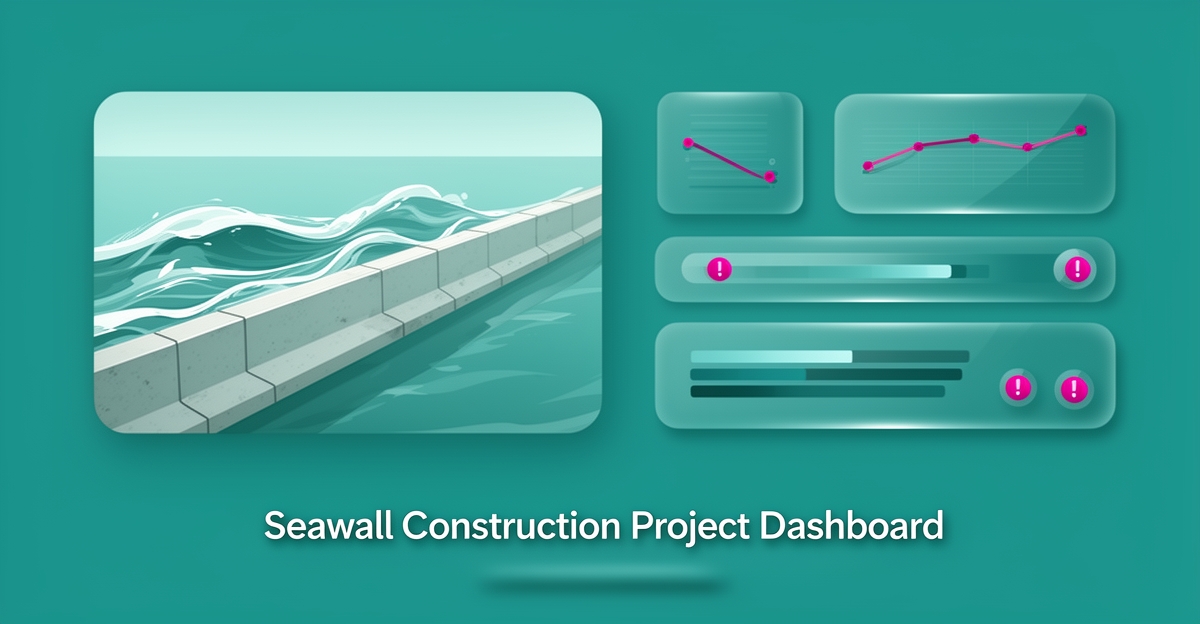
From Manual to AI: Transforming Seawall Project Management with Smart Dashboards
Key Facts
- Manual project tracking typically consumes a day or more of skilled time each week in project management roles, pulling focus from engineering work.
- Fragmented spreadsheets and delayed reporting are the leading causes of blind spots in coastal infrastructure projects.
- AI dashboards correlate timelines, material usage, labor hours, and compliance data into a single real-time view.
- Severity-based alert prioritization prevents alert fatigue—one security monitoring example logged 496 alerts in 24 hours, most of them noise.
- Governed rollouts aligned to standards like NIST AI RMF and ISO-42001 turn AI pilots into capabilities firms own outright.
Hire a team member that works 24/7 — for less than a part-time wage.
AI receptionists, SDRs, dispatchers and 99+ roles. Trained on your business, fully managed.
Not sure where to start? Ask our AI planner
The Hidden Costs of Manual Project Tracking in Coastal Infrastructure
Manual project tracking in coastal infrastructure often relies on fragmented spreadsheets and delayed reporting, creating blind spots that undermine decision-making. Teams spend excessive time consolidating data from disparate sources, which pulls focus from critical seawall design and construction tasks. This reactive approach means issues like material delays or labor shortages are often identified only after they’ve impacted timelines or budgets.
In practice, manual consolidation routinely consumes a day or more of skilled time each week in project management roles. That inefficiency directly contributes to cost overruns, as teams lack real-time visibility into resource allocation and progress tracking. Without immediate insight into material usage or labor hours, managers cannot adjust plans proactively, leading to waste and avoidable expenses.
The reliance on outdated tracking methods also amplifies operational errors. Transcription mistakes, version conflicts, and stale numbers cascade into compliance risks, particularly in regulated coastal projects where precise documentation of environmental safeguards and construction milestones is essential. Delayed reporting further exacerbates this, as regulators may receive outdated information, triggering penalties or work stoppages.
- Fragmented data sources prevent unified project oversight
- Delayed reporting hinders timely interventions
- Manual consolidation increases administrative burden
- Reactive decision-making elevates risk exposure
- Error-prone processes compromise data integrity
AIQ Labs addresses these challenges through AI Workflow Builds that centralize project data into intelligent dashboards, enabling real-time monitoring of timelines, resources, and compliance metrics. By replacing manual tracking with automated workflows, coastal infrastructure teams can shift from reactive firefighting to proactive project stewardship. This foundation supports smarter decision-making, reduces costly delays, and ensures seawall projects stay on schedule, on budget, and aligned with regulatory requirements—all while freeing teams to focus on engineering excellence rather than spreadsheet management.
How AI-Powered Dashboards Enable Real-Time Control and Predictive Oversight
AI-powered dashboards centralize critical project data—timelines, material usage, labor hours, and compliance metrics—into a single, intelligent interface that enables real-time oversight. By automating data collection and correlation, these systems eliminate the manual aggregation that typically consumes hours each week, allowing project managers to shift focus from data wrangling to strategic decision-making. This immediate access to synchronized data ensures that delays in material delivery or labor scheduling are flagged the moment they occur, not days later during a manual review cycle.
The true power of these dashboards lies in their ability to correlate disparate data streams and prioritize risks through intelligent alerting. For example, a sudden spike in concrete usage combined with delayed crew check-ins might trigger a high-priority alert for potential scheduling conflicts or safety concerns, while routine variances are logged for later review. This mirrors the correlation and severity-prioritization principles used in Security Information and Event Management (SIEM) systems, where universal log collection, normalization, and ranked alerting enable rapid, accurate detection. By applying similar principles to seawall projects—tracking sensor data, delivery logs, and workforce timestamps—AI dashboards transform reactive reporting into proactive oversight.
- Continuous ingestion of timeline, material, and labor data from integrated sources
- Automated correlation to identify hidden dependencies and emerging risks
- Severity-based alert prioritization to reduce noise and focus attention
- Real-time status visualization for instant situational awareness
- Historical trend analysis to support predictive forecasting
AIQ Labs’ approach ensures these dashboards are not just monitoring tools but active components of a governed, auditable system—where automation enhances, rather than replaces, human judgment. The most effective AI implementations maintain human oversight for critical decisions while using machines to handle coordination and preparation. This balance enables seawall project teams to act faster on emerging issues, reduce costly rework, and maintain compliance without the burden of manual tracking—turning project management from a reactive chore into a strategic advantage.
Implementing Governed AI Dashboards: A Phased Approach for Construction Firms
Most AI pilots in construction don't fail because the technology is weak—they fail because the business case and governance structure are. For seawall project management, where compliance, materials, and labor data carry real financial and regulatory stakes, a governed rollout matters more than a fast one.
A phased approach keeps that risk controlled. The first step is leadership alignment: executive sponsorship must be explicit about what the dashboards will track—timelines, material usage, labor hours, compliance—and what decisions AI is allowed to inform. Without that clarity, teams treat AI outputs as suggestions to ignore or, worse, as verdicts to accept uncritically.
The second phase builds the oversight structure. Governance research on integrating AI into regulatory processes recommends forming multidisciplinary governance structures with representatives from IT, data, legal, compliance, risk, and business units, and harmonizing AI-specific policies with existing IT governance frameworks. For a construction firm, that means your project managers, safety officers, and finance leads sit at the same table as your technical team. It also means aligning with recognized standards like NIST AI RMF and ISO-42001 rather than inventing rules from scratch.
Phase three embeds human-in-the-loop controls. AI in regulated processes requires layered safeguards with controls at each stage—from data handling to model outputs—so accountability stays strong in high-risk situations. The question isn't whether to use AI—it's whether it's working inside a governed, auditable system or around the edges of one. The same test applies to a seawall dashboard flagging a schedule slip or a compliance gap.
Practical controls to build in from day one:
- Human review and final authority over critical AI-driven decisions, especially cost, compliance, and safety calls
- Complete audit trails with timestamps for every state change and alert
- Alert prioritization by severity to prevent fatigue—one security monitoring example logged 496 alerts in 24 hours
- Integration with existing project management and accounting systems rather than parallel tools
That last point deserves emphasis. Most organizations struggle with integration, not intelligence: the value comes when dashboards pull from systems your teams already use, creating a single source of truth instead of another silo. This is where firms like AIQ Labs structure engagements around phased builds—approval per phase, with the client keeping everything built so far. For firms ready to connect dashboards into a broader operating layer across estimating, scheduling, and compliance, an AI Operating System extends the same governed, phased approach across the whole business.
Finally, watch the budget. AI usage can burn through budgets faster than expected as token consumption climbs, so continuous monitoring should include cost metrics alongside project metrics. Governance, in other words, isn't a compliance chore—it's what turns a pilot into a capability your firm owns.
Still paying for 10+ subscriptions that don’t talk to each other?
We build custom AI systems you own outright. No vendor lock-in. Full control.
Not sure where to start? Ask our AI planner
Frequently Asked Questions
How much time does manual project tracking actually waste on seawall projects?
Can AI dashboards really reduce errors compared to manual tracking?
What specific metrics do AI dashboards track for seawall construction?
Will AI dashboards replace my project managers' judgment?
How do I prevent alert fatigue when implementing real-time monitoring?
What's the safest way to implement AI dashboards without disrupting current projects?
Your Next Project Doesn't Need More Spreadsheets
Seawall projects demand precision—every delayed material shipment, every compliance gap, every labor hour miscalculation compounds into budget overruns and regulatory risk. The shift from manual tracking to AI-powered dashboards isn't about chasing technology trends; it's about reclaiming the days your team loses each week to data consolidation and error correction. When dashboards centralize timelines, resources, and compliance metrics into one intelligent view, project managers stop reacting to problems and start preventing them. AIQ Labs builds these governed, auditable systems specifically for construction firms ready to move beyond spreadsheet chaos—integrating with your existing tools, respecting human oversight, and delivering ownership, not subscriptions. Whether you're managing coastal infrastructure or complex builds, the question isn't whether AI fits your workflow—it's whether your current process can afford another avoidable delay. Start with a two-minute Fit Check to map where automation delivers the highest ROI, or book a free 30-minute strategy call to see exactly how a custom dashboard transforms your next project.
Make AI your competitive advantage — not just another tool.
Strategy, implementation and ongoing optimization. One partner, end to end.
Not sure where to start? Ask our AI planner