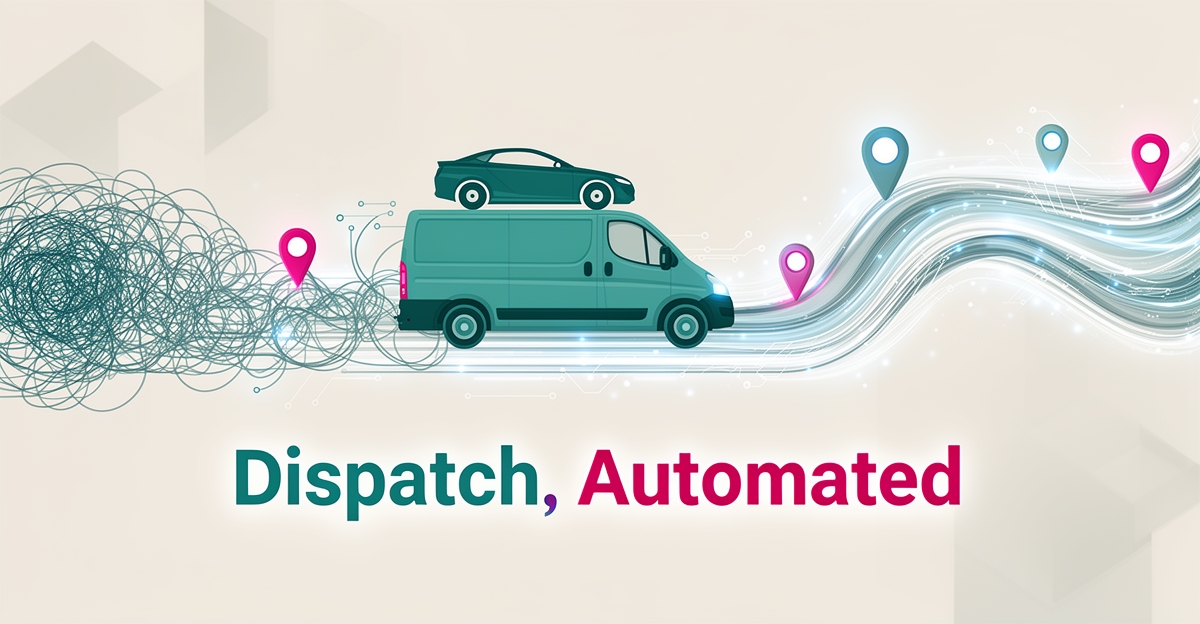
From Manual to AI: Transforming Service Dispatching in Auto Detailing
Key Facts
- Dispatchers and supervisors commonly spend 6–8 hours per week on status reporting and manual updates—time AI workflows can largely eliminate
- AI dispatch implementations in field service and logistics have reported double-digit productivity gains when rolled out with tight feedback loops
- Automated payment settlement and reconciliation can cut processing time dramatically compared to manual handling
- Industry analyses consistently find that most failed AI projects stumble on integration and process alignment, not the technology itself
- AIQ Labs has deployed 200+ multi-agent systems and runs 4 live SaaS products daily—this is proven infrastructure, not theory
Hire a team member that works 24/7 — for less than a part-time wage.
AI receptionists, SDRs, dispatchers and 99+ roles. Trained on your business, fully managed.
Not sure where to start? Ask our AI planner
The Hidden Costs of Manual Dispatching in Auto Detailing
Manual dispatching in auto detailing creates a cascade of hidden costs that silently erode profitability and customer trust. Technicians spend valuable service time chasing down job details or waiting for unclear assignments, while managers drown in spreadsheets and phone calls just to maintain basic scheduling visibility. This reactive approach turns every service day into a puzzle of misaligned resources and avoidable delays.
Administrative overhead is a major drain. Status reporting and manual updates commonly consume 6–8 hours per week for dispatchers and supervisors—time that could be spent on actual service delivery or business growth. These repetitive tasks not only inflate labor costs but also introduce human error into every step of the workflow, from incorrect job notes to missed follow-ups. Over time, these small inefficiencies compound into significant operational waste.
The result is a system where technician misallocation is common: jobs are assigned based on availability rather than proximity or skill set, leading to unnecessary travel time and underutilized expertise. Without real-time tracking, businesses lack the visibility to optimize routes or respond dynamically to delays, turning every service call into a potential bottleneck. This lack of intelligent routing directly impacts service speed and fuel efficiency, increasing costs while decreasing customer satisfaction. AIQ Labs addresses these inefficiencies through AI Workflow Builds that rebuild the dispatch loop from the ground up—automating task assignment, enabling real-time tracking, and cutting administrative burden so every vehicle is routed to the right technician at the right time.
How AI Workflows Enable Intelligent, Real-Time Service Dispatching
Manual dispatching in auto detailing is reactive by design — calls missed, routes guessed, and technicians idle while customers wait. AI-driven dispatching replaces that friction with autonomous, intent-based workflows that route, assign, and track every job in real time.
AI workflows move beyond rigid rules to goal-oriented orchestration. An AI agent verifies the booking, checks real-time technician location and availability, calculates optimal routing, assigns the job, and triggers confirmation without human hand-offs. This shift from simple automation to workflow orchestration lets service teams handle complex cases across multiple systems autonomously, 24/7.
Intelligent task routing solves the core inefficiencies of manual scheduling. Algorithms analyze proximity, skill sets, current workload, and historical performance to match the right technician to the right vehicle. Real-time GPS integration provides live visibility, while predictive signals anticipate bottlenecks from traffic or availability before they occur.
The business impact is measurable. AI dispatch implementations in logistics and field service have reported meaningful gains in user engagement, double-digit productivity boosts, and large reductions in payment settlement processing time once reconciliation is automated. As of late 2026, these results are consistent across adjacent industries—and the same mechanics translate directly to auto detailing when routing and assignment are intelligent.
Real-time tracking and transparency rebuild customer trust. Customers view live vehicle or technician location, receive automated SMS and email updates, and get proof of completion immediately. That end-to-end visibility eliminates the black box of manual dispatching and reduces status inquiries.
Effective systems combine AI agents with controlled workflows. The workflow sets guardrails and standard operating procedure — verify appointment, dispatch technician, confirm arrival, process payment — while the agent handles nuance such as rerouting for traffic or rescheduling for delays. This hybrid model ensures flexibility with auditability.
For auto detailing, intelligent dispatching means:
- Proximity-based assignment that minimizes empty miles and fuel cost
- Skill-aware matching to ensure the right detailing service is delivered correctly
- Autonomous status updates and payment processing that cut admin time
- Predictive reallocation that prevents late arrivals and protects revenue
AIQ Labs builds custom AI systems that integrate GPS tracking, payment gateways, and customer communication into a unified intelligent platform, ensuring every vehicle is scheduled, assigned, and serviced efficiently and on time. The result is faster response, higher utilization, and a dispatch operation that scales without adding headcount.
Building a Custom AI Dispatching System: From Assessment to Scale
Manual dispatching in auto detailing is a bottleneck that grows with every appointment. Teams juggle calls, calendars, and routes while customers wait for updates. A structured build process turns that chaos into autonomous, end-to-end execution.
Assessment starts with a time audit of the current dispatch loop. Track booking, assignment, confirmation, and payment reconciliation for 3–5 days to expose exact bottlenecks. Pinpointing repetitive tasks reveals where AI delivers the most value, and the audit also surfaces data quality issues that can derail adoption later.
Process mapping makes the invisible visible. Choose one workflow such as New Service Booking and map every step, decision point, and handoff between systems. Visual tools clarify where human judgment is essential and where automation can take over. Color-coding tasks — human, team, AI — creates shared clarity on ownership before any code is written.
Control points and governance are defined next. Explicitly decide which steps run fully autonomous and which require human oversight, with audit trails for every AI-driven action. This discipline matters because industry analyses consistently find that most AI projects that fail do so due to lack of integration and process alignment—not the technology itself.
Tool selection follows the map, not the hype. Choose capabilities that solve mapped problems: intent recognition for bookings, GPS integration for live technician location, and payment automation for settlement. In adjacent field service and logistics deployments, custom AI dispatch systems have driven measurable gains in engagement and settlement speed; similar results translate to detailing when routing and assignment are intelligent.
Human-AI control points are built into the workflow. The workflow sets guardrails for standard operating procedure, while an AI agent handles dynamic decisions like rerouting for traffic or rescheduling a late technician. This hybrid model preserves auditability and allows safe escalation.
Build, test, and iterate on a small scale first. Launch in one region or service type with real data, measure handling time and assignment accuracy, then refine. AI dispatch systems perform best when rolled out with tight feedback loops rather than big-bang launches.
Scaling repeats success across processes. Once booking is stable, extend the same pattern to follow-ups, payment settlement, and proactive maintenance reminders. AIQ Labs applies this assessment-to-scale methodology through AI Workflow Builds—rebuilding the one workflow that costs you the most, at a fixed price and in phases—so you connect CRM, scheduling, GPS tracking, and payment gateways into a unified dispatch fabric you own outright. For shops that want dispatch handled end-to-end without hiring, an AI dispatcher from the AI Employees lineup is another entry point.
Implementation follows a practical cadence:
- Discovery & Architecture to map processes and design integration points
- Development & Integration with existing tools via APIs
- Deployment & Training with role-specific guidance
- Optimization & Scale using performance data to improve routing and prediction
The result is intelligent task routing and real-time transparency that replaces reactive firefighting with proactive scheduling. Every vehicle gets scheduled, assigned, and serviced efficiently and on time.
Still paying for 10+ subscriptions that don’t talk to each other?
We build custom AI systems you own outright. No vendor lock-in. Full control.
Not sure where to start? Ask our AI planner
Frequently Asked Questions
How much time do dispatchers typically waste on manual status reporting and administrative tasks each week?
What measurable improvements have businesses seen after implementing AI-powered dispatching systems?
Can AI dispatching really reduce administrative overhead in auto detailing businesses?
What’s the biggest reason AI projects fail in service dispatching, and how can it be avoided?
How does AI improve technician assignment compared to manual dispatching?
What does a realistic implementation path look like for adding AI dispatching to an auto detailing business?
Ready to Replace Spreadsheets with Intelligent Dispatching?
The shift from manual to AI-driven dispatching represents more than an operational upgrade—it’s a fundamental reimagining of how auto detailing businesses allocate resources, serve customers, and scale. By replacing reactive phone calls and spreadsheet juggling with intelligent task routing, real-time GPS tracking, and autonomous workflow execution, shops can eliminate most of those weekly hours of administrative overhead while ensuring every technician is matched to the right job based on proximity and expertise. The result is a self-optimizing operation where routes adjust dynamically to traffic, customers receive proactive updates, and owners finally gain visibility into every service call. With AI dispatch implementations delivering measurable productivity gains in adjacent field service industries, the competitive advantage goes to businesses that act before these inefficiencies compound further. If you’re ready to map your current dispatch workflow and identify where intelligent automation can deliver immediate ROI, start with the two-minute Fit Check at AIQ Labs to see if a custom AI system makes sense for your operation—or book a free 30-minute strategy call directly at aiqlabs.ai/book.
Make AI your competitive advantage — not just another tool.
Strategy, implementation and ongoing optimization. One partner, end to end.
Not sure where to start? Ask our AI planner