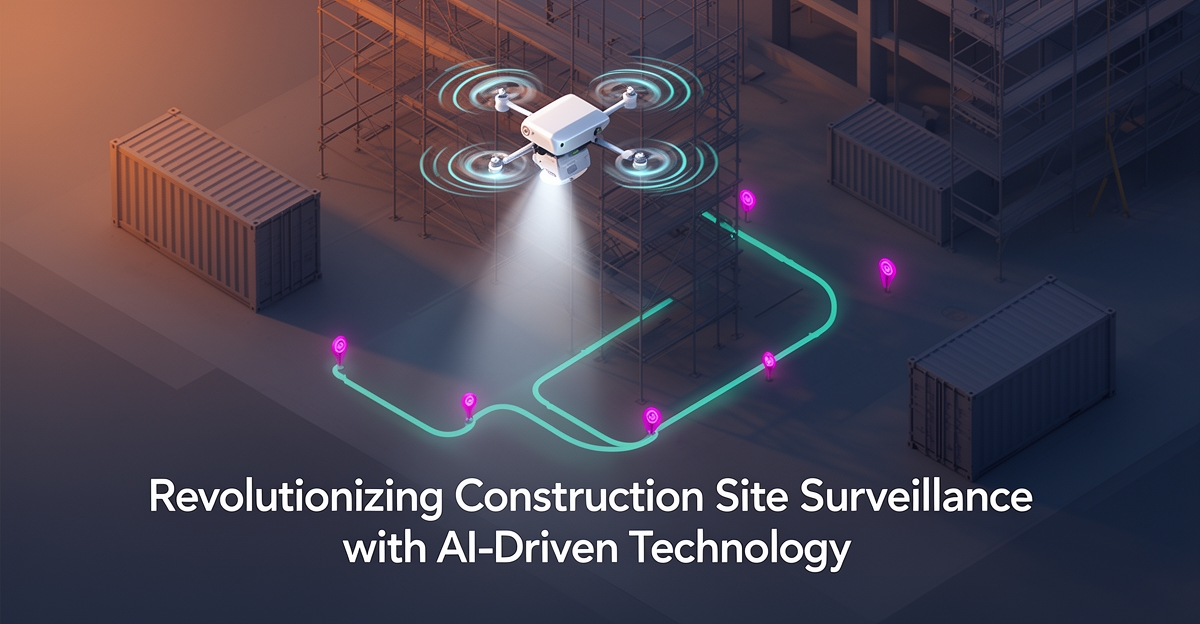
From Manual to AI: Transforming Site Patrols with Smart Monitoring and Alerts
Key Facts
- Enterprise AI agent adoption has grown sharply through 2026, with industry reporting pointing to continued large-scale expansion through 2030
- Manual site patrols create coverage gaps between scheduled rounds, leaving sites exposed during off-hours or high-risk periods
- Human reporting delays in manual patrols mean incidents are logged after the fact, not prevented in real time
- Administrative overhead from paper logs and shift handoffs consumes guard time in traditional patrols
- AIQ Labs helps construction security firms automate patrol schedules and reduce blind spots through AI Workflow Builds and managed AI Employees
- Real-time alerts replace end-of-shift reports and shrink response time in AI-driven site monitoring systems
Hire a team member that works 24/7 — for less than a part-time wage.
AI receptionists, SDRs, dispatchers and 99+ roles. Trained on your business, fully managed.
Not sure where to start? Ask our AI planner
The Cost of Manual Patrols on Construction Sites
Manual site patrols feel reliable until you measure what they actually cost. Construction security teams still rely on scheduled walk-throughs, paper logs and radio check-ins, and the gaps between those moments are where risk accumulates.
Traditional patrols are time-consuming and prone to human error. Guards follow fixed routes on fixed schedules, creating predictable blind spots and long intervals without coverage. Fatigue, distractions and staffing shortages compound the problem, making consistent real-time awareness difficult to maintain across large or multi-site operations.
The comparison between approaches is stark. Manual site patrols remain easy to implement, but they are time-consuming and prone to human error. AI-driven route planning and alert systems improve safety and efficiency, though they require a real investment in technology and process change. That investment calculus is shifting as adoption accelerates across physical operations.
Enterprise AI agent deployment has scaled rapidly through 2026. Industry reporting from major security vendors suggests the number of active AI agents in enterprises has moved from the tens of millions into a trajectory of billions by 2030. The same momentum is moving into physical operations, where agents can plan multi-step tasks, decide which tools to invoke, and execute actions on behalf of the user.
Manual patrols create three persistent cost drivers for construction security firms:
- Coverage gaps between scheduled rounds leave sites exposed during off-hours or high-risk periods
- Human reporting delays mean incidents are logged after the fact, not prevented in real time
- Administrative overhead from paper logs, route verification and shift handoffs consumes guard time
These inefficiencies are not just operational. They translate into delayed incident response, inconsistent compliance documentation and higher labor costs to maintain the same level of perceived coverage.
AIQ Labs helps construction security firms automate patrol schedules, send real-time alerts, and reduce blind spots through production-ready AI workflows. The shift moves security from reactive checks to continuous, data-driven monitoring where routes adapt to site activity, risk zones and live events.
Automation also changes how teams work. Instead of spending hours on repetitive walk-throughs, guards can focus on verification, intervention and exception handling. That reallocation improves morale and reduces fatigue-related errors.
The move from manual to AI-driven patrols is about visibility. Real-time coverage, intelligent routing and instant alerts replace the hope that a scheduled round happened on time and was thorough enough.
How AI-Driven Route Planning and Alerts Reduce Blind Spots
AIQ Labs automates patrol schedules by analyzing site layouts, risk zones, and historical incident data to generate optimized routes that minimize blind spots and maximize coverage efficiency. Production-ready AI workflows enable real-time adjustments based on changing conditions, ensuring patrols remain effective even as site dynamics evolve. This approach transforms static, repetitive routes into intelligent, adaptive monitoring systems that reduce human oversight gaps.
By integrating AI-driven alerts, security teams receive immediate notifications when anomalies are detected—such as unauthorized access, equipment tampering, or safety hazards—allowing for rapid response before incidents escalate. These alerts are triggered by AI agents trained to recognize patterns indicative of risk, leveraging multimodal inputs from cameras, sensors, and access logs. The system continuously learns from new data, improving detection accuracy over time and reducing false positives that can lead to alert fatigue.
This capability reflects a broader trend: as of late 2026, AI agents are increasingly trusted to handle complex, real-time decision-making tasks like route optimization and threat detection—capabilities now being applied to site safety and security operations. The same pattern-recognition strength that lets AI agents surface subtle issues in digital environments transfers directly to spotting safety or security blind spots in physical ones.
The result is a measurable improvement in both safety and operational efficiency: fewer missed inspections, faster incident response, and reduced reliance on manual scheduling and supervision. Security personnel are freed from rote patrol duties to focus on intervention, investigation, and preventive strategy—shifting their role from passive observers to active safety leaders. AIQ Labs supports this transition through end-to-end AI workflow integration, ensuring systems are not only deployed but continuously optimized for evolving site needs.
For construction security firms seeking to eliminate blind spots without increasing headcount, AIQ Labs offers a production-ready path forward—where AI doesn’t replace human judgment but amplifies it through smarter routing, faster alerts, and relentless vigilance. To explore how AI-driven route planning and real-time alerts can transform your site patrols, start with the two-minute Fit Check at aiqlabs.ai/apply, then schedule your free 30-minute strategy call.
Securing and Scaling AI Agents for Site Operations
Deploying AI agents for site patrols introduces new security considerations that extend beyond traditional software protection. Modern agents can plan multi-step tasks, decide which tools to invoke, and execute actions on behalf of users—which makes the trust boundary between agents and their tools a critical vulnerability point. A malicious actor who can modify a tool description can influence agent behavior, so this boundary requires careful architectural design to prevent unauthorized tool manipulation while maintaining operational flexibility.
Supply chain governance emerges as an essential companion to trust boundary management, particularly for construction security firms integrating third-party APIs and data sources. Maintaining an inventory of approved publishers, reviewing tool descriptions during security review, and requiring documented ownership for third-party servers are foundational practices for securing agentic workflows. These controls help prevent compromised tools from entering the operational environment, which is especially vital when AI agents access real-time site data, equipment sensors, or incident reporting systems.
For construction security applications, securing AI agents involves implementing validation layers that verify every action before execution, establishing role-specific guardrails that limit capabilities, and maintaining comprehensive audit trails for compliance review. AIQ Labs incorporates these security principles into its patrol automation systems, ensuring that AI-driven route planning and alert generation remain trustworthy even as they scale across multiple sites and shifts. This security-first approach enables construction firms to harness AI's efficiency gains while protecting against the unique risks posed by autonomous decision-making systems in field operations.
Implementation Roadmap: From Manual to AI Patrols
Manual patrols cost time and leave dangerous gaps. Construction security teams can move from clipboard rounds to continuous, intelligent coverage with a structured rollout.
Start with a current-state audit of routes, blind spots, and alert latency. Map where guards spend time, where incidents cluster, and which manual handoffs create delay. This baseline defines the automation targets and success metrics for the AI workflow.
Automate patrol schedules with AI-driven route planning. AIQ Labs helps construction security firms automate patrol schedules, send real-time alerts, and reduce blind spots—typically starting with a single high-cost workflow rebuilt at a fixed price through AI Workflow Builds. Dynamic routing adjusts to site changes, weather, and risk heatmaps instead of fixed loops.
Integrate sensors, cameras, and wearables into a unified alert layer. The system correlates motion, geofence breaches, and anomaly signals, then triggers tiered notifications to the right responder. Real-time alerts replace end-of-shift reports and shrink response time.
Deploy managed AI Employees for dispatch and monitoring. An AI Dispatcher can receive alerts, verify context, log incidents, and coordinate human guards around the clock—part of the AI Employees model, where managed AI staff handle real job roles at a fraction of the cost of a human hire.
Establish governance before scale. The trust boundary between AI agents and their tools is a critical consideration: a threat actor can modify a tool description to influence an agent's behavior. Maintain an inventory of approved publishers, review tool descriptions during security review, and require a documented owner for any third-party server.
Scale adoption with training and feedback loops. Teams need clear escalation rules, human-in-the-loop controls for critical decisions, and simple dashboards for daily use. Continuous monitoring improves route efficiency and alert accuracy over time. For firms running patrols across many sites, an AI Operating System can eventually connect monitoring, dispatch, and reporting into one owned operating layer.
The roadmap typically follows these practical steps:
- Audit manual patrols and map risk zones, handoffs, and data sources
- Pilot AI-driven route planning and real-time alerting on a single site zone
- Integrate alerts with existing radios, SMS, and dispatch tools via API workflows
- Implement supply chain governance and audit trails for agent actions
- Expand to full site coverage and add AI Employee roles for 24/7 monitoring
Enterprise adoption is accelerating. Industry reporting as of late 2026 points to AI agent deployment in enterprises growing from the tens of millions toward the billions by 2030, with momentum moving into physical operations like route optimization and threat detection. Guidance on reducing manual safety patrols in large facilities shows the same operational value: moving from scheduled walks to intelligent monitoring.
Still paying for 10+ subscriptions that don’t talk to each other?
We build custom AI systems you own outright. No vendor lock-in. Full control.
Not sure where to start? Ask our AI planner
Frequently Asked Questions
How much time do manual site patrols actually waste on construction sites?
Can AI really reduce blind spots compared to guards on fixed routes?
Are AI agents secure enough to handle real-time site alerts and dispatch?
Is AI for site patrols a niche trend or is adoption actually scaling?
What’s the first step to move from clipboard rounds to AI-driven patrols?
Will AI replace security guards on construction sites?
From Gaps to Guarded: The Future of Site Security
Manual patrols have long been the backbone of construction site security, but their limitations—coverage gaps, delayed reporting, and administrative overhead—now create avoidable risks and costs. AI-driven route planning and real-time alerts transform this model by enabling adaptive, continuous monitoring that reduces blind spots and accelerates incident response. By automating routine patrols, security teams can shift from passive observation to proactive intervention, improving both safety and operational efficiency. AIQ Labs supports this transition with production-ready AI workflows that integrate with your existing tools, ensuring AI enhances human judgment rather than replaces it. To see how intelligent monitoring can eliminate blind spots without increasing headcount, start with a two-minute Fit Check to assess your current workflows and identify high-impact automation opportunities. Complete the Fit Check here and take the first step toward smarter, more resilient site security.
Make AI your competitive advantage — not just another tool.
Strategy, implementation and ongoing optimization. One partner, end to end.
Not sure where to start? Ask our AI planner