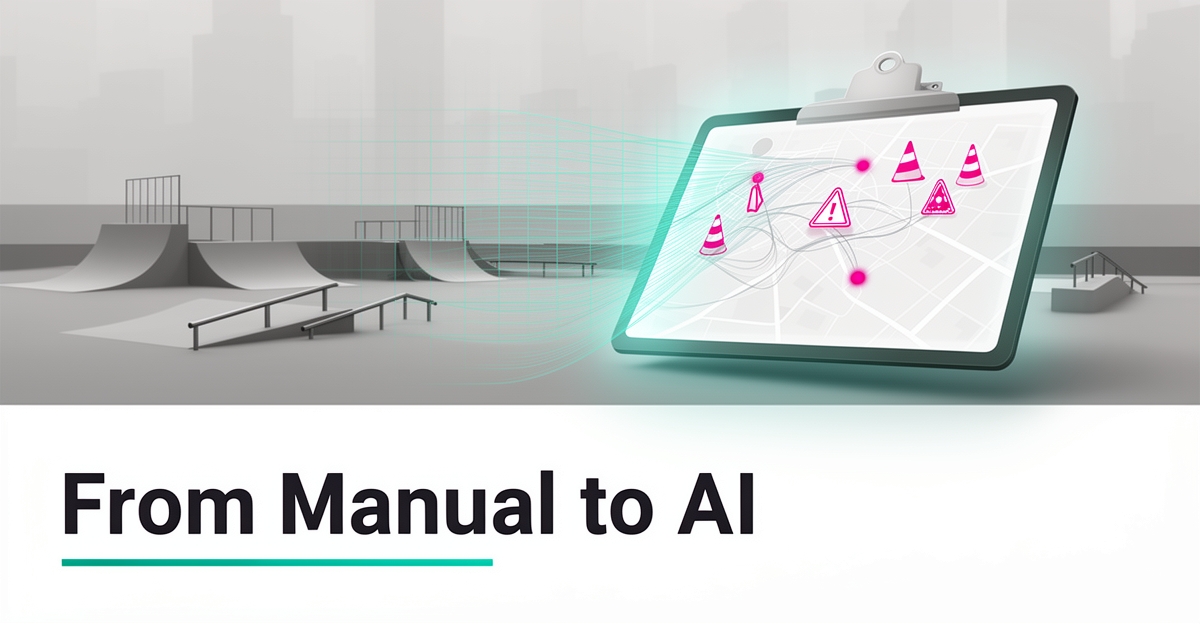
From Manual to AI: Transforming Skate Park Safety Reporting
Key Facts
- Paper incident logs fragment your safety record: lost forms, incomplete injury logs, and missed hazard patterns weaken both oversight and legal defensibility.
- AI document processing can scan incident forms, extract structured data, and flag recurring hazard zones without manual data entry.
- Auditable AI systems need immutable timestamps, role-based access, and explainable outputs to hold up under legal or regulatory review.
- AIQ Labs has deployed 200+ multi-agent systems and runs 4 live SaaS products daily—this is production experience, not theory.
- You don't need an enterprise budget: a single workflow can be rebuilt at a fixed price, then expanded in phases you own outright.
Hire a team member that works 24/7 — for less than a part-time wage.
AI receptionists, SDRs, dispatchers and 99+ roles. Trained on your business, fully managed.
Not sure where to start? Ask our AI planner
The Hidden Cost of Paper-Based Incident Reporting
Skate park operators face significant operational and legal risks when relying on paper-based incident reporting. Lost forms, incomplete injury logs, and missed hazard patterns create fragmented documentation that undermines safety oversight and weakens compliance trails. This isn't just an administrative burden—it's a liability waiting to happen.
Manual reporting struggles to capture the full context of incidents, making it difficult to identify recurring hazards or track trends over time. Without a centralized, searchable system, critical details slip through the cracks, leaving operators exposed when questions arise about duty of care or negligence. In legal proceedings, the absence of a clear, auditable trail can shift focus from prevention to accountability gaps.
Successful AI adoption in any organization typically requires aligned strategy, data, architecture, security, and governance—elements almost always missing in paper-based workflows. Without that foundation, even well-intentioned automation fails to deliver value or mitigate risk. For skate parks, this means patchy records and delayed responses to emerging safety concerns.
The fix is a connected system: data flowing from form scanning to hazard flagging to compliance updates, giving real-time oversight and faster intervention. Built with transparency and explainability, this kind of system keeps every action auditable and aligned with safety goals—moving beyond reactive logging to continuous risk awareness.
AIQ Labs builds systems that embody this principle through AI Workflow Builds: AI-powered reporting tools that scan forms, extract data accurately, and maintain secure, searchable records. These solutions reduce administrative overhead while strengthening the documentation backbone essential for both daily operations and legal defensibility. By grounding safety reporting in structured, accessible data, skate park operators gain clearer insight into patterns that might otherwise go unnoticed.
From Isolated Logs to Connected Safety Intelligence
Paper incident logs sit in binders, disconnected from one another, creating blind spots that delay risk response and obscure safety patterns. This fragmented approach turns valuable data into static records instead of actionable intelligence. To close this gap, AIQ Labs transforms skate park safety reporting by deploying connected AI agents that scan incoming forms, extract structured details like injury type and location, flag recurring hazard zones, update compliance audit trails in real time, and trigger instant alerts to park managers—all without manual intervention.
This shift moves isolated automation into a dynamic ecosystem of collaborating AI components working in sync to learn, adapt, and optimize continuously. Rather than replacing human oversight, the system augments safety staff by eliminating tedious data entry so they can focus on proactive risk mitigation and direct supervision—turning reactive paperwork into a living safety intelligence network.
The operational upside is straightforward: faster incident response, clearer hazard visibility, and reduced administrative burden—all while maintaining a secure, auditable trail that supports compliance and liability protection. Documentation-heavy, risk-sensitive operations like parks and recreation are exactly where this kind of automation pays off fastest, because the cost of a missed pattern isn't measured in dollars—it's measured in injuries. By orchestrating data extraction, risk detection, and alerting into a unified flow, AI doesn't just record safety events—it helps prevent them.
Augmenting Staff, Not Replacing Them
Public skepticism about AI is real, and it starts with the fear of being replaced. That anxiety shows up in parks and recreation, where safety staff worry automation means fewer eyes on the deck. The honest answer: safety AI works when it is framed as augmentation, not replacement. Supervisors remain the decision-makers; AI handles the repetitive capture and correlation that currently pulls them off the floor. The role shifts from paperwork to oversight.
Freeing staff from manual logs changes what supervision looks like. When incident forms, injury logs, and compliance tracking are scanned, extracted, and flagged automatically, supervisors gain time for direct observation, coaching, and hazard mitigation. And scaling AI successfully still requires the right strategy, data, architecture, security, and governance—aligned with actual business goals, not bolted on afterward.
Augmentation means designing workflows where humans set the rules and AI executes the routine. In practice this looks like:
- AI scans paper or digital incident forms and extracts data into a secure safety record
- Supervisors review flagged hazards and decide on corrective actions, not data entry
- Compliance reports generate automatically with auditable trails for legal exposure
- Staff act as conductors, validating AI outputs and ensuring responsible outcomes
Trust is built through transparency and control. Connected AI systems amplify human judgment when data flows, decisions, and actions stay synchronized across people, processes, and technology. Secure and ethical AI governance—transparency, bias mitigation, explainability, and continuous monitoring—each play critical roles in keeping the system trustworthy.
AIQ Labs builds custom AI document processing systems that capture safety records accurately and store them securely, reducing risk and legal exposure while keeping staff in control of safety decisions. If your park also needs front-line coverage—reception, dispatch, member outreach—AI Employees handle those roles at roughly 80% less cost than a human hire, freeing your team for the work that actually requires a human.
Governance, Auditability, and Legal Protection
When an incident occurs at a skate park, the safety report isn't just paperwork—it can become critical evidence in legal proceedings. For AI systems handling these records, transparency isn't optional; it's a necessity for auditability and trust. Every data point, from extraction to storage, must be traceable and explainable to withstand scrutiny, turning governance into a liability shield rather than a source of risk.
A robust governance framework for AI-driven safety reporting requires specific, measurable controls:
- Immutable audit trails for all AI actions and human interventions, with timestamps and user attribution
- Bias detection and mitigation in hazard identification logic, so risk assessments stay consistent across all park areas and user demographics
- End-to-end encryption and role-based access controls protecting sensitive incident information from tampering
- Continuous performance monitoring with automated anomaly alerts, so drift or errors are caught before they compromise record integrity
- Explainable AI outputs for clear rationale behind every flag
These elements work together to create a system where safety logs are not just accurate, but demonstrably reliable under examination. For organizations building custom AI systems for safety compliance, embedding these governance principles from the outset transforms the technology from a potential risk into a proven asset. When safety records are transparent, auditable, and continuously monitored, they provide a defensible foundation for incident response and regulatory compliance—and they directly answer public skepticism about AI by ensuring the system augments, rather than obscures, human oversight and accountability.
Implementing AI Safety Reporting Without the Enterprise Price Tag
The biggest misconception about AI safety reporting is that it requires an enterprise budget and a six-month consulting engagement. It doesn't. Small and mid-sized skate park operators can implement a working system by following a disciplined, phased path—and structure matters more than the technology itself.
Organizations that struggle to scale value from AI typically lack aligned strategy, data, architecture, security, and governance. For a skate park, that translates into three practical steps before any AI is deployed.
- Run a readiness assessment. Map your current incident forms, injury logs, and compliance records. Identify where data lives today and who touches it.
- Digitize everything into a single structured system. A unified data strategy means breaking down silos—paper forms, spreadsheets, and email alerts won't feed an AI reliably.
- Define what "good" looks like. Decide which hazards should trigger alerts, who receives them, and how the audit trail should be maintained.
Once the foundation is set, implementation should be phased rather than big-bang. Start with one workflow—scanning incident forms and extracting data into a structured log. Prove accuracy there, then layer on hazard flagging and automated compliance tracking. Individual AI components—form scanning, risk flagging, audit updates, notifications—should work in synchronization rather than isolation, and phased rollout lets you validate each connection before adding the next. This is exactly how AIQ Labs approaches workflow builds: rebuild the one workflow that costs you the most, at a fixed price, in phases.
One caution: keep humans in the loop. Your staff should become "AI conductors"—guiding the system's output rather than being replaced by it. The AI handles data entry and flagging; your team makes the safety decisions.
Ownership is the final piece. Avoid subscription models that lock your safety records inside a vendor's platform. AIQ Labs builds custom document-processing systems that scan forms, extract data, and flag hazards—systems clients own outright, with full control over the code and data. Flexible engagement models—Start Monthly, Build in Milestones, and Own It Outright, detailed on the pricing page—let operators match the investment to their stage: prove value with a single workflow first, then expand toward a full AI Operating System when the time is right.
The entry point is simple. Complete the two-minute Fit Check at aiqlabs.ai/apply, then book a free 30-minute strategy call at aiqlabs.ai/book. It's a working session with an AI engineer—not a sales pitch—and if there isn't a clear win for your park, they'll tell you that too.
Turn Incident Reports Into Your Strongest Safety Asset
Paper-based incident reporting doesn't just slow you down—it creates gaps in your safety oversight and weakens your legal protection when it matters most. By moving to an AI-powered system that scans forms, flags hazards, and maintains audit-ready records, you transform reactive paperwork into proactive risk management. The shift isn't about replacing your team; it's about giving them back the time to focus on supervision and prevention while AI handles the documentation grind. AIQ Labs builds custom safety reporting systems that skate park operators own outright—no subscription traps, no vendor lock-in, and no invented numbers. The path forward starts with understanding your specific workflow. Take the two-minute Fit Check at aiqlabs.ai/apply, then book a free 30-minute strategy call at aiqlabs.ai/book to map out whether AI safety reporting makes sense for your park—and if it doesn't, we'll tell you.
Make AI your competitive advantage — not just another tool.
Strategy, implementation and ongoing optimization. One partner, end to end.
Not sure where to start? Ask our AI planner