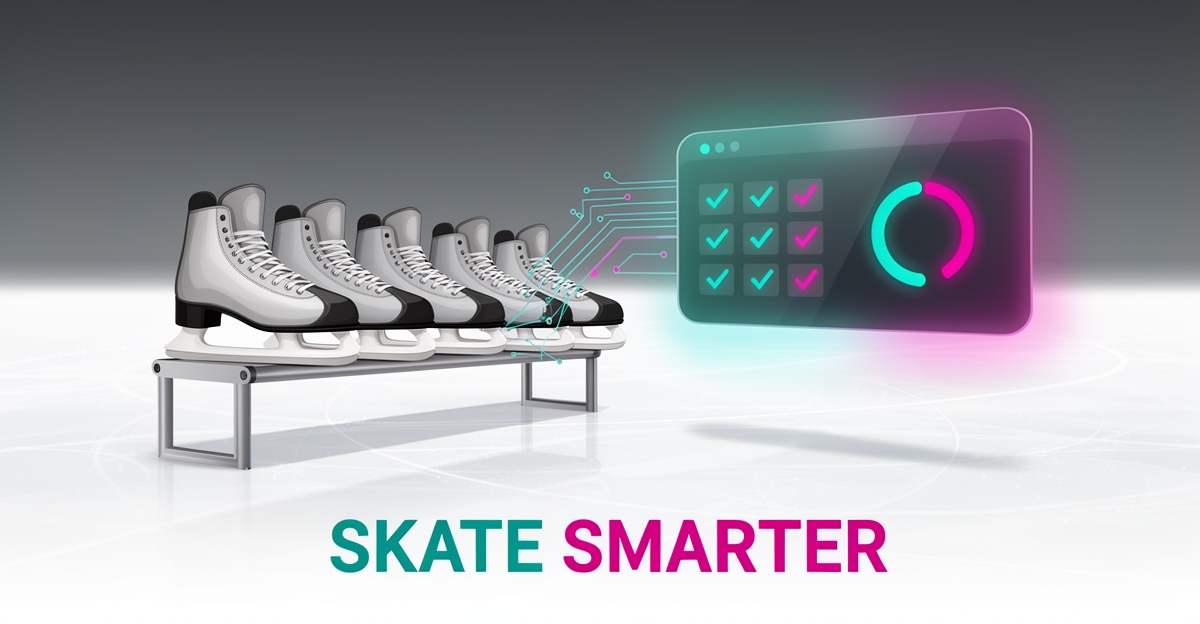
From Manual to AI: Transform Skate Rental and Equipment Management at Your Rink
Key Facts
- Manual check-ins, paper logs, and disconnected trackers are the biggest sources of lost margin at busy rinks
- AIQ Labs has deployed 200+ multi-agent systems and runs 4 live SaaS products daily
- AI Employees typically cost around 80% less than an equivalent human hire while working 24/7/365
- AIQ Labs builds in phases with fixed pricing—you own every system outright
- Every engagement starts with a 2-minute Fit Check and a free 30-minute strategy call
Hire a team member that works 24/7 — for less than a part-time wage.
AI receptionists, SDRs, dispatchers and 99+ roles. Trained on your business, fully managed.
Not sure where to start? Ask our AI planner
The Hidden Costs of Manual Rink Operations
Manual skate rental feels fast until the errors pile up. Every missed scan, lost pair, and delayed repair quietly erodes margin and staff morale.
Rink teams juggle check-ins, sizing, inventory counts, and maintenance logs during peak sessions. Human error in check-ins creates duplicate rentals, lost equipment, and billing disputes that frustrate guests. Staff spend valuable time reconciling paper logs with point-of-sale records, leaving less time for guest service.
Inventory inaccuracies compound quickly when skates move between rental windows, storage, and repair. Without real-time visibility, popular sizes sell out while slow-moving pairs sit idle, and damage goes unrecorded until the next shift. Companies that succeed with automation are the ones that align data, systems, and accountability with clear business goals—rink operations are no different.
Delayed maintenance tracking is a hidden cost driver. A skate returned with a loose blade or worn wheels may be reissued, increasing liability risk and shortening asset life. Unstructured notes on equipment condition sit in separate systems, making trends invisible until a costly failure occurs. This fragmentation is the same data-silo problem that stalls automation projects in every industry: when records live in disconnected tools, no one sees the full picture.
The operational drag shows up in staff time and lost revenue. Teams repeat manual data entry across rental, inventory, and maintenance tools, increasing error rates and overtime. Customer experience suffers when wait times rise and equipment quality drops—and inconsistent service is what drives guests to other rinks or activities.
Manual processes also create accountability gaps. When records are messy and ownership unclear, problems get discovered late and fixed expensively. Any operation moving toward automation needs clear oversight from day one, and that starts with clean, connected records.
Common pain points that drain rink operations include:
- Human error in check-ins leading to misallocated skates and billing disputes
- Inventory inaccuracies from disconnected rental, storage, and repair tracking
- Delayed maintenance tracking that hides equipment wear until failure
- Staff time lost to manual reconciliation instead of guest engagement
These frictions are not unique to rinks; they are part of a broader productivity challenge. The gains from automation accrue when repetitive, error-prone work is handed to systems that never get tired or distracted.
Moving from isolated tasks to connected intelligence changes the equation. AIQ Labs designs custom AI systems that integrate with existing rink operations—automating rental check-ins, inventory tracking, and equipment log management to cut errors and save staff time, with full ownership staying in your hands. Explore how this works across our AI Workflow Builds and AI Operating Systems.
How Agentic AI Creates Connected Intelligence for Rink Operations
The shift from manual processes to AI-driven operations isn't just about replacing tasks—it's about creating a system that learns and adapts. For ice rinks managing skate rentals and equipment, this means moving beyond isolated automation toward a truly connected workflow, where specialized AI agents collaborate to optimize operations in real time.
Imagine a rental check-in where an AI agent verifies customer details and skate availability instantly, while another agent simultaneously updates inventory levels and flags any maintenance needs from the previous use. This isn't sequential processing—it's parallel, coordinated action. When a helmet is returned with a cracked shell, one agent logs the damage, another adjusts available stock, and a third triggers a maintenance ticket—all without manual intervention. This level of coordination reduces errors and saves staff time previously spent on reconciliations and manual logs. To scale such systems successfully, strategy, data, architecture, security, and governance must align with business goals—that alignment is critical for unlocking AI's full potential.
Building this connected intelligence requires a strong foundation. A unified data strategy breaks down silos between rental systems, inventory trackers, and maintenance logs, enabling AI agents to access a single source of truth. Techniques like Retrieval-Augmented Generation (RAG) can transform unstructured notes on equipment condition into actionable insights. Simultaneously, AI-optimized infrastructure ensures the system can handle real-time processing demands, while secure governance frameworks protect customer data and ensure decisions—like flagging unsafe gear—are transparent and auditable. Without these elements, even the most advanced agents cannot function effectively or safely within the rink's operational ecosystem.
Building Your AI Foundation: Data, Integration, and Governance
Building a reliable AI foundation starts long before the first line of code is written. For ice rinks looking to automate skate rental and equipment management, success hinges on unifying fragmented data sources, ensuring the underlying infrastructure can support AI workloads, and establishing clear governance from day one. Without this groundwork, even the most advanced AI tools risk becoming isolated experiments that fail to scale or deliver lasting value.
The first critical step is breaking down data silos between point-of-sale systems, inventory trackers, and maintenance logs. A unified data strategy transforms disconnected records into a single source of truth that AI agents can act upon. For a rink, this means integrating rental timestamps, equipment condition notes, and usage patterns into a cohesive dataset—enabling capabilities like predictive maintenance or real-time inventory alerts. Frameworks such as Retrieval-Augmented Generation (RAG) further enhance this by converting unstructured inputs, like handwritten damage reports, into actionable intelligence.
Equally important is deploying AI-optimized infrastructure capable of handling continuous data processing and agent orchestration. This includes sufficient compute power, low-latency data pipelines, and scalable storage to support real-time workflows—such as instantly flagging a returned skate for repair while updating available stock. Organizations that align the right architecture with their business goals are far more likely to achieve measurable productivity gains. Skimping on this foundation often leads to bottlenecks that undermine performance and user trust.
Finally, secure and ethical AI governance must be embedded from the outset to protect sensitive customer and operational data. This involves implementing transparency measures, bias checks, explainable decision logs, and continuous monitoring—especially when AI systems influence rental eligibility or maintenance scheduling. Establishing clear policies early avoids the governance gaps that stall many automation projects. When data, infrastructure, and governance work in concert, AI doesn't just automate tasks—it creates a connected intelligence ecosystem where rental check-ins, inventory updates, and equipment logs evolve in sync, learning and optimizing over time. This is the bedrock for moving beyond isolated automation toward a resilient, self-improving operational model.
Your Action Plan: From Pilot to Full Transformation with AIQ Labs
The journey from manual processes to AI-powered efficiency begins with a single, targeted fix. Start by automating your most time-consuming workflow—like rental check-in—where AI can immediately reduce errors and free up staff for higher-value interactions. This focused approach lets you prove value quickly while building the foundation for broader transformation. That's exactly what our AI Workflow Builds are designed for: rebuild the one workflow that costs you the most, at a fixed price, in phases.
From there, expand to department-wide integration, connecting inventory tracking, equipment logs, and maintenance scheduling into a unified system. AIQ Labs' engagement models guide this progression, ensuring each phase delivers measurable ROI before scaling to the next level. Whether you start monthly, build in milestones, or own it outright, you retain full ownership of every system we develop together.
As your rink evolves, this phased roadmap scales toward a complete AI-operated environment where workflows don't just run—they learn and optimize. By aligning strategy, data, architecture, security, and governance with your business goals, you position your operation for smarter, more resilient operations. This isn't just about automation; it's about creating a connected operation where every rental, return, and repair contributes to better decisions. AIQ Labs has deployed 200+ multi-agent systems and runs 4 live SaaS products daily—this is work we do every day, not a theory. And if your front desk or rental counter needs help first, our AI Employees can handle reception, dispatch, and rental coordination at roughly 80% less cost than an equivalent human hire.
Your Rink's Next Season Starts with a Single Automated Workflow
Manual skate rental and equipment management quietly drain margin through errors, lost inventory, delayed maintenance, and staff hours lost to reconciliation. The path forward isn't a single tool—it's connected intelligence: unified data, AI-optimized infrastructure, and sound governance working together so check-ins, inventory updates, and repair logs evolve in sync. That alignment is what separates AI experiments that stall from systems that deliver lasting value. You don't need to transform everything at once. Start with your most painful workflow—likely rental check-in—prove the ROI, then expand into inventory and maintenance integration. AIQ Labs builds custom AI systems that rinks own outright, with payment models that let you start monthly, build in milestones, or own it from day one. The easiest first step costs nothing: take the two-minute Fit Check at aiqlabs.ai/apply, then book a free 30-minute strategy call where we'll map your biggest bottleneck and identify your highest-ROI automation opportunity. If there isn't a clear win, we'll tell you that too.
Make AI your competitive advantage — not just another tool.
Strategy, implementation and ongoing optimization. One partner, end to end.
Not sure where to start? Ask our AI planner