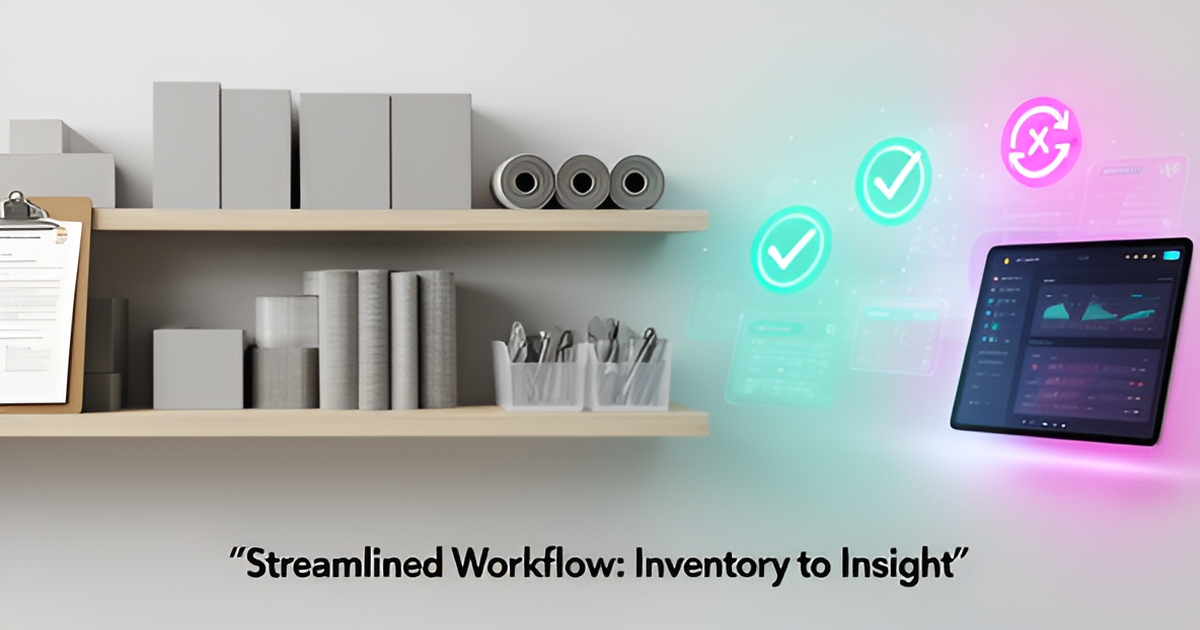
From Manual to AI: Transforming Studio Inventory and Materials Tracking
Key Facts
- Manual tracking typically carries a 1% to 2% error rate that compounds across hundreds of transactions.
- Lack of trust in manual data commonly forces small shops to carry 10% to 20% extra inventory as a safety buffer.
- Hidden costs stack up across four categories: labor for stock counts, stockout delays, error correction, and overstock carrying costs.
- AI-powered OCR can process material certificates in seconds rather than minutes, eliminating hours of manual entry each week.
- AIQ Labs has deployed 200+ multi-agent systems and runs four live SaaS products daily — this is production-grade automation, not a prototype.
Hire a team member that works 24/7 — for less than a part-time wage.
AI receptionists, SDRs, dispatchers and 99+ roles. Trained on your business, fully managed.
Not sure where to start? Ask our AI planner
The Hidden Cost of Manual Material Tracking in Studios
The transition from manual to automated material tracking represents one of the most significant shifts in operational efficiency for studios and small manufacturers. While manual methods like clipboards and spreadsheets have long been the standard, they come with substantial hidden costs that can stifle growth and profitability.
Industry analyses consistently point to the same four cost categories: labor for stock counts, revenue lost to stockout delays, time spent correcting errors, and carrying costs on overstock. For small operations, these combined losses typically run into the thousands per year. What looks like a simple administrative task is actually a significant financial drain.
The root of the problem lies in the inherent unreliability of manual systems. Manual tracking typically has an error rate of 1% to 2%, which might seem small but compounds quickly across hundreds of transactions. This lack of trust in data leads many businesses to carry 10-20% extra inventory as a safety buffer, tying up capital that could be better used elsewhere. For pottery studios managing clay supplies, glazes, and kiln schedules, this means either risking stockouts during critical production periods or wasting resources on excess materials.
The impact extends beyond just financial costs. Manual tracking creates what experts call a "data black box"—a murky process where the details behind inventory movements become obscured. When quality issues arise or materials run short, tracing the problem through scattered paper records can take days. This delay is particularly costly in studio environments where production schedules are tight and materials like specific clay bodies or glaze chemicals have limited shelf lives.
AIQ Labs addresses these challenges through [AI Workflow Builds](/workflow-builds) — we rebuild the one workflow that costs you the most, at a fixed price, in phases. By implementing AI-driven tracking, studios can achieve near-perfect accuracy and real-time visibility into their inventory. Documented deployments across manufacturing have shown certificate-reading tasks that once took hours compressed into seconds, and inventory management time cut dramatically once manual methods were replaced.
The benefits of automation extend to waste reduction and improved decision-making. With real-time inventory updates, studios can make better commitments to customers, leading to fewer short-shipments and last-minute material re-purchases. The hyperautomation market has grown steadily through the mid-2020s, reflecting the widespread recognition of these benefits across industries.
For pottery studios specifically, the transition from manual to automated tracking means no more guessing about clay inventory levels or kiln usage patterns. Instead of relying on memory or outdated spreadsheets, studio managers can access accurate, up-to-date information that helps prevent stockouts and reduce waste. This shift from periodic snapshots to continuous, real-time data transforms decision-making and operational efficiency.
The hidden costs of manual tracking are clear: labor expenses, error correction, stockout delays, and excess inventory all eat into profitability. By contrast, automated systems offer a path to significant savings and improved operations. The question isn't whether studios can afford to automate, but whether they can afford not to.
How AI Automation Delivers Real-Time Accuracy and Traceability
Manual tracking of clay and kiln materials often relies on handwritten logs and paper certificates, creating delays and blind spots that disrupt studio workflows. This approach leads to inconsistent data, with error rates typically between 1% and 2%, forcing studios to carry 10% to 20% extra inventory as a safety buffer. The hidden costs add up quickly through labor for stock counts, stockout delays, error corrections, and overstock carrying costs.
AI-powered automation transforms this process by delivering near-perfect accuracy and real-time visibility. Tools using OCR can extract data from material certificates in seconds, eliminating hours of manual entry each week. Manufacturers that have adopted AI-assisted certificate reading and automated inventory reconciliation routinely report double-digit hours saved monthly — time that returns directly to production work.
- OCR scans and validates clay batch certificates instantly
- Barcode/RFID tags provide live updates on kiln usage and stock levels
- Automated logs create an immutable audit trail for every material lot
These capabilities ensure full traceability—linking each clay shipment to its origin, properties, and kiln firing history—while preventing stockouts through continuous, reliable data. Studios gain the confidence to commit to production schedules knowing materials are tracked in real time, reducing waste and avoiding last-minute repurchases. By integrating these AI workflows with existing inventory systems, AIQ Labs helps studios turn guesswork into certainty, one batch at a time.
Practical Steps to Transition Your Studio to AI-Driven Tracking
Many pottery studios still rely on manual logs and spreadsheets to track clay, glazes, and kiln schedules, a process that drains time and invites costly errors. This approach not only slows daily operations but also creates hidden financial drains that impact profitability.
For studios, the inefficiencies manifest as wasted clay, rushed reorders, and disrupted production timelines. The error rate in manual systems typically falls between 1% and 2%, meaning even diligent tracking accumulates inaccuracies over time.
To begin the shift, identify your biggest pain point—often material receipts or batch records stored in disorganized files. An AI-powered document extraction workflow can process certificates and delivery notes in seconds with near-perfect accuracy, turning hours of manual entry into moments of automated validation. This immediate relief builds confidence for broader automation.
Next, digitize physical inventory using barcodes or RFID tags on clay bins and glaze containers, replacing handwritten logs with real-time stock visibility. Studios that automate counting and replenishment typically reclaim the majority of the time previously spent on these tasks, freeing staff for creative work. Finally, integrate the tracking system with existing studio management tools to create a single source of truth for material usage, kiln cycles, and cost analysis.
AIQ Labs supports this transition through [AI Workflow Builds](/workflow-builds) and, as tracking needs grow, a connected [AI Operating System](/ai-operating-systems) built in phases and owned outright. For studios that want managed AI staff handling ordering, scheduling, and supplier follow-ups, [AI Employees](/ai-employees) cover 99+ roles at a fraction of a human hire's cost. By following this phased approach—start small, prove value, then scale—studios transform guesswork into precision, reducing waste and preventing disruptive stockouts.
Still paying for 10+ subscriptions that don’t talk to each other?
We build custom AI systems you own outright. No vendor lock-in. Full control.
Not sure where to start? Ask our AI planner
Frequently Asked Questions
How much money is manual inventory tracking actually costing my pottery studio?
What's the error rate with manual tracking, and why does it matter?
How fast can AI actually process material certificates and batch records?
Will I need to replace my entire inventory system to start using AI tracking?
How does AI tracking prevent stockouts and reduce waste in a pottery studio?
What's the ROI on automating inventory tracking for a small studio?
From Guesswork to Growth: The AI Advantage for Studios
The evidence is clear: manual material tracking isn't just tedious—it's a silent profit drain costing studios thousands annually through labor waste, errors, stockouts, and excess inventory. By shifting to AI-powered automation, studios gain real-time accuracy, eliminate guesswork, and reclaim hours each week previously lost to manual logs and certificate processing. This transition transforms inventory management from a reactive chore into a strategic advantage—reducing waste, preventing production delays, and freeing teams to focus on creative work rather than paperwork. The path forward starts with identifying your biggest tracking headache and taking a targeted first step. Ready to see where AI can make the biggest impact in your studio? [Start the Fit Check](/apply) — a free 2-minute assessment, followed by a no-obligation 30-minute strategy call to map your bottleneck and uncover high-ROI automation opportunities tailored to your operations.
Make AI your competitive advantage — not just another tool.
Strategy, implementation and ongoing optimization. One partner, end to end.
Not sure where to start? Ask our AI planner