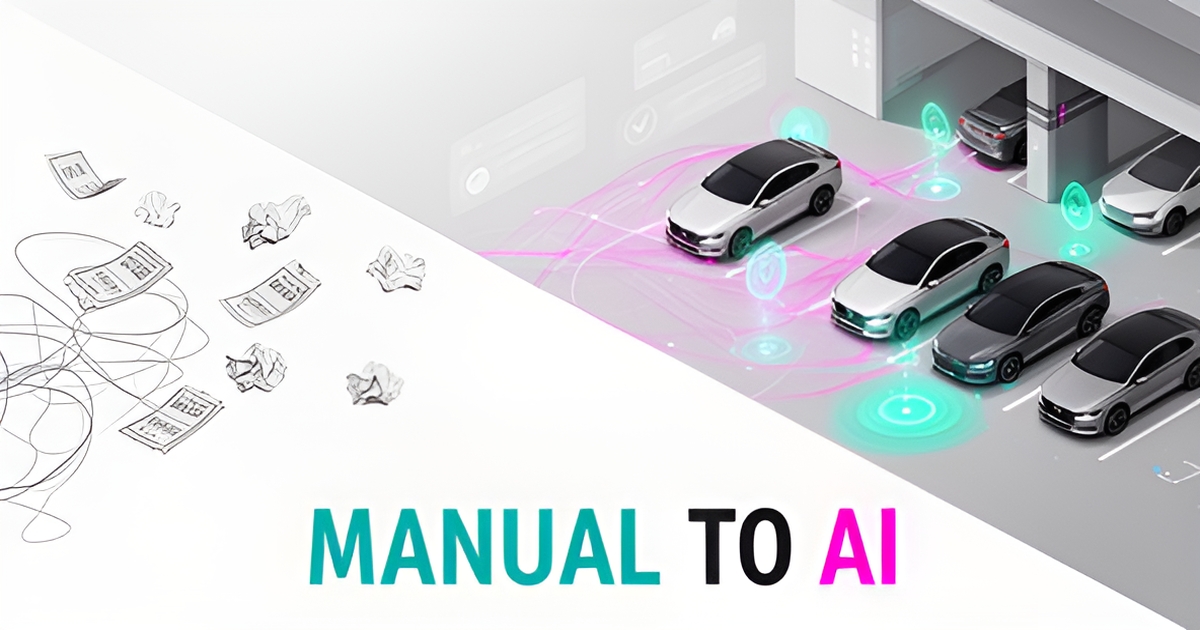
From Manual to AI: Transforming Valet Operations with Custom AI Workflows
Key Facts
- Semi-automated valet systems reduce labor costs by 60-70% compared to fully manual operations.
- The global valet parking robots market is projected to reach $9.7 billion by 2034.
- Software is the fastest-growing segment in valet parking, expanding at a 17.3% CAGR.
- Fully automated systems can reduce the per-slot footprint by up to 60%.
- V2I-compatible deployments are projected to represent up to 28% of new installations by 2032.
- Fully automated indoor facility installations require $8 million to $22 million in capital expenditure.
- More than 620 robotic parking facilities are expected to be in active operation globally by 2026.
What if you could hire a team member that works 24/7 for $599/month?
AI Receptionists, SDRs, Dispatchers, and 99+ roles. Fully trained. Fully managed. Zero sick days.
The High Cost of Manual Chaos
Manual valet operations are bleeding profit through invisible inefficiencies that no amount of extra staff can fix. Traditional paper tickets and radio-based dispatch create a chaotic environment where missed pickups and vehicle misidentification become daily headaches for your team.
This operational friction doesn’t just frustrate guests; it directly impacts your bottom line by increasing labor hours and reducing parking turnover speed. When guests wait too long at the curb or receive the wrong car, your brand reputation suffers immediate damage that is costly to repair.
According to industry analysis, these manual processes create significant stress for both guests and managers by introducing unclear parking locations and long curb waits into the experience. This chaos is not inevitable; it is a solvable engineering problem that requires a shift from reactive manual labor to proactive AI workflows.
Key Pain Points of Manual Valet Operations:
- Paper Ticket Loss: Physical tickets are easily lost, damaged, or forged, leading to revenue leakage and customer disputes.
- Radio Communication Errors: Verbal dispatch over radios is prone to mishearing, causing runners to search for cars in the wrong zones.
- Manual Data Entry: Staff spend valuable time logging vehicle details instead of providing premium guest service.
- Lack of Real-Time Visibility: Managers cannot see live parking lot occupancy or track vehicle location without walking the floor.
The financial impact of these inefficiencies is substantial. Semi-automated systems that begin to replace pure manual workflows have been shown to reduce labor costs by 60-70% compared to fully manual operations. This statistic highlights that even partial automation yields massive savings, leaving full automation as the ultimate competitive advantage.
Consider a mid-sized hotel with 200 rooms relying on traditional valet staff. Without digital tracking, a single lost ticket or misrouted car can delay guest departure by 10-15 minutes. Multiply this by dozens of cars per night, and you lose hundreds of minutes of operational time daily. This is where custom AI workflows transform chaos into clarity.
By replacing paper with digital workflows, businesses can capture data on every vehicle entry and exit. This data enables predictive staffing models that align valet availability with peak arrival times, ensuring you never have too many idle staff or too few overwhelmed attendants.
The transition begins not with buying expensive robots, but with fixing the broken workflow. PLACA.AI’s research confirms that software solutions addressing these specific pain points are the fastest-growing segment of the market, growing at a 17.3% CAGR.
This shift allows businesses to upgrade existing processes without the capital expenditure of robotic infrastructure, making AI accessible to SMBs. The goal is to create a system where every car is tracked, every payment is automated, and every guest interaction is seamless.
Once the data layer is established, you can deploy AI Employees to handle the routine coordination, freeing your human staff to focus on high-touch guest experiences. This hybrid approach maximizes efficiency while maintaining the human warmth that hospitality demands.
In the next section, we will explore how to design these intelligent workflows to eliminate manual bottlenecks entirely.
The Software-First Advantage
For small and medium-sized valet businesses, the allure of fully robotic parking structures often masks a harsh financial reality: the capital barrier is nearly insurmountable. While hardware-heavy solutions promise automation, the upfront investment required to install a fully automated indoor facility ranges from $8 million to $22 million for a single site. This prohibitive cost excludes the vast majority of SMBs from accessing true automation, leaving them trapped in inefficient, labor-intensive manual operations.
The market is rapidly recognizing that software offers a smarter, more accessible entry point. The global valet parking software segment is experiencing explosive growth, expanding at a Compound Annual Growth Rate (CAGR) of 17.3% from 2025 to 2034. This surge indicates a decisive industry shift toward digital workflow optimization rather than immediate robotic infrastructure (https://dataintelo.com/report/valet-parking-robots-market).
Software-first strategies allow businesses to achieve significant efficiency gains without the risk of massive capital expenditure. By digitizing core processes like ticketing, dispatch, and tracking, operators can modernize their operations incrementally. This approach aligns perfectly with AIQ Labs’ philosophy of building custom, owned AI systems that provide enterprise-grade control without vendor lock-in.
The preference for software stems from its ability to solve immediate operational pain points with minimal disruption. Traditional manual valet processes are rife with errors and inefficiencies that software can eliminate instantly.
According to industry analysis, replacing physical claim tickets with SMS pickup links and mobile app interactions significantly reduces guest friction. AI-powered License Plate Recognition (LPR) automates vehicle identification, which is "more accurate and in less time" than manual methods (https://www.placa.ai/valet-parking-system/). This technology directly prevents the costly and reputation-damaging error of handing the wrong vehicle to a customer.
Furthermore, software integrates seamlessly with existing infrastructure. Cloud-based platforms allow for centralized management of multiple locations, offering plug-and-play scalability. This means a valet company can expand its digital footprint across different venues without purchasing additional physical storage or hardware servers.
The data supports the argument that software delivers rapid ROI. Semi-automated systems, which rely heavily on software workflows rather than full robotics, already reduce labor costs by approximately 60-70% compared to fully manual operations. This cost reduction is achieved by optimizing human movement and reducing time spent searching for vehicles.
Key benefits of a software-first approach include:
- Error Reduction: LPR systems detect license plates with high accuracy, eliminating misidentification errors (https://www.placa.ai/valet-parking-system/).
- Labor Optimization: Semi-automated workflows cut labor expenses by up to 70% (https://dataintelo.com/report/valet-parking-robots-market).
- Scalability: Cloud-based GPS tracking allows staff to retrieve cars instantly without manual searching (https://www.placa.ai/valet-parking-system/).
- Data Ownership: Clients retain full control of their operational data, enabling future monetization opportunities.
For example, a mid-sized valet provider can deploy an "AI Workflow Fix" starting at $2,000 to replace paper tickets with a digital LPR system. This single intervention can streamline dispatch and reduce missed pickups, delivering tangible value within weeks rather than years.
Software does not preclude future hardware integration; it prepares the business for it. As the industry moves toward Vehicle-to-Infrastructure (V2I) connectivity, having a robust digital foundation is essential. V2I-compatible deployments are projected to represent up to 28% of new installations by 2032 (https://dataintelo.com/report/valet-parking-robots-market).
By starting with software, SMBs build the data infrastructure and operational discipline required to eventually integrate with autonomous systems. This phased approach minimizes risk while maximizing immediate operational improvements.
AIQ Labs leverages this insight by offering tailored transformation consulting that starts with workflow automation. We help businesses identify high-value opportunities for AI-driven automation, ensuring that every dollar spent contributes to immediate efficiency gains.
This focus on software-first workflows sets the stage for deeper integration with specialized AI Employees, such as automated dispatchers and concierge agents, creating a seamless transition from manual tasks to intelligent automation.
Building Your Custom AI Workforce
Traditional valet operations are suffocating under the weight of paper tickets, radio chaos, and missed pickups. While competitors chase expensive robotic infrastructure, you can achieve superior efficiency by deploying specialized AI Employees that handle dispatch, communication, and logistics. This approach offers a scalable middle ground between basic software and heavy hardware investment.
According to market research, semi-automated systems already reduce labor costs by 60-70% compared to fully manual operations, proving that automation delivers immediate ROI. You don’t need a $22 million robotic facility to eliminate operational bottlenecks. Instead, you need intelligent workflows that own the process from curb to curb.
At AIQ Labs, we deploy custom-built AI Employees that function as fully trained team members. These agents handle real-world tasks like scheduling, dispatching runners, and managing customer communications without the limitations of static chatbots.
- Defined Roles: From Valet Dispatcher to Concierge, each AI Employee has a specific job description and KPI.
- Natural Communication: Agents handle phone calls, SMS, and emails with human-like empathy and accuracy.
- 24/7 Availability: Unlike human staff, AI Employees never call in sick, take vacations, or miss a shift.
- Tool Integration: Seamless connection to your existing CRM, scheduling software, and GPS tracking systems.
Consider a busy hotel parking garage struggling with long curb waits and unclear vehicle locations. By deploying a Valet Dispatcher AI Employee, the business automates SMS pickup links and GPS-based runner dispatch. This directly addresses the stress points of "unclear parking locations" and "long curb waits" noted by industry software provider PLACA.AI. The result is a smoother guest experience and reduced operational friction.
This model allows you to own your AI workforce without vendor lock-in. We architect these systems using advanced multi-agent frameworks, ensuring they are production-ready and scalable. You gain the agility of a tech startup with the reliability of enterprise-grade engineering.
Ultimately, this strategy transforms your valet department from a cost center into a data-driven, efficient operation that scales with your business needs.
Future-Proofing for EV and Autonomous Vehicles
The valet industry is on the brink of a technological revolution that extends far beyond simple parking. As electric vehicles (EVs) and autonomous cars become mainstream, traditional manual valet operations face obsolescence without modern infrastructure integration.
The future of valet isn’t just storage—it’s connectivity.
Industry analysis shows that vehicle-to-infrastructure (V2I) compatible deployments are projected to represent up to 28% of new installations by 2032. This shift demands systems that can communicate with vehicles, not just store them.
AIQ Labs prepares your business for this transition by building custom AI workflows that bridge the gap between legacy operations and next-generation mobility.
The proliferation of electric vehicles is a primary driver for adopting robotic and software-integrated parking solutions. Modern valet systems are increasingly incorporating automated charging docks to enable "charge-while-parked" functionality.
This adds significant value beyond simple parking, turning idle time into active revenue generation. However, integrating these complex hardware systems requires robust software orchestration.
- Automated Energy Management: Sync vehicle arrival data with charging station availability.
- Real-Time Status Updates: Monitor battery levels and charge progress via cloud-connected fleet management.
- Seamless Guest Experience: Notify customers when their vehicle is fully charged and ready.
According to market research, robotic systems are increasingly incorporating these automated docks to meet rising EV demand. This capability positions your venue as a forward-thinking leader in hospitality and logistics.
Vehicle-to-Infrastructure (V2I) connectivity allows for seamless interoperability with Level 3 and Level 4 autonomous vehicles. This technology enables choreographed mobility handoffs without human involvement, a critical requirement for future-proofing valet operations.
By integrating V2I protocols, your AI systems can communicate directly with autonomous vehicles to optimize parking density and retrieval speed.
- Choreographed Handoffs: Enable autonomous vehicles to park and retrieve themselves with precision.
- Enhanced Safety: Reduce human error in complex, high-traffic environments.
- Scalable Operations: Handle increased vehicle volume without proportional staffing increases.
AIQ Labs ensures your AI Transformation Partner strategy includes these protocols. We build systems that are ready for the next wave of autonomous integration, ensuring no vendor lock-in or outdated technology.
While fully automated hardware installations can cost between $8 million and $22 million, software-first solutions offer a scalable alternative. Semi-automated systems currently reduce labor costs by 60-70% compared to fully manual operations.
AIQ Labs specializes in managed AI employees and custom AI development that replace costly subscription chaos with unified, owned digital assets.
We help SMBs: 1. Digitize Workflows: Replace paper tickets with AI-powered license plate recognition (LPR). 2. Optimize Dispatch: Use GPS tracking to locate vehicles instantly. 3. Integrate Charging: Build custom APIs for EV charging station communication.
This approach allows businesses to upgrade existing processes without the prohibitive capital expenditure of full robotic infrastructure.
The convergence of EV adoption and autonomous driving technology is creating an urgent need for intelligent, connected valet systems. By leveraging AIQ Labs’ expertise in custom AI development and V2I connectivity, your business can transform from a manual service provider into a future-ready mobility partner.
Contact AIQ Labs today to architect your competitive advantage in the evolving landscape of intelligent parking.
Next Steps for AI Transformation
The valet industry is pivoting from labor-intensive manual operations to intelligent automation, with semi-automated systems already reducing labor costs by 60-70% compared to traditional methods (https://dataintelo.com/report/valet-parking-robots-market).
For operators, the path forward isn’t about replacing your entire team overnight; it’s about strategic workflow integration that delivers immediate ROI.
By leveraging software-first solutions, you can modernize operations without the $8–22 million capital expenditure required for full robotic infrastructure (https://dataintelo.com/report/valet-parking-robots-market).
This approach allows you to capture the 17.3% CAGR growth in the software segment while maintaining full ownership of your systems (https://dataintelo.com/report/valet-parking-robots-market).
- Start with a Targeted AI Workflow Fix to digitize paper tickets and radio calls
- Deploy Managed AI Employees to handle dispatch and customer communication
- Build Custom Dashboards for real-time analytics and future data monetization
- Ensure EV and V2I Readiness to stay ahead of autonomous vehicle trends
Begin by identifying the most painful manual bottlenecks in your daily operations.
For many valet companies, this includes missed pickup requests and unclear vehicle locations, which create stress for both guests and managers (https://www.placa.ai/valet-parking-system/).
AIQ Labs’ AI Transformation Consulting pillar starts with a comprehensive readiness assessment to pinpoint these high-value automation targets.
We help you model the ROI and cost-benefit analysis for each proposed workflow, ensuring every dollar spent drives measurable efficiency.
This phase focuses on quick wins that demonstrate value immediately, such as replacing physical claim tickets with AI-powered license plate recognition (LPR) (https://www.placa.ai/valet-parking-system/).
LPR systems detect and recognize plates more accurately and in less time than manual methods, significantly reducing the risk of handing the wrong vehicle to customers (https://www.placa.ai/valet-parking-system/).
- Conduct a Free AI Audit & Strategy Session to map your current operational inefficiencies
- Identify single-point workflow fixes that can be automated within weeks, not months
- Establish baseline metrics for cost savings and guest satisfaction improvements
- Define success criteria for the initial AI deployment to ensure alignment with business goals
Once the foundation is set, introduce managed AI Employees to handle complex, multi-step workflows.
Instead of generic chatbots, AIQ Labs builds production-grade AI agents that act as specialized team members, such as a Valet Dispatcher or Concierge.
These AI Employees can manage SMS pickup links, coordinate GPS-based runner dispatch, and handle digital tipping, directly addressing the operational gaps that plague manual systems (https://www.placa.ai/valet-parking-system/).
This model costs 75–85% less than equivalent human roles while providing 24/7/365 availability and zero missed calls (AIQ Labs Business Brief).
By integrating these AI Workers with your existing CRM and scheduling tools, you create a seamless operational workflow that scales with demand.
- Hire a Valet Dispatcher AI Employee to automate runner coordination and location tracking
- Deploy an AI Concierge to handle guest inquiries, digital tipping, and feedback collection
- Integrate AI Agents with existing tools like calendars, CRMs, and payment processors
- Monitor performance metrics to continuously optimize AI behavior and guest experience
The final stage involves scaling your AI infrastructure to support long-term growth and emerging technologies.
With V2I-compatible deployments projected to reach 28% of new installations by 2032, your systems must be ready for autonomous vehicle integration (https://dataintelo.com/report/valet-parking-robots-market).
AIQ Labs ensures your custom-built systems include API-ready architecture for EV charging stations and vehicle-to-infrastructure protocols.
We also help you leverage data monetization opportunities by building dashboards that package anonymized traffic and occupancy data for third-party sale (https://dataintelo.com/report/valet-parking-robots-market).
This transforms your valet operation from a cost center into a data-driven revenue generator with sustainable competitive advantages.
- Design API integrations for EV charging docks and autonomous vehicle handoffs
- Build Custom Financial & KPI Dashboards to track operational efficiency and new revenue streams
- Establish Governance Frameworks for data security and ethical AI usage
- Plan for Continuous Optimization to adapt to new AI models and market demands
Transitioning from manual to AI-driven valet operations doesn’t require a complete overhaul.
By starting with targeted workflow fixes and scaling to managed AI Employees, you can achieve significant cost reductions and operational excellence.
AIQ Labs provides the end-to-end partnership needed to build, deploy, and optimize these systems, ensuring you own the technology and capture the ROI.
Contact us today to schedule your Free AI Audit and discover your first automation opportunity.
Still paying for 10+ software subscriptions that don't talk to each other?
We build custom AI systems you own. No vendor lock-in. Full control. Starting at $2,000.
Frequently Asked Questions
Is it worth it for small valet businesses to automate, or is the cost too high?
How do I fix the problem of guests waiting too long at the curb?
Can I integrate AI with my existing EV charging stations?
What specific role can an AI Employee take over in a valet team?
How does AI prevent handing the wrong car to a customer?
Stop Bleeding Profit: Turn Valet Chaos into Competitive Advantage
Manual valet operations are not just an inconvenience; they are a direct drain on your bottom line. As detailed in this article, reliance on paper tickets, radio dispatch, and manual data entry creates invisible inefficiencies that lead to revenue leakage, labor bloat, and damaged brand reputation through missed pickups and long curb waits. The solution is not adding more staff, but eliminating the chaos through proactive AI workflows. AIQ Labs specializes in transforming these exact manual processes into intelligent, automated systems that businesses own outright. We help you replace reactive labor with custom-built, production-ready AI agents that provide real-time visibility, eliminate communication errors, and significantly reduce operational costs. Whether you need a targeted workflow fix or a complete business AI system, we provide the engineering excellence and true ownership model necessary to scale your operations without vendor lock-in. Don't let operational friction stall your growth. Contact AIQ Labs today to discover how we can architect your competitive advantage.
Ready to make AI your competitive advantage—not just another tool?
Strategic consulting + implementation + ongoing optimization. One partner. Complete AI transformation.