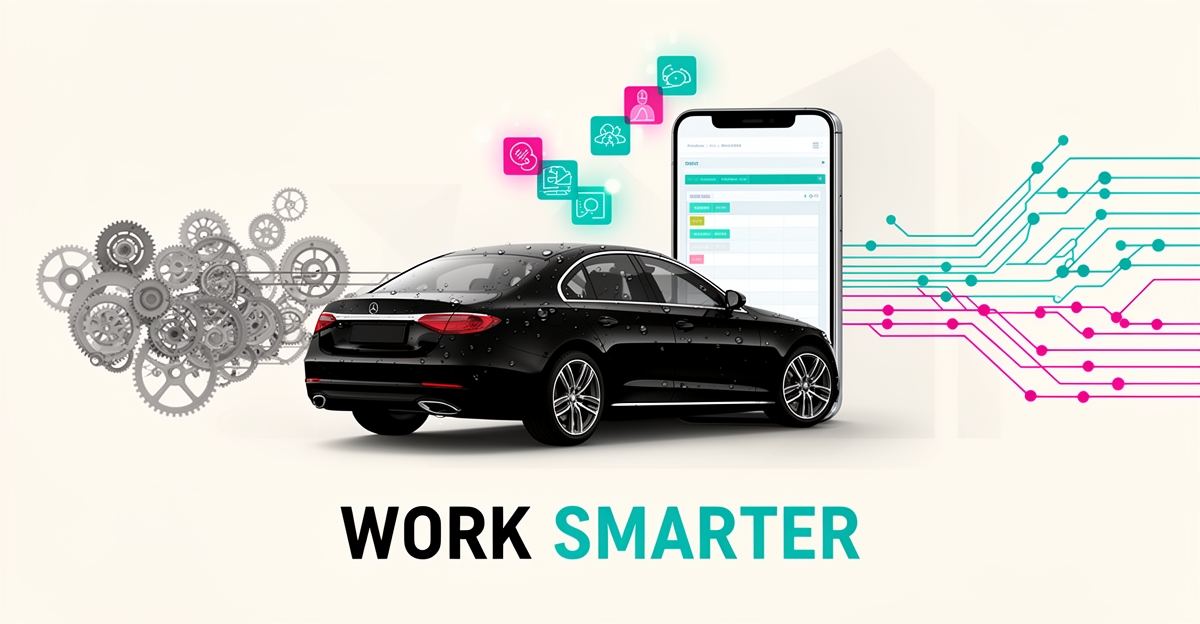
From Manual to AI: Transforming Workflows in a Mobile Auto Detailing Business
Key Facts
- Industry research suggests a majority of AI initiatives stall due to governance and planning gaps, as TechRadar reports
- Most companies adopt AI tools without formal oversight, creating shadow AI risks,
Scheduling chaos follows closely behind. Relying on shared calendars, text threads, or handwritten notebooks leads to double-bookings, missed appointments, and last-minute cancellations with no recourse. Scheduling errors are consistently cited as a top cause of customer dissatisfaction and operational waste in field service businesses. When a detailer shows up to the wrong address or arrives 20 minutes late due to poor coordination, it damages trust and increases fuel costs—both avoidable with better coordination.
Then there's the burden of paper-based tracking. Job cards, service checklists, and payment logs passed between team members create version control nightmares. Illegible handwriting, lost forms, and manual data entry into accounting systems introduce errors that delay invoicing and obscure real-time performance metrics. Small service business owners typically spend many hours each week on administrative tasks that could be automated—time that could instead be spent detailing vehicles or acquiring new clients. These manual processes don't just slow things down; they obscure the very data needed to make informed decisions about pricing, inventory, and team capacity.
The cumulative effect is a business running on inertia rather than insight. Owners find themselves firefighting instead of strategizing, unable to scale because every new client adds complexity to an already fragile system. Without visibility into workflow bottlenecks, improvements remain guesswork. This is where digital transformation stops being optional and becomes essential—not to chase trends, but to reclaim control over the fundamentals that keep a mobile detailing business running smoothly, profitably, and ready for growth.
The Shadow AI Trap: Why Governance Matters
Many businesses rush to adopt AI tools without oversight, creating hidden risks that undermine long-term success. This unchecked adoption, often called shadow AI, leads to fragmented systems, compliance gaps, and wasted investment—especially when teams deploy tools outside IT or leadership awareness. Without structured governance, even promising AI initiatives can stall before delivering value. Industry reporting suggests most companies now adopt AI without any formal oversight—turning innovation into liability.
The dangers of shadow AI extend beyond inefficiency. Unauthorized tools can introduce security vulnerabilities, violate data privacy regulations, and create accountability gaps when errors occur. In a mobile auto detailing business, for example, using an unsanctioned AI scheduling tool might sync customer data to unsecured servers, risking breaches or non-compliance with local privacy laws. These risks compound when multiple teams adopt different tools, creating silos that hinder collaboration and obscure decision-making. As noted in industry analysis, AI is getting baked into departmental processes without proper governance, leaving organizations exposed to operational and reputational harm.
To prevent these pitfalls, businesses must establish clear AI governance frameworks from the start. This includes defining approved tools, setting data usage policies, assigning accountability for AI outcomes, and implementing audit trails for transparency. AIQ Labs builds these safeguards into every transformation journey, ensuring AI adoption aligns with compliance, security, and business goals. By addressing governance early, companies avoid the shadow AI trap and create a foundation for scalable, responsible AI use—turning experimentation into sustainable advantage.
From Isolated Tools to Integrated Execution
Many auto detailing businesses start with AI by adding isolated tools—like a scheduling bot or a photo analyzer—without connecting them to core operations. This fragmented approach creates silos where data doesn't flow, decisions lack context, and accountability becomes unclear. According to industry reporting, most AI initiatives stall for exactly this reason: point solutions operating outside established workflows and oversight.
Integrated execution infrastructure solves this by embedding AI directly into the business's operational fabric. Instead of bolting on intelligence, unified systems enforce policy at the point of action—ensuring every automated decision aligns with standard operating procedures, compliance rules, and quality standards. This creates a clear audit trail: every action taken by an AI agent is logged, traceable, and reviewable, turning opaque automation into accountable execution.
- Policy enforcement happens in real time, preventing deviations before they occur
- Action logs provide unambiguous accountability for both AI and human oversight
- Integrated systems reduce friction by working within existing tools like CRMs and schedulers
- Audit readiness improves significantly with automated, tamper-evident records
- Teams spend less time reconciling discrepancies and more time on value-added tasks
For a mobile detailing business, this means an AI dispatcher doesn't just assign jobs—it checks technician availability against certified skills, validates customer location within service zones, confirms inventory levels for required products, and logs every decision with rationale. When AIQ Labs designs such systems—whether a single workflow rebuild or a full AI operating system—the infrastructure doesn't just automate tasks; it strengthens governance by making execution transparent, consistent, and auditable from the moment action is taken. This shift from isolated intelligence to integrated execution is where AI stops being an experiment and becomes a reliable part of how the business operates. Most companies adopt AI without considering governance, but integrated execution closes that gap by design.
Your Step-by-Step Transformation Roadmap
Transforming workflows in a mobile auto detailing business begins with a clear roadmap that moves beyond isolated tools to integrated execution. Start by mapping every manual task—from appointment scheduling and inventory tracking to customer follow-ups—and identify which processes consume the most time or are prone to error. This assessment phase is critical, because most stalled AI initiatives trace back to poor planning or unclear objectives according to industry reporting. Without this foundation, even advanced AI solutions risk becoming shadow AI—unauthorized, untracked, and ultimately ineffective.
Next, focus on data quality and system integration. AI performance depends entirely on the accuracy and accessibility of the data it processes. In mobile detailing, this means ensuring customer histories, service logs, and supply inventories are clean, consistent, and stored in systems that can connect with AI via APIs or middleware. As experts emphasize, the limiting factor for AI success is whether it can operate inside existing systems without introducing new risk, friction, or complexity. Investing in trusted execution infrastructure at this stage prevents costly rework later and enables real ROI.
Finally, implement AI in phases, beginning with a single high-impact workflow—such as automated appointment confirmation and reminders—before expanding to inventory forecasting or dynamic pricing. Pair each phase with targeted team training, clear documentation, and feedback loops to drive adoption. AIQ Labs supports this journey with fixed-price, phased workflow builds and, when you're ready to go further, a full AI operating system you own outright. This step-by-step approach ensures AI becomes a sustainable part of the business model, not just a temporary experiment.
Measuring ROI and Scaling AI Operations
After implementing AI workflows in a mobile auto detailing business, tracking performance becomes essential to justify continued investment and guide expansion. Key metrics such as time saved per appointment, reduction in scheduling errors, and customer response rates provide concrete evidence of AI's impact. Because so many AI initiatives stall due to governance issues, structured measurement is critical to avoid common pitfalls and ensure accountability across teams.
To scale AI operations effectively, businesses should first optimize existing workflows by analyzing performance data and refining agent behaviors based on real-world outcomes. This includes adjusting AI decision thresholds, improving data inputs, and aligning automation with peak service demand. Once core processes stabilize, expansion into adjacent areas—such as inventory tracking or customer follow-up—can proceed incrementally. A phased approach prevents infrastructure cost overruns while maintaining compliance, especially when integrating with tools like CRM or scheduling platforms.
AIQ Labs supports this scaling journey through milestone-based builds and ongoing optimization, helping businesses refine their AI systems without disrupting daily operations. With 200+ multi-agent systems deployed and 4 live SaaS products the company runs daily, that operational experience informs every recommendation. By establishing clear governance frameworks from the outset—such as audit trails for AI-driven decisions and role-based access controls—companies can mitigate shadow AI risks and maintain trust in automated processes. Ultimately, sustainable scaling depends on treating AI not as a one-time upgrade but as a maturing capability that evolves with the business.
Measuring ROI ensures AI delivers tangible value, while phased scaling protects against overextension. Together, they enable mobile auto detailing businesses to grow automation confidently, keeping compliance and cost efficiency at the forefront.
Ready to track and expand your AI impact? Start the Fit Check to identify your next high-ROI automation opportunity, then schedule a free 30-minute strategy call with our team to build a scalable, compliant roadmap.
Still paying for 10+ subscriptions that don’t talk to each other?
We build custom AI systems you own outright. No vendor lock-in. Full control.
Not sure where to start? Ask our AI planner
Frequently Asked Questions
How much time do small service businesses typically spend on administrative tasks that could be automated?
How many potential jobs do businesses lose to unanswered calls or delayed responses?
Why do so many AI initiatives stall, according to industry research?
What is shadow AI and why is it a risk for mobile auto detailing businesses?
How can a mobile detailing business start transforming its workflows with AI without creating shadow AI?
What does integrated execution mean in the context of AI for auto detailing businesses?
Your Next Move: From Bottlenecks to Breakthroughs
Running a mobile auto detailing business shouldn't mean drowning in missed calls, scheduling chaos, and paper trails that steal time from what you do best—making vehicles shine. This article showed how manual workflows quietly erode profits, how unchecked AI adoption creates shadow risks, and why true transformation starts with integrated execution, not isolated tools. By mapping your processes, securing data quality, and rolling out AI in phases—beginning with something like automated appointment confirmations—you build a foundation for measurable ROI and scalable growth. The real win isn't just saving hours; it's reclaiming control to focus on quality, customer trust, and strategic expansion. If you're ready to see where AI can deliver the fastest impact in your operations, start with a clear, no-pressure assessment. Start the Fit Check to uncover your highest-opportunity workflow, then schedule a free 30-minute strategy call to map a compliant, high-ROI path forward—built for your business, not a generic template.
Make AI your competitive advantage — not just another tool.
Strategy, implementation and ongoing optimization. One partner, end to end.
Not sure where to start? Ask our AI planner