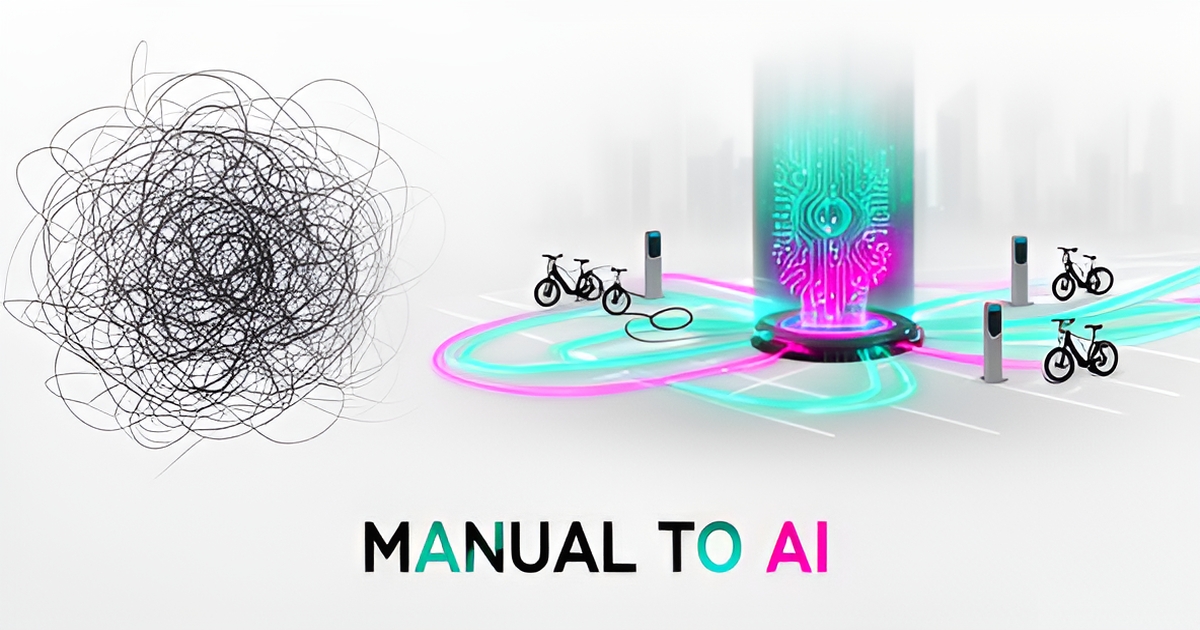
From Manual to AI: Transforming Your E-Bike Booking and Dispatch Workflow
Key Facts
- The global e-bike market is projected to reach roughly $140 billion by 2033, up from under $70 billion in 2025, per industry forecasts.
- Operators commonly report a meaningful share of fleet capacity sitting unused during peak hours due to manual dispatch inefficiencies.
- A growing share of new e-bikes now ship with GPS, app connectivity, or digital dashboards, per Joyride's Bosch Connected Biking integration.
- Vendors such as AllRide market AI smart routing as a driver of improved fleet utilization and reduced idle time.
- McKinsey estimates roughly one-third of working hours in the U.S. and Europe could be automated by 2030.
- AIQ Labs has deployed 200+ multi-agent systems and runs four live SaaS products daily.
Hire a team member that works 24/7 — for less than a part-time wage.
AI receptionists, SDRs, dispatchers and 99+ roles. Trained on your business, fully managed.
Not sure where to start? Ask our AI planner
The Manual Dispatch Bottleneck Costing You Rides
The e-bike rental industry keeps growing, with the global market projected to reach roughly $140 billion by 2033. Yet many operators still rely on manual dispatch processes that create costly inefficiencies just as connectivity becomes standard—more new e-bikes than ever now include GPS, app connectivity, or digital dashboards. This mismatch between technological capability and operational practice is creating a growing bottleneck that directly impacts revenue and rider satisfaction.
Manual dispatch systems struggle to keep pace with real-time demand fluctuations, leading to delayed matching between riders and available bikes. Human operators simply cannot process the multiple variables—bike location, battery level, rider proximity, and traffic conditions—fast enough to optimize fleet utilization. As a result, bikes sit idle while potential customers wait or abandon the booking process entirely. Operators frequently report that a significant share of fleet capacity goes unused during peak hours due to suboptimal matching.
Human error compounds these delays, creating a cascade of operational issues that frustrate both staff and customers. Dispatchers managing large fleets via spreadsheets or basic scheduling tools frequently misassign bikes, send riders to incorrect locations, or overlook maintenance needs until bikes break down in the field. These mistakes not only waste fuel and staff time but also generate avoidable complaints—particularly when riders arrive to find their reserved bike unavailable or malfunctioning. The resulting negative experiences damage brand reputation and discourage repeat usage in an increasingly competitive market.
The financial impact extends beyond immediate lost revenue to include higher operational costs from inefficient routing and increased labor hours spent resolving preventable issues. Companies relying on manual dispatch often require proportional staff increases as they scale, unlike AI-driven systems that handle growing complexity without additional headcount. This creates a scaling barrier that prevents rental businesses from capitalizing on the market's projected growth.
As connectivity becomes the default standard for new e-bikes, the gap between manual operations and technological capability will only widen. Operators who continue to depend on human-dependent dispatch processes will find themselves unable to leverage the real-time data flowing from their increasingly smart fleets—turning what should be a competitive advantage into a source of frustration and lost opportunity.
How AI Transforms Booking, Matching and Real-Time Fleet Control
AI-powered systems are changing how e-bike rental companies handle booking, matching, and fleet control by replacing guesswork with real-time intelligence. Platforms like AllRide use AI-based smart routing and scheduling to optimize dispatch decisions, which they market as a driver of improved fleet utilization and reduced idle time. This intelligent matching ensures riders are paired with the nearest available bike almost instantly, cutting wait times and increasing the likelihood of completed bookings.
Through integration with IoT-enabled hardware such as Bosch Connected Biking, e-bikes become trackable, rentable, and manageable at scale, allowing operators to monitor GPS location, battery health, and usage patterns in real time. Joyride's platform leverages this connectivity to automate routine tasks like ending abandoned rides and issuing refunds, reducing manual intervention while improving customer satisfaction. These capabilities transform fleets from passive assets into dynamically managed resources that respond to demand fluctuations with precision.
AI also enables predictive maintenance by analyzing sensor data to detect wear or software issues before they lead to breakdowns, minimizing downtime and extending vehicle lifespan. By combining real-time tracking, smart dispatch, and automated operations, rental companies can shift from reactive to proactive fleet management—ensuring more bikes are on the road when and where riders need them. [AIQ Labs](/workflow-builds) builds custom AI systems that integrate these capabilities into existing workflows, enabling e-bike operators to achieve faster service, fewer complaints, and measurable revenue growth without replacing their current infrastructure.
Building an Owned AI Dispatch System With AIQ Labs
Moving from disconnected tools to a unified, owned dispatch system requires a deliberate implementation path. The global e-bike market is projected to reach roughly $140 billion by 2033, and operators who control their AI infrastructure capture more of that value than those locked into rigid SaaS platforms.
The first step is platform selection grounded in interoperability. You need a foundation that connects to your existing CRM, accounting, and fleet tools without vendor lock-in. Joyride's solution supports dozens of languages and can deploy a ready-made platform quickly, while AllRide markets fast delivery with AI-based smart routing. Evaluate both against your ownership requirements — can you export data, extend workflows, and migrate without penalty?
Next, IoT hardware integration turns bikes into data nodes. Bosch Connected Biking provides condition monitoring, battery health, usage patterns, and placement data across the growing share of new e-bikes that ship with GPS or app connectivity. This telemetry feeds the routing engine, enabling real-time matching of rider demand to the nearest charged, operational bike.
AI routing configuration then replaces manual dispatch logic. Instead of a dispatcher juggling spreadsheets, a multi-agent system evaluates live traffic, geofence zones, battery thresholds, and historical demand patterns to assign rides in milliseconds. The same architecture can auto-end abandoned trips, trigger refunds, and rebalance fleet distribution during low-demand windows — all without human intervention.
- Platform selection with full data portability and API-first architecture
- IoT hardware integration for real-time telemetry ingestion
- AI routing agents configured to your operational rules and zones
- Automated workflows for ride lifecycle, refunds, and rebalancing
- Custom dashboard deploying KPIs, fleet health, and revenue analytics
AIQ Labs builds this stack as a connected AI operating system you own outright — no per-seat licenses, no feature gating. Delivered in phases through our [AI Operating Systems](/ai-operating-systems) approach, or as a focused rebuild of your single costliest workflow via [Workflow Builds](/workflow-builds). For operators who want dispatch handled end-to-end, our [AI Employees](/ai-employees) include a Dispatcher role that handles rider matching, communication, and exception escalation around the clock at a fraction of the cost of a human hire. Delivery follows a Build in Milestones model: approve each phase before the next begins, stop anytime, keep everything built so far — or choose Start Monthly or Own It Outright depending on how you want to pay. The result is a production-grade dispatch backbone that scales with your fleet and evolves with your strategy.
Risks, Readiness and What to Get Right First
Automating your dispatch workflow sounds like pure upside—until a rider asks who owns their GPS data, or your booking platform goes dark on a holiday weekend. The companies that succeed with AI treat risk assessment as seriously as the technology itself.
The most pressing concern is privacy. AI dispatch systems need data—lots of it. As one industry analysis puts it, connected vehicles collect information on where riders go, how fast they ride, and even how hard they brake, raising the question of who owns that data and who keeps it safe. With a growing share of new e-bikes shipping with GPS and app connectivity, rental operators are suddenly custodians of far more rider information than ever before.
Integration complexity is the second hurdle. Vendors promise rapid deployment, but connecting AI systems to legacy booking tools, payment processors, and fleet hardware often surfaces compatibility issues, data migration headaches, and staff training demands. Cost is the third: beyond upfront implementation, budget for hardware, ongoing support, and training—not just the headline subscription fee.
Then there's over-reliance on automation. AI handles routine tasks like ending abandoned rides and issuing refunds exceptionally well, but human oversight still matters for exceptions, edge cases, and the judgment calls no model can make. Build in human-in-the-loop controls from day one rather than retrofitting them after a failure.
Before you automate, work through this readiness checklist:
- Map your data flows: what rider information you collect, where it's stored, and who has access
- Audit your current tech stack for integration points and legacy compatibility gaps
- Define escalation rules: which decisions AI makes alone and which require a human
- Establish fallback procedures for system downtime during peak rental hours
- Confirm compliance with data protection regulations like GDPR and CCPA
This is where structured governance pays off. A McKinsey analysis cited in recent industry research suggests roughly one-third of working hours in the U.S. and Europe could be automated by 2030—which means the operators who automate carelessly will face the same risks at greater scale. AIQ Labs approaches this through three disciplines: a readiness assessment before any build, governance frameworks covering data security and audit trails, and adoption support so your team actually uses the system.
The goal isn't to eliminate risk entirely—that's impossible. It's to automate with eyes open, so your AI dispatch system becomes a durable asset rather than a liability waiting to surface.
Still paying for 10+ subscriptions that don’t talk to each other?
We build custom AI systems you own outright. No vendor lock-in. Full control.
Not sure where to start? Ask our AI planner
Frequently Asked Questions
How much can AI-powered dispatch actually increase revenue for e-bike rental companies?
What percentage of new e-bikes now come with GPS or app connectivity that enables AI tracking?
Can I keep ownership of my AI dispatch system if I work with AIQ Labs?
How long does it typically take to deploy an AI dispatch system?
What are the main risks of automating e-bike dispatch with AI, and how can they be managed?
Does AI eliminate the need for human staff in e-bike rental operations?
Your Fleet's Future Is Already Moving—Here's How to Catch Up
The e-bike rental market is accelerating toward a projected $140 billion by 2033, but operators still relying on manual dispatch are leaving rides—and revenue—on the table. As this article has shown, AI transforms booking, matching, and fleet control by turning real-time data into smarter decisions: reducing idle time, preventing costly errors, and enabling predictive maintenance that keeps more bikes on the road. The path forward isn't about replacing your team—it's about augmenting them with intelligent systems that handle routine tasks while your staff focuses on exceptions and growth. Start by mapping your data flows, auditing integration points, and defining clear human-in-the-loop controls. Then take the first step toward ownership: complete the [2-minute Fit Check](/apply) and schedule a free 30-minute strategy call with AIQ Labs to see where AI can unlock measurable gains in your specific workflow—no obligation, just clarity on your next move.
Make AI your competitive advantage — not just another tool.
Strategy, implementation and ongoing optimization. One partner, end to end.
Not sure where to start? Ask our AI planner