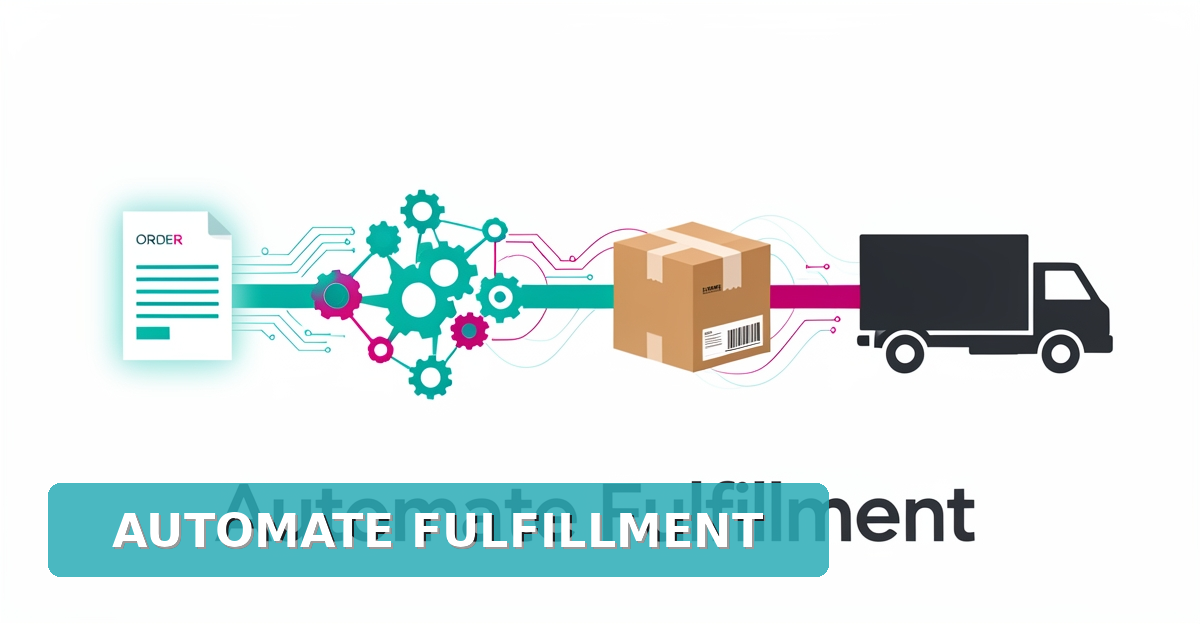
From Order Entry to Fulfillment: How AI Can Transform Promotional Product Operations
Key Facts
- Industry analyses commonly estimate automation saves businesses $5 to $15 per sales order according to order-management research
- Supply chain studies report sales order cycle-time reductions of roughly 40–50% with automation as cited in industry research
- Around 30% of supply chain leaders prioritize improving fulfillment speed as a top business goal based on industry surveys
- Roughly 36% of supply chain leaders see AI-powered analytics as essential for optimizing inventory management per recent research
- AI-powered data extraction is reported to achieve 99%+ accuracy in invoice processing according to Infios
- Manual order processing creates time-consuming repetitive tasks that pull staff from higher-value work as identified in industry analysis
- Lack of real-time visibility in manual processes hinders order tracking and customer inquiry responses per Turian's findings
Hire a team member that works 24/7 — for less than a part-time wage.
AI receptionists, SDRs, dispatchers and 99+ roles. Trained on your business, fully managed.
Not sure where to start? Ask our AI planner
The Order-to-Fulfillment Bottleneck in Promotional Products
Promotional product operations live or die on speed and accuracy from the moment an order hits the inbox to the moment it ships. When those steps rely on manual entry and disconnected tools, the entire fulfillment chain slows down and errors compound.
Manual order processing remains the heartbeat of operations for many B2B suppliers, yet it is defined by hands-on work. Industry analysis of order processing describes manual workflows as physical paperwork, manual data entry into ERP/CRM systems, and email communication that depends solely on human skills and personal experience.
That dependence creates predictable failure points. The same analysis identifies an increased risk of errors from typos and misinterpretation, time-consuming repetitive data entry that pulls staff away from higher-value work, and limited scalability as order volume grows. Lack of real-time visibility is also cited as a core drawback, making it harder to track orders and respond to customer inquiries.
Siloed systems magnify the problem. Research on modern order management notes that AI is becoming a growing necessity because legacy systems cannot handle dynamic supply chains. Instead of relying on static rules or siloed systems, effective operations tap into real-time data and predictive analytics to optimize decision-making on the fly.
The cost of the bottleneck is measurable. Automation research in order management commonly estimates savings of $5 to $15 per sales order, with reported cycle-time reductions of roughly 40–50%. The same body of research suggests around 30% of supply chain leaders have identified improving fulfillment speed as a top business priority, while roughly 36% see AI-powered analytics as key to optimizing inventory management.
In promotional products, the pain shows up daily as:
- Manual data entry across order forms, spreadsheets and vendor portals, raising error rates and rework
- Disconnected intake, quoting and fulfillment tools that prevent a single source of truth
- Limited scalability when seasonal campaigns spike order volume beyond headcount
- No real-time tracking for customers or internal teams, leading to status requests and delays
Order management is no longer just about keeping track of where stock is. As product strategy leaders emphasize, it is about orchestrating a seamless, efficient fulfillment process that ensures customer satisfaction while boosting operational efficiency.
A comprehensive view of end-to-end operational automation, from order intake to shipping, is where AI workflow and task automation applies directly. AIQ Labs builds production-ready systems that companies own and scale over time, replacing fragmented manual steps with integrated workflows that reduce errors and speed delivery.
Why AI Is Becoming a Necessity for Order Management
For decades, order management ran on static rules and manual oversight, a model that worked until complexity outpaced human capacity. Today, that approach buckles under the weight of modern supply chains. According to Omar Akilah, SVP of Product Strategy at Infios, AI in order management is not a far-off innovation; it's a growing necessity.
Traditional systems rely on predetermined rules that cannot adapt when conditions shift. Manual processing—still the norm for many promotional product distributors—depends entirely on human skills and personal experience to finish tasks, making it time-consuming, labor-intensive, and error-prone. Even non-autonomous tools like OCR, RPA, and EDI fail to eliminate these fundamental vulnerabilities.
AI replaces static logic with dynamic decision-making. Instead of following rigid workflows, AI taps into real-time data and predictive analytics to optimize decisions on the fly—from inventory allocation to route planning. This shift enables three critical capabilities:
- Customer Service: Chatbots and sentiment analysis resolve inquiries instantly
- Data Analysis: Real-time inventory insights and predictive demand forecasting
- Intelligent Orchestration: Dynamic optimization across the entire fulfillment lifecycle
The financial impact can be immediate and measurable. Industry research suggests automation commonly saves businesses $5 to $15 per sales order, with reported cycle-time reductions of roughly 40–50%. For operations processing hundreds of custom-branded orders daily, these savings compound rapidly while eliminating the manual data entry errors that plague traditional workflows.
This transformation extends beyond simple task automation into intelligent orchestration—AI systems that coordinate complex decisions across procurement, decoration, and shipping without human intervention. At AIQ Labs, we build production-ready systems that companies own outright, architecting this level of end-to-end automation to handle the specific variability of promotional product operations.
The gap between businesses using static rules and those leveraging predictive AI widens daily. As order volumes grow and customer expectations tighten, the question shifts from whether to adopt AI to how quickly you can implement it before competitors capture the efficiency advantage.
From Order Entry to Shipping: AI Applications Across the Promotional Product Workflow
The journey from order entry to shipping is where promotional product operations often face friction—manual data entry creates bottlenecks, inventory misalignments cause delays, and fragmented systems slow fulfillment. AI transforms this end-to-end workflow by embedding intelligence at every step, turning reactive processes into proactive, seamless operations.
Automated data capture begins at order intake, where AI-powered systems extract and validate information from emails, forms, or portals with reported accuracy above 99%, eliminating the manual entry errors that plague traditional workflows. This shift not only reduces processing time but also frees staff to focus on exception handling and customer engagement rather than repetitive data transcription. According to industry research, automation commonly saves businesses $5 to $15 per sales order and can cut sales order cycle times by roughly 40–50%, directly impacting operational efficiency from the first click.
Once orders are ingested, AI shifts to predictive intelligence—analyzing historical sales, seasonality, and real-time demand signals to optimize inventory allocation across warehouses. This ensures high-turnover promotional items are positioned closer to demand centers, reducing stockouts and overstock simultaneously. As noted in supply chain research, roughly 36% of leaders view AI-powered analytics as essential for optimizing inventory management, enabling smarter replenishment and fewer rush shipments that erode margins.
Fulfillment itself becomes dynamic with AI-driven routing and execution. Instead of static rules, intelligent systems evaluate carrier capacity, delivery windows, and package dimensions in real time to select the optimal shipping method and route. This adaptive orchestration minimizes transit delays and costs while improving on-time delivery rates. The same research highlights that around 30% of supply chain leaders prioritize improving fulfillment speed—a goal AI achieves by replacing guesswork with data-driven decisions at every handoff.
Finally, real-time tracking powered by AI provides end-to-end visibility, automatically updating customers and internal teams on order status, exceptions, and estimated delivery. This transparency reduces inquiry volume and builds trust, especially critical in promotional products where timing aligns with campaigns or events. By connecting intake, prediction, routing, and tracking into a unified intelligent workflow, AI doesn't just speed up fulfillment—it redefines what's possible in promotional product operations. For businesses ready to move beyond manual handoffs, AIQ Labs builds production-ready systems that own and scale this transformation from day one.
Building an Owned AI Operation You Can Scale
Moving from pilot to production requires an architecture built for ownership, not rental. AIQ Labs offers three entry points — AI Employees for managed AI staff handling order processing and fulfillment around the clock, AI Workflow Builds to rebuild the one workflow that costs you the most, and AI Operating Systems for one connected operating layer across the business — so promotional product distributors replace fragmented subscriptions with a unified system they control.
The economics of manual processing make the case for ownership undeniable. Industry research suggests automation saves businesses $5 to $15 per sales order and can reduce sales order cycle times by roughly 40–50%, while around 30% of supply chain leaders identify fulfillment speed as a top priority. When an AI employee handles order entry, artwork verification, and dispatch coordination 24/7 at a fraction of the cost of a human hire, the cost per transaction drops dramatically compared to staffing equivalent coverage.
- Workflow builds that target a single broken process — fixed price, delivered in phases
- AI employees spanning sales, operations, and fulfillment roles — from receptionists and SDRs to dispatchers, with 99+ roles available
- Complete AI operating systems serving as a central intelligence hub across every function, owned outright
Three payment models align investment with outcomes. Start Monthly deploys an AI employee — setup, training, integrations, monitoring, and improvements included — with the freedom to pause or adjust anytime. Build in Milestones splits a workflow or department system into phases; you approve and pay per phase, stop anytime, and keep everything built. Own It Outright delivers a full AI operating system at one project price, transferring complete ownership of code, agents, and data when finished. Real numbers arrive in writing after the free strategy call — no fake anchors, just the cheapest path to the win you're after.
The Fit Check takes two minutes at aiqlabs.ai/apply and leads to a free 30-minute strategy call at aiqlabs.ai/book — a working session with an AI engineer to map your biggest bottleneck and identify high-ROI automation opportunities. If there isn't a clear win, we'll say so.
Still paying for 10+ subscriptions that don’t talk to each other?
We build custom AI systems you own outright. No vendor lock-in. Full control.
Not sure where to start? Ask our AI planner
Frequently Asked Questions
How much can I actually save by automating order processing for my promotional products business?
Why is manual order entry such a bottleneck for promotional product distributors?
Can AI handle the custom artwork and variable specifications in promotional product orders?
How does AI improve fulfillment speed compared to traditional order management?
What's the difference between basic automation tools and true AI order management?
How can I implement AI for order fulfillment without a massive upfront investment?
The Cost of Standing Still in Promotional Product Operations
Every day your promotional product operation relies on manual order entry, disconnected systems, and static workflows, measurable value slips through the cracks. Industry research suggests automation commonly saves $5 to $15 per sales order while cutting cycle times by roughly 40–50%—yet the gap between businesses clinging to legacy processes and those leveraging AI widens daily. The transformation isn't theoretical: AI-powered order intake, predictive inventory allocation, dynamic fulfillment routing, and real-time tracking are already redefining what's possible from order entry to shipping. For SMBs ready to compete at enterprise speed without enterprise overhead, the path forward starts with identifying your single biggest operational bottleneck and building from there. AIQ Labs specializes in production-ready systems that promotional product distributors own outright—no vendor lock-in, just scalable infrastructure that grows with your business. Start with the two-minute Fit Check and book a free strategy call to map your highest-ROI automation opportunity. If there's no clear win, we'll tell you.
Make AI your competitive advantage — not just another tool.
Strategy, implementation and ongoing optimization. One partner, end to end.
Not sure where to start? Ask our AI planner