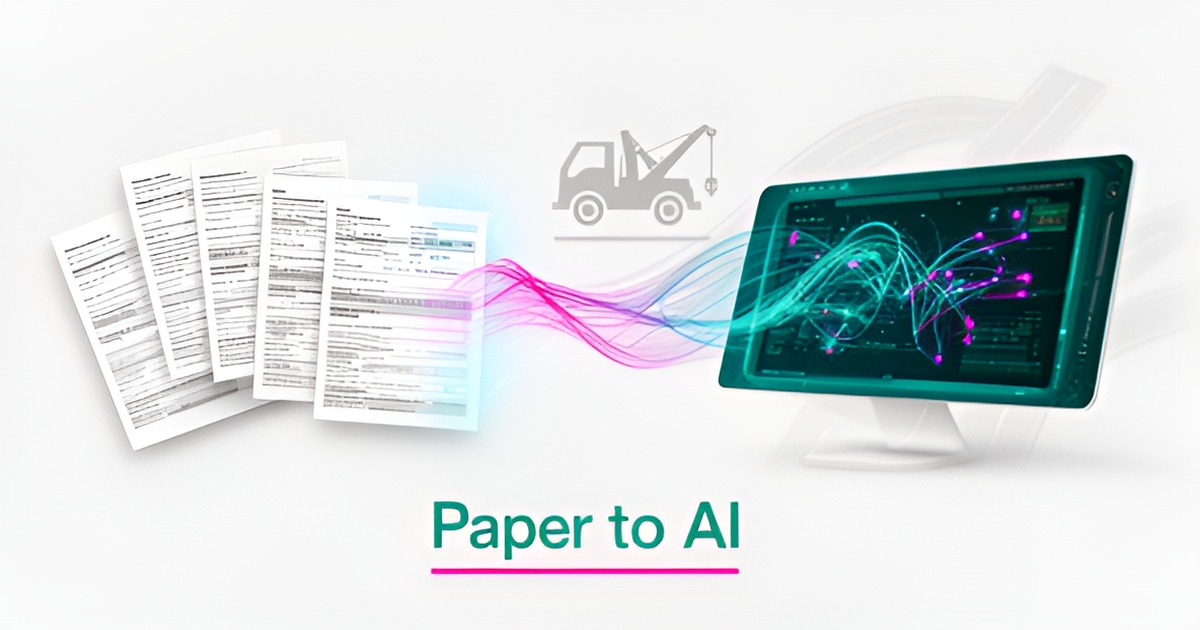
From Paper-Based to AI: Modernizing Service Request Management for Roadside Companies
Key Facts
- Manual request handling creates delayed response times, lost records, and error-driven rework
- AI document processing typically achieves very high extraction accuracy on structured forms like roadside intake sheets
- Automated intake typically reduces manual data entry substantially, freeing dispatchers for higher-value work
- Phased rollouts starting with one high-volume request type reduce risk and prove value early
- AIQ Labs has deployed 200+ multi-agent systems and runs 4 live SaaS products daily
Hire a team member that works 24/7 — for less than a part-time wage.
AI receptionists, SDRs, dispatchers and 99+ roles. Trained on your business, fully managed.
Not sure where to start? Ask our AI planner
The Hidden Cost of Paper-Based Service Requests
Paper forms and phone notes were built for a slower roadside industry. Today they create bottlenecks that cost time, money, and customers when every minute on the shoulder matters.
Manual service request systems rely on inconsistent data entry, lost records, and manual follow-ups. Dispatchers retype caller information, chase missing vehicle details, and reconcile handwritten notes after the fact. The result is delayed response times and frustrated drivers who receive vague ETAs.
Processing speed collapses under manual handling. Every paper form or scribbled note has to be read, interpreted, keyed, and verified by a person before dispatch can act on it. Volume spikes — storms, holiday weekends, multi-vehicle incidents — turn that manual queue into a backlog, and backlogs turn into lost calls and longer tow wait times.
Accuracy gaps compound the problem. Inconsistent handwriting, incomplete fields, and transcription errors create bad data that flows into dispatch and billing. A wrong license plate or a misheard cross-street sends a truck to the wrong location, burns fuel, and forces a second call the customer didn't expect.
Labor costs rise as teams work around the system. Staff spend hours rekeying requests, verifying details, and chasing customers for missing information — hours that add payroll cost without adding a single completed job.
The hidden cost shows up in customer experience. Requests sit in queues, dispatchers make decisions with partial information, and follow-ups multiply. Roadside businesses face:
- Lost or misfiled paper requests that require rework and apology calls
- Inconsistent data entry that creates duplicate tickets and wrong vehicle details
- Manual follow-ups that stretch call times and delay truck roll
- Error-driven rework that inflates labor hours without adding value
These inefficiencies erode margin while competitors move faster. The shift from manual to AI-driven processing is one of the most significant operational upgrades available to service businesses today, and AIQ Labs applies it directly to service request management through [AI Workflow Builds](/workflow-builds) — rebuilding the one workflow that costs you the most, at a fixed price, in phases.
Digitizing, standardizing, and automating request intake removes the friction points that define paper-based systems. When requests are captured consistently and routed instantly, dispatch gains clarity, drivers receive accurate ETAs, and operations scale without proportional headcount growth.
How AI Transforms Service Request Processing
Roadside service requests arrive by phone, text, email, and paper forms — each with different fields, handwriting, and urgency. That inconsistency creates delays, lost records, and manual follow-ups that keep dispatchers tied to data entry instead of helping drivers.
AI-driven document processing and workflow automation changes that pattern by digitizing, standardizing, and automating request intake from the first touchpoint. Modern extraction models handle structured forms with very high accuracy, and they keep improving — which means license plates, locations, and vehicle details are captured correctly the first time far more often than with manual entry.
Speed rises at the same time accuracy does. Once a request is captured digitally, routing, prioritization, and follow-ups happen in seconds rather than after someone finishes rekeying it. For roadside teams, that translates directly into faster ETAs and fewer misdispatches.
Cost and labor pressure ease as workflows automate. Every request that no longer needs manual rekeying is payroll redirected to dispatch, customer service, or fleet growth — work that actually moves the business.
The shift is especially relevant for service requests that involve inconsistent data entry, lost records, and manual follow-ups. AI can:
- Ingest calls, texts, emails, and scanned forms and extract key fields automatically
- Standardize requests into a single dispatch-ready record for CRM and dispatch platforms
- Route, prioritize, and trigger follow-ups without dispatcher re-keying
- Maintain audit trails and compliance data for regulated communications
AIQ Labs builds custom systems that businesses own outright and that integrate with existing CRM and dispatch platforms, so teams keep control of data and workflows. For roadside companies that want a single connected layer across intake, dispatch, billing, and follow-up, an [AI Operating System](/ai-operating-systems) ties those pieces together in phases — built once, owned forever, no per-seat subscription sprawl.
Implementation works best when starting with high-volume, standardized request types, establishing robust data preparation and model training, and ensuring seamless connectivity with existing systems. Phased deployment, integration planning, and change management reduce risk while letting teams realize measurable gains early.
The result is faster ETAs, fewer errors, and dispatchers focused on service instead of paperwork.
Implementation Roadmap: From Pilot to Full Integration
Roadside teams can't afford a big-bang rollout when every call is a service request. A phased roadmap reduces risk, proves value early, and builds the data foundation that makes AI reliable at scale.
Start with a focused pilot on high-volume, standardized document types. Successful implementations typically begin with the forms that flow through most often — standard tow requests, jump-starts, lockouts — so the extraction models learn quickly and the gains are visible within weeks, not quarters.
Data quality determines outcomes more than model choice. Establish robust data preparation and validation processes before expanding scope, and test extraction accuracy on your real roadside forms — not generic samples. Clean inputs and clear exception-handling rules matter more than picking the flashiest model.
Integration must happen in parallel with pilot work. Ensure seamless connectivity with existing systems so AI outputs flow directly into CRM and dispatch platforms. Integration planning, phased deployment, data quality, and change management are what separate automation that sticks from automation that becomes another silo.
A practical rollout follows four clear stages:
- Pilot: Digitize one high-volume request type, measure speed and accuracy gains, and train staff on exception handling.
- Integrate: Connect the AI workflow to CRM and dispatch with two-way API sync, automated routing, and audit trails.
- Expand: Add additional document types and channels, using learnings to improve model performance and user adoption.
- Optimize: Monitor KPIs, refine guardrails, and scale the system across departments with continuous improvement.
AIQ Labs applies this structure through custom-built systems that businesses own and integrate with existing CRM and dispatch platforms. The model supports phased deployment with payment options like Build in Milestones, so teams can approve and pay per phase while keeping everything built so far.
Full integration unlocks the business case. Faster intake compounds: every minute saved per request multiplies across daily volume, and every error prevented eliminates a costly rework loop. With proper change management, the shift from paper-based to AI becomes a sustainable capability, not a one-time project.
Still paying for 10+ subscriptions that don’t talk to each other?
We build custom AI systems you own outright. No vendor lock-in. Full control.
Not sure where to start? Ask our AI planner
Frequently Asked Questions
How much faster can AI process service requests compared to manual methods?
What accuracy can we expect from AI when extracting data from service request forms?
Will implementing AI reduce our labor costs for processing service requests?
How do we start using AI for our service requests without disrupting operations?
What are the risks or downsides of switching to AI for service request management?
Can AI work with our existing CRM and dispatch systems?
From Shoulder to Scale: Turning Faster Requests Into Competitive Advantage
Paper-based intake was built for a slower roadside industry, and it shows up now as delayed ETAs, lost requests, and dispatchers stuck rekeying details instead of moving trucks. Modernizing service request management means digitizing, standardizing, and automating intake from the first touchpoint so calls, texts, emails and forms become a single dispatch-ready record. The result is faster routing, fewer misdispatches, and operations that scale without proportional headcount growth. Teams that start with high-volume, standardized request types, invest in data preparation, and integrate AI outputs directly into CRM and dispatch platforms see measurable gains early and expand with confidence. AIQ Labs builds custom, owned systems that integrate with your existing stack — no subscription chaos, just digital assets you control. If you're ready to map your biggest bottleneck to a high-ROI automation plan, start the two-minute Fit Check at [aiqlabs.ai/apply](/apply) for a free 30-minute strategy call. If there isn't a clear win, we'll tell you that too.
Make AI your competitive advantage — not just another tool.
Strategy, implementation and ongoing optimization. One partner, end to end.
Not sure where to start? Ask our AI planner