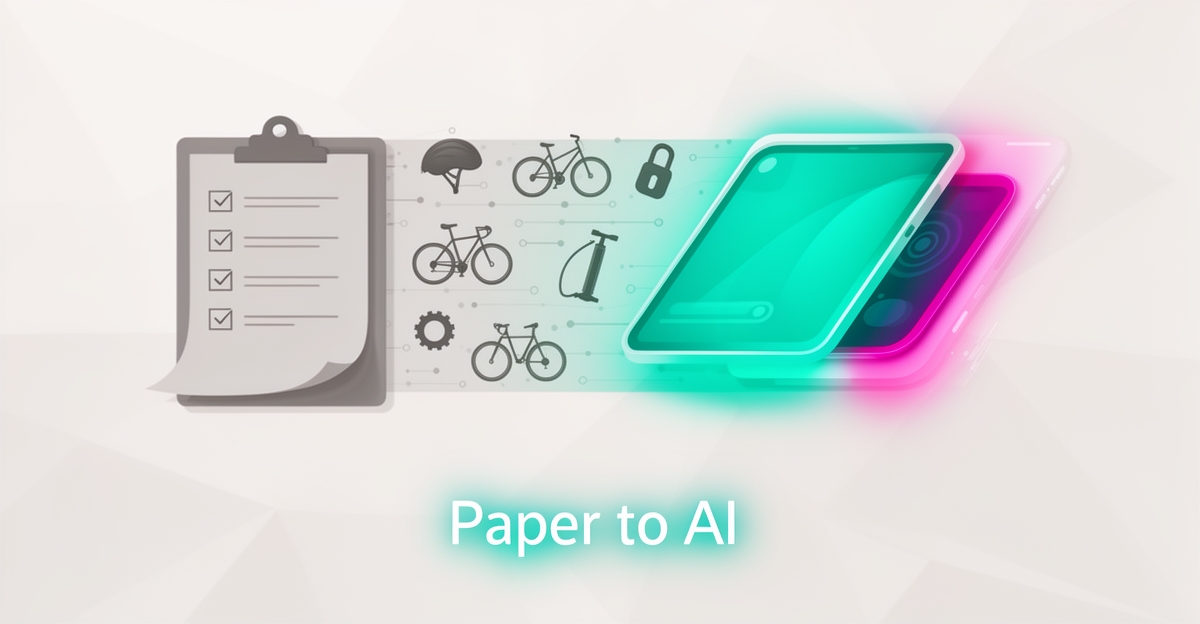
From Paper Forms to AI: Automating Bike Return Checklists with Smart Tracking
Key Facts
- Paper checklists create a lag between return and discovery—missing gear is typically caught days later, when recovery is hardest.
- AI-driven digital checklists validate returns in real time, flagging missing helmets, locks, and lights before the renter leaves the premises.
- Every digital return generates a timestamped, auditable record that resolves disputes without he-said-she-said arguments.
- Custom AI integration typically delivers better ROI than rip-and-replace platforms by avoiding migration costs, retraining downtime, and vendor lock-in.
- AIQ Labs has deployed 200+ multi-agent systems and runs four live SaaS products daily—this is production experience, not theory.
Hire a team member that works 24/7 — for less than a part-time wage.
AI receptionists, SDRs, dispatchers and 99+ roles. Trained on your business, fully managed.
Not sure where to start? Ask our AI planner
The Hidden Cost of Paper Checklists in Bike Rentals
The morning rush at the bike rental shop begins with a stack of paper return checklists, already showing signs of wear from yesterday’s use. Staff scramble to match each form to a returning bike, often finding sheets smudged, torn, or mysteriously vanished between the rack and the counter. This daily reality means critical details—like a missing helmet or a scratched frame—get overlooked simply because the paper trail went cold hours after the rider left.
Manual validation creates a cascade of avoidable problems. Gear goes unnoticed as absent because checklists aren’t reviewed until shift end, turning small losses into disputed damage claims when customers return days later. Bikes disappear without a clear accountability trail, and staff burn valuable hours chasing down inconsistencies through phone calls and manual data entry instead of focusing on customer service. The core issue isn’t just inefficiency—it’s the absence of real-time insight into problems the moment they occur.
This is exactly the kind of slow, error-prone workflow that AI handles well. For bike rentals, digital checklists validate returns instantly, flag missing gear before the renter leaves the premises, and trigger automated reminders—all without waiting for a staff member to locate a misplaced form.
- Missing gear detected at return, not days later during inventory
- Damage claims reduced through timestamped, validated checklists
- Staff time reclaimed from data entry for customer-facing tasks
- Automated reminders sent for overdue items before disputes arise
- Full accountability trail created for every bike and accessory
AIQ Labs builds custom systems that integrate with existing rental software to replace these fragile paper processes with intelligent digital workflows. By embedding AI validation directly into the return moment, rental companies shift from reactive damage control to proactive asset protection—turning a daily frustration into a streamlined, reliable operation. For operators who want to start smaller, a managed AI Employee can handle the follow-up side—reminders, dispute emails, overdue logs—while a custom build handles validation.
What AI-Driven Digital Checklists Change About the Return Process
Picture this: a renter rolls a bike back to your counter, drops off a helmet that may or may not be theirs, and the paper checklist gets a quick glance before everyone moves on. Hours or days later, someone notices the lock is gone—and nobody can prove when or where things went wrong.
AI-driven digital checklists flip that dynamic entirely. Instead of relying on a staff member's memory and a clipboard, renters complete a structured digital form at return, and the AI system validates the bike's condition and cross-checks every returned item—helmets, locks, lights—against the original rental record. Discrepancies are flagged instantly, not discovered after the fact.
This shift matters because renters themselves are increasingly comfortable with digital, AI-assisted experiences. Consumers now routinely book, check in, and manage rentals through their phones, and they expect the return step to work the same way. A clipboard at the counter is the one part of the journey that hasn't caught up.
When the system detects a missing item, it doesn't wait for a human to notice. Automated reminders go out to the renter promptly, which reduces disputes and meaningfully improves gear recovery rates. Instead of an awkward phone call days later, the renter receives a clear, timestamped notification while the return is still fresh in their mind.
The operational benefits compound quickly:
- Automated validation reduces human error in condition checks and gear counts
- Instant discrepancy flagging eliminates the lag between return and discovery
- Automated reminders drive timely follow-up without staff intervention
- Every return generates a timestamped, auditable record for dispute resolution
That last point deserves emphasis. Each digital return creates a complete, time-stamped trail—who returned what, when, and in what condition—which transforms how disputes get resolved. Rather than a he-said-she-said argument, operators can reference documented records that protect both the business and honest renters.
For bike rental companies running this on paper today, the transition is less disruptive than it might sound. Custom systems can be built to integrate directly with existing rental software, so checklists, validation, and reminders plug into the workflows your team already uses. AIQ Labs specializes in exactly this kind of tailored automation—rebuilding the one workflow that costs you the most at a fixed price, in phases—replacing manual inspection loops with systems that improve accountability and reduce lost equipment.
The result is a return process that runs itself: renters self-report through guided digital forms, AI verifies the details against the rental record, and staff only step in when something genuinely needs human attention. What used to be the most error-prone moment in the rental cycle becomes its most reliable one.
Why the Timing Is Right: AI Adoption in Travel and Rentals
The travel industry is undergoing a rapid transformation, with AI no longer a futuristic concept but a present-day expectation. As of late 2026, travelers routinely engage with AI-powered tools to plan trips, compare options, and streamline bookings—shaping how they interact with every touchpoint, including rental services. This shift is backed by clear behavioral data showing that AI isn’t just being adopted; it’s being preferred.
AI agents increasingly act as intermediaries between users and service providers—surfacing rental options, answering questions, and handling bookings end to end. Consumers who plan their entire trip through AI tools develop a baseline expectation: every step should be digital, instant, and self-serve. Broad satisfaction with AI-assisted journeys from inspiration to itinerary is now the norm, not the exception.
This growing reliance on AI has tangible implications for engagement and retention. Customers guided through digital, AI-assisted processes tend to complete them faster and with fewer errors than those navigating manual paperwork. For bike rental companies, this means renters arriving via AI channels are already primed for digital, seamless interactions and are less tolerant of outdated, manual processes like paper checklists.
When travelers expect AI to guide their flight searches, hotel bookings, and activity recommendations, they naturally anticipate the same level of intelligence when returning rental gear. A paper form feels disjointed in an experience otherwise shaped by smart suggestions and automated confirmations. By contrast, AI-driven digital checklists align with the expectations set across the rest of the travel journey—offering real-time validation, instant feedback on missing gear, and automated reminders that reduce friction and improve accountability.
AIQ Labs builds custom systems that integrate with existing rental software to deliver this seamless experience, replacing manual workflows with intelligent automation that meets modern traveler expectations. As AI becomes embedded in the fabric of travel planning and execution, bike rental businesses that cling to paper-based processes risk appearing out of step—not just operationally inefficient, but misaligned with the digital-first mindset their customers now bring to every interaction. The timing isn’t just right for AI adoption in rentals; it’s overdue.
How to Implement AI Return Checklists Without Replacing Your Rental Software
The shift from paper checklists to AI-driven returns doesn't require ripping out your rental platform — it requires a bridge. AIQ Labs develops custom systems that integrate with existing rental software, letting operators keep their core tools while layering intelligent validation on top.
- Connect the AI system to your current rental software via secure API
- Build a digital return checklist tailored to your fleet and accessories
- Have renters complete the form on their phone at drop-off
- Let AI validate condition, flag missing gear, and log discrepancies instantly
- Trigger automated reminders for unresolved items before they become losses
This approach preserves workflow continuity while eliminating the blind spots of manual inspection. Renters engage more deeply when digital tools guide the process. Accessibility matters too — voice-enabled interfaces and screen-reader compatible forms ensure every customer can complete returns independently. Data privacy stays intact because the system processes only return-specific inputs, not full customer profiles. For small and mid-sized operators, custom integration typically delivers better ROI than rip-and-replace platforms by avoiding migration costs, retraining downtime, and vendor lock-in.
From Fewer Lost Bikes to a Smarter Operation: The Payoff
Paper checklists cost more than paper. Every missed helmet, unlogged scratch, and late return erodes margin and staff time. Digital validation changes the equation from chasing problems to preventing them.
Automated return checklists replace manual inspection with consistent, AI-driven verification. The system validates the bike, flags missing gear instantly, and triggers reminders without staff intervention. That shift improves accountability and reduces lost bikes while freeing teams for higher-value work.
The data layer created by every return becomes an operational asset. Patterns in usage, wear, and damage emerge long before a breakdown. Maintenance can be scheduled proactively instead of reactively, and fleet utilization becomes visible across locations.
Consumer demand for AI-assisted service is already mainstream across travel and rentals. Customers increasingly expect seamless, digital-first interactions at every step—including the return desk. Operators who meet that expectation gain an edge in both accountability and experience.
For rental operators, that expectation translates into smarter operations:
- Fewer lost bikes and accessories through automated detection and instant reminders
- Cleaner, audit-ready return records with no manual data entry
- Usage and damage insights that inform maintenance before failures occur
- Faster returns and higher staff throughput during peak periods
AIQ Labs builds custom systems that integrate with existing rental software, improving accountability and reducing lost bikes. Development is delivered through flexible build models that match risk appetite and timeline. Start Monthly provides one managed AI employee with setup and a flat monthly plan—typically far less than the cost of a human hire—with build, training, integrations, monitoring and improvements included, and the ability to pause or adjust anytime. Build in Milestones splits a workflow or department system into phases you approve and pay per phase, keeping everything built so far. Own It Outright delivers a full AI operating system with full ownership of code, agents and data when complete. You can review all options on the pricing page.
The payoff is not just fewer losses. It is a smarter operation that learns from every return. With the right data capture and integration, return checklists become the early warning system for fleet health and customer experience.
If your biggest return-process bottleneck is still manual, run it past an AI engineer. Start the 2-minute Fit Check at https://aiqlabs.ai/apply for a free 30-minute strategy call at https://aiqlabs.ai/book to map the bottleneck and identify a high-ROI automation path.
Still paying for 10+ subscriptions that don’t talk to each other?
We build custom AI systems you own outright. No vendor lock-in. Full control.
Not sure where to start? Ask our AI planner
Frequently Asked Questions
Do I have to replace my current rental software to use AI return checklists?
Will renters actually use a digital form when they return a bike?
How does AI help me find missing gear before the customer leaves?
Are digital return processes better received than paper ones?
Is an AI return system accessible for all customers?
What’s the ROI compared to paper checklists?
Turn Returns From Liability Into Insight
Paper checklists cost bike rental teams time, gear, and trust — smudged forms, delayed discoveries, and disputes that could have been prevented at the counter. AI-driven digital returns flip that moment into real-time validation: renters complete a guided form, the system cross-checks items against the original rental, flags missing gear instantly, and triggers timestamped reminders before losses become permanent. The result is fewer lost bikes and accessories, cleaner audit-ready records, and staff freed from data entry to focus on customers. With renters now expecting seamless digital touchpoints at every step, the return desk is no longer an afterthought — it’s where accountability and experience meet. If manual returns are still your biggest bottleneck, map it with an AI engineer. Start the 2-minute Fit Check at https://aiqlabs.ai/apply for a free 30-minute strategy call at https://aiqlabs.ai/book to identify a high-ROI automation path tailored to your software.
Make AI your competitive advantage — not just another tool.
Strategy, implementation and ongoing optimization. One partner, end to end.
Not sure where to start? Ask our AI planner