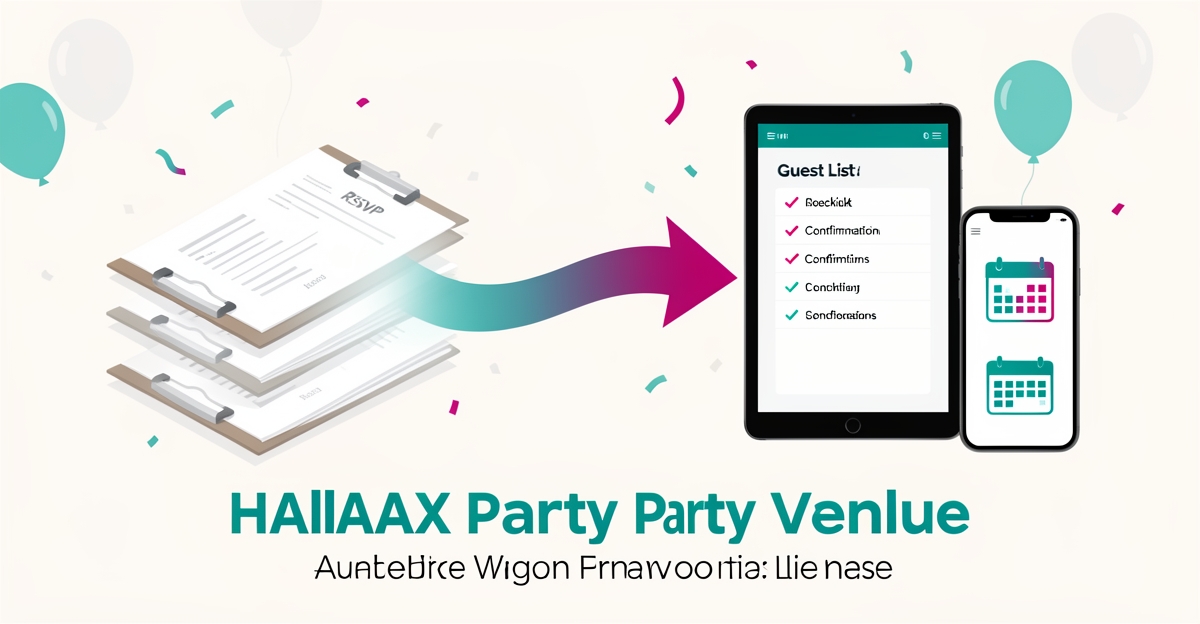
From Paper Forms to AI: How One Halifax Party Venue Automated Guest Lists and Confirmations
Key Facts
- Organizations lose nearly $2 trillion annually due to poor agreement management pulling skilled staff into repetitive tasks according to industry research
- MG Engineering saved over $50,000 annually by redirecting thousands of worker hours to high-value tasks after implementing AI-powered document workflows per Egnyte case study
- Honor Health Network processes 500+ forms and 184,000 submissions daily while reducing staff from 3 FTEs to 1 PTE through automated data capture per Egnyte implementation results
- 71% of data is loaded into the database and viewable within 30 minutes of upload in automated document workflow systems per Egnyte performance metrics
- 29% of data issues are automatically identified and routed to primary contacts for quality control in AI-powered document workflows per Egnyte system capabilities
- Zapier offers 6,000+ app integrations out of the box for workflow automation per platform specifications
- n8n provides 400+ integrations with full API access as a self-hosted, open-source automation solution per platform details
Hire a team member that works 24/7 — for less than a part-time wage.
AI receptionists, SDRs, dispatchers and 99+ roles. Trained on your business, fully managed.
Not sure where to start? Ask our AI planner
The Hidden Cost of Manual Guest List Management
The Halifax party venue staff arrived each morning to a familiar scene: stacks of paper RSVP forms waiting to be transcribed into spreadsheets, followed by hours of copy-pasting data between systems and chasing down missing confirmations. This daily grind wasn't just tedious, it represented a classic case of the 'agreement trap,' where businesses lose time not from lacking tools but from disconnected systems forcing manual workarounds. As Stéphane Barberet of Docusign observes, 'Businesses do not lose time on agreements - or any other business process - because they lack AI tools. They lose it because the steps involved, like contract intake, review and approvals, still move through disconnected systems, inboxes and document versions.'
The hidden cost of this manual approach extends far beyond staff frustration. Research shows poor agreement management costs businesses nearly $2 trillion in lost global economic value annually, as highly skilled employees get pulled into repetitive tasks that don't require their expertise. At the venue, this meant event coordinators spent valuable time on data entry instead of focusing on guest experience or creative planning, precisely the judgment-driven work that creates real value. The problem wasn't effort; it was process design.
Common pain points emerged in their workflow: manual copy-pasting between paper forms and digital systems, disconnected tools that didn't communicate, and time-consuming status chasing that created bottlenecks. These friction points represent exactly what organizations should identify during a tech stack optimization phase, mapping actual day-to-day workflows to spot where manual routing could be replaced with secure triggers. Without addressing these disconnects, any automation effort risks accelerating confusion rather than solving it.
- Manual data transcription from paper to spreadsheets
- Copy-pasting information between disconnected systems
- Chasing down missing RSVPs and confirmations
- Managing double-bookings and version control issues
- Wasted staff time on repetitive administrative tasks
The venue's experience mirrors findings from Egnyte's research, where organizations like MG Engineering saved $50,000+ annually by redirecting thousands of worker hours to high-value tasks after implementing AI-powered document workflows. Similarly, Honor Health Network eliminated paper from data capture entirely, handling 500+ forms and 184,000 submissions daily through automated systems. These examples demonstrate that the real opportunity lies not in adding AI for its own sake, but in embedding intelligent automation where work actually happens, transforming routine admin into time for work that requires judgment, negotiation, and genuine guest engagement.
Workflow First: Why AI Bolted Onto Broken Processes Fails
Many businesses rush to add AI to their operations, hoping for instant efficiency gains, only to find the technology amplifies existing problems rather than solving them. This happens when AI is bolted onto broken processes instead of being woven into well-designed workflows from the start.
Industry research confirms that AI projects consistently underperform when deployed without first addressing underlying workflow inefficiencies. As one expert notes, businesses lose time not because they lack AI tools, it's poorly designed workflows that often go unnoticed.
AIQ Labs follows a structured four-phase framework to ensure AI creates real value. It begins with an AI readiness assessment to evaluate data structure, security baselines, and official AI policies. Next comes tech stack optimization, mapping actual day-to-day workflows to spot friction points like manual copy-pasting or disconnected tools. Only then does pilot testing occur, selecting one small, high-impact workflow to validate with 2-3 tech-savvy team members. Finally, successful pilots scale securely through staff training, continuous monitoring, and regular iteration.
- Assess readiness: data structure, security, AI policy
- Map workflows: identify friction points and manual handoffs
- Pilot test: validate with small team, measure time savings and errors
- Scale securely: train staff, monitor for shadow AI, iterate regularly
For the Halifax party venue, this meant redesigning their guest list and confirmation process before introducing any AI. Manual paper forms and scattered email threads were replaced with a unified workflow that integrated with their existing event calendars and communication tools. Only after establishing this clear, repeatable process did AI elements, like automated RSVP tracking and confirmation generation, get added to handle repetitive tasks while keeping humans in the loop for exceptions. The result wasn't just automation for its own sake, but a system where technology served a fundamentally improved workflow.
The Custom Build: AI-Powered RSVPs, Confirmations, and Calendar Sync
Manual guest lists were costing the Halifax venue hours every week, chasing confirmations, updating spreadsheets, and reconciling calendars by hand. The custom build replaces that friction with an AI workflow that handles RSVPs end-to-end while staying connected to the tools the team already uses.
AIQ Labs architects the system around the venue’s existing event calendars and communication tools, so confirmations are auto-generated the moment an RSVP lands and the guest record updates in real time. The workflow tracks responses, flags incomplete details, and pushes status changes back to the calendar without manual copy-paste. This is workflow-first automation, not a layer on a broken process.
The pattern mirrors document-centric automation success stories. With Egnyte’s AI-powered document workflow, MG Engineering saved $50,000+ annually and redirected thousands of worker hours to high-value tasks. The system automatically collects, tags, and routes documents at scale with AI-powered steps that extract metadata, analyze content, classify files, and trigger actions.
Scale is visible in health care too. Honor Health Network eliminated paper from data capture, handling 500+ forms and 184,000 submissions per day. The platform loads 71% of data into the database and viewable within 30 minutes of upload, with 29% of data issues identified and routed to the primary contact for quality control. Resource needs fell as 3 FTEs reduced to 1 PTE, cutting headcount while increasing throughput.
The venue’s workflow follows the same principles:
- Auto-generate personalized confirmations on RSVP submission
- Track RSVPs in real time with live status dashboards
- Sync guest data and calendar holds to existing event calendars
- Route exceptions for manual review with human-in-the-loop checkpoints
By embedding AI where work actually happens, routine admin shrinks and staff can focus on judgment and guest experience. The build delivers owned, production-ready automation rather than subscription widgets, with integrations designed for long-term control and continuous optimization. For similar results, consider a [custom AI workflow build](/workflow-builds).
Build vs. Buy: Choosing the Right Automation Approach
When evaluating automation options, the Halifax venue quickly realized that off-the-shelf tools couldn’t meet their core need for deep, two-way integration between their event calendar, email system, and guest database. While platforms like Zapier offer 6,000+ app integrations and n8n provides self-hosted control, neither delivered the seamless, bidirectional data flow required to update RSVPs in real time and trigger personalized confirmations without manual intervention. Relay’s human-in-the-loop checkpoints added safety but still operated within a vendor-controlled environment that risked lock-in and limited customization. The venue needed a system they could fully own, modify, and scale, one that would grow with their business without recurring subscription creep or dependency on third-party roadmaps. This led them to pursue a custom-built workflow, not as a luxury, but as a necessity for true operational autonomy.
AIQ Labs made this approach accessible through flexible payment models designed for small businesses. By choosing the Build in Milestones model, the venue paid for each phase of the workflow as it was completed, starting with guest list synchronization, then moving to automated confirmation triggers, and finally adding RSVP tracking with analytics. At each stage, they reviewed working software, approved the output, and retained everything built so far, eliminating the risk of paying for unused features. This approach allowed them to spread costs over time while maintaining full ownership of the code, data, and integrations from day one. Unlike subscription-based tools where pricing escalates with usage, their custom system became a fixed asset, one that reduced manual workload, eliminated errors in guest tracking, and provided a foundation for future automation across other event management tasks. The result wasn’t just a workflow fix, it was a self-owned operational upgrade that paid for itself in time saved and process reliability. For more on this approach, see our [pricing page](/pricing).
Your First AI Workflow: A Practical Playbook for Local Businesses
Watching a Halifax party venue replace its paper guest lists with an AI workflow that auto-generates confirmations and tracks RSVPs is proof that automation isn't reserved for tech giants, it starts with a to-do list and a bit of discipline.
The venue's transformation began the same way yours can: by spotting repetition. Experts recommend scanning your daily tasks for anything you find yourself doing over and over, since these repetitive tasks are ideal candidates for automation. For the venue, that was manually copying RSVP details, chasing confirmations, and updating guest counts by hand.
Before installing anything, though, run an AI readiness assessment. Borrowed from the NIST AI Risk Management Framework, this step asks three foundational questions: Is your data stored in a centralized, cloud-based system? Do you have multi-factor authentication and active firewalls? Have you established clear guidelines for how staff use AI tools? Skipping this is what one implementation guide calls buying the 'smoker' before you've prepped the 'brisket', cheap, unmanaged software without a roadmap.
Next, map your actual workflows on paper. The biggest mistake small businesses make is automating a broken process, so look for friction points like manual copy-pasting, disconnected software tools, and manual routing that could become secure software triggers. As Docusign's Stéphane Barberet puts it, 'AI projects underperform when they're bolted onto broken processes. Instead, redesign existing processes, or reimagine them completely.'
Then pilot small. Choose one high-impact workflow and test it with just 2-3 tech-savvy team members, measuring whether it actually saves time, introduces errors, or feels easy to use. The venue's guest list system succeeded because it integrated with tools the team already used, their event calendar and communication platforms, rather than forcing new habits.
Once the pilot proves out, scale securely:
- Train staff on the new workflow, customized to each role
- Monitor continuously for 'shadow AI', unauthorized tools that create security risks
- Set calendar reminders to review every automated workflow every six months
- Iterate on triggers and prompts until the automation genuinely feels helpful
The payoff is real. Document-centric automation has helped organizations like MG Engineering save $50,000+ annually while redirecting thousands of worker hours to high-value tasks, the same principle behind the venue's reclaimed staff time.
If you're not sure where your first workflow should be, AIQ Labs offers a straightforward starting point: complete the two-minute Fit Check at [aiqlabs.ai/apply](/apply), then book a free 30-minute strategy call with an AI engineer at aiqlabs.ai/book to map your biggest bottleneck. If there isn't a clear win, they'll tell you. Prefer answers right now? Consider hiring an [AI Employee](/ai-employees) to help you identify opportunities.
Still paying for 10+ subscriptions that don’t talk to each other?
We build custom AI systems you own outright. No vendor lock-in. Full control.
Not sure where to start? Ask our AI planner
Frequently Asked Questions
How much time can businesses actually save by automating repetitive tasks like guest list management?
Why do AI projects often fail when added to existing workflows?
What’s the first step a small business should take before implementing AI automation?
Can off-the-shelf tools like Zapier or n8n handle complex, bidirectional workflows like real-time RSVP tracking?
What kind of ROI can a small venue expect from automating guest list confirmations and RSVPs?
How does AIQ Labs help businesses avoid vendor lock-in when building custom AI workflows?
Your Workflow, Upgraded: From Paper Piles to Purposeful Work
The Halifax party venue’s journey from paper RSVP forms to an AI-powered guest list system isn’t just about technology, it’s about reclaiming time for what truly matters: creating memorable guest experiences. By first fixing broken workflows, then thoughtfully embedding automation where work actually happens, they turned repetitive admin into space for judgment, creativity, and connection. The result? Fewer errors, real-time sync, and staff focused on hospitality instead of data entry. This approach proves that AI delivers real value not when it’s bolted on, but when it’s woven into a well-designed process, starting with a clear assessment of where your team gets stuck in the loop. If you’re ready to spot your own bottleneck and see what’s possible, take the two-minute Fit Check to map your biggest opportunity. From there, book a free 30-minute strategy call with an AI engineer to explore whether a custom workflow fix could save you time, and if there isn’t a clear win, they’ll tell you straight. No pressure, just clarity on where AI could actually help your business work better. For more on this approach, see our [pricing page](/pricing).
Make AI your competitive advantage — not just another tool.
Strategy, implementation and ongoing optimization. One partner, end to end.
Not sure where to start? Ask our AI planner