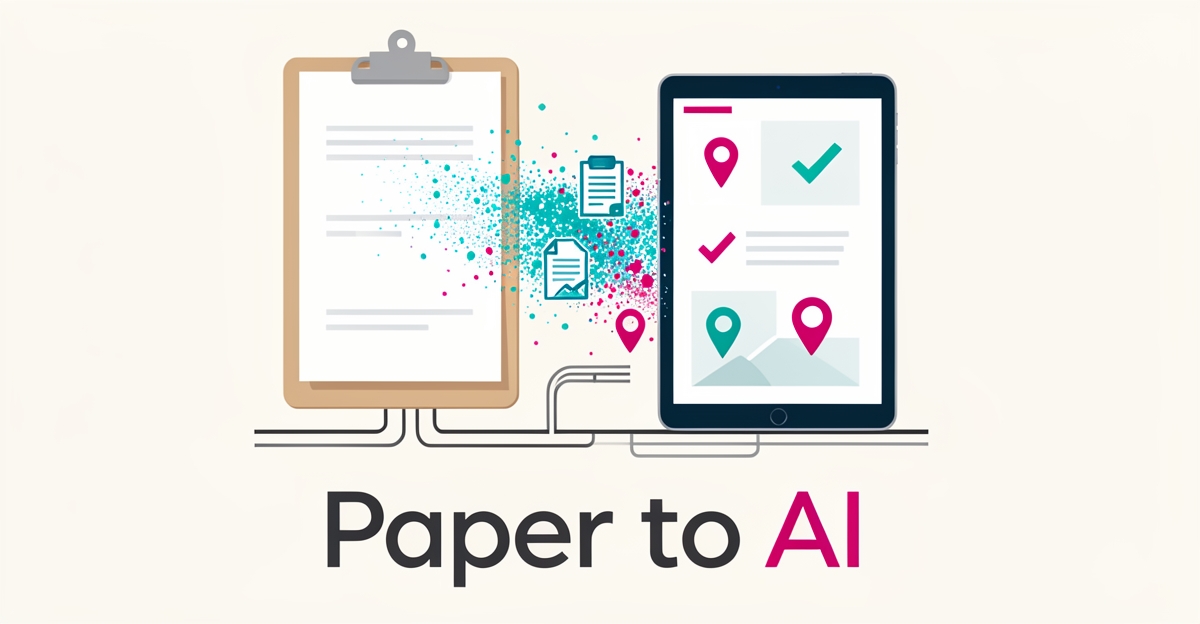
From Paper Forms to AI: How One Utility Locating Company in Halifax Automated Its Field Job Tracking
Key Facts
- Paper-based field job tracking creates double entry, transcription errors, and invoicing delays that compound across scheduling, dispatch, and customer service.
- AI document processing extracts job locations, utility types, and instructions from handwritten field notes, syncing directly to dispatch platforms in real time.
- Industry guidance on field service suggests AI can meaningfully improve first-time fix rates by ensuring technicians have accurate, complete information before arriving on site.
- A Halifax utility locating firm automated field job logs with AI document processing, eliminating double-entry errors and delays.
- Phased implementation, pilot one crew and one form type first, lets teams prove value without shutting down operations.
- AIQ Labs builds these systems through fixed-price, milestone-based AI Workflow Builds, so firms pay for each phase only after it proves value.
Hire a team member that works 24/7 — for less than a part-time wage.
AI receptionists, SDRs, dispatchers and 99+ roles. Trained on your business, fully managed.
Not sure where to start? Ask our AI planner
The Hidden Costs of Paper-Based Field Job Tracking
Manual paperwork in utility locating isn't just inconvenient, it's a silent drain on productivity and morale. Field technicians spend valuable hours filling out forms, chasing signatures, and deciphering handwritten notes instead of focusing on the critical work of locating underground infrastructure. This administrative burden creates operational bottlenecks that ripple through scheduling, dispatch, and customer service, turning routine jobs into delayed frustrations.
The human cost is significant. Frontline field roles are consistently identified in workplace research as among the most burnout-prone, and paperwork is a major contributor: when crews are stretched thin managing physical demands alongside manual documentation, errors increase and response times suffer. Every hour spent on a clipboard is an hour not spent on safety-critical locating work.
Paper-based systems also force technicians into an impossible trade-off: complete job logs accurately, or move to the next urgent locate request. That choice jeopardizes both compliance and service quality, and it repeats on every single job.
- Lost time hunting for misplaced forms or redoing illegible entries
- Delayed invoicing due to manual data transfer from field to office
- Increased safety risks when crews rush paperwork to meet deadlines
- Frustration from repetitive, low-value tasks that contribute to burnout
- Communication gaps when handwritten notes fail to convey critical updates
For a utility locating company in Halifax, these inefficiencies weren't just theoretical, they were daily realities eroding team capacity and customer trust. Recognizing that paper forms were actively hindering rather than supporting field operations marked the first step toward seeking a smarter, AI-driven approach to job tracking, one that could restore time, reduce errors, and let technicians focus on what they do best: keeping infrastructure safe and services running smoothly.
How AI Document Processing Transforms Field Operations
The shift from paper forms to AI-powered document processing is transforming how utility locating companies manage field operations. Manual data entry from handwritten tickets once created bottlenecks, errors, and delays that impacted both technicians and customers. Now, AI systems can automatically extract critical information, such as job locations, utility types, and work instructions, from scanned or photographed field notes and sync it directly to dispatch platforms in real time. This eliminates the need for staff to re-enter data, reducing administrative burden and minimizing transcription errors that could lead to mislocated utilities or safety risks.
Industry guidance on field service suggests AI can meaningfully improve first-time fix rates by ensuring technicians have accurate, complete information before arriving on site. When field workers receive real-time updates through integrated systems, they spend less time clarifying details and more time executing tasks correctly. AI also helps technicians save time and improve customer satisfaction by automating routine documentation and providing step-by-step guidance, including pictures and videos, directly to mobile devices in the field.
- Automates data capture from handwritten tickets and field notes
- Syncs extracted data instantly with dispatch and CRM systems
- Reduces manual entry errors and processing delays
- Delivers real-time job updates to field technicians
- Supports compliance with accurate, auditable records
AIQ Labs helps businesses implement these capabilities through AI Workflow Builds, rebuilding the one workflow that costs the most, at a fixed price, in phases. By automating the capture and routing of field data, companies not only cut operational delays but also empower technicians to work more confidently and efficiently. The result is a faster, safer, and more reliable service delivery model, one where information flows seamlessly from the field to the office and back again.
A Halifax Utility Locator's Automation Journey
For a Halifax-based utility locating firm, the daily grind of managing field job logs was a significant operational bottleneck. Paper forms and manual data entry led to frequent errors and delays, impacting everything from dispatch to invoicing. The firm knew there had to be a better way to track jobs and manage field data without disrupting their core operations.
The solution came in the form of AI-powered document processing. By digitizing field logs, the company automated data entry and document management, freeing up technicians to focus on their primary tasks. First-time fix rates, a critical metric in field services, depend heavily on technicians having complete, accurate information before they arrive on site, and that's exactly what reliable, real-time data capture delivers. The Halifax firm saw a noticeable reduction in errors and an increase in overall efficiency.
One of the key challenges was integrating the new AI system with their existing tools. The firm worked with AIQ Labs to build a custom AI solution that seamlessly integrated with their dispatch and scheduling software. This approach ensured that the new system enhanced, rather than replaced, their existing workflows. The real shift isn't in asking better questions, it's in building context and driving execution through AI within your specific operational framework.
The implementation process was straightforward and required minimal staff retraining. The AI system captured field notes, tracked job status, and synced with dispatch tools in real time. This allowed the firm to:
- Reduce manual data entry
- Improve job tracking accuracy
- Enhance communication between field and office staff
- Streamline invoicing and reporting
The results were immediate and impactful. The firm saw a significant reduction in errors and delays, leading to improved customer satisfaction and a more efficient operation. The AI system also provided valuable insights into job performance and resource allocation, enabling the firm to make data-driven decisions.
This case study highlights the potential of AI to transform field job tracking in the utility locating industry. By leveraging AI-powered document processing, companies can overcome the limitations of manual systems and achieve new levels of efficiency and accuracy. As the industry continues to evolve, embracing AI will be essential for staying competitive and meeting the demands of a rapidly changing market.
Overcoming Implementation Hurdles: Data, Integration, and Adoption
Paper forms survive in field service because they feel safe, not because they work. When a Halifax utility locating firm moved from clipboards to AI-powered document processing, the friction showed up immediately in data, systems, and people.
Data quality becomes the first hurdle. AI requires high-quality data to function effectively, and companies must ensure that their data is accurate, complete, and up-to-date. Field job logs collected on paper arrive smudged, incomplete, or delayed, which undermines automation from day one. A phased approach lets teams digitize and clean a single workflow first, prove value, and expand without shutting down operations.
Integration complexity follows quickly. AI must be integrated with existing systems and processes to function effectively. Dispatch tools, job status boards, and customer records rarely speak the same language. Building custom connectors that sync field notes to dispatch in real time avoids duplicate entry while keeping crews on familiar tools.
Adoption is the human side of the change. Frontline workers are already stretched, workplace research consistently shows high burnout and time pressure in field roles, and that pressure makes training critical. When crews see AI handling data entry and document management, the time saved shifts to higher-value field work.
A phased implementation keeps the business running while the system learns:
- Pilot with one crew and one form type to validate data capture accuracy
- Connect the pilot to dispatch only after field notes reliably sync
- Train supervisors first, then technicians, with short in-field coaching
- Measure first-time fix rates and admin time before scaling
The payoff is measurable. Industry guidance on field service notes that AI can improve first-time fix rates and provide step-by-step guided instructions to technicians in the field. For utility locating, that means fewer callbacks, faster job closeout, and less burnout from paperwork.
AIQ Labs approaches these hurdles as solvable design constraints rather than blockers, building custom AI systems that capture field notes, track job status, and sync with dispatch tools without requiring staff retraining. The goal is maintain operations while transitioning from paper, not a big-bang cutover. With clean data, thoughtful integration, and practical adoption, field teams keep moving while the back office finally catches up.
Your Path to Automated Field Job Management
You don't need to overhaul your entire operation overnight. The most successful transitions from paper to AI-powered field job tracking start small, prove value quickly, and scale based on real results rather than promises.
Begin by mapping your current workflow from the moment a locate request arrives until the final report leaves your office. Document every handoff, every delay, and every point where information gets re-entered or lost. This analysis typically reveals that field technicians spend excessive time on administrative tasks, a challenge reflected in workplace research showing most frontline employees lack sufficient time to complete their core job functions.
Once you identify your bottleneck, resist the urge to automate everything simultaneously. Instead, launch a targeted pilot program focused on a single workflow, perhaps digitizing field notes or automating job status updates. This approach mirrors what industry analysts describe as context-driven execution, where AI builds understanding within your specific operational framework rather than forcing generic solutions onto unique processes.
A well-structured pilot should include:
- Baseline metrics from your current paper process (time per job, error rates, delay frequency)
- A defined test group of technicians willing to provide honest feedback
- Clear success criteria established before implementation begins
- Integration checkpoints with your existing dispatch or project management tools
- A feedback loop that captures both quantitative results and qualitative user experience
The Halifax utility locating company referenced throughout this article started exactly this way, targeting their most error-prone documentation process first. By focusing on AI-powered document processing for field logs, they eliminated the double-entry that was causing delays and mistakes. This targeted approach allowed them to validate the technology's impact before expanding to additional workflows.
When evaluating potential solutions, prioritize systems that augment human judgment rather than replace it. Execution isn't just about outputs, it's about judgment, trade-offs, stakeholder alignment, and ownership. Your field supervisors still need to make critical decisions; AI simply ensures they have accurate, timely information to make them.
Flexible engagement models make this gradual approach financially viable. Rather than committing to a massive enterprise system, look for partners who offer milestone-based implementation, where you can start with a single workflow fix at a fixed price, pay for that phase, and expand only when you've documented concrete results. This structure eliminates the risk of investing in a comprehensive platform that might not fit your actual operational needs.
AIQ Labs structures implementations around exactly this philosophy with AI Workflow Builds: utility locating firms can begin with something as specific as automated field note capture, then scale to full dispatch integration only after the first phase proves its value. Firms that want a connected operating layer across their whole business can later graduate to an AI Operating System, built in phases and owned outright. The system should adapt to your existing processes, not force your team to relearn their jobs.
Finally, plan for the human element. Industry analysis indicates AI can improve first-time fix rates, but only when technicians trust and actually use the system. Choose solutions that require minimal behavior change and provide immediate, visible benefits, like eliminating after-hours paperwork, rather than adding new steps to their day.
Start with one workflow. Measure honestly. Scale what works. That's how paper-dependent operations become AI-powered without disrupting the field work that actually generates revenue.
Still paying for 10+ subscriptions that don’t talk to each other?
We build custom AI systems you own outright. No vendor lock-in. Full control.
Not sure where to start? Ask our AI planner
Frequently Asked Questions
How does AI document processing actually work for handwritten field notes?
What kind of efficiency gains can we realistically expect from automating field job tracking?
Will AI replace my field technicians or dispatchers?
How do we implement AI without disrupting our current field operations?
Do our technicians need extensive training to use AI-powered job tracking?
Why is manual paperwork such a problem for field service teams?
Paper Is The Bottleneck, Not Your Crews
Moving from clipboards to AI-powered document processing isn't about replacing field technicians, it's about removing the administrative drag that burns them out and slows the business. The Halifax utility locator's journey shows how digitizing field logs cut manual entry, improved job tracking accuracy, and restored time for higher-value work, while a phased pilot approach made adoption practical without retraining crews. The payoff is measurable: fewer errors, faster invoicing, and the kind of real-time information that helps teams work confidently in the field. If you're still choosing between accurate logs and the next urgent locate, start by mapping one workflow from request to closeout, baseline the time and error cost, and test AI capture on a single form type. AIQ Labs builds custom AI document processing through fixed-price, milestone-based AI Workflow Builds that integrate with your existing dispatch tools, and when you're ready for a connected operating layer across the whole business, an AI Operating System you own outright. Take the 2-minute Fit Check at aiqlabs.ai/apply to book a free 30-minute strategy call and map your biggest bottleneck. The question is less whether to change, and more where to start first.
Make AI your competitive advantage — not just another tool.
Strategy, implementation and ongoing optimization. One partner, end to end.
Not sure where to start? Ask our AI planner