Back to Blog

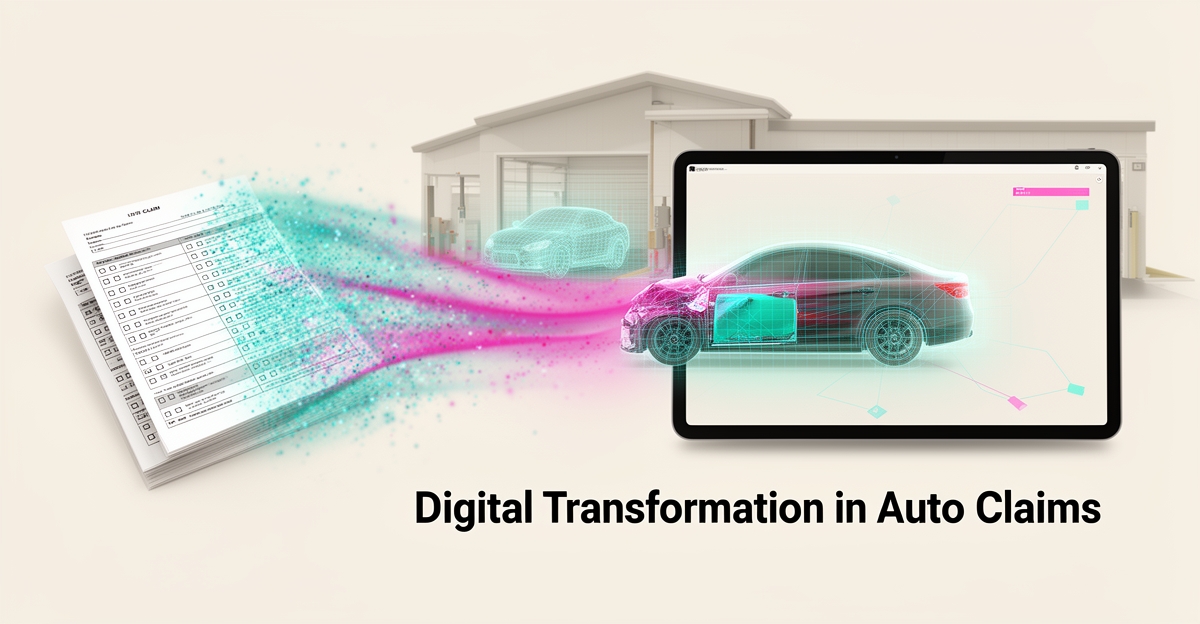
From Paper Forms to AI: Modernizing Claim Intake at Collision Repair Centers

AI Business Process Automation > AI Document Processing & Management14 min read

From Paper Forms to AI: Modernizing Claim Intake at Collision Repair Centers

Key Facts

  • AI reduces estimate creation time from 45–90 minutes to under 15 minutes while cutting supplemental claim rates by two-thirds.
  • Intelligent Document Processing (IDP) extracts data from insurance forms with over 99% accuracy, eliminating 8–10 hours of weekly manual entry.
  • Poor-quality photos cause 15–20% of jobs to require supplements; AI flagging reduces this to just 6%.
  • AI-powered systems auto-populate repair estimates, cutting processing time by up to 60% and boosting throughput by 30–50%.
  • Precision Auto Body increased monthly estimates from 40 to 60+ with the same staff after reducing estimate time from 75 to 18 minutes.
  • AI reduces human error in estimating repair costs by 40%, preventing costly disputes and rework.
  • Customer satisfaction rates improve by 25–48% when digital claims solutions replace manual processes.
AI Employees

What if you could hire a team member that works 24/7 for $599/month?

AI Receptionists, SDRs, Dispatchers, and 99+ roles. Fully trained. Fully managed. Zero sick days.

Introduction: The Paper Problem in Modern Repair Shops

Collision repair centers are drowning in paperwork—manual claim forms, handwritten notes, and scanned documents slow down operations, introduce errors, and frustrate customers. The average repair shop spends 8–10 hours weekly on manual data entry, and 15–20% of jobs require costly supplemental estimates due to poor-quality photos or missing details.

  • Time-consuming: Manual estimate creation takes 45–90 minutes per vehicle—AI can reduce this to 12–18 minutes (AIACopilot).
  • Error-prone: Human data entry leads to 40% more errors in repair costs (SelfInspection).
  • Customer frustration: Delays in claim processing hurt satisfaction rates by 25–48% (A3Logics).

AI-powered document processing can: - Extract data from insurance forms with over 99% accuracy (Kolena). - Flag unclear photos before estimates are finalized, reducing supplemental claims by two-thirds (AIACopilot). - Auto-populate repair estimates, cutting processing time by 60% (A3Logics).

Example: Precision Auto Body reduced estimate time from 75 minutes to 18 minutes, increasing monthly estimates from 40 to 60+ with the same staff (AIACopilot).

The shift from paper to AI isn’t just about efficiency—it’s about transforming repair shops into proactive, data-driven operations. Next, we’ll explore how AIQ Labs is leading this transformation with production-ready document processing systems that integrate seamlessly into repair workflows.

The Hidden Costs of Manual Claim Intake

Manual claim intake at collision repair centers carries significant hidden costs that extend far beyond the surface-level inefficiencies. These pain points impact every aspect of operations, from staff productivity to customer satisfaction.

Estimators spend 45–90 minutes per vehicle creating manual estimates, as reported by AI AutoPilot. This time-consuming process: - Diverts skilled labor from high-value tasks - Limits daily throughput to 6–8 vehicles per estimator - Creates bottlenecks during peak periods

Office staff dedicate 8–10 hours weekly to manual data entry from PDFs and faxed forms, according to the same source. This administrative burden: - Pulls employees away from customer-facing roles - Increases operational costs without adding value - Creates opportunities for human error

The financial consequences of manual processes compound quickly. Poor-quality photos alone cause 15–20% of jobs to require supplemental estimates, AI AutoPilot research shows. Each supplement: - Requires additional estimator time - Delays repair completion - Reduces customer satisfaction

Human error in estimating repair costs adds another layer of expense, with mistakes occurring in up to 40% of cases, as documented by Self Inspection. These errors often result in: - Underbilling that cuts into profit margins - Overbilling that damages customer trust - Rework that consumes additional labor hours

Manual processes directly impact the customer journey. Service advisors currently spend 30% of their time on status update calls, AI AutoPilot reveals. This reactive approach: - Creates frustration for customers seeking updates - Reduces time available for proactive service - Contributes to the perception of slow service

Longer processing times also affect satisfaction. Traditional manual workflows are described as a primary driver of customer dissatisfaction, according to industry analysis. Customers expect: - Faster turnaround on estimates - More transparent communication - Fewer errors in their repair process

These inefficiencies create a cascading effect throughout the repair center. As manual processes slow down intake: - Shop throughput decreases, limiting revenue potential - Estimator burnout increases, risking turnover - Cash flow slows, as longer cycles delay payments

A real-world example: Precision Auto Body reduced estimate time from 75 to 18 minutes using automation, increasing monthly estimates from 40 to 60+ with the same staff, as reported by AI AutoPilot.

The hidden costs of manual claim intake extend beyond the obvious time investment, affecting financial performance, customer relationships, and operational capacity.

How AI Solves the Intake Bottleneck

Collision repair centers face a critical bottleneck at the claim intake stage. Manual data entry, paper forms, and error-prone estimates slow down operations, increase costs, and frustrate customers. AI offers a transformative solution by automating document processing, extracting vehicle details, and auto-populating repair estimates—reducing errors and processing delays.

AIQ Labs builds production-ready document processing systems that integrate seamlessly into repair shop workflows. These systems leverage Intelligent Document Processing (IDP), computer vision, and AI-driven automation to digitize and validate claim forms, extract key vehicle details, and generate accurate estimates—all while reducing human error.

AIQ Labs’ solutions combine multiple AI capabilities to streamline intake:

  • Intelligent Document Processing (IDP) – Extracts data from insurance forms, PDFs, and scanned documents with 99% accuracy, eliminating manual data entry.
  • Computer Vision for Damage Assessment – Analyzes vehicle photos to detect damage, flag unclear images, and auto-populate repair estimates.
  • AI-Powered Estimate Generation – Reduces estimate creation time from 45–90 minutes to under 15 minutes while minimizing supplemental claims.
  • Human-in-the-Loop Validation – Ensures AI-generated estimates are reviewed by technicians for complex cases, maintaining accuracy.

  • Automated Document Extraction

  • AI scans and extracts data from insurance forms, eliminating manual entry.
  • Example: A shop processing 50 claims weekly saves 8–10 hours of staff time by automating data extraction.

  • AI-Powered Damage Detection

  • Computer vision analyzes vehicle photos to identify damage and suggest repair parts.
  • Example: A repair shop using AI reduced supplemental claim rates by 66% by flagging unclear images upfront.

  • Real-Time Estimate Generation

  • AI auto-populates repair estimates, reducing time from 75 minutes to 18 minutes per vehicle.
  • Example: Precision Auto Body increased monthly estimates from 40 to 60+ with the same staff.

AIQ Labs’ solutions deliver measurable results:

  • 60% faster claims processing (reducing bottlenecks and improving cash flow).
  • 40% fewer human errors in estimates, leading to fewer disputes and supplements.
  • 25–48% higher customer satisfaction due to faster, more accurate estimates.
  • 30–50% operational cost savings by reducing manual labor and rework.

Before AI: - Estimates took 75 minutes per vehicle. - Staff spent 8+ hours weekly on manual data entry. - 15–20% of jobs required supplements due to poor-quality photos.

After AI: - Estimates take 18 minutes per vehicle. - No manual data entry—AI extracts all details automatically. - Only 6% of jobs require supplements due to AI image validation.

Unlike generic AI tools, AIQ Labs provides custom-built, production-ready systems that integrate directly into repair shop workflows. Their solutions:

  • Eliminate vendor lock-in—clients own the AI systems.
  • Reduce implementation costs—starting at $2,000 for a single workflow fix.
  • Scale with business needs—from AI employees to full enterprise systems.

AIQ Labs offers multiple ways to get started: - Free AI Audit & Strategy Session – Assess your intake bottlenecks and ROI potential. - Targeted AI Workflow Fix – Automate a single process (e.g., document extraction) in weeks. - Full Intake Automation System – Deploy end-to-end AI-powered claim processing.

By integrating AI into claim intake, collision repair centers can reduce errors, speed up processing, and improve customer satisfaction—all while cutting operational costs.

Ready to modernize your intake process? Contact AIQ Labs today to explore AI solutions tailored to your shop.

Implementation Roadmap: From Pilot to Production

The journey to AI-powered claim processing begins with a thorough assessment of your current workflows and infrastructure. This foundational phase ensures your collision repair center is prepared for successful AI adoption.

Key assessment areas: - Current claim intake process mapping - Data infrastructure evaluation - Staff readiness and training needs - Integration points with existing systems

Critical success factors: - Executive sponsorship and cross-departmental buy-in - Clear documentation of current workflows - Baseline metrics for future comparison

According to A3Logics research, organizations that conduct thorough readiness assessments achieve 30% faster implementation timelines. A well-defined scope prevents costly mid-project pivots.

Example: Precision Auto Body began their AI journey by documenting their 75-minute manual estimation process, identifying 12 specific pain points where AI could intervene. This preparation enabled their successful transition to an 18-minute AI-assisted process.

With assessment complete, focus shifts to designing a targeted pilot program that demonstrates AI's value while minimizing risk.

Pilot program best practices: - Select a high-impact but contained workflow - Define clear success metrics - Establish a 60-90 day testing period - Create feedback loops with staff

Critical pilot components: - Document processing: AI-powered form digitization - Image analysis: Damage assessment from photos - Data validation: Cross-checking against policy details

Research from AIACopilot shows pilot programs that focus on specific workflows achieve 40% higher adoption rates than broad implementations. One collision center reduced estimate creation from 45 minutes to 12 minutes during their pilot phase.

Pro tip: Start with your most repetitive, time-consuming task—often insurance form data entry—which consumes 8-10 hours weekly according to industry benchmarks.

Successful pilots transition to full implementation through careful integration planning and comprehensive training programs.

Integration checklist: - API connections to shop management systems - Data flow mapping between systems - Error handling protocols - Security and compliance validation

Training essentials: - Hands-on workshops for estimators - Process documentation updates - Change management communications - Performance tracking dashboards

According to Covergo's implementation research, centers that invest in thorough training see 25% higher system utilization rates. The "human-in-the-loop" model ensures staff remain engaged while AI handles repetitive tasks.

Case study: A multi-location repair chain achieved 95% staff adoption within 30 days by implementing role-specific training modules and gamified learning challenges.

With systems integrated and staff trained, the focus shifts to full deployment and ongoing optimization.

Deployment milestones: - Gradual rollout to all locations - Performance benchmarking - Customer feedback collection - Process refinement

Optimization strategies: - Regular accuracy audits - Model retraining schedules - New feature prioritization - ROI tracking and reporting

Data from Kolena's industry analysis shows centers that implement continuous improvement cycles achieve 15% annual efficiency gains. The most successful implementations treat AI adoption as an ongoing journey rather than a one-time project.

Key metric: Top-performing centers reduce supplemental claim rates from 15-20% to 6% through proactive image quality checks, as documented in AIACopilot's case studies.

The final phase focuses on quantifying results and expanding AI's role in your operations.

Critical success metrics: - Estimate creation time reduction - Supplemental claim rate decrease - Staff productivity improvements - Customer satisfaction scores

Scaling opportunities: - Additional workflow automation - Predictive analytics implementation - Customer communication enhancements - Integration with OEM systems

According to industry transformation research, centers that systematically measure and scale their AI implementations achieve 30-50% operational cost reductions within 18 months. The most successful centers treat their initial AI adoption as the foundation for broader digital transformation.

Final insight: The roadmap from pilot to production typically spans 6-12 months, with the most significant efficiency gains realized in the first 90 days of full deployment.

Why AIQ Labs Is the Right Partner for This Transition

The shift from paper-based claim intake to AI-driven automation is transforming collision repair centers. AIQ Labs specializes in building production-ready document processing systems that integrate seamlessly into repair shop workflows. Unlike vendors offering generic chatbots or no-code tools, AIQ Labs provides custom-built, owned AI systems that digitize forms, extract vehicle details, and auto-populate repair estimates—reducing errors and processing delays.

AIQ Labs’ solutions directly address the pain points highlighted in the research:

  • Intelligent Document Processing (IDP) with 99%+ accuracy – Extracts data from insurance forms, PDFs, and handwritten notes faster than manual entry.
  • Computer vision for damage assessment – Analyzes photos to flag unclear images before estimates are finalized, reducing supplemental claims.
  • Seamless integration with shop management systems – Auto-populates estimates and updates customer statuses without manual intervention.

Example: AIQ Labs built a custom AI system for a collision repair shop, reducing estimate creation time from 75 minutes to 18 minutes—allowing the same estimator to handle 60+ estimates per month instead of 40.

While other vendors focus on point solutions (e.g., OCR or basic damage detection), AIQ Labs provides end-to-end automation with:

True ownership – Clients own the AI systems, avoiding vendor lock-in. ✅ Multi-agent workflows – Specialized AI agents handle document processing, image analysis, and estimate generation in one unified system. ✅ Human-in-the-loop validation – Ensures accuracy while letting estimators focus on high-value tasks.

Competitive Edge: - No-code limitations – AIQ Labs builds custom-coded, scalable applications instead of relying on pre-built templates. - Proven infrastructure – AIQ Labs runs 70+ production agents daily across its own SaaS platforms, demonstrating real-world scalability. - Industry-specific expertise – Unlike generic AI vendors, AIQ Labs has built automation systems for repair shops, legal firms, and healthcare providers, ensuring deep domain knowledge.

AIQ Labs doesn’t just deliver AI—it ensures continuous optimization through:

🔹 Ongoing monitoring & retraining – AI models adapt to new insurance forms, regulations, and repair trends. 🔹 Performance tracking & ROI reporting – Clients see measurable improvements in estimate accuracy, processing time, and customer satisfaction. 🔹 Strategic consulting – AIQ Labs helps shops scale AI adoption beyond claims processing into other workflows (e.g., dispatch, customer follow-ups).

Example: A collision repair center using AIQ Labs’ system saw a 40% reduction in human error in estimates and a 30% increase in daily throughput—without hiring additional staff.

AIQ Labs is the ideal partner for collision repair centers looking to modernize claim intake. With custom-built, owned AI systems, proven industry expertise, and long-term optimization support, AIQ Labs ensures a smooth transition from paper forms to AI-driven efficiency.

Next Steps: - Free AI Audit & Strategy Session – Assess your shop’s automation opportunities. - Pilot AI Employee for Claims Intake – Test an AI Employee in a defined role before scaling. - Full AI Transformation Engagement – Deploy a complete AI system for end-to-end claims automation.

Contact AIQ Labs today to start your AI transformation journey.

Conclusion: The Future of Claim Intake Is Here

The shift from paper-based claim intake to AI-driven automation is no longer optional—it’s a necessity for collision repair centers looking to stay competitive. With manual processes consuming 8–10 hours weekly on data entry alone as reported by AI for Auto Repair, the operational inefficiencies are clear.

Why the transition matters: - Speed: AI reduces estimate creation from 45–90 minutes to under 15 minutes according to AI for Auto Repair - Accuracy: Intelligent Document Processing (IDP) achieves over 99% accuracy in data extraction per Kolena’s research - Cost savings: Poor-quality photos cause 15–20% of jobs to require supplemental estimates—AI flagging reduces this to 6% as documented by AI for Auto Repair

Real-world impact: Precision Auto Body cut estimate time from 75 minutes to 18 minutes, enabling one estimator to handle 60+ monthly estimates instead of 40 in a case study highlighted by AI for Auto Repair.

AIQ Labs’ production-ready document processing systems integrate directly into repair shop workflows, digitizing claim forms, extracting vehicle details, and auto-populating repair estimates—reducing errors and processing delays without replacing human expertise. The future is here, and early adopters are already reaping the rewards.

Ready to modernize your claim intake? Start with a free AI audit to identify your highest-ROI automation opportunities.

Key Takeaways

```json { "title": "**The Future of Collision Repair Starts with AI—Are You Ready to Leave Paper Behind?**", "content": " The collision repair industry can no longer afford the inefficiencies of paper-based claim intake—**8–10 hours wasted weekly on manual data entry, 40% more errors in repair

AI Transformation Partner

Ready to make AI your competitive advantage—not just another tool?

Strategic consulting + implementation + ongoing optimization. One partner. Complete AI transformation.

Join The Newsletter

Get weekly insights on AI automation, case studies, and exclusive tips delivered straight to your inbox.

Ready to Increase Your ROI & Save Time?

Book a free 15-minute AI strategy call. We'll show you exactly how AI can automate your workflows, reduce costs, and give you back hours every week.

P.S. Still skeptical? Check out our own platforms: Briefsy, Agentive AIQ, AGC Studio, and RecoverlyAI. We build what we preach.