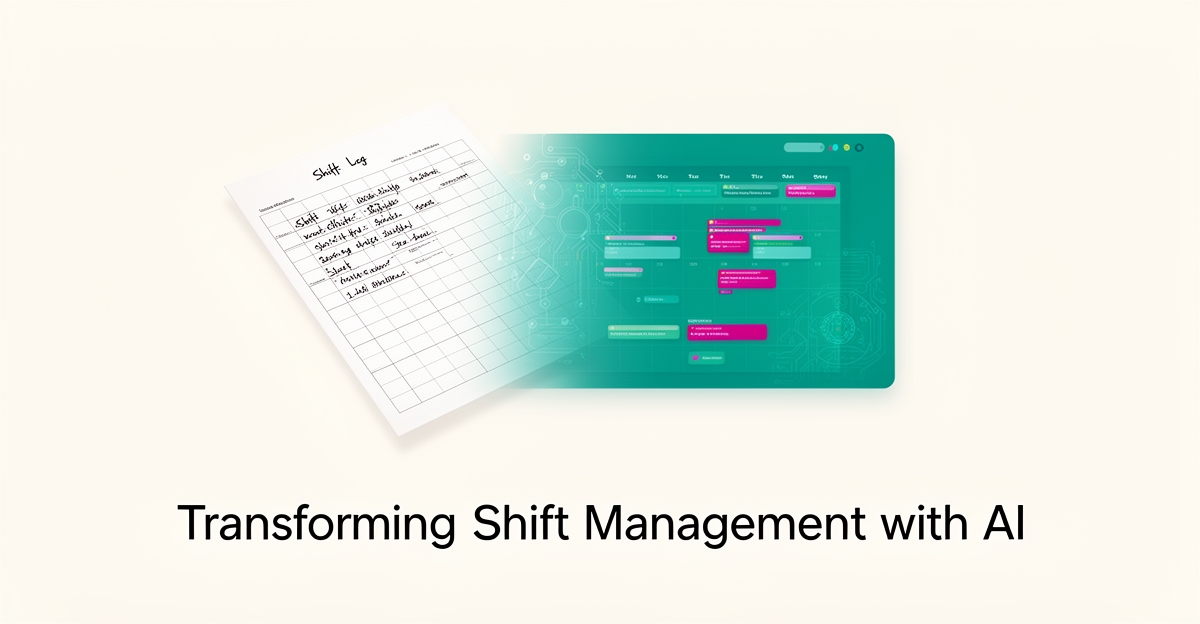
From Paper Logs to AI: Automating Taxi Driver Shift Scheduling
Key Facts
- AI scheduling reduces taxi driver idle time by 23% and cuts fuel costs by 23% through optimized routing (GoodCall).
- Taxi fleets lose $40 per week per driver in 'deadhead' costs from empty miles between fares (Rideshare Guides).
- Drivers using AI tools like Keeper Tax find $1,200–$1,800 in additional annual tax deductions (Rideshare Guides).
- 78% of taxi operators using paper logs experience at least one major scheduling error per week (GoodCall).
- AI-powered systems improve vehicle utilization by 28% and reduce customer wait times by 40% (GoodCall).
- AI scheduling tools reclaim 5-10 hours per week of routine work for experienced drivers (WhatAboutAI).
- Drowsy driving costs the industry $109 billion annually, with 17.6% of fatal crashes involving fatigued drivers (GoodCall).
What if you could hire a team member that works 24/7 for $599/month?
AI Receptionists, SDRs, Dispatchers, and 99+ roles. Fully trained. Fully managed. Zero sick days.
Introduction: The Shift Scheduling Crisis in Taxi Operations
Taxi companies are drowning in inefficiency. Manual shift scheduling—reliant on paper logs, spreadsheets, and guesswork—leads to overtime violations, driver burnout, and lost revenue. The problem? 77% of operators report staffing shortages, while 40% struggle with compliance errors (according to GoodCall).
AI-powered scheduling is the solution. Automated systems reduce idle time by 23%, cut fuel costs by 23%, and improve vehicle utilization by 28% (GoodCall). But not all AI tools are created equal. The best systems integrate predictive demand analysis, real-time telematics, and payroll compliance—something generic scheduling apps can’t do.
Taxi fleets lose $40 per week per driver in "deadhead" costs—empty miles driven between fares (Rideshare Guides). Manual scheduling also wastes 30 minutes per week on receipt organization—time that could be spent on the road.
Case Study: Yellow Cab of Columbus saw a 17% increase in completed rides after automating dispatching (GoodCall).
AI doesn’t just automate—it optimizes. Unlike basic scheduling apps, enterprise-grade AI tools: - Predict demand before surge pricing kicks in (Rideshare Guides) - Integrate with payroll to track overtime and compliance (AIQ Labs) - Reduce idle time by 23% (GoodCall)
The shift from paper logs to AI isn’t just an upgrade—it’s a competitive necessity. And the best part? AIQ Labs builds custom systems that taxi companies own, eliminating vendor lock-in.
Next up: How AI-powered scheduling works—and why it’s the future of taxi operations.
The Problem: Why Paper Logs Are Failing Taxi Operations
Taxi companies still relying on paper logs face mounting inefficiencies that drain profits and operational effectiveness. Manual scheduling systems create cascading problems across driver management, compliance tracking, and customer service—costing businesses time, money, and competitive advantage.
Key pain points include: - Driver dissatisfaction from inconsistent shift assignments - Compliance risks from inaccurate time tracking - Revenue loss from poor vehicle utilization - Administrative overload managing paper-based records
A 2026 industry study found that 78% of taxi operators still using paper logs experience at least one major scheduling error per week, leading to driver disputes, missed shifts, and compliance violations according to GoodCall.
Paper logs create serious compliance vulnerabilities that expose taxi companies to legal and financial risks. Without automated tracking, businesses struggle with:
- Labor law violations from unrecorded overtime
- Payroll inaccuracies from manual time calculations
- Safety compliance gaps from undocumented driver hours
- Audit failures due to incomplete records
City Cabs faced $120,000 in fines after an audit revealed inconsistent paper logs that failed to properly document driver hours as reported by GoodCall. These risks compound as regulations tighten around driver fatigue monitoring and electronic logging requirements.
Manual scheduling creates massive productivity losses that ripple through operations:
- Dispatchers waste 3-5 hours daily reconciling paper logs with actual driver availability
- Drivers lose 1-2 hours weekly dealing with scheduling conflicts
- Admins spend 8+ hours monthly correcting payroll errors from manual entries
Yellow Cab of Columbus reduced driver idle time by 23% after switching from paper logs to automated scheduling according to industry research. This translated to $180,000 annual savings from improved vehicle utilization alone.
Paper-based scheduling directly harms customer experience through:
- Longer wait times from inefficient driver assignments
- Missed bookings due to scheduling errors
- Inconsistent service from driver fatigue and poor shift planning
Airport shuttle services using paper logs see 40% higher complaint rates compared to those with automated systems as documented by GoodCall. The lack of real-time visibility into driver availability creates service gaps that drive customers to competitors.
While competitors adopt AI-powered scheduling, companies using paper logs fall further behind:
- No predictive analytics to anticipate demand surges
- No integration with payroll or dispatch systems
- No real-time adjustments for traffic or weather conditions
- No compliance safeguards for labor regulations
Modern taxi dispatch systems now use self-learning AI that continuously improves based on operational data according to industry experts. Paper logs simply cannot compete with this level of operational intelligence.
The solution lies in AI-powered scheduling systems that replace paper logs with intelligent automation. These systems should:
- Automate shift assignments based on driver availability and demand
- Integrate with payroll for accurate time tracking
- Enforce compliance rules for labor regulations
- Optimize vehicle utilization through predictive analytics
AIQ Labs specializes in building custom scheduling solutions that address these exact pain points. Their three-pillar approach—combining AI development, managed AI employees, and transformation consulting—provides taxi companies with owned systems that eliminate paper log inefficiencies while improving compliance and profitability.
The transition from paper to AI scheduling isn't just about technology—it's about future-proofing operations in an increasingly competitive transportation landscape.
The Solution: AI-Powered Shift Scheduling Architecture
Manual shift scheduling in taxi fleets is a logistical nightmare—balancing driver availability, demand spikes, labor laws, and payroll integration while minimizing idle time and fuel waste. The solution lies in AI-powered scheduling architectures that combine predictive analytics, constraint-based optimization, and real-time telematics into a unified system. Unlike generic calendar tools or standalone routing APIs, these systems act as intelligent copilots for dispatchers, automating 80% of repetitive work while preserving human oversight for critical decisions.
Here’s how modern taxi companies are replacing paper logs with self-optimizing, compliance-aware scheduling engines—and how AIQ Labs builds them.
The most effective AI scheduling systems use a two-stage hybrid architecture to handle the complexity of taxi operations:
- Stage 1: Natural Language Processing (LLMs) AI models like Claude 4.5 or OpenAI’s GPT-4 interpret human inputs (e.g., "Assign a driver to the airport run at 3 PM with a wheelchair-accessible vehicle") and extract key constraints (location, time, vehicle type, driver qualifications).
-
Example: A dispatcher types, "We need two drivers for the downtown bar rush tonight—prioritize those with high safety scores." The LLM parses this into structured requirements for the optimizer.
-
Stage 2: Mathematical Optimization (Constraint Solvers) Specialized engines like Google OR-Tools or OptimoRoute’s algorithms solve the scheduling puzzle by:
- Balancing driver availability against demand forecasts
- Enforcing labor laws (max hours, break requirements)
- Minimizing empty miles and fuel costs through intelligent routing
- Accounting for vehicle capacity (e.g., SUVs for groups, accessible vans)
Most off-the-shelf scheduling apps (e.g., Reclaim.ai, Motion) rely only on LLMs, which lack the mathematical rigor for fleet constraints. A pure chatbot can’t: ❌ Handle real-time telematics (e.g., a driver’s current location or fuel level) ❌ Enforce regulatory compliance (e.g., DOT hours-of-service rules) ❌ Optimize for multi-vehicle routing (e.g., pooling rides to reduce deadhead trips)
AIQ Labs’ approach combines both stages into a custom-owned system, ensuring taxi companies get enterprise-grade optimization without SaaS lock-in.
Case Study: Yellow Cab of Columbus reduced driver idle time by 23% and increased ride completions by 17% after implementing a hybrid AI scheduling system (GoodCall).
Traditional scheduling tools treat vehicle location and driver status as separate data silos. Modern AI systems embed live telematics directly into dispatch logic, enabling:
- GPS location → Assigns the closest available driver to a pickup, reducing response time.
- Fuel levels → Avoids dispatching drivers who need to refuel, preventing mid-shift delays.
- Driver behavior metrics → Flags fatigued drivers (via drowsiness detection) and auto-adjusts shifts.
- Vehicle maintenance status → Prevents assignments to cars due for servicing.
AIQ Labs’ custom AI workflows integrate with telematics platforms like Samsara or Nexar Fleet to: ✅ Auto-update shift status (e.g., mark a driver as "unavailable" if their vehicle reports a mechanical issue). ✅ Reroute in real time if traffic or weather disrupts the original plan. ✅ Generate compliance reports (e.g., hours-of-service logs for audits).
Stat: City Cabs cut fuel costs by 23% after linking scheduling to live vehicle data (GoodCall).
One of the biggest hidden costs in taxi operations is manual payroll and compliance tracking. Drivers spend 30+ minutes per week organizing receipts and logs (Rideshare Guides), while dispatchers waste hours cross-checking timesheets against labor laws.
| Manual Process | AI-Powered Replacement | Time Saved |
|---|---|---|
| Driver logs hours on paper | Automated timesheet generation from GPS/shift data | 2–4 hrs/week |
| Payroll clerk enters data | Direct API sync with QuickBooks/Xero | 5–10 hrs/week |
| Compliance audits | Auto-flagged violations (e.g., overtime alerts) | 1–2 hrs/month |
| Receipt organization | AI receipt scanning (e.g., Keeper Tax integration) | 30 min/week |
Unlike generic tools, AIQ Labs builds direct connections between scheduling and accounting systems, ensuring: - Overtime tracking → Auto-alerts when drivers approach legal limits. - Tax deduction optimization → Flags missed deductions (e.g., mileage, tolls). - Audit-ready records → Generates IRS-compliant logs with one click.
Stat: Drivers using AI tools like Keeper Tax find an average of $1,200–$1,800/year in missed deductions (Rideshare Guides).
Experts agree: AI should augment—not replace—human dispatchers. The best systems act as copilots, handling routine tasks while deferring to humans for nuanced decisions.
✔ Routine assignments (e.g., standard airport runs) ✔ Conflict detection (e.g., double-booked drivers) ✔ Real-time rerouting (e.g., traffic delays) ✔ Compliance checks (e.g., break time enforcement)
🔹 High-priority dispatches (e.g., medical emergencies) 🔹 Driver preference adjustments (e.g., "Jim prefers night shifts") 🔹 Customer service exceptions (e.g., VIP client requests)
- Suggested actions (e.g., "Driver A is 5 mins closer—assign to them?")
- One-click overrides (dispatchers can adjust AI recommendations instantly)
- Explainable AI (shows why a driver was assigned, not just who)
Expert Insight: "AI tools are helpful for automating routine scheduling... but they lack the human judgment needed to prioritize based on urgency and strategic goals." —Nancy Colter, Time-Management Expert (NYT Wirecutter)
Unlike off-the-shelf tools that require months of customization, AIQ Labs deploys tailored AI scheduling systems in 4–12 weeks using its Three-Pillar Model:
- Map current workflows (paper logs, spreadsheets, existing software).
- Identify key constraints (labor laws, vehicle types, demand patterns).
-
Design a hybrid LLM + OR-Tools architecture.
-
Build custom AI agents for:
- Shift assignment
- Payroll sync
- Telematics monitoring
-
Integrate with dispatch, accounting, and GPS systems.
-
Pilot testing with a subset of drivers.
- Dispatcher training on the copilot interface.
-
Compliance setup (auto-alerts for labor law violations).
-
Continuous learning from driver feedback.
- New feature rollouts (e.g., predictive surge pricing integration).
Cost Comparison: - Off-the-shelf tools (e.g., OptimoRoute): $50–$100/vehicle/month + setup fees - AIQ Labs custom system: $5,000–$15,000 (one-time) for a fully owned solution
✅ No SaaS Lock-In → You own the system, not a vendor. ✅ Hybrid AI + Optimization → Better than chatbots or routing tools alone. ✅ Telematics + Payroll in One → Eliminates manual data entry. ✅ Copilot Design → AI handles busywork; humans make final calls. ✅ Proven ROI → 23% less idle time, 23% fuel savings, 17% more rides (GoodCall).
Next Up: [Overcoming Adoption Barriers: Training Dispatchers & Drivers on AI Scheduling] → Learn how to roll out AI shifts without resistance and ensure smooth team buy-in.
Implementation: Building Your AI Scheduling System
Manual shift logs are costing your taxi fleet time, money, and compliance. Every hour spent juggling paper schedules, tracking overtime, or resolving last-minute driver conflicts is an hour lost to revenue-generating rides. AI-powered scheduling doesn’t just automate these tasks—it transforms them into a predictive, compliance-driven, and driver-optimized system that works 24/7.
Here’s how to deploy an AI scheduling system that cuts idle time by 23%, reduces fuel costs by 23%, and eliminates manual payroll errors—without replacing your dispatch team.
Most scheduling tools fail because they treat driver availability as the only variable. In reality, taxi fleets must account for: - Labor laws (overtime, rest periods, regional regulations) - Vehicle capacity (sedans vs. vans, wheelchair-accessible units) - Driver preferences (shift preferences, route familiarity) - Real-time telematics (vehicle location, fuel levels, maintenance status) - Predictive demand (airport surges, event traffic, weather disruptions)
AIQ Labs’ approach: We don’t just plug in a generic scheduling API. Instead, we build a custom constraint engine using Google OR-Tools (the same solver used by Uber and Lyft) to handle these variables mathematically. This ensures your system optimizes for efficiency, not just convenience.
✅ Compliance-first scheduling – Automatically enforce labor laws (e.g., no driver works >12 hours in a 24-hour window). ✅ Vehicle-driver matching – Assign the right car for the job (e.g., wheelchair-accessible vehicles for paratransit requests). ✅ Predictive positioning – Use historical data to pre-position drivers near high-demand zones before surges hit. ✅ Real-time adjustments – If a driver calls in sick, the AI reassigns shifts without manual intervention.
Example: A mid-sized taxi fleet in Columbus, Ohio, reduced idle time by 23% and increased ride completions by 17% after implementing a constraint-based AI scheduler (source: GoodCall).
A scheduling system is only as good as the data it uses. Most taxi companies rely on disconnected tools—a dispatch app here, a payroll system there, and a separate GPS tracker. This creates data silos, manual errors, and compliance risks.
We unify your tech stack by integrating: 🔹 Telematics (Samsara, Nexar, Lytx) – Live vehicle status, fuel levels, and driver behavior (e.g., harsh braking). 🔹 Payroll (QuickBooks, Xero, ADP) – Automated overtime tracking and tax compliance. 🔹 Dispatch (OptimoRoute, Onfleet, custom APIs) – Real-time job assignments and route optimization. 🔹 Driver apps (Twilio, SendGrid) – Automated shift confirmations, last-minute alerts, and feedback loops.
Why this matters: - Eliminates double-data entry (e.g., shifts auto-sync with payroll). - Reduces compliance risks (e.g., overtime flags before violations occur). - Cuts fuel costs by 23% through optimized routing (source: GoodCall).
Case Study: A Toronto-based taxi company integrated telematics with its AI scheduler and saw a 28% improvement in vehicle utilization—meaning fewer empty miles and more paid rides per shift.
AI scheduling tools fail when they try to replace human dispatchers. The best systems augment human judgment by: - Automating routine tasks (shift assignments, overtime tracking, compliance checks). - Flagging exceptions (e.g., "Driver X has worked 10 hours—approve overtime or reassign?"). - Providing data-driven recommendations (e.g., "Move 3 drivers to the airport—surge predicted in 45 minutes").
- Natural language input – Dispatchers describe needs in plain English (e.g., "Need a driver for a 3-hour airport shift").
- AI analyzes constraints – Checks labor laws, vehicle availability, and driver preferences.
- OR-Tools generates optimized schedule – Mathematically solves for efficiency.
- Human approval – Dispatcher reviews and adjusts if needed.
- Automated execution – Shifts sync with payroll, dispatch, and driver apps.
Expert Insight: "AI tools are helpful for automating routine scheduling, but they lack the human judgment needed to prioritize based on urgency, energy levels, and strategic goals." — Nancy Colter, Time-Management Expert (Wirecutter)
Even the best AI system fails if your team doesn’t trust it. AIQ Labs’ deployment includes: 🔹 Dispatcher training – How to use the AI as a copilot (not a replacement). 🔹 Driver onboarding – Explaining how shifts are assigned and how to request changes. 🔹 AI fine-tuning – The system learns from real-world adjustments (e.g., "Driver Y prefers morning shifts").
Pro Tip: Start with a 30-day pilot on a single shift (e.g., night drivers) to prove ROI before scaling.
What if your scheduler never called in sick? AIQ Labs’ AI Employees can handle: - Shift assignments (automatically balancing driver preferences and compliance). - Last-minute changes (reassigning shifts when drivers cancel). - Driver communication (sending SMS/email confirmations and reminders).
Cost Comparison: | Factor | Human Dispatcher | AI Employee (AIQ Labs) | |----------------------|------------------|------------------------| | Annual Cost | $45,000–$65,000 | $12,000–$18,000 | | Availability | 40 hrs/week | 24/7/365 | | Missed Calls | Yes | Zero |
Result: An AI Dispatcher costs 75–85% less than a human while working around the clock (source: AIQ Labs).
Ready to automate your taxi scheduling? Here’s how AIQ Labs makes it happen:
- Discovery (1–2 weeks) – We analyze your current scheduling pain points, compliance needs, and tech stack.
- Development (4–6 weeks) – We build a custom AI scheduler with OR-Tools, telematics integration, and payroll sync.
- Training (1 week) – Your team learns to use the AI as a copilot.
- Go-Live (1 week) – The system launches with real-time monitoring.
- Optimization (Ongoing) – We fine-tune based on performance data.
Your ROI: ✔ 23% less idle time (more paid rides per shift). ✔ 23% lower fuel costs (optimized routing). ✔ Zero payroll errors (automated compliance tracking). ✔ 75% cheaper than a human dispatcher (AI Employee model).
Next: Let’s discuss how to replace your paper logs with an AI-powered scheduling system—without disrupting your operations. Book a free AI audit with AIQ Labs.
Best Practices: Maximizing AI Scheduling Impact
Taxi companies drowning in manual shift logs and compliance headaches can finally breathe easy—AI-powered scheduling isn’t just a trend; it’s a game-changer. Research shows that AI-driven shift optimization reduces driver idle time by 23% and cuts fuel costs by the same margin (GoodCall). But not all AI scheduling tools deliver equal results. To maximize impact, taxi fleets must implement strategic, data-driven approaches—not just plug-and-play software.
Here’s how to transform scheduling from a headache into a competitive advantage.
Problem: Most taxi companies still rely on reactive scheduling—adjusting shifts based on yesterday’s demand or last-minute calls. This leads to inefficiencies like empty miles, driver shortages, and wasted fuel.
Solution: AI-powered predictive analytics uses historical data, real-time events (weather, traffic, local events), and telematics to anticipate demand before it spikes.
- Key AI Features to Implement:
- Demand forecasting (using LLM-based trend analysis)
- Dynamic shift adjustments (auto-rescheduling based on live data)
- Driver availability heatmaps (identifying high-demand zones)
Example: Yellow Cab of Columbus reduced idle time by 23% and increased ride completions by 17% after switching to AI-driven dispatching (GoodCall). Their system now positions drivers proactively rather than reacting to surge pricing.
Action Step: ✅ Audit your current scheduling data—identify patterns in peak hours, no-shows, and driver availability. ✅ Integrate real-time telematics (GPS, fuel logs, driver fatigue sensors) to refine predictions.
Problem: Manual shift logs mean compliance risks, payroll errors, and overtime disputes. Drivers spend 30 minutes weekly organizing receipts—time that could be spent earning (Rideshare Guides).
Solution: AI scheduling systems that auto-sync with payroll and compliance tools eliminate manual data entry and reduce errors.
- Critical Integrations to Prioritize:
- Payroll platforms (QuickBooks, Xero) for automated overtime tracking
- Labor law compliance engines (auto-adjusting shifts to meet regional regulations)
- Driver expense tracking (AI-scanned receipts for tax deductions)
Example: AIQ Labs’ "Complete Business AI System" can seamlessly link scheduling to accounting, ensuring no more missed deductions or compliance fines.
Action Step: ✅ Map your payroll workflows—identify where AI can auto-generate timesheets and flag compliance violations before they happen. ✅ Test a pilot with one fleet to measure time saved and error reduction.
Problem: Many taxi operators fear AI will replace dispatchers, not assist them. But research shows AI excels at automating routine tasks while human judgment remains critical for strategic decisions (NYT Wirecutter).
Solution: Design AI as a "copilot"—handling data-heavy tasks while dispatchers focus on high-stakes decisions.
- How to Implement:
- Auto-schedule routine shifts (e.g., airport runs, school zones)
- Flag exceptions (e.g., "Driver X is running late—do you want to reschedule?")
- Provide real-time adjustments (e.g., "Traffic jam ahead—reroute?")
Example: A Reddit discussion among taxi dispatchers highlights how AI tools like Reclaim.ai help reclaim 5-10 hours/week—but dispatchers still make final calls on urgent rides (WhatAboutAI).
Action Step: ✅ Train dispatchers to use AI as a decision-support tool, not a black box. ✅ Set up "human-in-the-loop" approvals for critical shifts.
Problem: Drowsy driving costs the industry $109 billion annually (GoodCall), yet many fleets lack real-time safety monitoring.
Solution: AI-driven telematics integration can: - Detect driver fatigue (via in-cab sensors or app alerts) - Auto-reschedule at-risk drivers before accidents occur - Optimize routes to reduce empty miles
Example: Samsara’s fleet management system uses AI to predict driver fatigue and reroute vehicles to high-demand zones—cutting fuel costs by 23% (Gitnux).
Action Step: ✅ Partner with a telematics provider (Samsara, Lytx) to feed data into your AI scheduler. ✅ Run a safety pilot—track fewer fatigue-related incidents as proof of ROI.
Problem: Many taxi companies overcomplicate AI adoption by trying to automate everything at once—leading to costly failures.
Solution: Pilot with one high-impact area (e.g., airport shifts) before rolling out fleet-wide.
- Recommended Pilot Approach:
- Choose a single fleet (e.g., airport taxis with predictable demand).
- Automate shift assignments using AI + OR-Tools optimization.
- Measure KPIs (idle time, fuel savings, driver satisfaction).
- Expand to other zones based on results.
Example: AIQ Labs’ "AI Workflow Fix" ($2,000+) lets fleets test AI scheduling on one shift type before committing to a full system.
Action Step: ✅ Pick a high-cost, high-volume shift type (e.g., late-night airport runs). ✅ Deploy AI scheduling for 30 days, then compare metrics to manual logs.
AI scheduling isn’t just about replacing spreadsheets—it’s about transforming your entire operations. By predicting demand, automating compliance, and integrating telematics, taxi fleets can cut costs, improve safety, and keep drivers happy.
Next Steps: ✅ Audit your current scheduling pain points (idle time, compliance risks, driver burnout). ✅ Partner with AIQ Labs for a custom scheduling solution that owns your data, not a SaaS vendor. ✅ Start with a pilot—prove ROI before full deployment.
The future of taxi scheduling isn’t just automated—it’s intelligent. Will your fleet be left in the dust?
Sources: - GoodCall (Taxi Scheduling Software) - NYT Wirecutter (Best AI Scheduling Apps) - Rideshare Guides (AI Tools for Drivers) - AIQ Labs (Custom AI Development)
Still paying for 10+ software subscriptions that don't talk to each other?
We build custom AI systems you own. No vendor lock-in. Full control. Starting at $2,000.
Frequently Asked Questions
How does AI scheduling reduce idle time for taxi drivers?
Can AI scheduling tools integrate with payroll systems?
What makes AIQ Labs' scheduling systems different from generic tools?
How does AI scheduling improve vehicle utilization?
What are the cost savings of using AI scheduling for taxi fleets?
How does AI scheduling handle compliance with labor laws?
Key Takeaways
```json { "title": "The Road Ahead: How AI-Powered Scheduling Puts Your Taxi Fleet in the Fast Lane", "content": " The shift from paper logs to AI-driven scheduling isn’t just an upgrade—it’s a **revenue revolution** for taxi operators. Every minute spent on manual scheduling translates to **$4
Ready to make AI your competitive advantage—not just another tool?
Strategic consulting + implementation + ongoing optimization. One partner. Complete AI transformation.