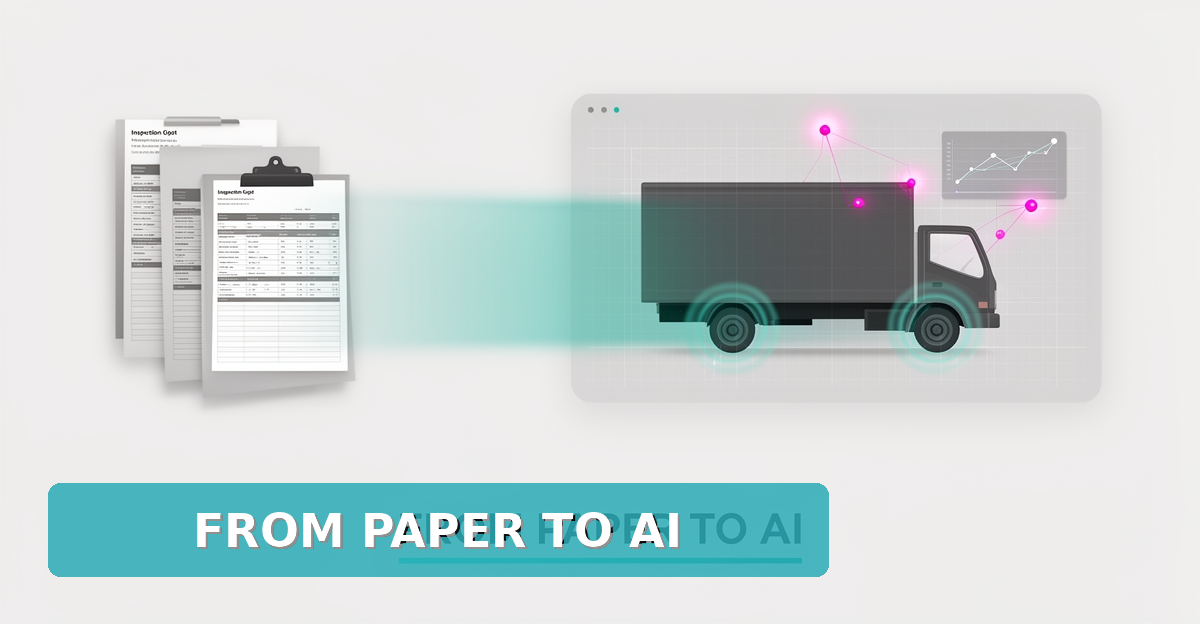
From Paper Logs to AI: Automating Vehicle Inspection and Material Tracking
Key Facts
- A large share of facilities and fleet teams still run on paper, spreadsheets, or no formal system at all, based on industry analyses of maintenance operations
- Paper-based request handling typically loses a meaningful fraction of maintenance requests between handoffs—industry studies commonly cite double-digit percentages
- Work order completion that takes days on paper systems often drops to hours once capture is digitized
- Teams that complete the digital transition typically report fewer unexpected failures and more work orders completed with the same staff
- A significant portion of experienced maintenance professionals is expected to retire within the next several years, taking undocumented knowledge with them
Hire a team member that works 24/7 — for less than a part-time wage.
AI receptionists, SDRs, dispatchers and 99+ roles. Trained on your business, fully managed.
Not sure where to start? Ask our AI planner
The Hidden Cost of Paper Vehicle Logs and Material Sheets
A clipboard in a cab, a binder on a shelf, a spreadsheet nobody updates—this is how many fleets still track inspections and materials. And the costs are far larger than the price of paper.
Industry analyses of maintenance operations consistently find that a majority of facilities and fleet teams still manage work with paper, spreadsheets, or no formal system at all. Fleets and operations teams relying on the same methods face identical structural weaknesses.
The first failure mode is information loss. Paper-based systems commonly lose a meaningful share of maintenance requests between handoffs—industry studies frequently cite double-digit percentages. A defect noted on a clipboard can simply vanish before anyone acts on it.
The second is response delay. Work order completion that stretches across days on paper systems often drops to a day or less once capture is digitized. In fleet operations, a week of lag on an inspection finding can turn a minor repair into a downtime event.
The third failure mode is knowledge drain. A significant share of experienced maintenance professionals is expected to retire within the next several years, taking decades of undocumented institutional knowledge with them. When inspection history lives in handwritten logs and veterans' memories, that knowledge leaves the organization permanently.
The fourth is budget blindness. Without structured data, teams cannot see failure patterns, forecast material needs, or accurately cost jobs. The result is reactive spending and a growing deferred maintenance backlog. For any operation running vehicles and materials, the same opacity makes it impossible to defend budget requests with evidence.
The downstream costs compound quickly:
- Unexpected failures that proactive, data-driven teams report far fewer of
- Staff capacity wasted on manual logging instead of completing work
- Audit exposure, since paper systems cannot demonstrate complete audit readiness
- Job costing errors that quietly erode margins on every project
Closing these gaps requires more than scanning documents. AI-powered document processing can read formats, capture key fields, and route information where it's needed, reducing manual errors and unlocking staff time. This is precisely where custom systems—like those AIQ Labs builds to capture, analyze, and report on vehicle and material data in real time—turn a liability into a forecasting and resource-planning advantage.
How AI-Powered Tracking Replaces Paper with Real-Time Accuracy
The shift from paper-based vehicle inspection and material tracking to AI-powered systems represents a fundamental evolution in operational accuracy. For decades, manual logs created blind spots where critical data was lost, delayed, or misinterpreted—leading to costly errors in inventory, job costing, and maintenance planning. This progression isn't just about digitizing forms; it's about replacing guesswork with real-time intelligence that prevents failures before they occur.
Organizations still relying on paper face systemic inefficiencies that compound over time. Requests get lost between handoffs, response times stretch across days, and none of it is visible until something breaks. These losses aren't merely administrative—they translate directly into unexpected equipment failures, safety risks, and budget overruns. Digitizing capture eliminates most request loss and cuts response times dramatically, laying the groundwork for the next leap: AI-powered tracking.
The evolution—from paper to digital records to AI-powered maintenance—builds a cumulative advantage at each step. AI document processing captures inspection data from photos, scans, and forms with high accuracy, eliminating manual entry errors. Intelligent workflows then route this data instantly to trigger work orders, update inventory levels, and flag discrepancies in material usage. Finally, predictive maintenance analyzes patterns in vehicle performance and material consumption to forecast failures before they happen, turning reactive repairs into scheduled, cost-effective interventions.
The measurable gains of this transformation are substantial. Teams completing the full transition typically report fewer unexpected failures and meaningfully more work orders completed with the same staff. Real-time capture and analysis enable same-day response, while AI-powered predictive maintenance catches issues that would otherwise go undetected until breakdown. For AIQ Labs, this means helping clients replace error-prone paper trails with systems where every inspection, part used, and service interval is tracked, analyzed, and acted upon in real time—turning vehicle and material data into a strategic asset for forecasting, compliance, and resource planning.
Building an Owned AI System for Inspections and Job Costing
Paper logs hide problems until they become expensive. Vehicle inspections and material usage tracked by hand create the same four failure modes seen in facilities maintenance: information loss, compliance gaps, knowledge drain, and budget blindness.
Building an owned AI system changes the capture point. Inspections are digitized at the source, material usage is logged in real time, and the system analyzes patterns for forecasting and resource planning. True ownership means the business controls the code, agents, and data, with no vendor lock-in.
AIQ Labs architects custom AI systems that capture, analyze, and report on vehicle data in real time, with 200+ multi-agent systems deployed to date. The build approach maps to how the business wants to invest and scale:
- Start Monthly — one AI employee with setup plus a flat monthly plan, build, training, integrations, monitoring and improvements included, pause or adjust anytime
- Build in Milestones — one workflow or department system split into phases, approve and pay per phase, stop anytime and keep everything built
- Own It Outright — full AI operating system with one project price, full ownership of code, agents and data when complete
The system replaces manual transcription with AI-powered document processing that reads formats, captures key fields, and routes info exactly where it is needed. If inspections and material tracking are the workflow costing you the most, a fixed-price Workflow Build rebuilds it in phases.
Automation tools cut repetitive tasks and eliminate delays, integrating with existing systems and providing real-time notifications and logs. And when inspection and material data is captured continuously, job costing becomes auditable and forecasting improves because the data foundation is complete and owned. For teams that want one connected operating layer across the whole business, an AI Operating System extends the same approach beyond the shop floor.
Implementation Roadmap from Logs to Live AI
The path from paper logs to AI-powered tracking doesn't require a complete operational overhaul overnight. Organizations succeeding in this transition follow a deliberate, staged approach—one that builds data foundations before layering on intelligence.
Start by auditing your current inspection and material tracking workflows. Document where paper logs live, who touches them, and where information typically stalls or disappears. This audit tells you which workflow costs the most—and that's the one to rebuild first.
Next, digitize the capture layer before adding intelligence. Replace clipboards with mobile forms that feed a central database, ensuring every vehicle inspection and material transaction creates a structured digital record. This foundational step alone eliminates most of the request loss and response lag typical of paper-based systems.
Once data flows digitally, integrate AI document processing to handle unstructured inputs. Modern systems can read handwritten logs, extract key fields, and route information automatically—reducing manual errors and unlocking administrative time. AIQ Labs builds custom AI systems that capture and analyze this vehicle data in real time, enabling better forecasting without the complexity of managing multiple disconnected tools.
- Assess current paper-based workflows and identify data loss points
- Digitize inspection forms and material logs into structured databases
- Deploy AI document processing for automated data extraction
- Integrate real-time dashboards for compliance and inventory visibility
- Establish feedback loops for continuous system refinement
Address security and compliance requirements early in the architecture phase. AI-powered document processing requires careful handling of sensitive operational data, and integration with existing systems can present technical complexity that demands specialized expertise.
Finally, implement monitoring that tracks both system performance and business outcomes. Teams completing this transition consistently report fewer unexpected failures and more work completed with the same staff. Partnering with an experienced team like AIQ Labs ensures your implementation navigates integration challenges while maintaining the audit trails necessary for regulatory compliance.
Still paying for 10+ subscriptions that don’t talk to each other?
We build custom AI systems you own outright. No vendor lock-in. Full control.
Not sure where to start? Ask our AI planner
Frequently Asked Questions
How much time can AI-powered tracking save on work order completion compared to paper-based systems?
What percentage of maintenance requests are lost in paper-based systems, and how does AI prevent this?
Can AI really prevent unexpected equipment failures?
What happens to institutional knowledge when experienced staff retire, and how does AI help retain it?
Is it necessary to replace all paper logs at once to benefit from AI tracking?
How does owning an AI system differ from using vendor-locked software?
Turning Inspection Data Into Your Competitive Edge
The journey from paper logs to AI-powered tracking isn't just about eliminating clipboards—it's about reclaiming lost time, preventing costly surprises, and turning every vehicle inspection and material transaction into actionable intelligence. Organizations still relying on manual systems lose requests between handoffs, face multi-day response delays, and operate without the data needed to forecast needs or defend budgets. By digitizing capture layers, applying AI for real-time analysis, and building owned systems that scale with your business, fleets and operations teams report fewer unexpected failures and more work completed with the same staff—transforming inspection data from a liability into a strategic asset for compliance, forecasting, and resource planning. If you're ready to assess where your current workflows stall and map a clear path forward, start with the free two-minute Fit Check to explore your highest-impact AI opportunities—no obligation, just clarity on where AI can deliver real value for your business.
Make AI your competitive advantage — not just another tool.
Strategy, implementation and ongoing optimization. One partner, end to end.
Not sure where to start? Ask our AI planner