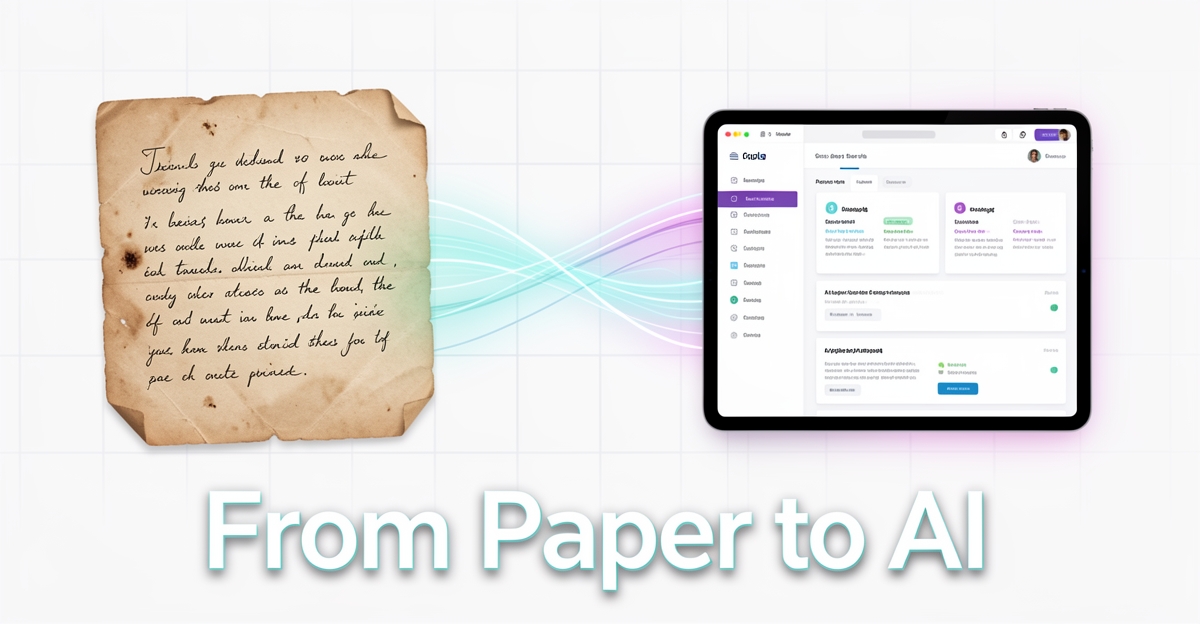
From Paper Logs to AI-Driven Tracking: How Historic Firms Can Improve Field Record Accuracy
Key Facts
- Paper-based systems typically create audit delays and reduce accountability compared to digital alternatives
- AI can transform handwritten field notes into searchable, organized databases with automatic categorization and geotagging
- AI-driven tracking reduces data entry errors while improving real-time access to records and service consistency
- Digital record systems generally provide better accuracy, accountability, and real-time insights than paper logs
- AI can identify patterns in historical data that humans may miss, uncovering hidden trends in decades of logs
- Mid-sized manufacturers often face limited IT bandwidth and aging equipment when implementing AI tracking
- Tribal knowledge concentrated in a few employees creates operational vulnerabilities when combined with paper logs
Hire a team member that works 24/7 — for less than a part-time wage.
AI receptionists, SDRs, dispatchers and 99+ roles. Trained on your business, fully managed.
Not sure where to start? Ask our AI planner
The Hidden Cost of Paper Logs in Field Operations
Walk into many mid-sized manufacturing facilities, and you'll find decades of operational history stored in filing cabinets, binders, and handwritten logbooks. These firms typically manage years of unstructured paper records alongside aging equipment, multi-shift operations, and bilingual workforces—a combination that turns routine record-keeping into a significant operational liability.
The problems start with data entry errors. When technicians rely on paper logs, handwriting variations, language barriers, and shift-change miscommunications introduce transcription mistakes that compound over time. Paper-based systems tend to create audit delays and reduce accountability compared to digital alternatives, leaving managers without real-time visibility into field operations.
Perhaps more damaging is the loss of tribal knowledge. In facilities where institutional memory resides with a handful of veteran employees, paper logs capture only fragments of critical context. When those employees retire or move on, the handwritten notes they leave behind often lack the detail needed to maintain consistency. Tribal knowledge concentrated in a few people creates operational vulnerabilities, especially when combined with limited IT bandwidth to digitize records properly.
The hidden costs manifest in several ways:
- Audit delays that stretch for weeks as staff manually reconcile illegible or missing entries
- Inconsistent service delivery across shifts when bilingual teams interpret handwritten notes differently
- Lost operational intelligence when historical patterns remain buried in unsearchable paper archives
- Compliance risks from incomplete or inaccurate field documentation
These challenges explain why forward-thinking firms are exploring AI-driven tracking solutions that transform handwritten field notes into searchable, organized databases. By converting paper logs into digital assets with automatic categorization and geotagging, manufacturers can finally unlock the value trapped in their historical records while eliminating the error-prone manual entry that plagues traditional workflows. AIQ Labs' AI Workflow Builds are designed for exactly this kind of high-cost, paper-bound workflow—rebuilt one phase at a time at a fixed price.
How AI Transforms Handwritten Notes into Actionable Data
Handwritten field notes have long been the backbone of field operations, but they also create blind spots that slow decisions and audits. AI-driven tracking changes that by turning messy paper logs into structured, searchable intelligence without erasing the human judgment behind them.
AI can transform handwritten field notes and paper logs into searchable, organized databases with automatic categorization and geotagging. These systems reduce data entry errors while improving real-time access to records and enhancing consistency of service delivery. The conversion preserves context from the field while making it queryable across teams and time periods.
Pattern recognition is where AI adds value humans miss. AI can identify patterns in historical data that humans may miss, surfacing degradation trends, recurring site conditions, or documentation gaps hidden in decades of logs. This shifts record keeping from storage to insight.
Digital systems also change how teams experience accuracy and accountability. Digital record systems generally provide better accuracy, accountability, and real-time insights compared to paper logs. That accountability supports audit readiness, which matters for historic firms managing compliance and heritage reporting.
For firms with limited IT bandwidth and aging equipment, implementation still requires care. Mid-sized manufacturers may face challenges due to limited IT bandwidth and aging equipment. A practical approach preserves the human element of field work while improving data consistency.
AIQ Labs builds custom AI systems that map directly to this need. The focus is on converting field notes into searchable, organized databases with automatic categorization and geotagging, while keeping field expertise central to the workflow. With 200+ multi-agent systems deployed and four live SaaS products the company runs daily, this is proven territory, not theory.
Capabilities that matter in practice include:
- Handwritten content digitization with automatic categorization and geotagging for site-specific records
- Real-time searchable databases that reduce data entry errors and improve access across shifts
- Pattern detection in historical logs to uncover hidden trends humans may miss
- Audit-ready documentation with consistent service delivery tracking
The result is a system that respects field practice and delivers real-time access to records and improved consistency. Teams can locate a specific inspection note, compare it to prior years, and see geotagged changes without manual transcription.
Transitioning from paper to digital also brings scalability. Digital systems can provide scalability and flexibility for firms with growing operations, and they can help firms transition from paper logs to digital systems with minimal disruption. That flexibility supports historic firms balancing preservation rigor with modern operational demands.
Practical Steps to Digitize Without Disrupting Field Work
Transitioning from paper logs to digital systems doesn't require a complete overhaul of field operations. Historic firms can adopt AI-driven tracking through a phased approach that respects existing workflows while building toward greater accuracy and efficiency.
Start by assessing current paper logs to identify inconsistencies, gaps, and high-error areas—such as illegible handwriting or delayed entries—that compromise data reliability. This evaluation helps pinpoint where automation will deliver the greatest impact, especially in environments with multi-shift operations or tribal knowledge concentrated in a few individuals, which are common among mid-sized manufacturers.
Next, choose a system that aligns with field realities, prioritizing tools that support offline capture, voice-to-text input, and seamless synchronization when connectivity returns. AIQ Labs' Build in Milestones model allows firms to implement one workflow at a time—such as equipment inspection logs or maintenance records—without overburdening limited IT bandwidth. You pay per milestone, and you own what gets built outright.
Before full migration, clean and organize existing data by standardizing formats, resolving duplicates, and assigning unique identifiers. This step ensures the AI model trains on accurate historical patterns, improving its ability to categorize and geotag new entries correctly.
Run the digital system in parallel with paper logs for 2–4 weeks, allowing field teams to validate accuracy and build confidence in the new process. During this period, provide role-specific training focused on practical use—such as how to correct AI-generated tags or retrieve past records—rather than theoretical features. If ongoing staffing is the bottleneck, AI Employees can handle data reconciliation and record retrieval at roughly 80% less cost than a human hire.
Only after consistent data alignment should firms fully transition, storing original logs securely for reference or audit needs. This low-risk path minimizes disruption while laying the foundation for real-time access, reduced entry errors, and improved service consistency—key benefits of AI-driven tracking in field operations.
To begin your assessment with expert guidance, start the 2-minute Fit Check for a free 30-minute strategy call with an AIQ Labs engineer who can map your biggest bottleneck and identify high-ROI automation opportunities tailored to your field workflows.
Turning Paper Logs into Predictive Power
Historic firms burdened by paper logs face more than just messy handwriting—they risk audit delays, lost tribal knowledge, and compliance gaps that compound over time. As this article outlines, AI-driven tracking transforms these challenges by converting handwritten notes into searchable, geotagged databases that preserve field expertise while eliminating manual errors. The result isn't just cleaner records—it's real-time access, pattern recognition that surfaces hidden trends, and audit-ready documentation that scales with your operations. For mid-sized manufacturers navigating bilingual teams, aging equipment, and limited IT bandwidth, the path forward is practical: start with a focused assessment of your current logs, then pilot a single workflow like equipment inspections using a system built for field realities. AIQ Labs helps firms make this shift without disruption—whether through a fixed-price AI Workflow Build, managed AI Employees, or a full AI Operating System built in phases and owned outright—so the technology serves your workflow, not the other way around. To see where your biggest bottleneck lies and how to turn it into a high-ROI opportunity, start the 2-minute Fit Check for a free 30-minute strategy call with an AIQ Labs engineer who can map your unique challenges and outline a phased, low-risk path forward.
Make AI your competitive advantage — not just another tool.
Strategy, implementation and ongoing optimization. One partner, end to end.
Not sure where to start? Ask our AI planner