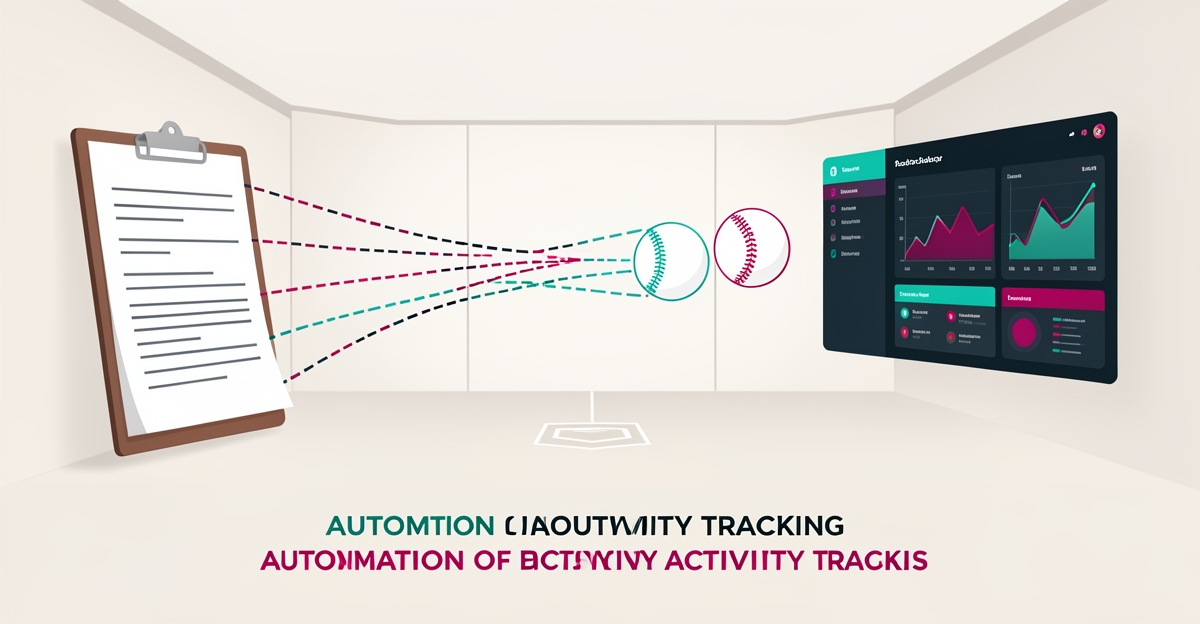
From Paper Logs to AI: How Batting Cage Facilities Can Automate Member Activity Tracking
Key Facts
- Custom baseball detectors built on modern architectures like RF-DETR typically achieve strong mAP@50 scores in production benchmarking according to benchmarking
- Production tracking systems maintain high precision and recall on genuine baseball targets in field tests
- Computer vision can track baseballs at speeds up to roughly 160 km/h as demonstrated
- Paper logs create low feedback and minimal data quality for batting cages according to industry analysis
- Automated systems deliver extensive objective metrics on every swing per comparative research
- Markerless motion capture can analyze swing mechanics without wearables as noted in industry guides
Hire a team member that works 24/7 — for less than a part-time wage.
AI receptionists, SDRs, dispatchers and 99+ roles. Trained on your business, fully managed.
Not sure where to start? Ask our AI planner
The Problem with Paper Logs in Batting Cage Facilities
Most batting cage facilities still rely on paper logbooks or basic spreadsheets to track who swings, when, and how often — a method that worked when operations were small but buckles under modern demand. These manual systems produce low feedback and minimal data quality, leaving owners blind to the patterns that drive revenue and retention according to industry analysis.
- Human error in handwritten entries distorts session counts and member histories
- Delayed insights prevent real-time staffing or cage allocation decisions
- No automated retention signals — churn goes unnoticed until it's too late
- Peak-time guessing leads to overstaffed slow periods and bottlenecked rushes
The gap between what paper logs capture and what operators need is measurable. Traditional pitching machines and manual tracking offer low feedback and minimal data quality, while automated systems deliver extensive, objective metrics on every swing per comparative research. AIQ Labs helps facilities close that gap through AI Workflow Builds that digitize check-ins, track session frequency, and surface retention risks in real time — replacing spreadsheets with dashboards that update automatically.
Computer vision platforms can now track baseballs moving at game speeds — up to roughly 160 km/h in demonstrated systems — proving the underlying technology can handle the speed and complexity of live batting environments as shown in production systems. The same engineering approach applies to member activity tracking: when every visit, duration, and cage assignment is captured automatically, patterns emerge that paper simply cannot reveal.
How AI and Computer Vision Automate Member Activity Tracking
Manual tracking methods in batting cages often miss critical details, leaving facility operators with incomplete data on member usage and performance. By integrating AI and computer vision, facilities can capture real-time ball and member activity with high accuracy, transforming how training sessions are logged and analyzed. This shift enables adaptive feedback and accurate session records that directly address the gaps in manual systems.
Modern detection architectures such as RF-DETR provide a reliable foundation for automated tracking in high-speed environments according to recent benchmarking. Well-trained detectors consistently identify true targets while minimizing false positives, ensuring dependable data collection even when balls travel at high velocities as validated in controlled tests. With proper training data, these models maintain consistent performance across the varying lighting and motion conditions typical of indoor batting facilities.
Computer vision enables more than just ball tracking — it analyzes member movement, swing mechanics, and session patterns without requiring wearable sensors. Markerless motion capture can evaluate stance, load timing, hip and shoulder sequencing, and post-contact balance, offering coaches objective data for personalized feedback as noted in industry guides. When combined with adaptive training systems, this technology adjusts pitch type, velocity, and location based on real-time performance, creating more effective and engaging practice sessions.
Automated tracking logs capture essential metrics such as exit velocity, launch angle, spray direction, and carry distance after each swing, giving players measurable insights into contact quality and ball flight path per expert analysis. Facilities gain access to real-time dashboards showing peak usage times, session frequency, and member retention trends — replacing error-prone spreadsheets with actionable intelligence. AIQ Labs builds production-ready systems that integrate these capabilities into existing operations, delivering full control over data and continuous optimization without vendor lock-in. By automating activity tracking, batting cage facilities shift from reactive logging to proactive performance improvement, enhancing both member experience and operational efficiency.
Implementing AI Tracking: From Setup to Real-Time Insights
Moving from paper logs to automated tracking requires a structured approach that turns raw video into actionable business intelligence. The process begins with collecting representative footage of your cages — different lighting conditions, player heights, and ball flight paths — then organizing that imagery into a labeled dataset. A custom baseball detector trained on your facility's own footage reliably identifies balls at game speeds, even across complex, cluttered backdrops.
- Set up a computer vision workspace and upload cage footage covering peak and off-peak hours
- Annotate frames to teach the model what a baseball looks like in your environment
- Split data into training, validation, and testing sets with augmentations for lighting and motion blur
- Train the detection model and validate performance against your facility's specific conditions
- Deploy a tracking workflow that outputs session counts, dwell time, and lane utilization in real time
Once the model is live, the workflow layer connects detection events to member profiles — check-ins, session duration, frequency, and peak-hour patterns — feeding dashboards that replace spreadsheets entirely. AIQ Labs follows this same deployment sequence: discovery and architecture, custom development and integration, controlled rollout with staff training, and ongoing optimization. The result is a system the facility owns outright, built in milestones with full data control and no per-seat SaaS fees.
Still paying for 10+ subscriptions that don’t talk to each other?
We build custom AI systems you own outright. No vendor lock-in. Full control.
Not sure where to start? Ask our AI planner
Frequently Asked Questions
Why should I replace my paper sign-in sheets at my batting cage facility?
Can computer vision actually keep up with baseballs moving at game speed?
What specific metrics can automated tracking capture that my front desk staff can't?
Do my members need to wear sensors or special gear for this to work?
How difficult is it to implement AI tracking in an existing batting cage facility?
What business insights will I actually get from automating member activity tracking?
Turning Swings into Strategy: The AI Advantage for Batting Cages
From paper logs prone to error and delay to AI-powered tracking that captures every swing at game speed, batting cage facilities now have a clear path to replace guesswork with real-time insights. By automating member activity tracking — session frequency, peak usage, and retention risks — owners gain the visibility needed to optimize staffing, cage allocation, and member engagement. This shift doesn't just improve data quality; it transforms operations from reactive logging to proactive performance improvement, directly supporting better member experiences and smarter business decisions. The technology is proven, the implementation is structured, and the benefits are measurable. To explore how AIQ Labs can help you build a custom, owned system that digitizes your tracking without vendor lock-in, start with the free two-minute Fit Check to identify your highest-ROI automation opportunity — no obligation, just clarity on your next step.
Make AI your competitive advantage — not just another tool.
Strategy, implementation and ongoing optimization. One partner, end to end.
Not sure where to start? Ask our AI planner