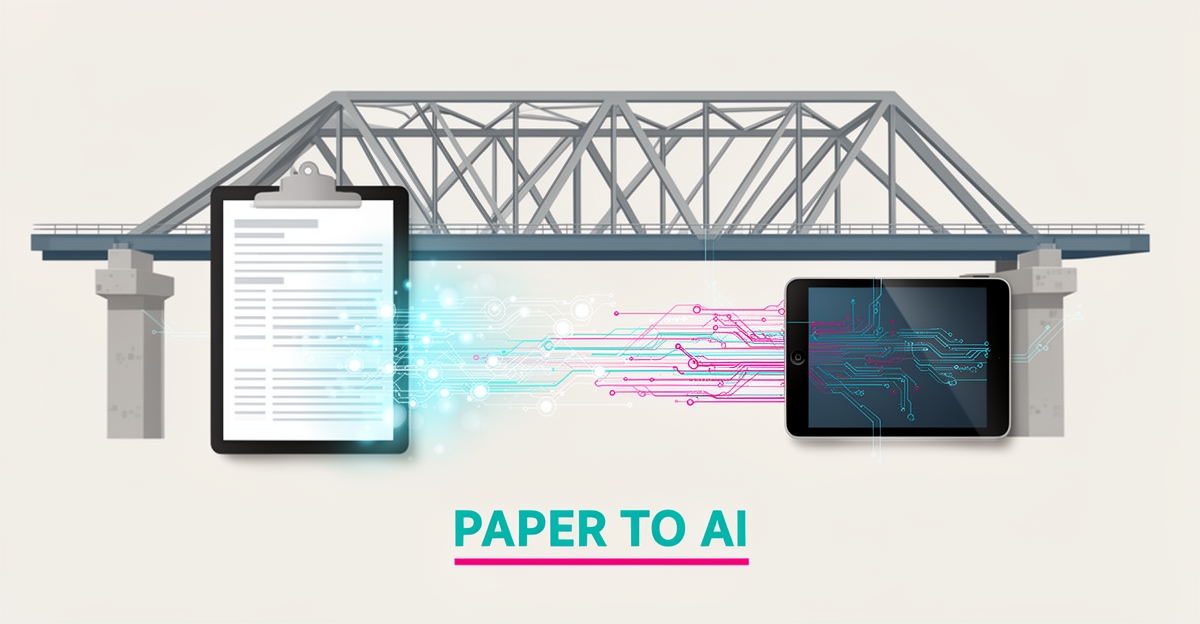
From Paper Logs to AI: How Bridge Contractors Can Modernize Field Data Collection
Key Facts
- The construction industry continues to face a persistent skilled labor shortage, intensifying pressure to maximize efficiency from existing crews
- Paper logs create scalability bottlenecks as bridge projects grow in complexity and sensor requirements
- Manual transcription, illegible handwriting, and lost forms are the most common sources of field data errors
- A phased approach—digitize one workflow first—prevents overinvestment and pilot purgatory
- AIQ Labs' Build in Milestones model lets contractors approve and pay for each AI phase as it ships
Hire a team member that works 24/7 — for less than a part-time wage.
AI receptionists, SDRs, dispatchers and 99+ roles. Trained on your business, fully managed.
Not sure where to start? Ask our AI planner
The Hidden Cost of Paper Logs in Bridge Construction
The construction industry continues to face a persistent skilled labor shortage, and that gap intensifies pressure on bridge contractors to maximize efficiency from existing teams. Yet many still rely on paper logs for field data collection—a method that actively undermines productivity. Manual data entry consumes valuable crew time that could be spent on critical tasks like structural inspections or safety monitoring, directly contributing to project delays in an already strained labor market.
Paper-based systems are inherently prone to human error, with illegible handwriting, transcription mistakes, and lost forms compromising data integrity. These inaccuracies cascade into costly rework, flawed progress reporting, and delayed decision-making—issues that scale rapidly across large infrastructure projects. Without real-time validation, errors often go undetected until later stages, when fixes become exponentially more expensive and time-consuming to correct.
Traditional logging also creates severe scalability limits. As bridge projects grow in complexity—requiring more sensors, frequent measurements, and multi-disciplinary coordination—paper logs become unmanageable bottlenecks. Crews waste hours each day transferring data from notebooks to spreadsheets or filing systems, time that could instead support value-added field work. This operational drag prevents contractors from leveraging limited skilled labor effectively.
The hidden cost extends beyond labor inefficiency. Poor data quality from paper logs undermines material optimization efforts. When field data is delayed or inaccurate, contractors miss opportunities to reduce waste, optimize pours, or adjust reinforcement placement—directly impacting both project budgets and sustainability goals. These compounding inefficiencies reveal why clinging to paper isn't just outdated—it's actively eroding profitability and competitiveness in modern bridge construction.
How AI-Powered Data Pipelines Transform Field Operations
Bridge contractors are moving beyond paper logs to embrace AI-powered data pipelines that transform field operations from reactive to proactive. By capturing and analyzing real-time data from sensors, drones, and mobile devices, these systems enable immediate insights that keep projects on track and within budget. The gains come from eliminating manual entry errors, optimizing resource allocation, and flagging delays before they impact timelines.
AIQ Labs supports this shift by integrating AI with mobile field tools to create seamless data flows across construction phases—from site prep to final inspection. The technology doesn't replace human expertise but augments it, allowing supervisors to focus on critical decisions rather than clipboard chores. Field teams benefit from automated validation, anomaly detection, and instant reporting, turning raw data into actionable intelligence. This shift reduces rework, enhances safety compliance, and ensures materials are used with precision.
- Real-time data collection eliminates lag between field observation and office review
- Automated validation reduces human error in measurements and material tracking
- Predictive analytics forecast delays and resource needs before issues escalate
- Integrated dashboards provide unified visibility across subcontractors and phases
- Continuous monitoring ensures compliance with safety and quality standards
The transition requires more than just technology—it demands a mindset shift where human oversight remains central to interpreting AI-generated insights. Contractors must upgrade their data infrastructure to support reliable, scalable pipelines while emphasizing collaboration between AI systems and experienced field personnel. The real challenge lies in making AI cost-effective throughout its lifecycle, which starts with strategic planning and ends with sustained operational improvement. By grounding AI adoption in proven benefits and disciplined implementation, bridge contractors can turn data from a burden into a competitive advantage.
Practical Steps to Build Your AI Data Pipeline Without Overinvesting
The fear of overinvesting in AI often stops bridge contractors before they start. But building a data pipeline doesn't require a seven-figure infrastructure gamble—it requires a phased approach that matches investment to proven value. That's exactly how AIQ Labs structures its AI Workflow Builds: rebuild the one workflow that costs you the most, at a fixed price, delivered in phases.
Before purchasing sensors or software, establish a culture of AI readiness within your field crews. This means training supervisors to capture structured data on mobile devices rather than paper, and standardizing how pour logs, inspection photos, and material certifications are labeled. Without this foundation, even the most sophisticated AI will choke on inconsistent inputs.
Identify where paper creates the most drag—typically daily progress reports, concrete batch tracking, and safety compliance logs. These repetitive, time-consuming tasks offer the clearest automation ROI. AI delivers results when applied to well-defined bottlenecks rather than sprayed across operations.
You don't need to build a data center. Start by migrating field data to a cloud-based repository with API access, ensuring your information is clean and queryable. As you scale, infrastructure and compute costs can escalate quickly, so design for efficiency from day one. Implement caching for repeated queries, batch processing for non-urgent analytics, and monitoring to catch runaway compute costs before they hit your bottom line.
AIQ Labs structures these transitions through a Build in Milestones model that aligns with the phased roadmap above. Rather than committing to a full "AI transformation" upfront, contractors can:
- Phase 1: Digitize one critical workflow (e.g., rebar inspection logs) and validate data quality
- Phase 2: Automate data validation and basic anomaly detection
- Phase 3: Deploy predictive analytics for schedule and budget forecasting
You approve and pay for each phase as it ships, keeping everything built so far if priorities shift. This prevents the "pilot purgatory" where projects stall between proof-of-concept and production. For contractors who want ongoing capacity without hiring, managed AI Employees can handle reporting, dispatch, and follow-up work at a fraction of the cost of an additional hire.
Even as pipelines automate, keep veteran engineers in the loop to interpret AI-generated insights. AI is a collaborator—not a replacement. The goal is to arm your team with real-time data, not remove their judgment from critical safety and quality decisions.
By treating AI as an incremental operational upgrade rather than a moonshot, bridge contractors can modernize field data collection without betting the company on unproven infrastructure. Not sure where to start? AIQ Labs' 2-minute Fit Check is the fastest way to find out whether your workflows are ready.
Still paying for 10+ subscriptions that don’t talk to each other?
We build custom AI systems you own outright. No vendor lock-in. Full control.
Not sure where to start? Ask our AI planner
Frequently Asked Questions
What are the biggest risks of relying on paper logs for bridge project data?
Where should a bridge contractor start with AI-powered data collection?
How can contractors avoid overinvesting in AI infrastructure?
Will AI replace field engineers and supervisors?
How does AIQ Labs help bridge contractors modernize field data collection?
Key Takeaways
Your next bridge project doesn't have to run on paper. With skilled labor persistently scarce, every hour crews spend transcribing paper logs is an hour stolen from structural inspections, safety monitoring, and value-added field work. AI-powered data pipelines eliminate transcription errors, surface insights in real time, and scale as your projects grow in complexity.
The path forward doesn't require a seven-figure bet. Start with the one workflow that costs you the most, digitize it, validate the data, and expand from there. With a milestone-based model, you approve and pay for each phase as it ships—keeping everything built if priorities shift. Treat AI as an incremental operational upgrade, and field data stops being a burden and starts being a competitive advantage.
Make AI your competitive advantage — not just another tool.
Strategy, implementation and ongoing optimization. One partner, end to end.
Not sure where to start? Ask our AI planner