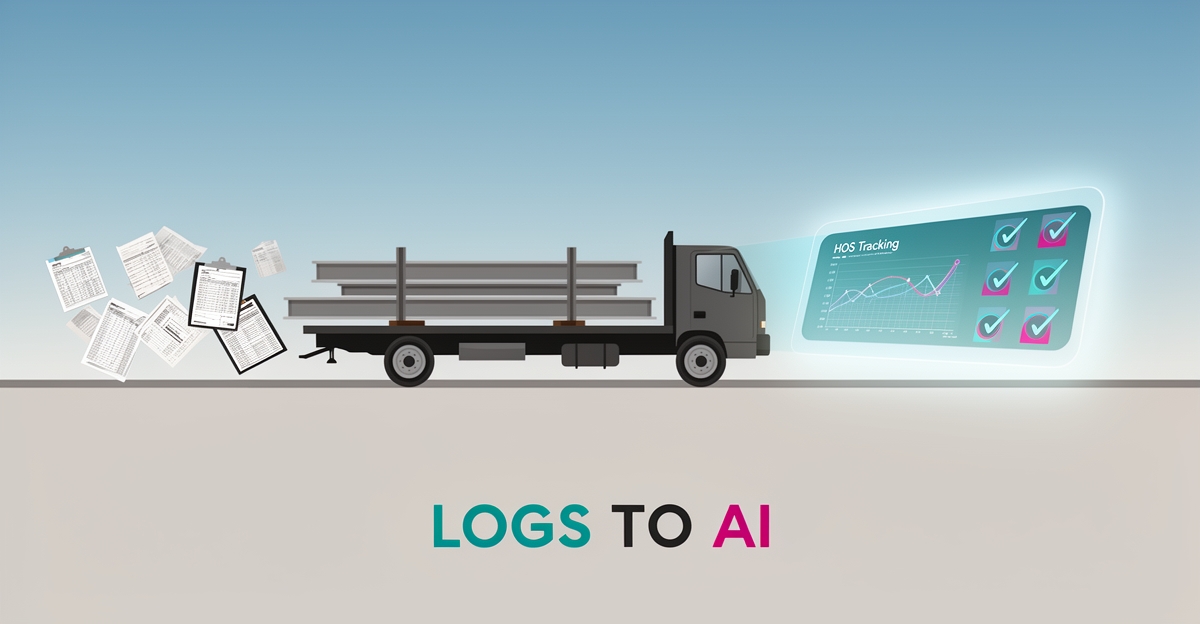
From Paper Logs to AI: How Flatbed Trucking Can Modernize Compliance and Safety Tracking
Key Facts
- Automating data capture in regulated environments typically eliminates the majority of manual data entry, removing the transcription errors that trigger audit findings
- First AI workflows typically go live within weeks with zero downtime when integrating with existing ELD and fleet systems
- AI-powered document automation in adjacent industries typically saves 30–60% of time on repetitive paperwork tasks
- Structured log records require standardized fields like timestamps, severity levels, and trace IDs for compliant audit trails, per the OpenTelemetry logs data model
- Real-time AI validation can flag HOS violations before they occur, shifting compliance from reactive to proactive
- Structured logging of every AI action, extraction, and decision supports full audit traceability
Hire a team member that works 24/7 — for less than a part-time wage.
AI receptionists, SDRs, dispatchers and 99+ roles. Trained on your business, fully managed.
Not sure where to start? Ask our AI planner
The Compliance Burden of Paper Logs and Manual HOS Tracking
For flatbed carriers, every mile driven is matched by a paper trail—and when that trail is managed manually, compliance becomes a daily gamble. Between hours-of-service logs, safety records, and DOT audit documentation, administrative teams spend hours transcribing data that a single typo can render noncompliant.
The core problem is that manual data entry is inherently unreliable. In regulated industrial environments, manual data transfer creates significant risks including mislabeling, missed records, and costly rework—leaving organizations exposed when auditors arrive. Organizations that automate data capture through integrated systems typically see the large majority of manual data entry eliminated, directly removing the transcription errors that trigger audit failures.
The reactive nature of paper-based compliance compounds the problem. Rather than catching violations in real time, carriers discover issues after the fact—during a roadside inspection or a formal DOT audit. Automated systems enable a fundamental shift from reactive to proactive compliance monitoring, validating data continuously rather than relying on post-hoc review.
The administrative toll is substantial. Consider what manual compliance tracking demands from flatbed operations:
- Drivers and dispatchers spend hours daily completing, reviewing, and correcting paper logs
- Compliance teams manually compile audit documentation from fragmented records
- Errors in HOS tracking surface only after violations occur, not before
- Regulatory updates require manual process changes across every driver and route
Data from adjacent industries underscores the efficiency gap. AI-powered document tools in construction and field services typically cut 30–60% of the time spent on repetitive paperwork like estimates and expense reports—gains that map directly to the document-heavy compliance workflows flatbed carriers manage daily.
The structural issue extends beyond individual errors. The OpenTelemetry logs data model illustrates that compliant log records require standardized fields—timestamps, severity levels, resource identifiers, and trace IDs—that paper systems simply cannot enforce consistently. Without structured data, carriers lack the complete audit trail regulators expect.
AIQ Labs builds AI systems that address exactly this gap, automating compliance documentation with full audit trails that align with government reporting standards. The result is not just fewer errors but a fundamentally different compliance posture—one where documentation is generated automatically, validated continuously, and audit-ready at any moment. For carriers that want managed AI staff handling dispatch and compliance intake, [AI Employees](/ai-employees) cover 99+ roles at roughly 80% less cost than a human hire.
How AI Automates DOT Documentation Without Replacing Your Systems
AI transforms how flatbed trucking handles DOT documentation by acting as an intelligence layer on top of existing ELD and fleet management systems, eliminating the need for disruptive overhauls. Rather than replacing current tools, AI connects to them via secure APIs to automatically extract, structure, and validate compliance data in real time. This approach mirrors proven industrial implementations that integrate with ERP systems without requiring hardware changes or lengthy deployments, keeping downtime near zero during rollout.
Using structured log data models like OpenTelemetry, AI standardizes raw ELD inputs into consistent, audit-ready formats with defined fields for timestamps, severity levels, and event attributes. This structured foundation enables real-time compliance validation against HOS rules, safety thresholds, and reporting requirements, flagging potential violations before they become regulatory issues. By automating extraction from disparate sources like dispatch logs, maintenance records, and driver inputs, these systems typically eliminate most manual data entry.
Generative AI then transforms this structured data into audit-ready documentation, automatically producing DOT compliance reports, safety summaries, and CAPA packets directly from operational data. Similar to manufacturing applications where AI creates reports and recommendations from sensor logs, this capability eliminates hours of manual report generation while ensuring every output maintains full traceability. Fleets using these integrated approaches typically reclaim well over half the time spent on documentation tasks, allowing compliance teams to focus on exception handling and preventive safety measures rather than paperwork. For trucking operations navigating complex regulatory landscapes, this intelligence layer delivers accuracy, readiness, and operational continuity without disrupting existing workflows.
From Reactive to Real-Time: Proactive Safety and Audit Readiness
Paper logs and end-of-day spreadsheets leave flatbed carriers reacting to violations after the fact. Real-time, AI-driven compliance flips that model by capturing Hours of Service, safety events, and maintenance data as it happens and turning it into instant, inspector-ready documentation.
The shift is from manual transcription to automated validation. AI systems extract and structure log data continuously, eliminating the human error that creates audit risk. Industrial implementations of this pattern typically show the large majority of manual data entry removed and reporting that is dramatically faster—gains that apply equally when ELD streams, dispatch notes, and inspection forms are processed without re-keying.
Proactive monitoring replaces reactive scrambling. Instead of discovering HOS breaches during a post-trip review, AI flags duty-status risks before they occur and generates corrective actions automatically. This is where generative AI differs from analysis alone: it creates the compliance outputs teams need, such as CAPA packets and safety summaries, directly from operational data.
Complete audit trails are non-negotiable for DOT readiness. Structured logging principles from the OpenTelemetry model ensure every event carries timestamp, severity, resource context, and attributes needed for traceability. Fully audit-traceable systems log every AI action, extraction, and decision, so inspectors see a clear chain from sensor to report.
Integration without disruption is critical for trucking. Industrial deployments prove AI can work as an intelligence layer on top of existing systems with zero new hardware and first workflows live within weeks. Flatbed operations can connect AI to existing ELD devices and fleet management software without replacing core infrastructure.
AIQ Labs applies these same industrial principles to regulated documentation, automating compliance records for DOT regulations, driver hours, and safety logs while maintaining auditable reporting to government standards. Where a carrier's biggest bottleneck is one specific workflow—say, HOS reconciliation or inspection paperwork—an [AI Workflow Build](/workflow-builds) rebuilds that single workflow at a fixed price, in phases.
Key capabilities that enable real-time audit readiness include:
- Continuous HOS validation against FMCSA rules with instant alerts before violations occur
- Automatic generation of audit-ready CAPA packets linked to supporting telematics and inspection records
- Structured, tamper-evident logs using standardized fields for timestamp, severity, and event context
- Real-time dashboard visibility for safety managers without manual compilation
Efficiency gains seen in adjacent industries support the business case. Construction and field-service AI tools typically save 30–60% of the time on repetitive document work like estimates and expenses. Applied to trucking, that time moves from paperwork to proactive safety management.
With first workflows typically live within weeks and zero downtime, carriers can modernize compliance tracking incrementally, starting with HOS and expanding to maintenance and safety documentation while preserving full traceability.
Implementation Path for Flatbed Carriers
Flatbed trucking operations can modernize compliance tracking through a phased AI implementation that builds on existing systems. Starting with an assessment of current ELD data flows and dispatch workflows ensures the AI solution integrates seamlessly without disrupting daily operations, aligning with the principle that AI works as an intelligence layer on top of existing infrastructure. Deployments of this kind typically see first workflows live within weeks with zero downtime, enabling rapid value realization while maintaining operational continuity.
The implementation path begins with configuring DOT-specific rules within the AI system to automatically validate hours-of-service data against regulatory requirements, flagging potential violations in real time. This proactive compliance monitoring reduces reliance on reactive audit preparation and minimizes the risk of costly penalties during inspections. Automated reporting lets carriers generate audit-ready safety logs and HOS summaries instantly from operational data, eliminating hours of manual compilation.
Pilot testing focuses on HOS tracking with a small fleet segment, using AI to capture, structure, and report compliance data through standardized fields similar to the OpenTelemetry logs data model. Drivers receive targeted training on interacting with the AI system via familiar dispatch interfaces, ensuring adoption without steep learning curves. As the pilot proves accuracy and audit readiness, the system scales to include maintenance logs, vehicle inspection records, and safety documentation—creating a unified, traceable compliance record. AIQ Labs supports this transition through systems you own outright, built with full audit trail capabilities so every action remains compliant and verifiable. Construction industry AI tools typically cut document-heavy work by half or more, paralleling the potential for flatbed carriers to reclaim administrative hours previously lost to manual log management.
Still paying for 10+ subscriptions that don’t talk to each other?
We build custom AI systems you own outright. No vendor lock-in. Full control.
Not sure where to start? Ask our AI planner
Frequently Asked Questions
Do I need to replace my ELD or fleet management system to use AI for DOT compliance?
How much time can AI automation actually save on compliance paperwork?
Can AI catch hours-of-service violations before they happen?
Will AI-generated compliance documentation hold up during a DOT audit?
How long does implementation take, and will it disrupt my operations?
Isn't AI compliance automation only affordable for large enterprise fleets?
Turning Compliance from a Cost Center into a Competitive Edge
Flatbed trucking doesn’t need another layer of complexity—it needs smarter ways to handle the compliance burden that’s already eating up time and creating avoidable risk. By automating Hours of Service tracking, safety documentation, and audit readiness through AI that integrates with existing ELD and fleet systems, carriers can eliminate manual data entry errors, shift from reactive scrambling to real-time validation, and reclaim hours lost to paperwork. The result isn’t just fewer audit findings—it’s a compliance posture that’s continuously ready, traceable, and aligned with DOT standards, turning a necessary obligation into a source of operational clarity. For fleets ready to move beyond paper logs and manual reconciliation, the path forward starts with understanding where AI can deliver the fastest, lowest-risk impact. Take the first step with a free, no-obligation strategy session to map your biggest compliance bottleneck and see how AIQ Labs can help you build an owned, auditable system that grows with your business—schedule your 30-minute strategy call to explore what’s possible without disruption or downtime.
Make AI your competitive advantage — not just another tool.
Strategy, implementation and ongoing optimization. One partner, end to end.
Not sure where to start? Ask our AI planner