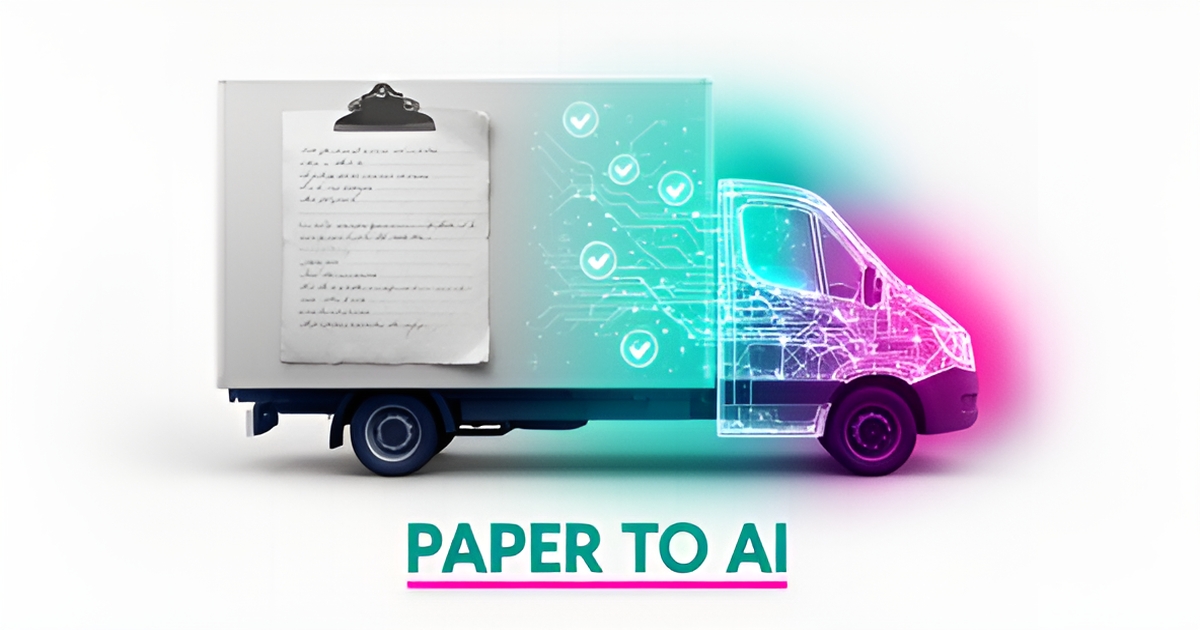
The Hidden Cost of Paper Logs: Why Manual Maintenance Records Are Failing Your Fleet
Every paper logbook in your fleet is quietly costing you money. Manual maintenance records fail in predictable, expensive ways—from missed defects to compliance fines that can cripple a mid-size operation.
Start with inspection accuracy. Industry testing comparing manual and AI-assisted inspections suggests human inspectors catch roughly 70-80% of vehicle defects, meaning a meaningful share of problems slip through even when checks are performed diligently. The gap tends to be widest in hard-to-see categories like fluid leaks and underbody damage.
The record-keeping itself compounds the problem. Manual logbooks are prone to data entry errors, and those errors have real consequences—compliance analyses of manual logbook programs have documented six-figure penalty totals across groups of fleets attributable to paperwork mistakes alone.
CVSA's International Roadcheck puts the stakes in perspective year after year: a substantial share of inspected vehicles is placed out of service. These aren't surprise failures; they're defects that accumulated while passing daily manual inspections, missed by a process that catches only a fraction of problems.
What does this cost a fleet in practice?
- Compliance reporting typically consumes several hours per week under manual processes, versus automatic generation with digital systems
- Missed defects escalate into preventable breakdowns—early detection is consistently cheaper than roadside failure
- Without predictive alerting, fleets lose the advance warning that helps them fix issues before an inspector finds them
Beyond fines, paper records create audit exposure. When documentation is scattered across binders and filing cabinets, proving compliance becomes a labor-intensive scramble. Digital, AI-managed records reduce audit preparation labor significantly while keeping documentation consistently inspection-ready.
The pattern is clear: manual systems don't just slow fleets down, they actively miss information that regulators, insurers, and your own maintenance team need. This is precisely the problem AI document processing addresses—systems that scan, categorize, and store maintenance records automatically, generating compliant, searchable documentation with minimal human input. If maintenance record-keeping is the workflow bleeding the most money in your operation, AIQ Labs' Workflow Builds rebuild exactly that one process at a fixed price.
Once a fleet grows past roughly 25-30 vehicles, paper logs and spreadsheets create maintenance gaps that manual processes simply cannot close. The question shifts from whether to automate to how quickly the hidden costs can be stopped.
AI-Powered Maintenance Automation: How Technology Eliminates Errors and Cuts Costs
The difference between catching a brake defect and missing it can be the difference between a small repair and a roadside breakdown. That's why AI-powered maintenance systems are increasingly replacing manual inspections across growing fleets.
Industry testing suggests AI-powered inspection systems can achieve 95-99% defect-detection accuracy, versus roughly 70-80% for human inspectors. That gap represents thousands of critical defects on highways daily—defects that AI catches before they become failures. The technology also cuts inspection time significantly, completing checks in minutes rather than the longer windows manual methods require.
Beyond detection, AI enables predictive maintenance that transforms cost structures. Fleet management analyses report these systems can reduce downtime substantially and cut maintenance costs meaningfully. By continuously monitoring sensor data—tire pressure, engine temperature, brake wear—AI predicts failures before they happen, turning emergency repairs into scheduled maintenance.
The financial impact compounds quickly:
- Early defect detection consistently costs less than roadside failure—per-truck savings vary, but fleets typically report thousands of dollars per vehicle annually
- Automation eliminates the weekly hours manual compliance reporting consumes
- Fewer preventable breakdowns means fewer tows, fewer late deliveries, and less unplanned overtime
AI systems also eliminate the documentation errors that plague manual record-keeping. Where paper logs depend on human entry, AI systems maintain high consistency through automatic photo documentation and instant defect-to-work-order conversion. This creates audit-ready records without hours of weekly compliance reporting.
For fleet operators, the implementation math is straightforward. AIQ Labs builds custom systems that process real-world vehicle data and generate compliant, searchable records with minimal human input—turning maintenance from a reactive cost center into a predictive advantage. You can start with a two-minute Fit Check to see whether your operation is a match before committing to anything.
From Pilot to Profit: Implementing AI Maintenance Records in Your Fleet Operations
Paper logs create gaps that cost real money. Fleet teams that move from manual records to AI maintenance capture defects earlier, cut compliance risk, and give drivers proof of safe operation instead of suspicion.
A phased rollout reduces risk and builds trust. Real-world deployments typically start with a 15-20% pilot, run parallel AI and manual inspections to establish a baseline, then expand once accuracy gains are visible. This approach matters most once a fleet exceeds 25-30 vehicles, where paper logs and spreadsheets create maintenance gaps manual processes can't close.
The pilot phase focuses on data, not disruption. Select a representative group of vehicles and train drivers on the mobile app for 1-2 weeks. Run AI and human inspections on the same assets. The accuracy gap becomes visible within days, and that visibility creates buy-in.
Integration connects the pilot to existing operations. Link the AI inspection system to maintenance software and telematics so flagged defects generate automatic work orders. Configure alert thresholds for critical issues like brake or tire defects. Integration with telematics and electronic logging devices creates a connected ecosystem that enhances compliance and provides real-time visibility.
Full deployment scales with training and change management. Expand to the entire fleet, complete driver training, and activate real-time monitoring dashboards. Frame AI as a tool for driver exoneration, not surveillance—adoption succeeds when technology is aligned with stakeholder incentives, and drivers respond far better to systems that prove their innocence than to systems that watch them.
- Pilot on 15-20% of the fleet with parallel AI and manual inspections to establish a baseline comparison
- Integrate AI inspection with existing telematics and maintenance software for automatic work order generation
- Scale to the full fleet with driver training focused on exoneration and efficiency benefits
- Optimize through continuous defect trend analysis and inspection frequency tuning
Optimization turns data into prevention. Analyze defect trends across the fleet, tune inspection frequencies based on data, and expand predictive capabilities. Predictive maintenance can substantially reduce fleet downtime and maintenance costs relative to reactive protocols.
For fleets that want to own their system rather than rent it forever, AIQ Labs builds custom AI systems that process real-world vehicle data and generate compliant, searchable records with minimal human input. Larger operations can go further with an AI Operating System—one connected layer across maintenance, dispatch, and compliance, built in phases and owned outright. Payment models are flexible: start monthly, build in milestones, or own the system outright. There are no invented case-study numbers here; the honest way to size the opportunity is a conversation about your actual fleet data.
Break-even timelines vary by fleet size and current cost structure, but the pattern holds: early detection turns expensive failures into cheap fixes, and audit-ready records eliminate the weekly reporting grind. The fleets that move first stop paying for problems they no longer have.
Still paying for 10+ subscriptions that don’t talk to each other?
We build custom AI systems you own outright. No vendor lock-in. Full control.
Not sure where to start? Ask our AI planner
Frequently Asked Questions
How much can AI-powered inspections improve defect detection compared to manual methods?
Industry testing suggests AI-powered inspection systems achieve 95-99% accuracy, while human inspectors catch roughly 70-80% of defects. That improvement in detection capability directly reduces missed safety issues and compliance failures.
What are the financial benefits of switching from manual maintenance logs to AI systems for a mid-size fleet?
Exact savings depend on fleet size, vehicle mix, and current breakdown rates, but fleets typically recover automation costs quickly through avoided breakdowns, reduced overtime, and lower administrative overhead. A structured pilot with parallel inspections gives you real numbers from your own operation before you scale.
How much time can AI save on vehicle inspections compared to manual processes?
AI-assisted inspections typically cut inspection time substantially—completing checks in minutes rather than the longer windows manual methods require—freeing labor hours for other operational tasks.
Can AI help avoid costly compliance violations?
Yes. By catching defects early and keeping records consistently inspection-ready, AI systems help fleets address issues before they become out-of-service orders or fines. The advance warning comes from continuous monitoring rather than periodic manual checks.
What is the error rate in manual logbooks, and how does AI improve data accuracy?
Manual logbooks are prone to data entry errors that have triggered significant penalties across the industry. AI systems maintain high consistency through automatic photo documentation and instant defect-to-work-order conversion, eliminating most human entry errors.
Is AI fleet management only practical for large fleets, or can smaller operations benefit too?
AI systems become increasingly valuable once a fleet exceeds roughly 25-30 vehicles, where manual processes begin to break down—but smaller operations can benefit too, especially if they start with a single high-cost workflow rather than a full platform.
From Risk to Resilience: The AI Advantage for Modern Fleets
The evidence is clear: paper maintenance logs cost fleets through missed defects, compliance failures, and operational waste. AI-powered systems close this gap with high inspection accuracy, predictive maintenance that reduces downtime, and audit-ready records that eliminate hours of weekly reporting. The path forward starts small: pilot AI inspections on 15-20% of your fleet, run parallel checks to validate results, then scale with integration into your maintenance and telematics systems. When you're ready to turn maintenance from a liability into a predictable advantage, AIQ Labs offers a free 30-minute strategy call to map your specific opportunity—no obligation, just clarity on where AI delivers real ROI for your fleet. Start with the two-minute Fit Check, or reach the team at [email protected].
Make AI your competitive advantage — not just another tool.
Strategy, implementation and ongoing optimization. One partner, end to end.
Not sure where to start? Ask our AI planner