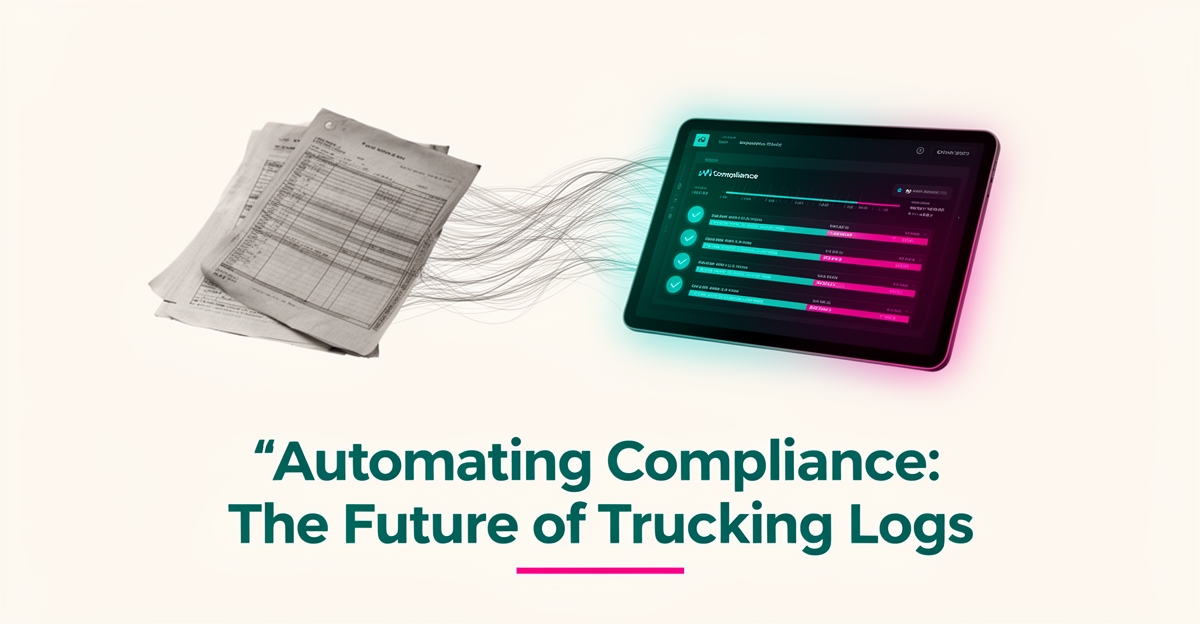
From Paper Logs to AI: How Heavy Haulers Can Automate Driver Hours & Compliance
Key Facts
- AI-powered permitting and compliance tools typically cut permit processing time dramatically for multi-state heavy haul moves, according to industry reporting.
- AI-enhanced route planning can deliver meaningful fuel savings when planners work from real-time driver availability data.
- Predictive maintenance driven by AI typically reduces unplanned breakdowns in fleet operations.
- Manual log errors surface during roadside inspections and DOT audits—after penalties have accumulated.
- Governed AI requires traceability: finance leaders warn "if you cannot trace it, you cannot trust it" on AI governance.
Hire a team member that works 24/7 — for less than a part-time wage.
AI receptionists, SDRs, dispatchers and 99+ roles. Trained on your business, fully managed.
Not sure where to start? Ask our AI planner
The Hidden Cost of Paper-Based Hours Tracking in Heavy Haul
Every hour a driver spends wrestling with paper logs is an hour lost on the road—and every misplaced decimal or forgotten entry becomes a potential compliance violation waiting to surface during an audit. In heavy haul operations, where a single oversize load can require permits from multiple states and adherence to strict hours-of-service regulations, manual tracking systems create a cascade of hidden costs that ripple through the entire operation.
The most immediate cost appears in processing delays. Manual permit applications and paper-based compliance documentation slow operations significantly, while industry reporting on AI in heavy haul logistics suggests AI-powered tools can substantially reduce permit processing time. For heavy haulers managing multi-state routes, the difference between manual and automated processing can mean the difference between on-time delivery and costly project delays.
Error rates compound these delays. Handwritten logs invite transcription mistakes, mathematical errors in hour calculations, and missing entries—all of which surface during roadside inspections or DOT audits. These aren't minor inconveniences. Compliance failures trigger fines, increase insurance premiums, and damage safety ratings that took years to build.
The operational burden extends beyond the cab:
- Dispatchers spend hours each week chasing down paper logs and reconciling discrepancies
- Safety managers manually cross-reference driver hours against ever-changing state regulations
- Back-office staff re-enter handwritten data into spreadsheets, introducing additional error points
- Fleet managers lack real-time visibility into driver availability, leading to poor load planning
The audit vulnerability is particularly acute in heavy haul, where loads often cross multiple jurisdictions with varying rest requirements and driving limits. Paper systems make it nearly impossible to proactively identify potential violations before they become citations. Companies discover problems during audits—after penalties have already accumulated.
Time inefficiencies multiply across the organization. Drivers spend 15-20 minutes per day on manual log entries. Fleet managers burn hours reconciling these logs against fuel receipts, toll records, and delivery confirmations. When disputes arise, someone must physically locate and review archived paper records—a process that can take days.
The financial impact extends beyond direct labor costs. Manual processes lead to suboptimal routing decisions, as planners lack real-time data on driver availability and hours remaining. AI-enhanced route planning can deliver meaningful fuel savings compared to traditional methods—savings that disappear when routes are planned around incomplete or outdated driver status information.
Perhaps most costly is the reactive posture paper systems force on compliance teams. Without automated validation, companies can't catch violations in real time. They discover problems during quarterly reviews or, worse, during DOT audits. This reactive approach contrasts sharply with governed AI systems that flag potential issues before they become violations, allowing dispatchers to adjust routes or schedules proactively.
AIQ Labs builds document processing systems that eliminate these manual bottlenecks by digitizing logs at the point of capture, validating entries against current regulations in real time, and creating audit trails that satisfy both internal governance and regulatory requirements. The shift from paper to AI-powered compliance isn't just about efficiency—it's about transforming compliance from a liability into a competitive advantage. For fleets that want a managed way in, AI Employees can handle dispatch follow-ups, permit paperwork, and compliance chasing around the clock.
How AI Automates and Validates Driver Hours with Real-Time Compliance
When a single missed log entry can trigger a roadside violation, heavy haulers can't afford to rely on memory or manual paperwork. AI-powered document processing and validation systems now automate driver hours and compliance, transforming how fleets manage hours-of-service (HOS) regulations.
These systems digitize paper logs using smart scanning, then cross-check entries against FMCSA rules in real time. If a driver approaches their daily driving limit or misses a required break, the platform flags the issue instantly—before it becomes a violation. This proactive approach helps fleets avoid costly fines and keeps drivers safe and compliant.
AI also streamlines permit processing. Industry reporting on heavy haul logistics indicates AI-powered tools can dramatically reduce permit processing time, accelerating cross-border shipments and reducing administrative delays. Machine learning decodes complex state-by-state requirements, ensuring every load meets local regulations without manual research.
Beyond compliance, AI delivers measurable operational gains. AI-enhanced route planning can cut fuel costs by optimizing journeys in real time, and predictive maintenance systems typically reduce unplanned breakdowns, keeping trucks on the road and avoiding costly delays. These improvements compound, creating a more efficient and resilient operation.
AIQ Labs builds production-ready systems that integrate with existing workflows. Our platforms digitize logs, validate hours, and flag risks automatically—so your team spends less time on paperwork and more time on the road. We also embed governance and audit trails, ensuring every AI-generated output is traceable and trustworthy. As finance leaders put it: "If you cannot trace it, you cannot trust it." That principle guides every system we deploy.
Key benefits of AI-powered compliance automation include:
- Real-time HOS validation and violation alerts
- Faster permit processing for multi-state and cross-border loads
- Fuel savings through optimized, availability-aware routing
- Fewer unplanned breakdowns with predictive maintenance
- Full audit trails for regulatory confidence
By automating driver hours and compliance, heavy haulers reduce risk, cut costs, and improve safety. AI turns a manual, error-prone process into a streamlined, intelligent system—one that keeps fleets moving and regulators satisfied.
Implementing Trusted AI: From Pilot to Production with Audit-Ready Outputs
Moving from a promising pilot to a production system that satisfies auditors requires a disciplined rollout, not a leap of faith. Heavy haulers should start by mapping every handoff between dispatch, ELD feeds, and the permitting workflow so the AI has a single source of truth. Industry experience shows AI-powered permitting toolkits deliver the biggest gains only when the model ingests clean, structured data from day one.
- Select a platform with native API connectors for your TMS, ELD, and state permitting portals
- Define validation rules that flag hours-of-service exceptions before they reach the driver
- Build a human-in-the-loop review queue for edge cases such as cross-border splits or adverse-weather extensions
- Log every model decision with timestamp, input snapshot, and confidence score for finance-grade traceability
Governed AI means a compliance officer can drill from a summary variance down to the underlying ELD ping and the exact regulatory clause that triggered the alert. Finance leaders warn that "if you cannot trace it, you cannot trust it," so every automated log edit must carry an immutable audit trail. AIQ Labs architects these workflows using multi-agent frameworks that enforce validation gates at each step, ensuring the system catches discrepancies before they become violations. Training dispatchers and safety managers on the new exception queue is equally critical; a two-week shadow period where AI recommendations run parallel to manual review builds confidence without disrupting operations. Once the error rate drops below the threshold your insurer requires, flip the switch to full automation and schedule quarterly model recalibration using the latest FMCSA rule changes.
You don't have to rebuild everything at once. Some fleets start with a single Workflow Build—the one compliance workflow that costs the most, rebuilt at a fixed price in phases. Others move toward a connected AI Operating System that ties dispatch, ELD, permitting, and billing into one owned layer.
Still paying for 10+ subscriptions that don’t talk to each other?
We build custom AI systems you own outright. No vendor lock-in. Full control.
Not sure where to start? Ask our AI planner
Frequently Asked Questions
How much time does paper-based hours tracking actually waste for heavy haul drivers?
Can AI really speed up permit processing for multi-state heavy haul loads?
Will automating driver hours help with compliance and audits?
What operational savings come with AI beyond compliance?
How do we make sure AI compliance outputs are trustworthy for auditors?
What does a safe rollout from pilot to production look like?
From Liability to Competitive Advantage
Paper logs turn compliance into a constant risk. Heavy haulers lose hours to manual entries, face costly fines from transcription errors, and discover violations only after an audit. AI changes that equation by digitizing logs at capture, validating hours-of-service in real time, and flagging risks before they become citations. The impact is measurable: faster permit processing for multi-state moves, fuel savings from availability-aware routing, and fewer unplanned breakdowns. Governed AI with immutable audit trails means compliance teams can trace every alert back to the source data and the exact regulation triggered. If you cannot trace it, you cannot trust it. AIQ Labs has deployed 200+ multi-agent systems and runs four live SaaS products daily—production-ready systems that integrate with existing TMS and ELD workflows and deliver finance-grade traceability. Start the 2-minute Fit Check at https://aiqlabs.ai/apply for a free 30-minute strategy call to map your biggest bottleneck and identify a high-ROI automation path.
Make AI your competitive advantage — not just another tool.
Strategy, implementation and ongoing optimization. One partner, end to end.
Not sure where to start? Ask our AI planner