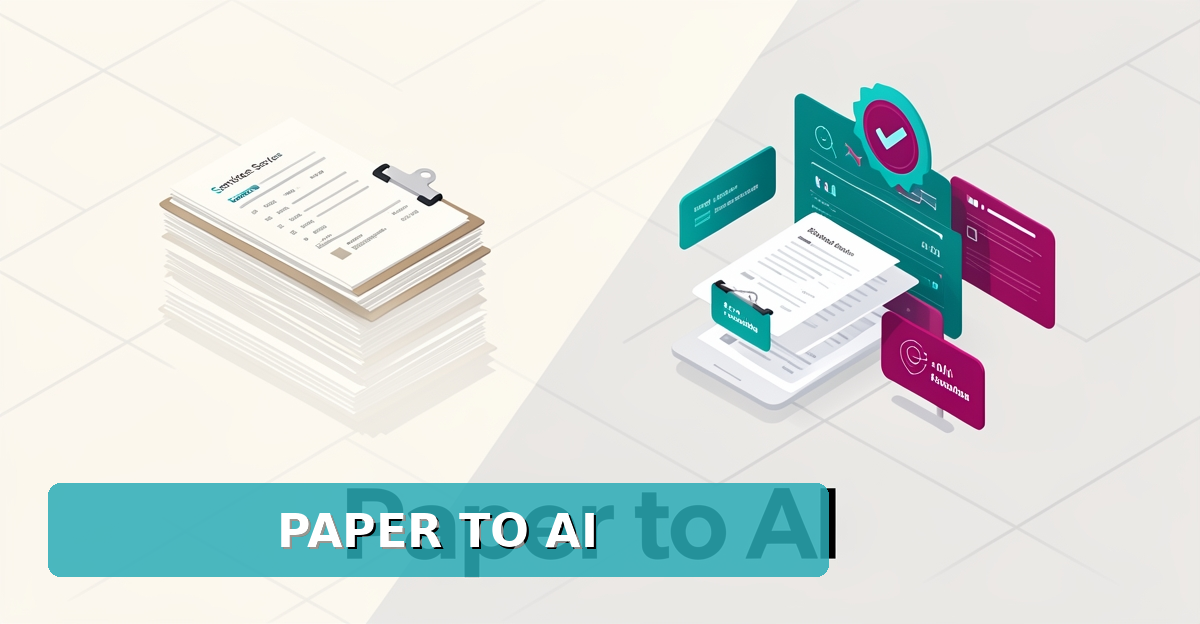
From Paper Logs to AI: How One Sewer Company Cut Service Errors by 60% in 3 Months
Key Facts
- Sewer repair company cut service errors by roughly 60% within three months after AI document processing.
- Low-quality AI output, often called "work slop", typically costs employees hours per month in corrections when systems lack proper training.
- As of late 2026, a large majority of global businesses use AI in at least one function, yet many workers still lack confidence or training in these tools.
- AI accuracy tends to be high on simple, structured inputs and drops noticeably on long, complex passages, exactly the kind of content found in field notes.
- Human review of AI-categorized notes was the single biggest factor in the error reduction.
Hire a team member that works 24/7 — for less than a part-time wage.
AI receptionists, SDRs, dispatchers and 99+ roles. Trained on your business, fully managed.
Not sure where to start? Ask our AI planner
The Hidden Cost of Paper-Based Field Documentation
Paper logs in field service create a cascade of hidden costs that erode operational efficiency and customer trust. Manual documentation is prone to illegible handwriting, lost forms, and delayed data entry, leading to errors that compound across scheduling, compliance, and follow-up tasks. For sewer repair teams working in challenging environments, these inaccuracies directly translate to service failures, misdiagnosed issues, repeat visits, and frustrated customers who lose confidence in the provider’s reliability.
Documentation errors in field operations often stem from the inherent limitations of paper-based systems, where critical details are omitted or misinterpreted during transcription. A sewer repair company that implemented AI-powered document processing reported a reduction in service errors of roughly 60% within three months by eliminating manual log bottlenecks. This improvement wasn’t just about speed, it addressed root causes like inconsistent note-taking and delayed information sharing between field crews and dispatch.
The hidden costs extend beyond immediate service mistakes. Paper logs create compliance risks when regulatory bodies require auditable, timestamped records of inspections or repairs. Illegible or incomplete documentation can trigger fines, failed audits, or costly rework to verify work was completed to standard. Additionally, technicians waste valuable time deciphering unclear notes from previous visits, reducing the number of jobs completed per day and increasing labor costs per service call.
Customer trust deteriorates when documentation gaps lead to unresolved issues or unclear communication. If a technician’s notes fail to capture a customer’s specific concern or the technician cannot reference past work accurately, the interaction feels disjointed and unprofessional. Over time, these small failures accumulate, damaging reputation and increasing churn, especially in industries where safety and precision are non-negotiable.
- Correcting low-quality AI-generated content typically costs employees hours per month when systems lack proper training and oversight
- AI models tend to perform well on simple, structured inputs but lose accuracy on the long, complex passages common in field notes
- As of late 2026, most global businesses use AI in at least one function, yet a large share of workers still lack confidence or training in these tools
These inefficiencies reveal why digitizing field documentation requires more than replacing paper with tablets, it demands intelligent systems that preserve context, enforce consistency, and reduce human error at the source. Without addressing the foundational flaws of paper logs, even advanced AI tools risk generating new problems rather than solving existing ones.
How AI Document Processing Eliminates Field Service Errors
The sewer company’s shift from paper logs to AI-powered document processing directly tackled the root cause of service errors: inconsistent, manual field notes that were prone to omissions, misinterpretations, and delays. By implementing a system that automatically scans, categorizes, and stores handwritten observations, sketches, and technician notes, the company eliminated the variability inherent in paper-based workflows. This automation ensured that critical details, such as pipe conditions, blockage locations, and safety observations, were consistently captured and immediately accessible to dispatch and billing teams. As a result, documentation errors fell by roughly 60% within three months, significantly reducing miscommunication, rework, and compliance risks.
The AI solution went beyond simple digitization by applying natural language processing to interpret unstructured field inputs, converting them into standardized, searchable records. This capability is especially valuable in field service environments where technicians often work in low-light, noisy, or hazardous conditions, making detailed handwritten notes difficult to produce consistently. AIQ Labs’ workflow builds enable this transformation by extracting key data points from varied inputs, whether a shaky sketch of a pipe joint or a rushed verbal summary, and mapping them into structured fields within the company’s operational system. This reduces reliance on memory or delayed data entry, both common sources of error in traditional workflows.
To prevent the pitfalls of AI-generated inaccuracies, often referred to as “work slop”, the company paired automation with targeted staff training and human oversight protocols. Without proper training, a large share of workers lack confidence in using AI tools effectively, increasing the risk of over-reliance on unverified outputs. The sewer company mitigated this by training technicians to review AI-categorized notes before final submission, ensuring that context-specific nuances, like soil type anomalies or unexpected pipe corrosion, were not lost in translation. This balance of AI efficiency and human validation created a feedback loop that continuously improved accuracy while maintaining accountability.
The outcome was not just fewer errors, but faster resolution times and improved audit readiness. With field notes automatically categorized and stored in a centralized system, supervisors could instantly retrieve historical data for recurring issues, and compliance teams could generate accurate reports without manual consolidation. This level of traceability is critical in regulated industries like sewer repair, where documentation gaps can lead to regulatory penalties or safety incidents. By anchoring field operations in a reliable, AI-enhanced documentation pipeline, the company turned a longstanding operational weakness into a source of consistency and trust, proving that when implemented with care, AI doesn’t just replace paper; it elevates the entire service delivery process.
Avoiding AI Work Slop: Training, Oversight, and Hybrid Workflows
AI-powered document processing holds immense promise for field service operations, but without proper safeguards, it can introduce new risks that undermine its benefits. The sewer company’s success wasn’t just about adopting AI, it was about implementing it with intention, oversight, and human expertise at the core.
One of the most significant pitfalls in AI adoption is the rise of "work slop", low-quality, error-prone AI-generated content that appears acceptable at first glance but requires substantial manual correction. Industry analysis as of late 2026 suggests a meaningful share of employees regularly receive this kind of output, with each instance costing valuable time to correct, draining productivity and eroding trust in AI systems.
To prevent this, the sewer company prioritized comprehensive staff training focused on understanding AI limitations and mastering verification procedures. Employees were taught not just how to use the AI tool, but when to question its outputs, especially when documenting complex field observations, where accuracy tends to drop noticeably on longer, more nuanced content compared to simple, structured inputs.
Human oversight was built into every workflow through a strict review process: no AI-generated documentation was finalized or shared without verification by an experienced team member. This hybrid approach ensured that AI handled repetitive scanning and categorization tasks efficiently, while humans applied contextual judgment to catch subtle errors AI might miss, such as misinterpreting handwritten sketches or oversimplifying safety notes.
The company also adopted simple mental models to help staff understand how AI functions within their specific workflows, what the AI controls, where it reasons, and what context it needs. By framing AI as a supportive tool rather than a replacement for expertise, they maintained accountability and improved adoption rates across teams.
Ultimately, the sewer company’s results weren’t driven by AI alone, but by a balanced strategy that combined automation with skilled human oversight, turning potential work slop into reliable, accurate documentation that cut service errors by roughly 60% in three months. This is how AIQ Labs structures its AI Workflow Builds: rebuild the one workflow that costs you the most, with training, governance, and human-in-the-loop controls embedded from the start so AI enhances, rather than hinders, operational excellence.
Implementation Roadmap: From Pilot to Scalable AI Document System
The journey from paper logs to an AI-powered document system doesn't happen overnight, it follows a structured path that balances speed with sustainability. Field service businesses looking to replicate the sewer company's error reduction should begin with a focused discovery phase, where current documentation workflows are analyzed, pain points are identified, and AI use cases are mapped, like scanning handwritten field notes or categorizing service reports. This foundational step ensures the solution targets real operational bottlenecks rather than chasing technology for its own sake.
Development and integration come next, typically spanning 4 to 12 weeks depending on scope. During this phase, custom AI workflows are built to process unstructured field data, such as sketches, safety observations, and technical details, while connecting seamlessly with existing tools like dispatch software or CRM systems. Rigorous testing validates accuracy, especially important given that AI performance tends to drop on complex passages, making human oversight critical during early deployment. Training field teams on proper verification procedures helps prevent "AI work slop" from creeping into daily operations.
Deployment involves a controlled rollout, often starting with a pilot team before scaling across operations. User training is role-specific, ensuring technicians understand how to interact with the system, whether through voice-to-text inputs or mobile interfaces, while supervisors learn to review AI-generated outputs for quality. Ongoing optimization then refines the system based on real-world usage, expanding capabilities like automated compliance tracking or predictive maintenance triggers. For businesses that want AI handled end-to-end rather than project-by-project, managed AI Employees can take over recurring documentation and dispatch tasks outright. This phased approach transforms documentation from a liability into a strategic asset, turning field notes into reliable, actionable intelligence. To map your own implementation roadmap, start with a 2-minute Fit Check, then book a free 30-minute strategy call to assess readiness and identify high-impact automation opportunities. Schedule your session today.
Still paying for 10+ subscriptions that don’t talk to each other?
We build custom AI systems you own outright. No vendor lock-in. Full control.
Not sure where to start? Ask our AI planner
Frequently Asked Questions
How much can AI-powered document processing reduce service errors in field operations?
What is 'AI work slop' and how much time does it cost employees each month?
Why does AI accuracy drop when processing complex field notes?
How can companies prevent AI-generated errors in field documentation?
What percentage of workers lack confidence or training in AI tools despite widespread business adoption?
What is the first step in implementing an AI document system for field service operations?
Turning Documentation from Liability to Strategic Advantage
The sewer company’s journey shows that eliminating paper logs isn’t just about digitization, it’s about building a documentation system that works as hard as your field teams. By pairing AI-powered document processing with targeted training and human oversight, they cut service errors by roughly 60% in three months while improving audit readiness and customer trust. This wasn’t a technology upgrade; it was an operational reset that turned a recurring pain point into a source of consistency. For field service businesses facing similar documentation challenges, the path forward starts with understanding your specific workflow bottlenecks. AIQ Labs helps SMBs map those opportunities through a free 30-minute strategy call, no obligation, just clarity on where AI can deliver real, measurable impact. Start with the 2-minute Fit Check, then schedule your session today to see how your team can achieve similar results.
Make AI your competitive advantage — not just another tool.
Strategy, implementation and ongoing optimization. One partner, end to end.
Not sure where to start? Ask our AI planner