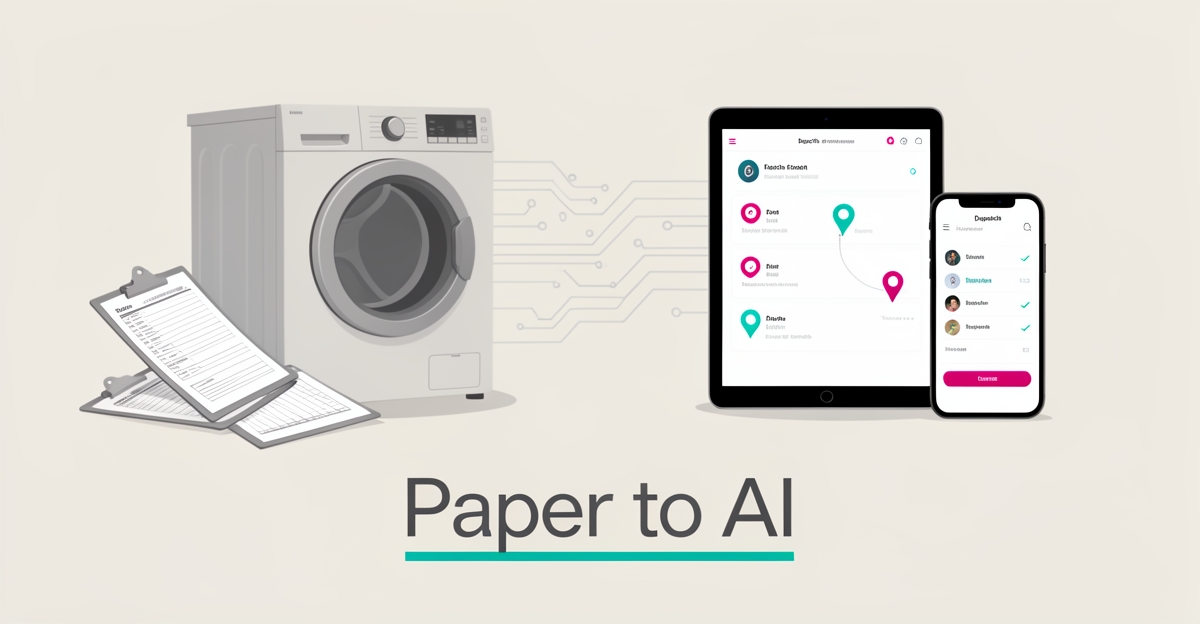
From Paper Logs to AI: How One Washer & Dryer Repair Shop Automated Job Tracking
Key Facts
- Industry surveys consistently rank work order status tracking as one of the most time-consuming tasks for facility and service teams
- Poor work order response contributes to equipment downtime, which carries substantial costs in industrial settings
- AI-powered scheduling eliminates double bookings and poorly spaced appointments that previously left technicians driving in circles, per documented appliance repair case studies
- Technicians arriving with full asset history and parts lists is a key driver of higher first-visit success rates
- Businesses using AI for time tracking have reported productivity gains of up to roughly 30% in some analyses
- Optimized routing lets technicians complete more jobs in less time while reducing travel, according to field service operator feedback
- Automated post-service follow-ups trigger feedback requests and maintenance reminders without staff effort
Hire a team member that works 24/7 — for less than a part-time wage.
AI receptionists, SDRs, dispatchers and 99+ roles. Trained on your business, fully managed.
Not sure where to start? Ask our AI planner
The Hidden Cost of Paper Logs in Repair Shops
The clipboard-based dispatch board, the grease-stained paper log, the "I think Dave has that job", for many washer and dryer repair shops, this is the daily reality of job tracking. While it might feel like a low-cost way to run a business, the hidden operational drag of manual systems creates a cascade of errors that directly impacts the bottom line.
The most immediate cost is time. Industry research on work order management has consistently found that status tracking is one of the most time-consuming tasks service teams face, one widely cited survey put the figure at 44% of facility teams. When a technician has to call the office to find their next job, or a dispatcher has to manually cross-reference a spreadsheet to see who is available, the business is bleeding productive hours.
This manual approach inevitably leads to scheduling errors. Without a centralized system, it's easy to fall victim to double bookings or poorly spaced appointments, which frustrate customers and burn out technicians. As documented case studies on appliance repair efficiency note, manual scheduling often leaves customers uncertain about technician arrival times, a primary driver of missed appointments and negative reviews.
The problem extends beyond the schedule to the service call itself. When job details are scribbled on a paper ticket, critical information gets lost. Technicians arrive on-site without the full service history, the specific error codes, or the right replacement parts. This lack of preparedness is a primary cause of low first-time fix rates, forcing costly return trips and damaging customer trust.
The operational drag of paper logs manifests in several critical areas:
- Invisible Workloads: Without a live dashboard, managers have no real-time view of job status, making it impossible to know which jobs are open, overdue, or completed without making phone calls.
- Technician Unpreparedness: Technicians arrive without the right parts or procedural checklists, leading to repeat visits and frustrated customers.
- Communication Gaps: Customers are left in the dark about arrival times, leading to missed appointments and a poor service experience.
- Administrative Overload: Staff spend hours manually compiling service records for warranty claims or compliance audits instead of focusing on growth.
These aren't just minor inconveniences; they represent a significant financial drain. Poor work order response and tracking contribute to equipment downtime, which in industrial settings has been estimated to cost businesses hundreds of thousands of dollars per hour. While a repair shop's scale is different, the principle is the same: every minute a technician is idle, misrouted, or unprepared is a direct hit to profitability.
For a small repair business, these inefficiencies compound. A few missed appointments a week, a couple of extra trips for parts, and hours spent on manual data entry can easily add up to thousands of dollars in lost revenue and wasted wages each month. This is the operational ceiling that AI-powered workflow automation is designed to break.
How AI Transforms Core Repair Workflows
The repair shop's transformation began when they replaced their paper-based dispatch board with an AI-powered platform that connects scheduling, technician tracking, and customer communication in a single workflow. Instead of juggling spreadsheets and phone calls, the system now analyzes technician availability, repair complexity, and travel distance to build optimized daily routes automatically. Case studies on appliance repair efficiency show this approach eliminated double bookings and poorly spaced appointments that previously left technicians driving in circles.
- Automated scheduling assigns jobs based on real-time technician location, skill set, and parts availability
- Live GPS tracking lets customers monitor technician progress and receive automated arrival calls
- Pre-visit data packets deliver appliance history, error codes, and required parts to mobile devices
- Post-service follow-ups trigger feedback requests, maintenance reminders, and warranty notices without staff effort
The impact on field operations was immediate. Technicians now arrive with full asset history and parts lists before leaving the shop, a change that drove a significant increase in first-visit success rates and reduced callbacks. Field service operators using live technician tracking report customers no longer wait all day, they simply track the technician's progress and head home when the automated call confirms the tech is en route. With routes optimized and less time spent on logistics, the shop saw a measurable increase in daily job completions while work order tracking shifted from the most time-consuming task to a live dashboard visible to everyone. AIQ Labs builds these kinds of integrated systems through AI Workflow Builds, rebuilding the one workflow that costs your shop the most, at a fixed price and in phases, so dispatch, CRM, and field tools connect into one platform you own outright rather than rent.
From Implementation to Impact: A Step-by-Step Transition
Paper logs and phone calls don't scale when every service call depends on timing, parts, and technician availability. The shift from manual job tracking to an AI-driven system starts with mapping the real friction points and building a workflow that runs without constant human oversight.
The first move is a workflow assessment. Teams identify where requests disappear, where double bookings happen, and where status updates stall. Industry research on work order management has found that status tracking ranks as the most time-consuming task for a large share of facility teams, and that most don't know when their equipment is due for service. That visibility gap drives callbacks, missed appointments, and overtime.
System selection replaces paper work orders, email chains, and spreadsheets with a centralized digital platform that creates, assigns, tracks, and closes every job from a single view. AIQ Labs approaches this as an AI Workflow Build, unifying CRM, scheduling, and field tools so every job has a documented record from first request to digital close, delivered in milestones, so you see value early and can stop at any phase.
Implementation follows a practical sequence:
- AI-driven dispatch setup that automatically assigns jobs based on technician availability, expertise, and location
- Real-time tracking deployment so customers can monitor technician progress and receive automated en-route calls
- Automated communication configuration for reminders, schedule-change notifications, and instant technician updates
- Post-service follow-up automation for feedback requests, maintenance reminders, and warranty information
With AI-driven dispatch, the system instantly analyzes availability, estimated repair times, and travel distances to balance schedules and reduce travel. Technicians receive appliance details, error codes, and past service history before arrival, which improves first-visit success and reduces parts returns.
Real-time tracking changes the customer experience. Field service operators report customers no longer have to wait all day; they can monitor technician progress and head home when the tech is close. Automated calls confirm the technician is officially en route.
Automated communication cuts no-shows and builds trust. Customers receive reminders and real-time updates, while technicians get instant adjustments when earlier jobs run long. Post-service automation saves staff time while strengthening relationships through consistent feedback requests and maintenance prompts.
The operational impact is measurable. Some analyses of AI-assisted time tracking report productivity gains of up to roughly 30%, and optimized routing lets technicians complete more jobs in less time. From implementation to impact, the transition moves a repair shop from reactive firefighting to a predictable, visible service engine that customers can rely on.
Still paying for 10+ subscriptions that don’t talk to each other?
We build custom AI systems you own outright. No vendor lock-in. Full control.
Not sure where to start? Ask our AI planner
Frequently Asked Questions
Why is tracking repair jobs on paper such a big deal for a small appliance repair shop?
How does AI-powered scheduling actually assign jobs to technicians?
Do customers really stop waiting all day for the repair technician?
Will technicians actually show up with the right parts the first time?
How much productivity improvement can a repair shop expect from AI automation?
Is switching from paper logs to an AI system too complicated or risky for a small business?
The Clipboard Is Costing You More Than You Think
The story of this washer and dryer repair shop comes down to a simple trade: they swapped phone calls, paper logs, and guesswork for a system that schedules jobs, routes technicians, and keeps customers informed automatically. The results speak for themselves, fewer double bookings, better first-visit success rates, more jobs completed per day, and customers who no longer wait around all day for a technician to arrive. And this isn't an outlier; some analyses report productivity gains of up to roughly 30% for businesses using AI-assisted time tracking. If your shop is still running on clipboards and crossed fingers, the path forward is clear: map your friction points, centralize your job tracking, and automate the workflows that eat your team's time. AIQ Labs builds these systems as custom, owned platforms, not another subscription to juggle. Start with the two-minute Fit Check at aiqlabs.ai/apply, then book a free 30-minute strategy call to map your biggest bottleneck with an AI engineer. If there's no clear win, we'll tell you that too.
Make AI your competitive advantage — not just another tool.
Strategy, implementation and ongoing optimization. One partner, end to end.
Not sure where to start? Ask our AI planner