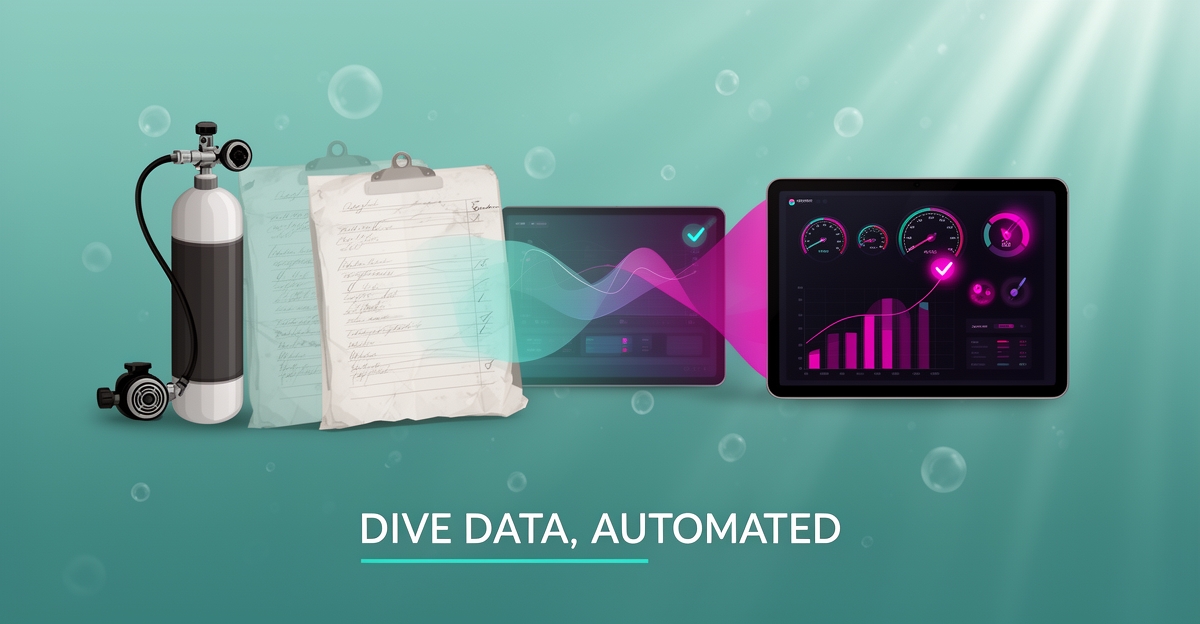
From Paper Logs to AI: How Scuba Shops Can Automate Dive Checklists and Safety Records
Key Facts
- AI-enabled dive computers typically cost meaningfully more than traditional models, according to gear comparison research
- Traditional dive computers commonly run on user-replaceable batteries that last multiple years, based on technical specifications
- Modern dive logging platforms automate calculations, data analysis, and secure backup options as demonstrated by current platforms
- AI can reduce human error and improve regulatory compliance by automating dive logging, equipment checks, and incident reports per AI use case research
- AI dive computers add maintenance requirements like sensor calibration and battery management—reasons many recreational divers stick with simpler gear per gear comparison research
- Digital dive records with automated backups give shops verifiable, continuous documentation for audits and incident review as shown by dive logging analysis
Hire a team member that works 24/7 — for less than a part-time wage.
AI receptionists, SDRs, dispatchers and 99+ roles. Trained on your business, fully managed.
Not sure where to start? Ask our AI planner
The Hidden Costs of Manual Dive Logs and Safety Records
Manual dive logs and safety records create hidden operational risks that many scuba shops overlook until a compliance audit or incident investigation reveals the gaps. Paper-based systems rely on handwritten entries that are prone to transcription errors, illegible notes, and inconsistent formatting across staff members. These seemingly small mistakes compound over time, leading to inaccurate dive profiles, missing equipment maintenance dates, and unverified certification renewals—all of which can jeopardize diver safety and regulatory standing.
Lost or damaged records represent another significant vulnerability. A single waterlogged logbook, misplaced folder, or fire-damaged filing cabinet can erase years of critical safety data in an instant. Unlike digital systems with automated backups, paper records offer no redundancy, leaving shops exposed to irreversible data loss. This fragility becomes especially problematic during PADI or DAN audits, where verifiable, continuous records are typically required for maintaining operational licenses and instructor certifications.
The administrative burden of manual record-keeping further strains shop resources. Staff spend valuable time deciphering handwriting, re-entering data into spreadsheets, and chasing down missing signatures—time that could be better spent on customer service or dive training. Modern dive logging platforms show that automated calculations, data analysis, and secure backup options directly address these inefficiencies by eliminating redundant data entry and keeping records synchronized across devices. Without such automation, scuba shops remain trapped in a cycle of reactive corrections rather than proactive safety management. Current dive logging platforms demonstrate how digital transformation turns these hidden costs into measurable operational gains.
How AI-Powered Dive Logging and Safety Automation Works
Scuba shops can transform their safety documentation by implementing AI-powered systems that automate dive logging, equipment checks, and incident reports. These solutions use document processing and multi-agent architectures to extract data from paper forms, dive computers, and maintenance records with minimal human intervention. AIQ Labs builds production-ready systems—over 200 multi-agent deployments to date—that handle complex dive documentation with accuracy and real-time updates, reducing the risk of human error in critical safety workflows.
Automated data extraction enables dive shops to digitize paper logs and equipment checklists by scanning forms and capturing key details like dive times, depths, gas mixes, and equipment conditions. AI-powered logging can automate calculations, data analysis, and secure backup options, ensuring records are complete and instantly accessible for training or audits. Real-time validation checks entered data against safety thresholds—such as no-decompression limits or cylinder pressure requirements—and flags inconsistencies before they become risks.
Secure backup and compliance features protect sensitive dive records while meeting regulatory standards. Systems can encrypt logs, store them in tamper-proof archives, and generate automated reports for certification agencies or insurance providers. By integrating multi-agent workflows, scuba shops can synchronize equipment maintenance schedules, incident tracking, and diver profiles into a single intelligent system—whether that starts as a targeted workflow build or grows into a full AI operating system for the whole shop. This approach not only saves time but also creates a proactive safety culture where potential issues are identified and addressed before they impact divers.
Implementing AI Automation in Your Scuba Shop: A Practical Roadmap
Adopting AI-driven documentation doesn't have to be an all-or-nothing leap. The shops that succeed treat it like a dive plan: assess conditions first, then descend in controlled stages.
Start by mapping your current workflows. Track how dive logs, equipment checks, and incident reports move through your shop today—on paper, in spreadsheets, or scattered across apps. Research on AI use cases for dive schools shows that automating dive logging, equipment checks, and incident reports reduces human error and improves regulatory compliance, but you can't automate what you haven't documented. Identify where errors and delays actually occur.
Next, inventory your existing tools. Most shops already run a CRM, a booking or scheduling system, and possibly accounting software. The goal is integration, not replacement—your AI documentation system should connect to these platforms so records update in real time rather than living in another silo.
When choosing an implementation path, AIQ Labs offers three ways in:
- Start Monthly — an AI Employee handling a defined documentation role, at roughly 80% less cost than a human hire, with a flat monthly plan that includes the build, training on your business, tool integrations, monitoring, and improvements. Pause or adjust anytime.
- Build in Milestones — a single workflow or department system split into phases, where you approve and pay for each phase as it ships and keep everything built if you stop.
- Own It Outright — a full AI operating system for your shop, built in phases with one project price, and full ownership of the code, agents, and data when complete.
This staged approach mirrors a lesson from dive gear itself. According to gear comparison research, AI dive computers typically cost meaningfully more than traditional models and carry maintenance requirements like sensor calibration and battery management—reasons many recreational divers stick with simpler, more dependable equipment. The same principle applies to shop automation: begin with a targeted workflow fix rather than a full overhaul, prove the value, then scale.
Data integrity deserves early attention. Analysis of dive logging solutions notes that AI-powered logging requires data security and backup measures to ensure records stay intact—critical when those records support compliance and incident review.
This is where working with an experienced builder matters. AIQ Labs has deployed 200+ multi-agent systems and runs four live SaaS products daily, so the systems it builds for dive documentation are proven in production, not theory. Every engagement starts with a 2-minute Fit Check followed by a free 30-minute strategy call to assess your current systems, identify high-ROI automation opportunities, and map a realistic implementation plan—if there isn't a clear win, they'll tell you that too.
The roadmap is straightforward: assess, integrate, pilot, scale. Shops that follow it move from paper logs to verified digital records without disrupting daily operations.
Still paying for 10+ subscriptions that don’t talk to each other?
We build custom AI systems you own outright. No vendor lock-in. Full control.
Not sure where to start? Ask our AI planner
Frequently Asked Questions
How much time does manual dive log keeping actually waste for a scuba shop?
Are AI dive computers reliable enough for everyday recreational use?
What happens if our paper dive logs get lost or damaged?
Can AI automation really help us pass PADI or DAN audits?
Do we have to replace our CRM and booking system to use AI documentation?
When does it make sense to use AI dive computers versus traditional ones?
Dive Into Smarter Safety: Your Path Forward
The shift from paper logs to AI-powered documentation isn't just about ditching clipboards—it's about building a safer, more reliable foundation for your scuba shop. By automating dive logging, equipment checks, and incident reports, you eliminate costly human errors, ensure records are always audit-ready, and free your team to focus on what matters most: guiding divers and growing your business. The roadmap is clear: start by mapping your current workflows, integrate with tools you already use, and pilot a targeted fix—like an AI Employee for documentation—before scaling. This staged approach lets you prove value quickly without disrupting daily operations. Ready to see how AI can transform your safety records from a liability into a strength? Take the 2-minute Fit Check, then book a free 30-minute strategy call to explore your high-ROI opportunities—no obligation, just clarity on what's possible for your shop.
Make AI your competitive advantage — not just another tool.
Strategy, implementation and ongoing optimization. One partner, end to end.
Not sure where to start? Ask our AI planner