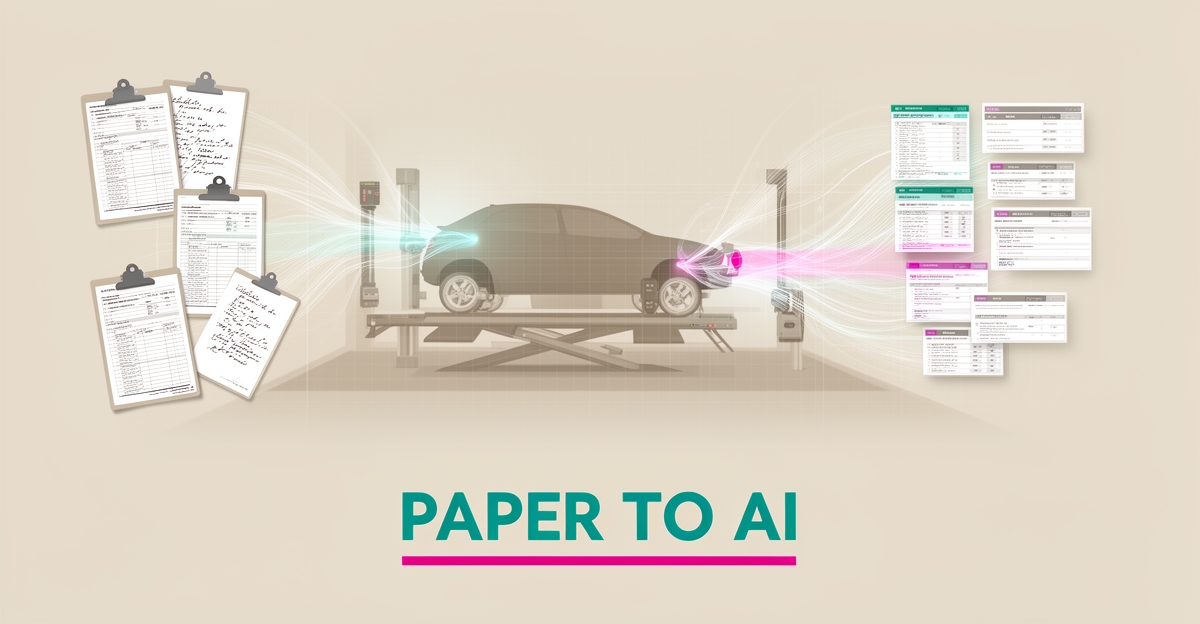
From Paper Logs to AI: How Wheel Alignment Shops Can Automate Service Records
Key Facts
- A large share of business processes across industries remain paper-based, and automotive service is no exception.
- Most organizations are still early in their automation journey; only a small fraction have reached advanced automation combining RPA and AI/ML.
- Data quality is consistently cited as a top obstacle to AI adoption—messy, unstructured records undermine even good software.
- Handwritten alignment forms are the classic case: the data exists but is not findable, structured, or consistent.
- Starting with a small, recent slice of records and a standard template is the proven path to audit-ready digital documentation.
- AIQ Labs has deployed 200+ multi-agent systems and runs 4 live SaaS products daily—this is built and battle-tested, not theoretical.
Hire a team member that works 24/7 — for less than a part-time wage.
AI receptionists, SDRs, dispatchers and 99+ roles. Trained on your business, fully managed.
Not sure where to start? Ask our AI planner
The Paper Log Problem in Alignment Shops
Handwritten alignment forms feel temporary until an audit, a comeback, or a lost customer file proves otherwise. Paper logs stay the default in automotive service because the workflow was built around them, not because they work.
Across industries, a large share of business processes are still paper-based, and automotive service is among the slower sectors to move. In a wheel alignment shop that means alignment specs, before-and-after measurements, and technician notes live on clipboards, work orders, and file cabinets. The data exists, but it is not findable.
Paper creates three shop-specific risks that digital records eliminate. Audit risk grows when forms are incomplete, altered, or missing. Service history becomes fragmented across bays, making warranty claims and repeat-visit verification slow and manual. Retrieval turns into a physical hunt.
Illegible notes and inconsistent fields are normal with handwritten logs. One technician writes toe and camber in shorthand, another adds free-text comments, a third leaves a field blank. That variance makes any later search unreliable and prevents the shop from building a usable dataset for AI.
The scale of the problem is wider than alignment shops. Most businesses are still in the paper-to-digital transition, and only a small fraction have reached advanced automation that combines robotic process automation with AI and machine learning. Basic digitization—scanning pages into folders—does not count, because scanned images are just as unsearchable as the paper they came from.
Data quality compounds the issue. Organizations consistently rate their own data as unready for AI, citing quality and organization as primary obstacles. For alignment shops, poor data means even a digitized scan of forms remains unsearchable without structure.
Common paper log pain points in alignment bays include:
- Illegible technician notes that delay service lookups and create miscommunication
- Lost or misfiled work orders that erase vehicle history and audit trails
- Slow manual retrieval when a customer asks for last alignment specs
- Inconsistent fields that prevent trend analysis on common issues by make and model
The persistent paper challenge is not just storage. It is the inability to extract, categorize, and store service data from paper forms or handwritten notes into searchable digital records. AI document processing can turn those forms into structured, audit-ready documentation for every alignment job without forcing a wholesale shop overhaul overnight.
AIQ Labs builds custom systems that ensure accurate, audit-ready documentation by extracting service data from paper and handwritten notes and making it searchable. This is typically delivered as a focused AI Workflow Build—rebuilding the one workflow that costs you the most, at a fixed price, in phases. The first step is not AI magic, it is making the paper readable, structured, and consistent.
The AI Readiness Paradox for Small Shops
The automotive service industry is racing toward AI adoption, but most shops are building on foundations of sand. A large majority of organizations are actively experimenting with or deploying AI in some form, yet the same organizations routinely rate their own data quality as mediocre. This disconnect—what analysts call the AI Readiness Paradox—explains why so many technology investments fail to deliver returns.
The pattern is consistent: ambition outpacing infrastructure. Despite high enthusiasm, only a small fraction of organizations have achieved advanced automation using AI and machine learning. Even more revealing, most businesses believe their data is AI-ready, yet the overwhelming majority encounter significant data challenges during implementation, with internal data quality and organization cited as the primary obstacle.
For wheel alignment shops, this paradox manifests in a familiar scenario: purchasing expensive AI-powered diagnostic tools or customer management systems, only to discover that handwritten service logs, inconsistent terminology, and incomplete vehicle histories render the software ineffective. Buying AI tools without structured data is like installing a high-performance engine in a car with no wheels—the power exists, but it cannot connect to the road.
The root cause lies in how service information is captured and stored. When alignment specifications, customer notes, and vehicle histories live in paper logbooks or scattered spreadsheets with varying formats, AI systems cannot parse the chaos. Research consistently shows that processes must be properly documented and structured before automation can succeed. Without this foundation, even the most sophisticated AI becomes an expensive paperweight.
Breaking this cycle requires shifting from wholesale transformation to targeted data hygiene. Instead of attempting to digitize decades of records overnight, successful shops start with discrete, manageable datasets. This pragmatic approach involves:
- Digitizing only the most recent 6-12 months of alignment service records first
- Creating standardized templates for vehicle specifications, before-and-after measurements, and technician notes
- Establishing consistent terminology across all service documentation
- Building a searchable digital repository that can scale incrementally
This focused methodology creates a blueprint for expansion. Once the initial dataset proves clean and accessible, shops can apply the same standards to historical records or additional service categories. The goal is creating AI-ready data—structured, consistent, and machine-readable—before investing in advanced automation.
AIQ Labs approaches this challenge by building custom document processing systems that extract data from existing paper forms and handwritten notes, converting them into structured digital records. Rather than forcing shops to abandon their current workflows immediately, this creates a bridge between analog operations and digital intelligence. By ensuring service data is audit-ready and properly organized from day one, shops avoid the readiness trap that stalls most automation initiatives and put themselves in the small group that achieves genuinely AI-driven operations.
How AI Extracts, Categorizes and Stores Service Data
The journey from paper service logs to AI-powered records begins with intelligent document processing. Modern AI systems can convert scanned paper forms and handwritten alignment notes into structured, searchable digital data using optical character recognition (OCR) enhanced with natural language understanding. This technology extracts critical information—customer details, vehicle VINs, pre- and post-service alignment specs, and technician observations—transforming unstructured paper into a consistent digital format ready for storage and analysis. With so much business data still trapped on paper, shops that solve this first unlock historical records their competitors cannot use.
Once extracted, AI categorizes and tags each data point according to predefined schemas—such as camber, caster, and toe measurements—building a normalized dataset that supports both operational use and long-term insights. This structured foundation enables retrieval-augmented generation (RAG) systems to provide citation-accurate answers when technicians query past service records, ensuring responses are grounded in the shop's own documented history rather than generic AI guesswork. RAG's effectiveness depends entirely on the quality of the underlying data, making the initial digitization and categorization step critical for trustworthy AI assistance. Shops that invest in clean, well-organized data from the start lay the groundwork for reliable, audit-ready documentation that meets regulatory and warranty requirements.
Beyond immediate retrieval, this digitized alignment data becomes a living dataset for operational insights and continuous improvement. By analyzing trends across hundreds of digitized records—such as common misalignment patterns by vehicle make or the effectiveness of specific adjustment procedures—shops can identify preventive maintenance opportunities and refine service protocols. Because so few organizations have reached advanced automation with AI/ML, the competitive advantage available to shops that build high-quality data foundations now is real. This incremental approach—starting with alignment specs, validating the process, then expanding to other service types—creates a scalable blueprint for data quality that supports everything from daily workflow automation to future agentic AI applications. The result is not just digital records, but a strategic asset that enhances accuracy, compliance, and decision-making across the entire service lifecycle.
A Pragmatic Roadmap From Paper to Searchable Records
Many wheel alignment shops still rely on paper logs, creating a hidden bottleneck in service accuracy and audit readiness. With so much business data still paper-based, historical records are difficult to search, analyze, or leverage for AI-driven insights. The first step toward automation isn't buying software—it's fixing the data at its source.
Start with a discrete data hygiene project focused on your most recent alignment records. Define a clear standard template capturing VIN, vehicle specs before and after service, technician notes, and customer details. This targeted effort builds a repeatable blueprint for data quality without overwhelming your team. As you digitize and structure this dataset, document the rules and workflows so they can be scaled to older records or other service types like tire rotations or brake jobs.
Employee engagement is critical to success—technology fails when users aren't trained or motivated. Involve technicians and service writers in designing the template, show them how searchable records reduce repetitive questions and speed up warranties, and provide hands-on support during the transition. When staff see the system as a tool that makes their job easier, adoption follows naturally. AIQ Labs partners with shops to build custom systems that reflect these standardized processes—built in phases, with clear milestones, and owned outright by you, not rented from a vendor. That ensures ownership, accuracy, and a foundation for future AI capabilities like retrieval-augmented search or agentic workflows. By starting small, focusing on data quality, and bringing your team along, you close the gap between paper logs and intelligent, searchable records.
Still paying for 10+ subscriptions that don’t talk to each other?
We build custom AI systems you own outright. No vendor lock-in. Full control.
Not sure where to start? Ask our AI planner
Frequently Asked Questions
Why can't I just buy an AI tool to read my paper alignment logs?
How does AI actually turn handwritten alignment forms into digital records?
Do I have to digitize decades of old service records all at once?
What's the difference between basic automation and the AI systems you build?
My technicians hate new software. How do I get them to actually use this?
Can AI really answer questions about past alignment jobs accurately?
Paper Out, Performance In: Your Roadmap to AI-Ready Alignment Records
The move from paper logs to searchable service records isn't about chasing AI hype, it's about fixing the foundation that makes AI work. Handwritten forms create audit risk, slow retrievals, and data that is too inconsistent to analyze or trust. The shops that win start small: standardize a template for VIN, before-and-after specs, and technician notes, digitize the most recent 6–12 months first, and build a clean, searchable repository that scales. That disciplined data hygiene is what turns paper into an asset for retrieval-augmented search, trend analysis, and future automation. AIQ Labs helps alignment shops build custom document processing systems that extract data from paper and handwritten notes into structured, audit-ready records without forcing an overnight overhaul—whether that's a single workflow rebuild or a fully connected AI Operating System you own outright. If you want a practical assessment of your current bottleneck and a high-ROI path forward, start the 2-minute Fit Check at https://aiqlabs.ai/apply and book a free 30-minute strategy call, or reach us directly at [email protected]. With so much business data still stuck on paper, the opportunity to get ahead starts with making your paper readable, structured, and consistent.
Make AI your competitive advantage — not just another tool.
Strategy, implementation and ongoing optimization. One partner, end to end.
Not sure where to start? Ask our AI planner