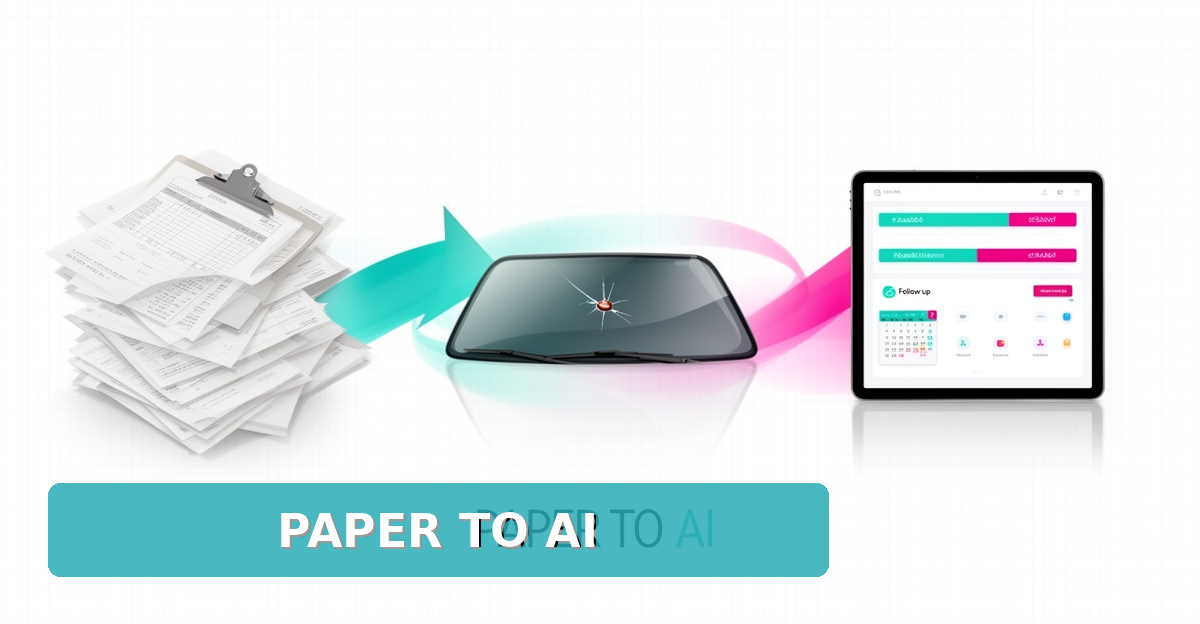
From Paper Logs to AI: How Windshield Repair Shops Can Automate Job Tracking and Customer Follow-Up
Key Facts
- Paper-based tracking systems commonly lose a meaningful share of work orders between handoffs—industry maintenance research suggests the figure can reach 15-25% in heavily manual operations
- Digital work order systems typically compress job completion times dramatically compared with paper-based tracking, with maintenance studies showing multi-day reductions in cycle time
- Automated reminders and follow-ups are one of the most reliable ways to reduce no-shows and missed appointments in service businesses
- AI and automation are projected to save the auto repair industry billions annually in labor costs as of 2025 reporting per Space Coast Daily
- AIQ Labs has deployed 200+ multi-agent systems and runs four live SaaS products daily, so the automation patterns described here are proven in production
Hire a team member that works 24/7 — for less than a part-time wage.
AI receptionists, SDRs, dispatchers and 99+ roles. Trained on your business, fully managed.
Not sure where to start? Ask our AI planner
The Hidden Cost of Paper Logs in Windshield Repair Shops
Despite the rise of digital tools, many windshield repair shops still rely on paper logs to track jobs, schedule follow-ups, and manage customer communication—a practice that silently erodes efficiency and revenue. Manual systems create friction at every stage, from the moment a work order is written to when a customer is contacted for a follow-up. Paper logs are easily misplaced, damaged, or illegible, leading to lost work orders that never reach the technician's queue. Industry maintenance research suggests that in heavily paper-based operations, a significant share of requests—sometimes cited at 15-25%—get lost between handoffs, a pattern that translates directly to missed repair opportunities and dissatisfied customers in the auto glass industry.
The consequences extend beyond lost paperwork. When shops depend on manual tracking, job cycle times stretch well beyond what digitally streamlined operations achieve—maintenance studies have documented multi-day gaps between paper-based and digital work order completion. This delay isn't just an operational hiccup; it cascades into missed appointments, delayed follow-ups, and eroded customer trust. Technicians waste hours deciphering handwritten notes or chasing down missing details, while managers lack real-time visibility into job status, making it impossible to prioritize urgent repairs or reallocate resources effectively. Without a centralized, searchable system, shops operate reactively instead of proactively, letting preventable issues slip through the cracks.
These inefficiencies aren't just inconvenient—they're costly. Every lost work order represents direct revenue loss, and every delayed follow-up reduces the likelihood of customer retention or referral. Shops using paper logs often find themselves stuck in a cycle of playing catch-up, unable to scale because their foundation is built on fragile, analog processes. The hidden cost isn't just in time or materials—it's in the opportunity cost of not being able to take on more jobs, improve response times, or deliver the seamless experience customers now expect. For windshield repair businesses aiming to grow, continuing with paper logs isn't just outdated—it's a strategic liability that undermines every other effort to improve service and profitability.
How AI Workflow Automation Eliminates Tracking Gaps
Paper logs create blind spots that cost windshield repair shops time, callbacks, and revenue every week. Jobs slip between the dispatcher, the technician, and the customer because there is no single source of truth.
In paper-based operations, requests routinely fall through the cracks between handoffs. The same pattern shows up in mobile repair: a job written on a clipboard is rarely updated in real time, so status stalls and follow-ups are missed.
AI-driven workflow automation replaces those manual handoffs with automated job status tracking that updates as work progresses. Multi-agent systems can ingest a new request from SMS, phone, or dispatch software, create the work order, assign it, and log completion without retyping.
Intelligent scheduling reduces the drag on completion time. Digital work order studies have documented large cycle-time reductions when organizations move from paper to automated tracking, and similar compression happens when windshield shops automate dispatch and routing.
Proactive customer follow-up is built into the workflow rather than added as an afterthought. The system triggers SMS or email reminders before the appointment, confirms arrival, requests photo proof of repair, and asks for a review once the job closes.
AIQ Labs builds custom AI workflows—through its Workflow Builds service—that integrate with existing tools like Google Sheets or dispatch software, so shops keep what works and eliminate the gaps. The approach uses multi-agent orchestration to handle tracking, scheduling, and communication in one connected loop.
Typical automation gains include:
- Automated job status updates from technician check-ins, reducing manual logging
- Intelligent scheduling that balances travel time, parts availability, and customer windows
- Proactive follow-ups for approvals, reschedules, and post-repair satisfaction checks
- Centralized visibility across paper logs, Sheets, and dispatch tools to prevent lost requests
The result is fewer missed appointments and clearer accountability. Organizations that move from paper to AI-powered maintenance management consistently report fewer unexpected failures and more work completed with the same staff—a signal of the stability gained when tracking is continuous.
By owning the custom system, shops avoid subscription sprawl and lock-in while gaining a workflow that learns from their data. Automation does not replace technicians; it removes the administrative friction that keeps them from doing more billable work.
From Pilot to Profit: Implementing AI Tracking Without Disruption
Many windshield repair shops still rely on paper logs or spreadsheets to track jobs and schedule follow-ups, leading to missed appointments and lost revenue. The pattern is well documented across service industries: manual handoffs lose requests, and paper-based cycle times run far longer than digital ones.
The solution isn't a full system overhaul—it's starting small with a single workflow fix. Using AIQ Labs' Build in Milestones model, shops can begin by automating job logging and customer follow-up: capturing repair details, triggering status updates, and sending automated reminders via SMS or email. Each phase is delivered, tested, and approved before moving to the next, ensuring the system works in real-world conditions without disrupting daily operations. This approach avoids high upfront costs and vendor lock-in, as clients own what's built at every stage and can pause or adjust anytime.
By focusing on one critical workflow first—like job tracking and follow-up—shops can validate ROI quickly. For windshield repair shops, this means fewer no-shows, better technician utilization, and improved customer satisfaction—all before scaling to other workflows like inventory or invoicing. And when a shop is ready to connect everything—dispatch, scheduling, follow-ups, billing—into one connected operating layer, AIQ Labs' AI Operating Systems service builds that in phases, owned outright.
Start with the 2-minute Fit Check to see if your shop qualifies, then book a free 30-minute strategy call to map your biggest bottleneck and see how a single AI workflow fix can deliver measurable results in weeks—not months.
- Automate job logging and status tracking
- Trigger SMS/email follow-ups after service
- Reduce missed appointments with intelligent reminders
- Stop anytime, keep everything built so far
- Scale only after proving ROI in your shop
Still paying for 10+ subscriptions that don’t talk to each other?
We build custom AI systems you own outright. No vendor lock-in. Full control.
Not sure where to start? Ask our AI planner
Frequently Asked Questions
How much time do windshield repair shops typically lose by using paper logs instead of digital systems?
What percentage of maintenance requests get lost in paper-based systems, and how does that affect windshield repair shops?
Can AI workflow automation really reduce unexpected failures and missed jobs in windshield repair operations?
Will implementing AI workflow automation require me to replace my current tools like Google Sheets or dispatch software?
How can I start using AI for job tracking and follow-up without disrupting my daily operations?
What kind of results can I expect from automating job tracking and follow-up in my windshield repair shop?
Ready to Ditch the Clipboard?
The shift from paper logs to AI-powered tracking isn't just about modernization—it's about reclaiming the revenue and efficiency that manual systems silently drain from your operation. When requests get lost between handoffs and cycle times stretch because nothing updates in real time, the cost of staying analog becomes impossible to ignore. You don't need a complete operational overhaul to start seeing results. By automating job tracking and customer follow-ups first, you create immediate accountability while building the foundation for scalable growth. AIQ Labs builds these custom workflow systems so you own the solution outright, without disrupting daily operations. Start by identifying your biggest tracking bottleneck—whether it's lost work orders or missed follow-ups—then take the first step toward a system that works as hard as you do. Your technicians will thank you, your customers will notice the difference, and your bottom line will reflect the change.
Make AI your competitive advantage — not just another tool.
Strategy, implementation and ongoing optimization. One partner, end to end.
Not sure where to start? Ask our AI planner