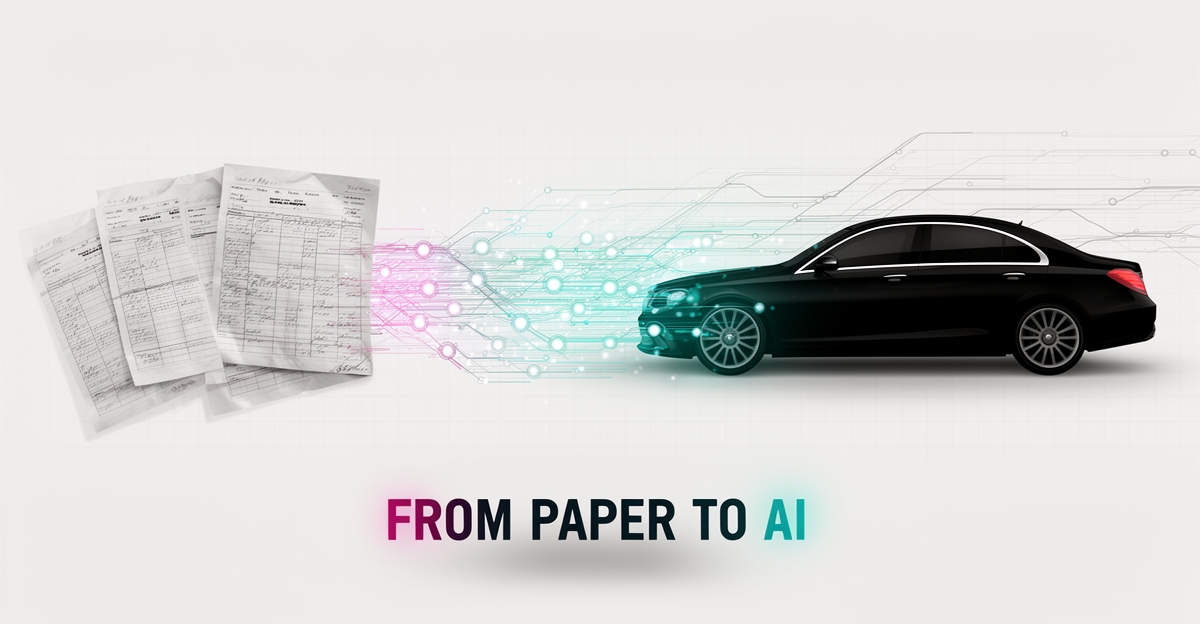
From Paper Logs to AI: Modernizing Black Car Service Operations
Key Facts
- Industry surveys suggest only a small minority of organizations—often cited around 10%—report achieving full observability into their operations.
- Commercial AIOps and observability platforms typically run $50k+ per year in subscription costs, and pricing is often unpredictable as volumes grow.
- Fully custom agentic systems have historically required $200k+ in development and 6+ months to initial value; phased builds reduce both figures substantially.
- Custom AI document-processing builds have ranged from roughly $40,000 for an MVP to $400,000+ for advanced agentic systems, depending on scope.
- AIQ Labs has deployed 200+ multi-agent systems and runs 4 live SaaS products daily—this is production experience, not theory.
Hire a team member that works 24/7 — for less than a part-time wage.
AI receptionists, SDRs, dispatchers and 99+ roles. Trained on your business, fully managed.
Not sure where to start? Ask our AI planner
The Hidden Cost of Paper Logs in Black Car Service Operations
The black car service industry still runs on paper logs, handwritten maintenance records, and disconnected entries that create blind spots in daily operations. This reliance on manual processes means dispatch teams operate without real-time visibility, making it impossible to track vehicle usage or driver status as events unfold. The result is an operational risk that accumulates silently—missed pickups, inefficient routing, and delayed maintenance—all stemming from data that exists only in fragmented, error-prone formats.
Industry research on observability suggests only a small minority of organizations—often cited around 10%—achieve full visibility into their operations, leaving the vast majority struggling to correlate events across systems or detect issues before they impact service. A large part of that gap comes down to the difficulty of manually sifting through massive, unstructured data streams like paper logs. Without automated intelligence, teams spend hours reconciling discrepancies instead of preventing problems.
Manual trip sheets and handwritten records introduce avoidable errors at every stage—data entry mistakes, illegible notes, and delayed updates that distort operational truth. These inaccuracies propagate through dispatch decisions, leading to misallocated vehicles and frustrated customers. The lack of a single source of truth means supervisors spend time verifying facts instead of optimizing performance. AIQ Labs sees this pattern repeatedly in legacy operations where paper-based workflows create a foundation of uncertainty.
- Delayed incident response due to lack of real-time anomaly detection
- Increased labor costs from manual data entry and reconciliation
- Higher risk of compliance gaps from incomplete or inconsistent records
- Reduced vehicle utilization from poor visibility into usage patterns
- Customer dissatisfaction from unpredictable service reliability
The hidden cost of paper logs isn't just in the time spent filling them out—it's in the opportunities lost because critical data remains trapped in analog form. Until black car services bridge this gap, they'll continue to operate with one eye closed, reacting to problems instead of preventing them. Modernizing these core processes isn't about adopting technology for its own sake—it's about restoring clarity to operations that have long operated in the dark.
How AI-Powered Data Pipelines Turn Paper Into Real-Time Intelligence
Paper logs create blind spots between the road and the dispatch desk. AI-powered data pipelines close that gap by turning scanned trip sheets, handwritten notes, and mobile uploads into structured, real-time intelligence that dispatch and CRM systems can act on immediately.
The digitization starts with ingest. Documents arrive by scanner, email, portal upload, API, or cloud storage and enter a unified intake layer. This removes manual re-keying and creates a single entry point for all vehicle usage and trip data.
Next is classify and extract. AI document extraction identifies the form type and pulls specific fields, tables, and layouts, including handwriting. The pipeline transforms unstructured logs into consistent event templates that are searchable and comparable across the fleet.
Validation happens with AI and human-in-the-loop. Foundation-model LLMs check extracted data against business rules, flag low-confidence fields, and route exceptions for human review before commit. This step protects data quality and prevents bad data from reaching dispatch.
Clean data then pushes to operational systems. Structured records sync to dispatch platforms, ERPs, and customer CRMs, giving managers real-time visibility into vehicle usage, driver status, and trip completion without manual reconciliation.
AI agents add a proactive layer on top of the pipeline. They continuously monitor the stream and deliver capabilities such as:
- Contextual anomaly detection that correlates location, duration, and driver status to flag route deviations or unusual idle time
- Automated root-cause suggestions that link a delayed pickup to traffic incidents, maintenance issues, or vehicle swaps
- Natural-language queries that let dispatchers ask "Why was the Smith pickup delayed?" and receive a direct, context-rich answer
This shift from static rules to adaptive detection reduces false alarms and alert fatigue. Manual correlation of log streams simply does not scale, which is why so many operators never achieve full observability running on paper.
For black car services moving from paper to real-time operations, the pipeline replaces reactive troubleshooting with intelligent root cause analysis and continuous learning. AIQ Labs builds this kind of pipeline as a fixed-price, phased workflow build—you keep ownership of what gets built, and there are no surprise subscription bills as your data volumes grow.
Choosing Your Path: Off-the-Shelf Platforms vs. Custom-Built Systems
Black car operators moving off paper logs face a build-or-buy decision that shapes cost, speed, and control for years. The right path depends on how dispatch-driven your data is and whether you need ownership over the pipeline that feeds dispatch and customer systems.
Commercial AIOps and observability platforms promise speed. They can deliver initial value in under a month and offer low integration complexity with pre-built connectors. The trade-off is price and predictability. Subscriptions typically run $50k+ per year, and market comparisons of tools like Datadog and Splunk consistently flag high, unpredictable cost structures—with surprise bills as usage grows, and pricing best suited to large enterprises with big budgets.
Open-source stacks look free on paper. The software cost is $0, but DIY complexity is real: implementations commonly take 3–6 months to initial value with high integration burden. Teams must build ingestion, parsing, and anomaly detection themselves, and maintain human-in-the-loop review manually. Most organizations never close the observability gap this way because manually sifting through massive log streams doesn't scale.
Custom-built agentic systems maximize fit for dispatch workflows. Historically these required $200k+ in development and 6+ months to initial value—but a phased approach changes the math. AIQ Labs scopes the one workflow that costs you the most, rebuilds it at a fixed price in milestones, and delivers working software at each phase. The upside is a pipeline designed around trip sheets, maintenance records, and driver logs, with validation using business rules and human-in-the-loop, then pushing clean data to dispatch and CRM in real time. For legacy black car services, generic tools rarely understand the nuances of vehicle usage, route deviations, and driver status correlation.
Choosing a path means weighing three realities:
- Speed to value vs long-term ownership. Commercial is fast, custom is owned.
- Subscription cost vs build cost. $50k+/year recurring, forever, vs a fixed-price build you own outright.
- Generic observability vs dispatch-specific intelligence. Off-the-shelf alerts vs context-aware root cause for pickups and fleet utilization.
Ownership matters when the data is your operation. With AIQ Labs, you own what is built—no vendor lock-in, no proprietary query languages holding your data hostage. A log-digitization and dispatch-sync pipeline can be scoped as a single workflow build, or grown into a full AI operating system for your business, built in phases and owned outright. Payment models are straightforward: start monthly, build in milestones, or own it outright—details on the pricing page.
Implementation Roadmap: From First Scan to Synced Dispatch System
Paper logs and manual entries create blind spots in black car service operations, making it difficult to track vehicle usage or respond to anomalies in real time. By building an AI-powered data pipeline, companies can digitize these logs, extract actionable insights, and sync data directly to dispatch and customer systems for immediate visibility.
The first step is defining the use case and identifying data sources, such as scanned trip sheets or mobile app APIs, which sets the foundation for ingestion and structuring. Next, teams design the data ingestion pipeline to pull in these documents consistently, whether through an upload portal, email parser, or API gateway. Once ingested, AI parsing converts unstructured text or OCR output into structured event templates, creating a searchable index that enables further analysis.
With structured data in place, machine learning models can detect anomalies like unexpected route deviations or unusual fuel consumption without relying on static rules. These insights are then integrated with operational systems like dispatch platforms or customer CRMs to visualize trends and trigger alerts. To support daily operations, a small language model generates concise summaries of incidents or vehicle usage for triage and reporting.
A human-in-the-loop workflow ensures that low-confidence extractions or AI-flagged exceptions are reviewed by operators before data is committed to downstream systems. Finally, continuous monitoring and model retraining prevent drift as log formats or vehicle types evolve, maintaining accuracy over time. This rollout transforms reactive, paper-based processes into a proactive, intelligent operation—and because it's built in milestones, you see working software at every phase, not after a six-month wait. If you want to know whether this fits your operation, the 2-minute Fit Check is the fastest way to find out, followed by a free 30-minute strategy call to map high-impact automation opportunities.
Avoiding the Pitfalls: Data Quality, Alert Fatigue, and Vendor Lock-In
Even the most advanced AI pipeline can fail without attention to foundational risks, and modernization projects often stall when data quality, alert fatigue, or vendor lock-in undermine confidence in the system. In black car services, where trip logs may come from scanned paper, mobile apps, or dispatcher notes, inconsistent formats and manual entry errors create noisy inputs that degrade AI parser performance—feeding non-standardized data to AI models leads to poor generalization and inconsistent results, requiring deliberate pre-processing to ensure reliability. Without this step, even sophisticated anomaly detection can produce excessive false positives, triggering alert fatigue that causes dispatchers to ignore genuine warnings—a well-documented pitfall in observability tooling where tuning is critical to avoid alarm overload. Model drift poses a silent threat as well: as log formats evolve or new vehicle types enter the fleet, AI models trained on historical data lose accuracy unless continuously retrained on fresh inputs, a maintenance requirement often underestimated in planning. Equally perilous is vendor lock-in, where proprietary platforms use closed query languages or data models that make migration costly and complex, trapping businesses in expensive ecosystems with limited flexibility—some commercial platforms, while fast to deploy, carry unpredictable costs and steep exit barriers that erode long-term value. A production-grade, owned system counters these risks by design: it enforces data standardization at ingestion, incorporates human-in-the-loop validation for low-confidence extractions, enables continuous model retraining with performance monitoring, and avoids proprietary lock-in through open standards and portable architectures. By prioritizing control, transparency, and adaptability from the outset, black car services can build AI pipelines that not only digitize logs but sustain trust and operational value over time—turning a fragile pilot into a resilient, owned capability.
Still paying for 10+ subscriptions that don’t talk to each other?
We build custom AI systems you own outright. No vendor lock-in. Full control.
Not sure where to start? Ask our AI planner
Frequently Asked Questions
How long does it take to see value from an AI-powered data pipeline for a black car service?
What are the main risks of using paper logs in black car service operations?
Do most organizations lack full visibility into their operations?
How does an AI-powered data pipeline improve data quality compared to manual entry?
What is the cost difference between off-the-shelf AI platforms and custom-built systems?
Can AI agents really help dispatchers understand why a pickup was delayed?
Your Fleet Deserves Real-Time Intelligence
The journey from paper logs to AI-powered operations isn't just about digitizing forms—it's about eliminating the blind spots that cost black car services time, money, and customer trust. By transforming handwritten trip sheets into structured, real-time intelligence, operators gain the visibility needed to prevent delays, optimize fleet utilization, and deliver consistent service. AIQ Labs helps black car services build secure, owned data pipelines—scoped as a single workflow build or a full AI operating system—with 200+ multi-agent systems deployed and 4 live SaaS products running daily. If you're ready to replace reactive troubleshooting with proactive intelligence, take the 2-minute Fit Check and book a free 30-minute strategy call—no obligation, just clarity on where AI can create real value for your business.
Make AI your competitive advantage — not just another tool.
Strategy, implementation and ongoing optimization. One partner, end to end.
Not sure where to start? Ask our AI planner