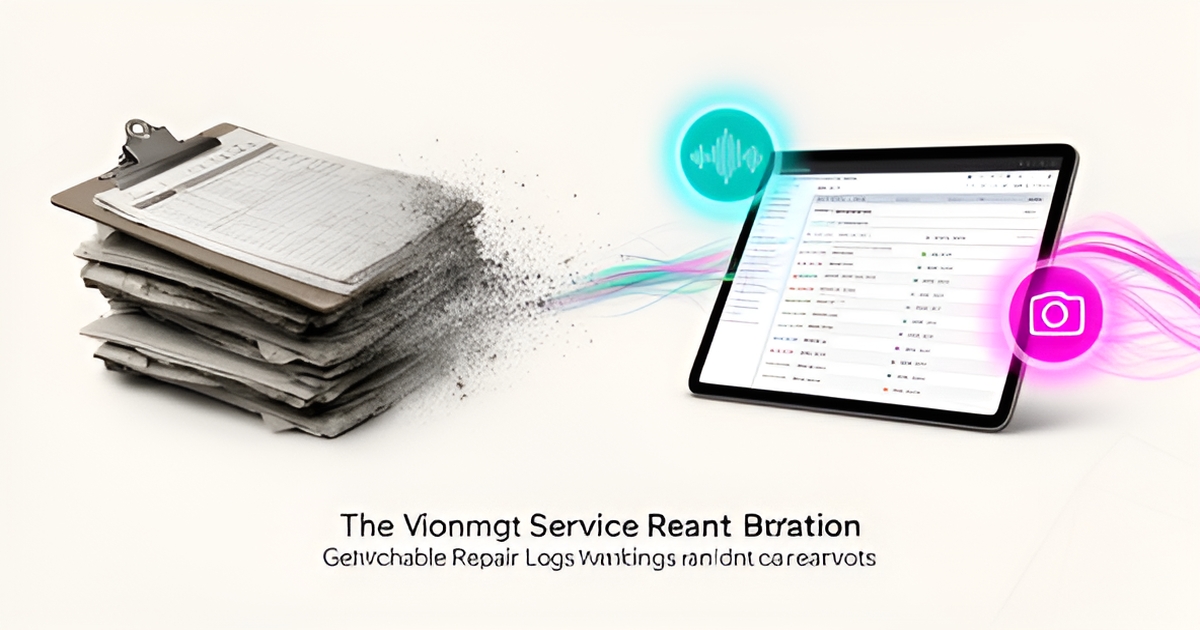
From Paper Logs to AI: Modernizing Engine Repair Records for Small Shops
Key Facts
- Industry research reports 75% of organizations are evaluating new tools to address log management challenges
- Only 10% of organizations report achieving full observability with traditional methods, per the same research
- AI-driven documentation can cut most manual data entry for small engine shops by auto-generating records from voice and photos
- AIQ Labs has deployed 200+ multi-agent systems across production platforms, including documentation workflows
- Voice-to-text conversion captures technician observations in real time during repairs
- Structured logs enable instant searchability by vehicle, symptom, part, or service date
- AI-powered documentation systems improve service consistency and reduce errors in repair shops
Hire a team member that works 24/7 — for less than a part-time wage.
AI receptionists, SDRs, dispatchers and 99+ roles. Trained on your business, fully managed.
Not sure where to start? Ask our AI planner
The Hidden Cost of Paper Repair Logs
Many small engine shops still rely on paper repair logs, creating invisible bottlenecks that slow down daily operations and limit growth. Manual logging leads to fragmented data, where critical service histories are scattered across notebooks, clipboards, and filing cabinets, making it nearly impossible to retrieve a complete repair timeline when needed. This lack of centralized access forces technicians to waste valuable time searching for past service notes, delaying diagnostics and extending customer wait times. According to industry research, only 10% of organizations achieve full observability with traditional methods, highlighting how paper-based systems fail to provide the integrated view necessary for efficient decision-making.
Beyond delays, paper logs contribute to significant knowledge loss when experienced technicians leave or retire. Handwritten notes are often inconsistent, difficult to interpret, and prone to damage or misplacement, eroding the institutional memory that small shops depend on for consistent service quality. Without a searchable, standardized record, new staff must rely on verbal handoffs or trial-and-error, increasing the risk of errors and reducing first-time fix rates. This challenge has prompted 75% of respondents in that research to actively evaluate new tools to address log management shortcomings, underscoring a widespread recognition that legacy approaches are no longer sufficient.
The consequences extend beyond inefficiency—they impact customer trust and shop profitability. When repair histories are incomplete or inaccessible, technicians may recommend unnecessary parts or overlook recurring issues, leading to comebacks and dissatisfied clients. Paper logs also hinder proactive maintenance tracking, making it difficult to identify patterns in part failure or service frequency that could inform better inventory planning or customer recommendations. AIQ Labs helps small engine shops overcome these limitations by transforming tribal knowledge into structured, searchable digital records through AI-powered documentation systems that capture every service detail accurately and consistently. By eliminating manual entry and enabling instant retrieval, shops gain the clarity needed to improve service consistency, reduce errors, and build stronger customer relationships—turning a hidden cost into a competitive advantage.
Why AI-Driven Documentation Changes the Game
The traditional paper log is a bottleneck in modern engine repair shops, where technicians spend valuable time on manual documentation instead of hands-on work. This inefficiency compounds across multiple service bays, delaying turnaround and obscuring patterns that could prevent repeat issues. AI-driven documentation changes the game by transforming voice notes, photos, and technician input into structured, searchable repair records without manual entry. Using multi-agent AI systems, these tools automatically extract part usage, service steps, and diagnostic conclusions from unstructured inputs, creating a unified digital trail for every job. AI-driven log management tools represent a significant advancement in how logs are aggregated, analyzed, and interpreted, enabling small shops to move beyond reactive fixes toward predictive maintenance. For businesses using AIQ Labs' custom documentation builds, this shift removes most manual data entry, freeing technicians to focus on repairs while ensuring every detail is captured accurately and consistently.
The impact extends beyond individual work orders to fleet-wide intelligence. When repair records are auto-generated and centralized, shop owners gain real-time visibility into recurring failures, parts consumption trends, and technician performance across all vehicles serviced. This capability supports smarter inventory decisions, targeted training, and proactive customer recommendations—turning repair history into a strategic asset. Industry research shows that 75% of organizations are evaluating new tools to address log management challenges, reflecting a growing recognition that structured, accessible data is critical for operational excellence. By automating the capture and organization of service data, AI eliminates the guesswork and delays inherent in paper-based systems, allowing small shops to operate with the precision and foresight typically reserved for larger operations.
- Voice-to-text conversion captures technician observations in real time during repairs
- Photo analysis identifies parts, wear patterns, and installation quality automatically
- Multi-agent workflows cross-reference inputs to validate diagnostics and flag inconsistencies
- Structured output enables instant searchability by vehicle, symptom, part, or service date
- Continuous learning improves accuracy as the system processes more shop-specific data
These capabilities are not theoretical—AIQ Labs has deployed 200+ multi-agent systems across production platforms, including documentation workflows the company runs daily. Logging is the heartbeat of any well-run system, and for engine repair shops, AI-driven documentation ensures that heartbeat is strong, steady, and informative. By replacing manual logs with intelligent, self-generating records, small shops unlock efficiency gains that directly improve service quality, reduce comebacks, and build customer trust—all while laying the foundation for scalable, data-driven growth.
From Voice to Structured Record: How It Works in Practice
Voice-to-structured record workflows are reshaping how small engine shops capture service data, turning spoken notes into actionable intelligence with minimal effort. Instead of juggling clipboards or typing after each job, technicians now dictate observations directly into a mobile app or phone system during or right after a repair. This hands-free approach keeps focus on the work while ensuring no detail is lost to memory or haste. The spoken input—often casual, fragmented, and rich with contextual nuance—is then processed by AI to extract meaning and structure it for downstream use.
The AI parses this unstructured voice input into standardized JSON logs that capture critical repair elements: symptoms observed, parts used, labor time, diagnostic steps, and follow-up recommendations. By converting free-form speech into consistent, machine-readable format, the system eliminates variability in how different technicians document the same issue. This standardization is foundational for reliability, especially when multiple team members interact with the same equipment over time. As noted in industry guidance, structuring logs for machine parsing using formats like JSON is a key step in enabling effective log management and analysis according to expert guidance on logging best practices. Once structured, these logs become instantly searchable and filterable by date, equipment type, symptom, or part number.
These JSON records don't sit in isolation—they flow into integrated systems that power daily operations. The AI documentation engine connects directly with inventory management to auto-decrement parts used and trigger reorder alerts when stock dips below thresholds. Simultaneously, it updates the CRM with service history, enabling advisors to provide informed recommendations during customer check-ins. This closed-loop integration reduces manual data entry across platforms and ensures that part usage, service frequency, and repair outcomes are always reflected in real time. Over time, the accumulating structured logs form a self-updating knowledge base that learns from every completed job.
This evolving knowledge base becomes a powerful onboarding and troubleshooting tool. New technicians can query past repairs for similar models or symptoms, instantly accessing proven solutions instead of relying on trial and error or interrupting senior staff. Shops using AI-driven documentation systems typically see fewer repetitive questions and faster ramp-up for new hires, as the system preserves and surfaces institutional knowledge that would otherwise remain siloed in individual experience. As highlighted in broader log management trends, AI-driven tools are advancing how logs are aggregated, analyzed, and interpreted—turning routine documentation into a strategic asset per recent industry analysis. For small engine shops, this means less time spent re-solving known issues and more focus on delivering consistent, expert service.
Choosing the Right Approach: Build vs. Buy vs. Partner
Small engine shops still lose hours chasing paper logs, handwritten notes, and scattered photos of serial numbers. Modernizing repair records is less about buying software and more about choosing an approach that fits a shop's workflow, budget, and data ownership needs.
Off-the-shelf log analysis tools dominate the conversation. Current market roundups list leading log analysis tools, with options like Dash0, Splunk, and Datadog offering real-time insights and automated root cause analysis. These SaaS platforms deliver speed and polish, but they are built for software observability, not for a service bay where a tech writes "replaced carburetor, part #XYZ" on a work order.
Splunk provides strong log search and analytics with proven scalability, yet it is notoriously expensive and has a steep learning curve. Datadog offers extensive integrations and a polished user experience, but its cost structure is high and unpredictable for small operations. Dash0 brings AI-driven analysis as a newer entrant, though it may lack support for industry-specific workflows.
Custom AI documentation systems trade subscription convenience for integration depth and ownership. A purpose-built system can ingest handwritten notes, photos, voice dictation, and parts invoices, then auto-generate accurate, searchable records that match how technicians actually work. True ownership means the shop controls its repair history, part usage, and service notes without vendor lock-in.
The market is moving fast. Industry research shows only 10% of organizations report achieving full observability, while 75% of respondents are evaluating new tools to address log management challenges. That gap reflects a mismatch between generic tools and real-world documentation needs.
When a managed AI approach outperforms SaaS subscriptions:
- Workflow fit is specific to engine repair, not generic IT logs
- Data ownership and privacy matter for customer vehicle histories
- Integration must connect shop management, parts suppliers, and invoicing
- Cost predictability beats per-event pricing that scales with volume
AIQ Labs offers three ways to close this gap. An AI Employee can run documentation and record-keeping as a managed role at a fraction of the cost of a human hire. A Workflow Build rebuilds the one workflow that costs you the most—like repair-order documentation—at a fixed price, in phases. And for shops that want everything connected, an AI Operating System provides one operating layer you own outright. Each approach preserves how technicians capture information today and makes it searchable tomorrow, without forcing a shop to adapt to a software-first logging model.
Starting Small: A 30-Day Pilot That Proves Value
Paper logs cost small engine shops more than time — they cost repeatability, recall, and revenue. A 30-day pilot lets you prove digital documentation value before committing to a full rollout.
Start with one bay or one technician and one workflow: the repair order. An AI documentation agent listens to the service conversation, captures part usage, labor steps, and diagnostic notes, then auto-generates a structured, searchable record. The shop keeps working normally while the system builds a knowledge base in the background.
The pilot is designed to measure what matters. Track time saved per repair order by comparing manual entry minutes to auto-generated records. Measure search speed improvement when a past issue is retrieved by symptom, engine model, or part number instead of digging through binders. Capture knowledge retention by reviewing how consistently notes are completed across shifts.
According to industry research, 75% of respondents are evaluating new tools to address log management challenges, and only 10% of organizations report achieving full observability. Small shops face the same visibility gap with paper logs.
A focused pilot makes the gap visible and the fix measurable. The approach mirrors how logging is evolving broadly, where current log analysis comparisons show a market shift toward AI-driven aggregation and interpretation.
Value signals to collect during the 30 days include:
- Average minutes saved per repair order on documentation and data entry
- Time to retrieve a prior repair history by engine, symptom, or technician
- Completion rate and consistency of service notes across jobs
- Technician adoption and feedback on workflow friction
With those metrics in hand, the shop can decide how to scale. AIQ Labs builds custom documentation systems that reduce manual entry and improve service consistency, and the pilot data defines the scope. Teams can expand via a milestone-based Workflow Build—approving and paying per phase—or adopt a flat monthly AI Employee plan that covers build, training, integrations, monitoring, and improvements. Full payment models and pricing signals are outlined at aiqlabs.ai/pricing.
The pilot also surfaces data quality questions early. Structured logs from day one support searchable repair histories and smarter parts forecasting later. As experts note, logging is the heartbeat of any well-run system, it is essential for understanding what's happening, but it's not just about recording everything — it's about logging smartly.
Thirty days is enough to prove time savings, faster retrieval, and better knowledge retention without disrupting the whole shop.
Still paying for 10+ subscriptions that don’t talk to each other?
We build custom AI systems you own outright. No vendor lock-in. Full control.
Not sure where to start? Ask our AI planner
Frequently Asked Questions
Why are paper repair logs costing my small engine shop more than just time?
How does AI-driven documentation actually work in a shop bay?
Will AI logs really reduce manual data entry for my technicians?
Should I buy an off-the-shelf log tool like Splunk or Datadog for my shop?
What's a low-risk way to test AI documentation before a full rollout?
Is logging really important enough to invest in for a small shop?
Turning Wrenches, Not Pages: Your Next Move
Paper logs are quietly costing small engine shops more than time—they erode consistency, hide recurring issues, and walk out the door when experienced technicians leave. As this guide has shown, AI-driven documentation turns voice notes, photos, and technician input into structured, searchable records that integrate with inventory and CRM systems, cutting most manual entry while preserving institutional knowledge. With 75% of organizations actively evaluating new tools to fix log management gaps, the shift away from paper isn't a trend—it's a competitive necessity. The smartest path forward is a focused 30-day pilot: start with one bay, measure time saved and retrieval speed, and let the data guide your next step. AIQ Labs builds custom documentation systems designed around how small shops actually work, giving you true ownership of your repair history without forcing you into generic software. If you're ready to see what that looks like in your shop, start with the two-minute Fit Check at aiqlabs.ai/apply, then book a free 30-minute strategy call to map your highest-ROI opportunity—no pressure, just clarity.
Make AI your competitive advantage — not just another tool.
Strategy, implementation and ongoing optimization. One partner, end to end.
Not sure where to start? Ask our AI planner