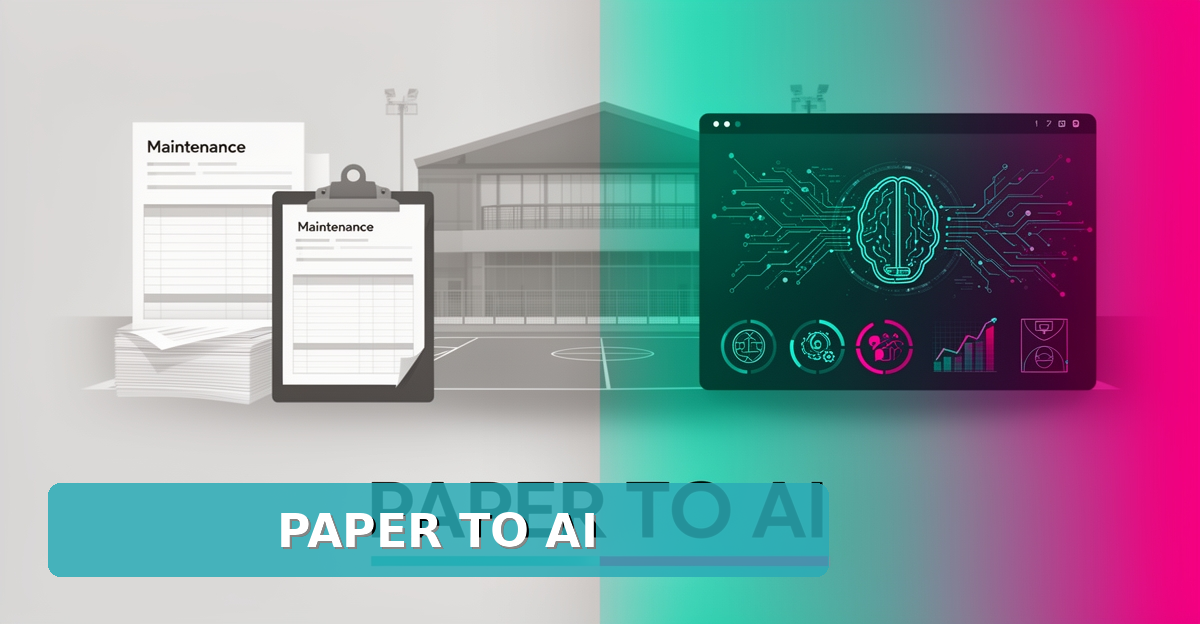
From Paper Logs to AI: Modernizing Facility Maintenance at Your Sports Complex
Key Facts
- Paper-based maintenance creates data graveyards where roughly 22% of work orders reportedly contain illegible or incomplete data, according to industry research.
- Organizations switching to AI-driven maintenance have reported around 30% faster fault resolution and 25% fewer repeat breakdowns, industry research shows.
- A steel plant digitizing 150,000 annual work orders reported reducing Mean Time to Repair by 31% and boosting productivity 28%, case study data indicates.
- Paper systems can force multi-hour response delays while AI platforms aim to eliminate the information lag entirely, maintenance studies indicate.
- Inaccessible historical repair data reportedly drives a 12% repeat failure rate as teams solve identical problems repeatedly, research suggests.
- Technician-first AI design achieved a 98% user adoption rate within 60 days in one documented rollout, implementation data shows.
- Paper-heavy facilities often need dedicated clerical staff for data entry while AI eliminates manual transcription entirely, operational analysis reveals.
Hire a team member that works 24/7 — for less than a part-time wage.
AI receptionists, SDRs, dispatchers and 99+ roles. Trained on your business, fully managed.
Not sure where to start? Ask our AI planner
The Paper Log Problem Hiding in Sports Complexes
The hum of a busy sports complex often masks a quieter crisis unfolding in maintenance offices and equipment rooms: critical repair data trapped in paper logs, Excel sheets, and dusty filing cabinets. This patchwork approach creates what industry research calls "data graveyards," where failure patterns remain buried and inaccessible when they're needed most. Technicians frequently "jot fixes in notebooks," supervisors "pore over Excel sheets," and historic solutions vanish into archives, forcing teams to solve the same problems repeatedly without learning from past incidents. This system inefficiency translates directly to delays, with paper-based maintenance reportedly generating an average 4.5-hour response lag before work even begins. Nearly a quarter of all work orders—22%—are rendered useless by illegible or incomplete data, turning documentation efforts into administrative noise rather than actionable intelligence.
The consequences extend far beyond inconvenience. When experienced staff leave, their undocumented expertise walks out the door, creating a knowledge vacuum that directly impacts equipment reliability. Inaccessible historical repair data reportedly drives a 12% repeat failure rate, meaning the same faults resurface because no one can access what fixed them last time. Teams waste hours rediscovering solutions already proven effective, while managers struggle to identify trends amid scattered, inconsistent records. This cycle of reactive fixes—rather than preventive insights—keeps sports complexes stuck in costly downtime, where every preventable breakdown erodes both operational efficiency and user experience. As one maintenance manager noted, switching from paper to intelligent systems transformed their approach from "firefighting the same faults weekly to nipping issues in the bud." For facilities aiming to maximize uptime, the hidden cost of paper logs isn't just in wasted time—it's in the repeated failures that could have been avoided with accessible, structured knowledge.
How AI Turns Maintenance Logs Into Predictive Intelligence
Digitizing maintenance logs is only the first step—real transformation happens when AI turns those records into actionable intelligence. Instead of simply storing data, modern platforms analyze patterns, surface proven fixes, and capture the institutional knowledge that veteran technicians carry in their heads.
According to industry research, organizations switching to AI-driven maintenance platforms have reported roughly 30% faster fault resolution and 25% fewer repeat breakdowns. The difference lies in how these systems structure information: every work order becomes searchable intelligence tied to asset history, location, and failure type.
A steel plant case study demonstrates the impact at scale. After digitizing 150,000 annual work orders and implementing AI-driven workflows, the facility reported reducing Mean Time to Repair by 31% and improving maintenance labor productivity by 28%. Technicians who once waited hours for information now access real-time data instantly.
The shift from basic digitization to predictive intelligence involves several key capabilities:
- AI suggests relevant fixes based on similar historical failures
- Root cause tags create reusable knowledge for recurring issues
- Voice-to-text logging captures details in noisy environments
- Real-time inventory correlation prevents unnecessary trips
This structured approach transforms what industry analysts describe as "data graveyards" into living knowledge bases. When experienced personnel retire, their expertise remains embedded in the system rather than walking out the door. New technicians follow proven repair steps instead of starting from scratch, reducing guesswork and bottlenecks.
At AIQ Labs, our AI Workflow Builds rebuild the one workflow that costs you the most—like maintenance log processing—integrating with your existing maintenance tools to create this intelligent layer. The goal isn't replacing human expertise but amplifying it through context-aware decision support that surfaces the right information at the right moment.
The steel plant achieved a 98% user adoption rate within 60 days by designing workflows that fit how technicians actually work. This adoption rate matters because even the most sophisticated AI delivers no value if teams don't use it. Technician-first design—including gamification and peer champions—proved essential to the transformation.
Basic CMMS platforms function as digital filing cabinets, still requiring manual tagging and report generation. True AI-infused systems eliminate this friction by automatically structuring data and flagging anomalies before breakdowns occur. The result is a predictive maintenance capability that turns daily routines into lasting operational intelligence.
A Practical AI Maintenance Roadmap for Facility Teams
Transformation begins not with a rip-and-replace overhaul, but with a phased roadmap that respects how technicians actually work. When one steel plant modernized its maintenance operations, it achieved a 98% active user rate within 60 days by following a structured implementation sequence—a blueprint applicable to any sports complex seeking to escape paper-based chaos.
Start with AI-OCR legacy ingestion. Before deploying new tools, digitize historical paper logs using Optical Character Recognition. This gives your AI models immediate context on chronic equipment failures, transforming dusty filing cabinets into searchable intelligence. The steel plant ingested 24 months of legacy data to establish baseline failure patterns, eliminating the "data graveyard" where critical insights once went to die.
Next, implement voice-to-text logging for real-time data capture. In noisy environments like mechanical rooms or ice rinks, technicians can dictate repair details hands-free while AI automatically categorizes entries into specific failure modes. This eliminates the multi-hour average delays typical of paper systems while ensuring full digital traceability.
The roadmap continues with operational integration:
- Real-time part correlation: Link digital work orders directly to inventory systems so technicians see live stock levels before leaving the machine site.
- Autonomous shift handovers: Configure AI to compile "Unfinished Task Reports" and critical asset alarms automatically, replacing error-prone verbal briefings.
- Geofenced safety permits: Replace paper permits with digital, location-aware clearances that verify lockout/tagout procedures before work begins.
Technology alone doesn't guarantee adoption. The steel plant succeeded by identifying "Champion Technicians" on every shift who trained peers, while implementing gamification and "Adoption Rewards" to encourage engagement. This technician-first approach—designing interfaces that reduce tablet time compared to clipboards—drove the rapid adoption rates that generic software rollouts rarely achieve.
Crucially, your AI platform must function as an execution layer that integrates with existing CMMS and ERP systems, not a replacement for them. Bidirectional API connectors ensure field data reaches enterprise systems without manual re-entry, preserving your current investments while adding intelligence. AIQ Labs builds these systems in phases you approve, so you keep everything built so far and own the platform outright without vendor lock-in.
The results justify the methodical approach: organizations following this roadmap report roughly 30% faster fault resolution and a 31% reduction in Mean Time to Repair, transforming maintenance from reactive firefighting into predictive reliability.
Building Owned AI Systems That Integrate With Your Tools
Paper logs turn sports complexes into data graveyards where critical failure patterns stay buried. Technicians jot fixes in notebooks, supervisors pore over Excel sheets, and historic repairs hide in dusty files, creating repeat breakdowns and knowledge loss when staff change.
Organizations moving to AI-driven maintenance see measurable gains. Companies switching to intelligent workflows report roughly 30% faster fault resolution and 25% fewer repeat breakdowns through structured knowledge capture. A steel plant case study shows a 31% reduction in Mean Time to Repair and 28% improvement in maintenance labor productivity after digitizing 150,000 annual work orders.
Building owned AI systems that integrate with your tools means scanning, categorizing and tracking maintenance logs, equipment issues and vendor records without vendor lock-in. AIQ Labs builds these systems to integrate with your existing maintenance tools, replacing outdated paper systems with an ever-growing maintenance manual.
Custom document processing captures institutional knowledge that walks out the door with retiring staff. The system ingests legacy paper logs via AI-OCR, then uses voice-to-text logging for noisy rink or field environments. Every work order becomes structured intelligence tied to asset, location, shift and fault type.
AI Employees can handle the daily tracking work alongside human teams—at roughly 80% less cost than a human hire:
- Scan and categorize handwritten logs, photos and vendor invoices into searchable records
- Track equipment issues across courts, pools and HVAC with real-time part correlation to inventory
- Auto-compile shift handovers and unfinished task reports so the next crew starts informed
- Suggest relevant fixes based on similar asset failures to reduce guesswork
This is true ownership, not a subscription widget. Systems are custom-built and you own the code, agents and data outright.
Engagement can start small and scale. Start Monthly delivers one AI employee with setup plus a flat monthly plan that costs far less than a human hire, including build, training, integrations and monitoring. Build in Milestones splits a workflow or department system into phases you approve and pay per phase, keeping everything built so far. Own It Outright delivers a full AI Operating System with one project price, with full ownership on completion. No fake prices, no invented case-study numbers—just a clear plan.
The result is real-time visibility instead of the multi-hour response delays and next-day data latency common with paper. Maintenance managers track performance metrics instantly, technicians access historical repair data at the point of need, and the complex stays operational.
Still paying for 10+ subscriptions that don’t talk to each other?
We build custom AI systems you own outright. No vendor lock-in. Full control.
Not sure where to start? Ask our AI planner
Frequently Asked Questions
How much faster can we resolve maintenance issues with AI compared to paper logs?
Will AI maintenance systems really reduce repeat breakdowns, and by how much?
How long does it typically take for technicians to get information with paper-based systems?
What percentage of work orders become useless due to poor data quality in paper systems?
Can AI systems actually capture knowledge from retiring technicians?
How quickly do teams typically adopt AI maintenance platforms when implemented correctly?
Turn Maintenance Chaos into Your Competitive Edge
From paper logs that hide failure patterns to AI systems that turn every repair into lasting intelligence, the path forward for sports complexes is clear: digitize legacy data, capture knowledge in real time, and let AI surface the right fix at the right moment. The reported results speak for themselves—roughly 30% faster fault resolution, 25% fewer repeat breakdowns, and maintenance teams spending less time searching and more time keeping facilities running. For facility managers ready to move beyond reactive fixes, the next step is simple: take the 2-minute Fit Check, then book a free 30-minute strategy call to see how AIQ Labs can build an owned, integrated system that turns your maintenance data into your biggest operational advantage. Discover how leading facilities are already achieving these gains.
Make AI your competitive advantage — not just another tool.
Strategy, implementation and ongoing optimization. One partner, end to end.
Not sure where to start? Ask our AI planner