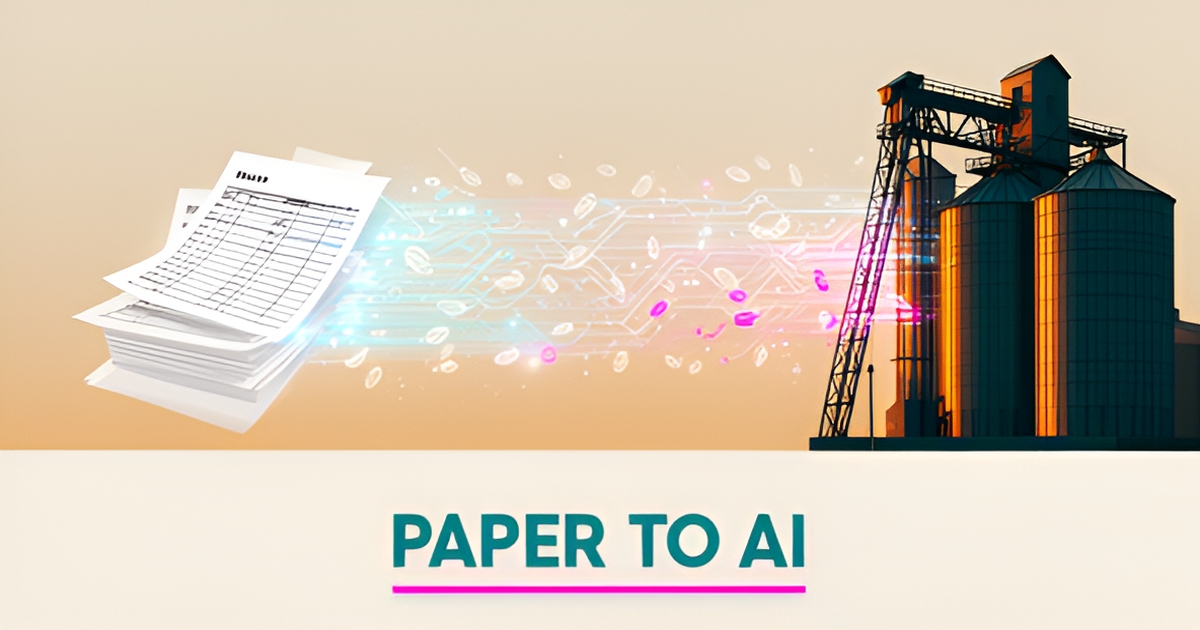
From Paper Logs to AI: Modernizing Grain Elevator Operations Step-by-Step
Key Facts
- Intelligent document processing (IDP) systems automatically read, classify, and extract data from unstructured paper forms like scale tickets and inspection logs
- Automated validation cross-references every field against contract tolerances and food-safety thresholds in seconds, removing the manual review choke point
- AI employees typically cost around 80% less than an equivalent human hire while working around the clock, per AIQ Labs' AI Employees service
- AIQ Labs has deployed 200+ multi-agent systems and runs four live SaaS products daily, per AIQ Labs' service record
- A phased build—starting with one high-friction workflow—lets operators prove value before scaling to a full AI operating system
Hire a team member that works 24/7 — for less than a part-time wage.
AI receptionists, SDRs, dispatchers and 99+ roles. Trained on your business, fully managed.
Not sure where to start? Ask our AI planner
The Hidden Cost of Paper Logs and Manual Records
Grain elevators running on paper logs aren't just nostalgic—they're bleeding efficiency daily. Every handwritten ticket, misfiled scale receipt, and delayed data entry creates a ripple effect that compounds across receiving, shipping, and compliance.
The operational drag is measurable. Teams spend hours reconciling discrepancies that a digital system would catch instantly. Manual validation of thousands of records introduces human error and bottlenecks that slow everything down during the windows when speed matters most—peak harvest, load-out, and audit season.
- Lost or illegible scale tickets during peak harvest
- Duplicate entries that distort inventory positions
- Compliance gaps when auditors request traceability records
- Delayed decisions because data sits in filing cabinets
AIQ Labs works with grain operators to map these failure points before designing a phased transition. The shift starts with intelligent document processing that reads, sorts, and extracts crucial data from scale tickets, contracts, and quality reports automatically. Modern document AI services—such as Amazon Textract and Amazon Comprehend—can be combined into resilient pipelines that handle complex document workloads, so local teams move faster while central teams stay in control.
The cost isn't just labor hours—it's the missed optimization opportunities. When grain quality data, moisture readings, and protein levels live in paper logs, they can't feed predictive models for blending decisions or inventory forecasting. The competitive gap widens every season paper remains the system of record.
What AI-Powered Document Processing Actually Does
Moving from paper logs to AI-powered document processing transforms how grain elevators handle inbound and outbound tracking, quality grading, and regulatory reporting. Instead of manually sorting through scale tickets, inspection forms, and compliance documents, intelligent document processing (IDP) systems automatically read, classify, and extract key data from unstructured paper forms. This turns chaotic physical records into clean, searchable, and actionable digital information—eliminating bottlenecks and reducing human error in daily operations.
Cloud-based IDP solutions, like those built with Amazon Textract and Comprehend, are designed to read, sort, and extract crucial data from documents automatically, creating resilient pipelines that handle even complex document workloads. For grain elevators, this means scale tickets can be processed the moment they're scanned, with weight, moisture content, and carrier details pulled directly into operational systems without manual entry. Inspection logs for grain grading—often handwritten or variably formatted—can be interpreted accurately, ensuring consistent quality assessments tied to batch records for traceability and compliance.
These systems go beyond simple scanning by understanding context and relationships in document content. In a grain elevator setting, this capability allows the system to distinguish between a receiving ticket and a quality certificate, route each to the correct workflow, and flag anomalies—such as mismatched weights or out-of-spec moisture levels—for immediate review. By automating validation across thousands of documents, IDP eliminates repetitive manual checks, reduces processing delays, and supports faster decision-making during peak harvest periods.
- Automated data extraction reduces manual entry time by eliminating repetitive data handling tasks
- Context-aware sorting ensures documents are routed to the correct operational workflow without human intervention
- Real-time validation of document content improves data accuracy and supports compliance with regulatory reporting standards
For elevator operators pursuing digital transformation, AI-powered document processing isn't just about replacing paper—it's about creating a foundation where every ticket, log, and form feeds into a unified, intelligent system. This structured data enables better inventory tracking, faster settlements with producers, and smoother alignment with USDA or Canadian Grain Commission reporting requirements. As part of a broader AI strategy, this step lays the groundwork for advanced analytics, predictive maintenance, and automated grading models—turning document chaos into operational clarity. AIQ Labs helps grain elevator businesses design and implement these capabilities through AI Workflow Builds—a fixed-price, phased approach that rebuilds the one workflow that costs you the most.
Automating Compliance and Quality Control with AI
Grain elevators process thousands of compliance records each season—from mycotoxin test results and moisture logs to USDA grade certificates and customer contract specifications. A single missed anomaly can trigger a rejected load, a recall, or a regulatory finding that ripples through the entire supply chain.
AI-driven validation changes that equation. Automated validation can eliminate human error and bottlenecks across thousands of records, flagging consistency and threshold issues instantly. The same principle applies to grain quality data: AI models ingest lab results, scale tickets, and phytosanitary documents, then cross-reference every field against contract tolerances and food-safety thresholds in seconds—removing the manual review choke point entirely.
- Real-time flagging of out-of-spec moisture, protein, or toxin levels
- Automated traceability links from bin to bill of lading
- Audit-ready logs with timestamped decision trails
- Pattern matching for recurring quality defects across lots and seasons
The compliance payoff is equally concrete. The same pattern-recognition capability that validates individual documents can match lot numbers across disconnected systems—scale tickets, lab LIMS, ERP contracts—creating an unbroken chain of custody that satisfies FSMA, HACCP, and customer audit requirements without a single spreadsheet.
AIQ Labs helps operators design this validation layer as part of a phased digital transformation plan, starting with the highest-risk documents and expanding until every record flows through an intelligent, auditable pipeline.
A Phased Roadmap: From First Workflow to Full AI Operations
Starting your AI journey doesn't require overhauling everything at once. Begin with a single, high-friction workflow—like digitizing scale tickets or processing grain receipts—to prove value quickly and build organizational confidence. This targeted approach lets you measure ROI early while minimizing disruption to daily operations. AI-powered document processing reads, sorts, and extracts crucial data from documents automatically, eliminating manual entry errors and accelerating workflows in exactly these operational contexts.
Once the initial workflow demonstrates clear efficiency gains—such as reduced processing time and fewer data discrepancies—expand to department-wide automation. This phase connects related functions like inventory tracking, logistics coordination, and compliance reporting into a unified system. By integrating AI across these touchpoints, grain elevators create a single source of truth that reduces silos and improves cross-departmental decision-making. Automating validation across thousands of records removes the human-error bottleneck and improves operational reliability across the board.
Finally, scale to a full AI Operating System that orchestrates workflows, predicts maintenance needs, and optimizes resource allocation in real time—one connected operating layer, built in phases and owned outright. This integrated platform transforms reactive operations into proactive, intelligence-driven management. Throughout each phase, AIQ Labs supports readiness assessments, change management, and continuous optimization to ensure adoption sticks and value compounds. Payment models are straightforward: start monthly, build in milestones, or own it outright—no inflated projections, just a fixed price for a defined phase of work. With each milestone, you're not just automating tasks—you're building a resilient, future-ready operation that owns its AI assets and scales with confidence. For businesses ready to map their first high-ROI opportunity, start with the two-minute Fit Check leading to a free 30-minute strategy call to identify your ideal starting point.
Still paying for 10+ subscriptions that don’t talk to each other?
We build custom AI systems you own outright. No vendor lock-in. Full control.
Not sure where to start? Ask our AI planner
Frequently Asked Questions
What are the main problems with using paper logs in grain elevator operations?
How does AI-powered document processing improve data accuracy in grain elevators?
Can AI help with compliance and quality control in grain handling?
What is a practical first step for a grain elevator looking to adopt AI without disrupting operations?
How does AI enable better decision-making in grain elevator operations?
What role does conversational search play in AI-powered document processing for grain elevators?
Your Next Season Runs on Data, Not Paper
The shift from paper logs to AI-powered operations isn't a technology project—it's a profitability decision. Every scale ticket digitized, every quality check automated, and every compliance record linked creates compounding value: faster settlements, fewer rejected loads, and audit-ready traceability without the spreadsheet scramble. The phased roadmap proves you don't need a full overhaul to start seeing returns; a single high-friction workflow like scale-ticket processing can deliver measurable efficiency gains in weeks. As those wins stack—department-wide automation, then a unified AI operating system—the competitive gap closes and then reverses. AIQ Labs helps grain operators navigate each phase with readiness assessments, systems you own outright, and managed AI employees that work alongside your team. The first step is simply identifying where the paper bottleneck hurts most. Take the two-minute Fit Check at aiqlabs.ai/apply to pinpoint your highest-ROI starting point, then book a free 30-minute strategy call to map the path forward—no obligation, just clarity.
Make AI your competitive advantage — not just another tool.
Strategy, implementation and ongoing optimization. One partner, end to end.
Not sure where to start? Ask our AI planner