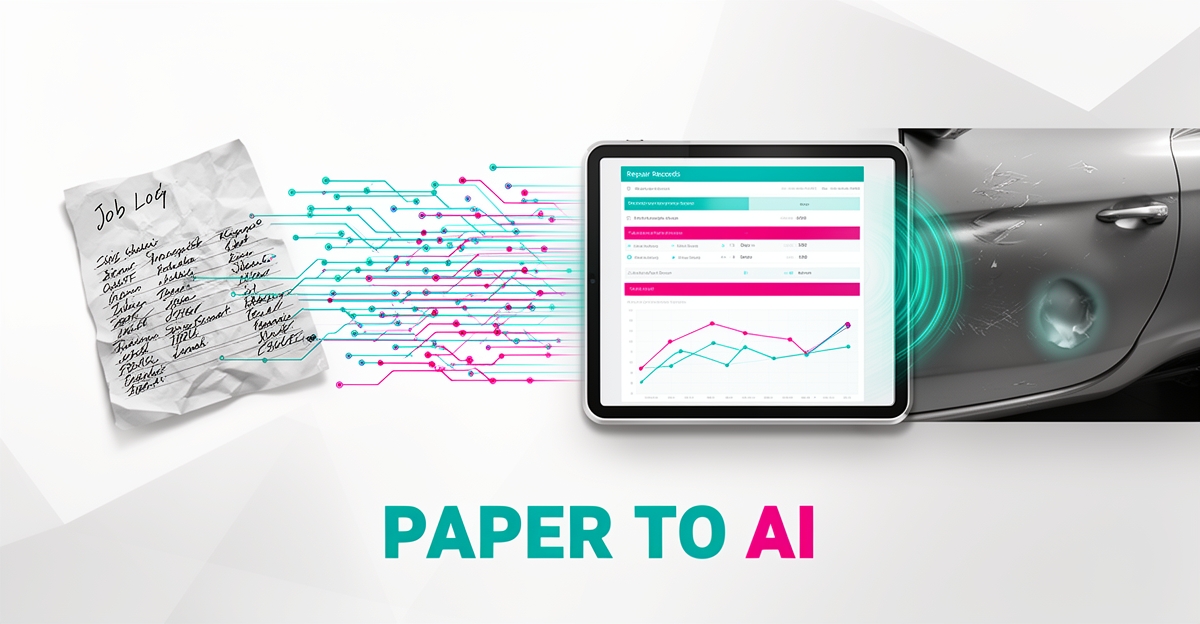
From Paper Logs to AI: Modernizing Mobile Dent Repair Job Records
Key Facts
- A growing share of employers across automotive, supply chain, and insurance sectors treat AI and big data as core workforce skills heading toward 2030.
- Custom-template AI document models typically train with only a handful of examples — often in the range of 5–15 — for standardized forms.
- Variable handwritten logs generally require custom-neural models trained on larger example sets, often cited in the 50–500 range.
- Modern LLMs process PDFs and images natively, reducing reliance on middleware conversion tools.
- AIQ Labs has deployed 200+ multi-agent systems and runs 4 live SaaS products daily.
Hire a team member that works 24/7 — for less than a part-time wage.
AI receptionists, SDRs, dispatchers and 99+ roles. Trained on your business, fully managed.
Not sure where to start? Ask our AI planner
The Hidden Costs of Paper-Based Job Records in Mobile Dent Repair
Paper logs look cheap until they start costing you jobs, cash, and customers.
Mobile dent repair teams live on the road. When job records stay on paper, illegible technician notes, lost invoices, and delayed insurance claims become the norm. The result is operational drag that compounds with every service call.
Manual logging creates invisible bottlenecks across the entire workflow. Technicians spend time rewriting forms instead of repairing. Dispatchers chase missing paperwork. Back-office staff re-enter data by hand, introducing errors that delay billing and claims.
The industry is moving fast while paper-bound teams fall behind. As of late 2026, a substantial and growing share of employers across automotive, supply chain, and insurance sectors treat AI and big data as core workforce skills heading toward 2030 — a clear signal that data-driven operations are becoming the baseline, not the differentiator.
Without real-time visibility, managers cannot track technician performance, parts usage, or revenue per job. Decisions rely on memory and incomplete spreadsheets. Accountability disappears when a form is lost, wet, or written in shorthand only the author understands.
Paper-based job records also create compliance and audit risk. Missing signatures, inconsistent date formats, and no version control make it hard to prove work was completed or parts were used. Intelligent Document Processing changes that by automating the four-step workflow of ingest, classify/extract, validate, and push to systems, turning unstructured logs into structured data for ERP and CRM.
Common drag points from manual records include:
- Illegible or incomplete technician notes that force rework and customer callbacks
- Lost or damaged invoices that delay payment and insurance reimbursement
- Zero visibility into team performance, job completion times, and parts consumption
- Manual re-entry errors that corrupt reporting and forecasting
Real-time performance tracking is impossible when data lives in notebooks in vans. Digitizing and organizing repair logs with AI documentation generation eliminates manual errors and improves accountability across mobile teams. AIQ Labs helps businesses move from tribal knowledge to accessible intelligence — whether through AI Employees that handle dispatch and back-office paperwork, or a targeted AI Workflow Build that rebuilds the one workflow costing you the most.
Modern solutions leverage large language models to understand document context, layout, and handwriting, moving beyond simple OCR. The shift is significant for mobile operations that need speed, accuracy, and audit trails without adding headcount.
Teams that stay on paper lose more than time. They lose pricing accuracy, customer trust, and the ability to scale.
How AI Document Processing Turns Paper Logs into Structured Business Data
The shift from paper-based job logs to AI-powered document processing is transforming how mobile dent repair businesses operate. By digitizing handwritten notes, damage photos, and repair forms, companies eliminate manual data entry errors that can delay invoicing and distort performance tracking. This transition enables real-time visibility into technician productivity and job profitability across distributed teams.
Intelligent Document Processing (IDP) follows a four-step workflow that turns unstructured repair logs into actionable business data. First, documents are ingested from mobile devices via email, scanners, or cloud storage. Next, AI models classify the document type and extract key fields such as technician ID, vehicle VIN, parts used, labor hours, and total cost. The system then validates this data against business rules — flagging inconsistencies for human review — before pushing clean, structured output to CRM, ERP, or accounting platforms like Salesforce or QuickBooks. This workflow reduces manual effort and creates a faster path from document receipt to business action.
Modern AI goes far beyond basic OCR by leveraging current-generation foundation models that natively understand document layouts, handwriting, tables, and even embedded damage photos. These models can parse complex tables of parts, interpret handwritten technician notes, and contextualize images within the repair log — all without requiring middleware wrappers. As of late 2026, native LLMs typically process PDFs and images directly, eliminating intermediate conversion steps while maintaining strong accuracy in layout and reading order.
For mobile repair businesses handling variable forms and handwritten logs, custom-neural models — often trained on example sets in the 50–500 range — provide the flexibility needed to capture inconsistent layouts. Such models excel with variable formats, making them ideal for field-service documents where no two repair logs look exactly alike. Once extracted, data flows seamlessly into operational systems — triggering invoices, updating job statuses, and feeding performance dashboards that help managers identify top performers and training needs.
This structured data foundation supports broader AI initiatives, including technician performance tracking, automated reporting, and predictive maintenance alerts. By converting paper logs into reliable digital records, mobile dent repair shops build the auditable trail needed for insurance claims and customer disputes while freeing technicians to focus on repairs rather than paperwork. The result is a more accountable, efficient operation where every job record contributes directly to business intelligence.
Choosing the Right AI Approach: Middleware Wrappers vs. Native LLM Document Understanding
As mobile dent repair businesses modernize their job records, they face a critical decision in how to implement AI document processing. The industry has been shifting from middleware wrappers toward native LLM capabilities as foundation models mature, driven by cost, maintenance, and integration advantages. Current-generation models from Anthropic, OpenAI, and Google now process PDFs and images directly, eliminating the need for intermediate conversion steps while maintaining high accuracy in layout and table understanding.
Cost models differ significantly between approaches. Middleware tools typically use credit-based or per-page pricing that can become unpredictable at scale. In contrast, native LLMs generally charge per token, offering more transparent and often lower costs for high-volume document processing — a key consideration when scaling AI across mobile technician workflows. Maintenance trade-offs also favor native solutions, which avoid middleware-specific bugs like raw OCR output or bounding box errors that can compromise data integrity.
For enterprise applications requiring precise bounding box coordinates — such as PII redaction or audit trail verification — native LLMs still present challenges. While they excel at layout understanding and reading order, achieving pixel-perfect positioning often requires specialized tools or post-processing techniques. This limitation is particularly relevant for mobile repair logs containing sensitive technician or customer data that must be redacted before storage or sharing. Organizations implementing AI document processing must evaluate whether their use case demands such precision, balancing it against the broader benefits of native model adoption in areas like classification accuracy and integration simplicity. AIQ Labs helps clients navigate these technical choices — whether as a fixed-price AI Workflow Build or as part of a fuller AI Operating System — ensuring document processing systems align with both operational needs and compliance requirements.
From Digitized Logs to Real-Time Performance Tracking and Automated Reporting
The true value of digitizing repair logs lies not in the files themselves but in the structured data they generate — data that paper systems could never harness. Once AI processes these logs into clean, searchable records, businesses unlock real-time visibility into technician performance, parts usage, and labor costs across distributed teams. This transformation turns passive documentation into active operational intelligence, directly impacting billing accuracy, claim processing speed, and resource allocation.
With structured data flowing from AI-processed repair logs, managers gain access to live dashboards that track key metrics like jobs completed per day, average repair time, and first-time fix rates — all updated in real time as technicians submit records from the field. These insights enable data-driven decisions about staffing levels, pricing strategies, and scheduling efficiency, especially critical for mobile teams operating across wide geographic areas. The growing share of automotive-sector employers treating AI and big data as core skills reflects the rising reliance on this kind of analytics for competitive advantage.
Automated reporting capabilities further streamline operations by triggering invoice generation the moment a repair log is validated, reducing billing cycles from days to minutes. Parts and labor costs are automatically tallied against predefined pricing rules, minimizing human error and ensuring consistency across all service points. Integrated audit trails capture every data point — from initial damage assessment to final payment — providing compliance-ready documentation for insurance claims and internal reviews. This end-to-end automation not only accelerates claim cycles but also reduces disputes by eliminating discrepancies between field notes and backend systems.
For mobile dent repair businesses managing fleets of technicians, this shift from reactive record-keeping to proactive performance management represents a fundamental operational upgrade. AIQ Labs supports this transformation with systems you own outright rather than rent — built in phases, integrated directly with your ERP and CRM platforms, so digitization delivers measurable business outcomes beyond simple file storage.
Your Implementation Roadmap: Building an AI-Powered Job Record System
Start by assessing your current document workflow and daily volume of repair logs, invoices, and parts lists. Track how many paper forms technicians submit weekly and identify bottlenecks in data entry that delay invoicing or performance reporting. This discovery phase ensures your AI solution targets real pain points, not hypothetical ones — and with AI and big data now treated as core skills across much of the automotive and supply chain sectors, this assessment is critical for mobile repair businesses aiming to stay competitive.
Next, define your extraction schema by listing the specific data points you need from each job record: technician ID, vehicle VIN, parts used, labor hours, total cost, and damage location. For consistent, standardized forms like repair invoices, a custom-template model typically requires only 5–15 training examples to achieve high accuracy. If your logs vary significantly in layout or include handwritten notes, opt for a custom-neural model trained on a larger example set — often in the 50–500 range — to handle the complexity. This tiered approach balances effort and precision for field service documentation.
Configure a human-in-the-loop validation step where low-confidence extractions are flagged for technician review — such as unclear VINs or ambiguous parts lists — before data pushes to your ERP or accounting software. Integrate the AI system with tools like QuickBooks or Salesforce using REST APIs to automate invoice generation and technician performance tracking. AIQ Labs supports this progression from a single fixed-price AI Workflow Build to a full AI Operating System your business owns outright — with payment models that let you start monthly, build in milestones, or own it outright. Start the 2-minute Fit Check to map your workflow and identify high-ROI automation opportunities.
Still paying for 10+ subscriptions that don’t talk to each other?
We build custom AI systems you own outright. No vendor lock-in. Full control.
Not sure where to start? Ask our AI planner
Frequently Asked Questions
How does switching from paper logs to AI document processing actually save money for a mobile dent repair business?
What specific data points can AI extract from handwritten dent repair logs, and how many examples are needed to train the model?
Can native LLMs process PDFs and images directly without middleware tools?
What are the real risks of sticking with paper-based job records in mobile dent repair beyond just lost paperwork?
How soon can a mobile dent repair business see real-time performance tracking after implementing AI document processing?
What’s the first step a mobile dent repair shop should take when considering an AI-powered job record system?
Turn Every Job Record Into Revenue Intelligence
Paper logs were never built for the speed mobile dent repair demands. Moving from notebooks in vans to AI-powered document processing eliminates illegible notes, lost invoices, and manual re-entry, replacing them with structured data that flows directly into ERP and CRM systems. That shift unlocks real-time visibility into technician performance, parts usage, and job profitability, while creating auditable trails for insurance claims and compliance. With a growing share of automotive-sector employers treating AI and big data as core skills, the competitive gap between paper-bound teams and data-driven operations is widening. The practical path starts with mapping your current workflow and volume, defining the exact fields you need extracted, and building a validation step before pushing clean records to your backend. AIQ Labs builds these systems so you own them outright rather than rent subscriptions — with 200+ multi-agent systems deployed and 4 live SaaS products the company runs daily. Start the 2-minute Fit Check at https://aiqlabs.ai/apply, then book a free 30-minute strategy call at https://aiqlabs.ai/book to map your biggest bottleneck and identify high-ROI automation opportunities. Prefer email? Reach the team at [email protected].
Make AI your competitive advantage — not just another tool.
Strategy, implementation and ongoing optimization. One partner, end to end.
Not sure where to start? Ask our AI planner