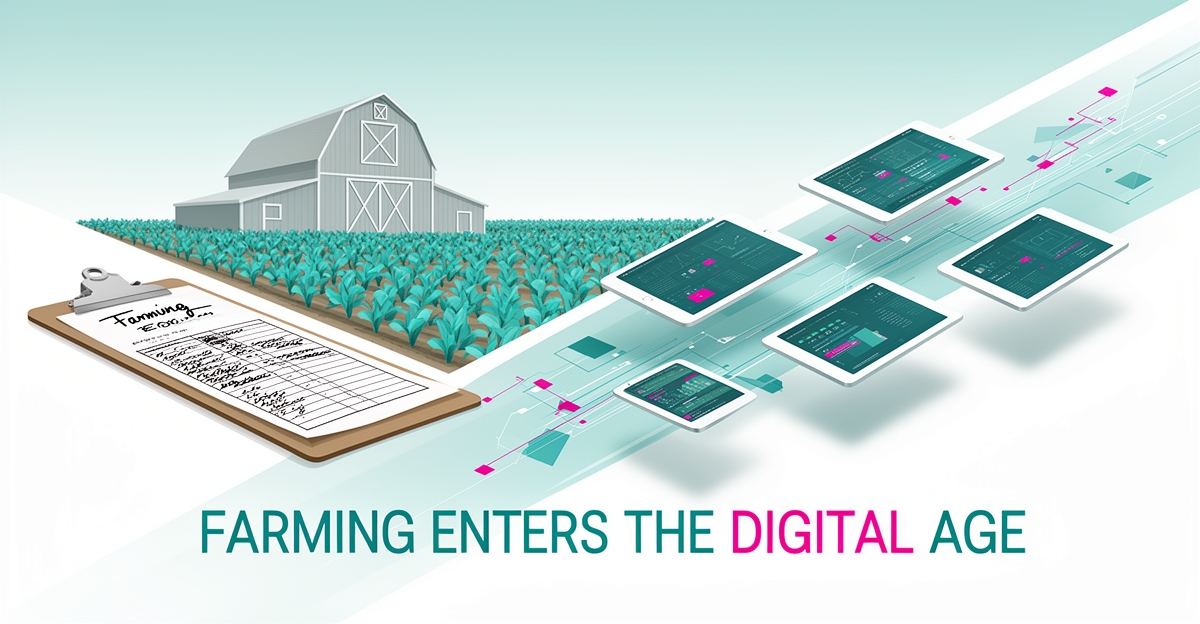
From Paper Logs to AI: Modernizing Organic Farm Operations Step-by-Step
Key Facts
- Paper logbooks and scattered spreadsheets create data gaps that certification inspectors flag, and missing pages raise finding risk on every audit.
- Traditional SOP creation is time-consuming, prone to inaccuracies, and leads to low adoption rates — a cycle of errors, re-training and inconsistency.
- AI document automation captures data from PDFs, scans, emails, online forms and mobile photos using OCR technology, converting them into structured, searchable records.
- AI still trails humans in complex reasoning and planning tasks, so successful implementations balance automation with human oversight.
- AIQ Labs has deployed 200+ multi-agent systems and runs four live SaaS products daily — proof of working AI operations, not slideware.
- AIQ Labs builds custom AI systems that clients own outright — code, agents, and data — eliminating vendor lock-in.
Hire a team member that works 24/7 — for less than a part-time wage.
AI receptionists, SDRs, dispatchers and 99+ roles. Trained on your business, fully managed.
Not sure where to start? Ask our AI planner
Paper Logs and Manual SOPs Are Creating Invisible Drag on Organic Farms
Organic farms pride themselves on working with nature, not against it — yet many still run daily operations on paper logbooks, scattered spreadsheets, and the tribal knowledge of a few longtime employees. That gap between field philosophy and office reality creates a quiet drag on every harvest, inspection, and hiring cycle.
Traditional methods of creating standard operating procedures (SOPs) and process guides are inefficient, time-consuming, and prone to inaccuracies, leading to low adoption rates and a cycle of errors, re-training, and inconsistency. These legacy approaches suffer from rapid obsolescence and maintenance problems that undermine compliance readiness. When a certification auditor asks for three years of input records, the scramble begins — and the risk of a finding increases with every missing page.
- Time-consuming documentation pulls skilled workers away from high-value field decisions
- Inconsistent entries across crews create data gaps that inspectors flag
- Knowledge silos mean one departure erases years of operational context
- Rapid obsolescence turns SOPs into outdated artifacts before the ink dries
The cost compounds silently: significant efficiency gains are typical when manual document workflows shift to intelligent automation. Yet most organic operations remain stuck in the pilot phase of digital adoption — experimenting with tools but failing to scale them into embedded capability. AIQ Labs sees this same maturity curve in agriculture: farms that treat digitization as a project instead of a capability plateau quickly, while those that build owned, integrated systems pull ahead. The first step isn't buying software — it's recognizing that paper logs aren't just nostalgic; they're a structural liability.
Why AI Document Automation Is the Practical Entry Point
Modernizing organic farm operations begins by replacing paper logs with intelligent systems that capture data without manual entry. AI document automation transforms how farms handle everything from organic certification records to harvest logs by converting handwritten or scanned documents into structured, searchable data.
Unlike rigid template-based systems, AI-driven solutions adapt to document variations and improve over time. These platforms capture information from diverse sources — PDFs, smartphone photos, scanned forms, and email attachments — processing them through OCR technology that converts images into machine-readable text.
The technology classifies documents automatically using content-based categorization, eliminating the need for manual sorting. Key capabilities include:
- Automated extraction from PDFs, scans, and mobile photos
- Intelligent classification based on document content
- Continuous improvement through adaptive learning
- Direct API integration with cloud storage systems
This adaptive approach delivers measurable operational gains: faster processing, fewer errors, and scalable workflows compared to manual extraction methods. Farms processing organic certification paperwork or harvest records can handle increasing documentation volumes without adding administrative staff.
For operations ready to move beyond paper, AIQ Labs' AI Workflow Builds rebuild the one workflow that costs the most — at a fixed price, in phases. Document automation is often that first workflow: it digitizes existing records while establishing the data infrastructure for more advanced AI applications. The result is a practical entry point that delivers immediate efficiency gains while building toward comprehensive operational transformation.
From Capture to Process Intelligence: Building an Owned AI System
Capturing field logs is only half the battle; turning that data into actionable intelligence is where true operational resilience begins. By moving from static paper records to dynamic, AI-powered process documentation, organic farms can standardize workflows and accelerate onboarding without sacrificing compliance rigor.
Traditional SOPs often suffer from inconsistency and rapid obsolescence, creating knowledge silos that hinder growth. Manual documentation methods are time-consuming and prone to inaccuracies, leading to low adoption rates and a cycle of re-training. AI-driven systems solve this by adapting to document variations and improving over time, unlike rigid template-based tools. AI document automation captures data from diverse sources — PDFs, scans, emails, and mobile photos — converting them into structured, searchable workflows.
This transformation enables farms to build an owned AI operating system that evolves with their operations. Rather than relying on disconnected spreadsheets, producers can implement intelligent systems that auto-classify documents, extract critical data with high accuracy, and flag anomalies in real time. The result is a single source of truth that reduces errors and ensures every team member follows current best practices. AIQ Labs' AI Operating Systems service builds exactly this: one connected operating layer, constructed in phases and owned outright.
However, AI is not a panacea for every operational challenge. While AI excels at pattern recognition and data extraction, current research indicates AI still trails humans in complex reasoning and planning tasks. Successful implementation requires balancing automation with human oversight, particularly for strategic decision-making.
Key steps to building your process intelligence layer include:
- Deploy AI-powered capture tools that convert paper logs and mobile photos into structured digital data
- Implement automated classification systems that organize documents by type, date, and compliance requirement
- Establish standardized SOPs that update dynamically as processes improve
- Create feedback loops where AI flags deviations and suggests optimizations
AIQ Labs helps organic operations navigate this transition by architecting custom systems that businesses own outright, ensuring that your process intelligence remains a sustainable competitive asset rather than a rented subscription. By focusing on true ownership and scalable architecture, farms can future-proof their operations while maintaining the flexibility to adapt as AI capabilities evolve.
A Phased Roadmap to AI Operations With Full Ownership
Paper logs, clipboards and tribal knowledge cost organic farms time and accuracy every season. A phased roadmap replaces manual capture with owned AI systems that grow with the operation.
Phase one is digitize and document. Field notes, harvest sheets and compliance records move from paper to structured data. AI document automation captures documents from PDFs, scans, emails, online forms and mobile photos, while OCR converts images or scanned text into machine-readable data. This creates a single source of truth without vendor lock-in.
Phase two is process capture and standardization. Traditional SOP creation is time-consuming, prone to inaccuracies and difficult to maintain. AI-powered process documentation accelerates and standardizes onboarding and reduces errors by turning observed workflows into living guides. AIQ Labs maps these workflows first, then builds the custom system — you control the code, agents and data.
Phase three is workflow automation with owned AI. Critical farm workflows — inventory, harvest logging, compliance reporting, customer orders — are rebuilt as custom AI systems at a fixed price, delivered in phases. Payment can flex three ways: Start Monthly, Build in Milestones, or Own It Outright, with full ownership transferred at completion. See aiqlabs.ai/pricing for how the models compare — no fake prices, no invented case-study numbers.
Phase four is managed AI employees for daily operations. Trained agents handle intake, scheduling, dispatch and follow-up around the clock. AIQ Labs' AI Employees service provides managed staff across 99+ roles — receptionists, SDRs, dispatchers and more — at roughly 80% less cost than a human hire, integrating with your existing tools and improving continuously.
Phase five is governance and scale. Long-term sustainability requires governance, compliance and continuous optimization. That means frameworks for data security, audit trails and human-in-the-loop controls while expanding use cases season over season.
A practical phased path looks like this:
- Digitize paper logs with AI document capture and automatic classification
- Document and standardize SOPs with AI-powered process capture
- Build custom owned workflows for inventory, compliance and sales
- Deploy managed AI employees for reception, dispatch and customer follow-up
- Govern, optimize and scale with continuous improvement and ownership retained
With 200+ multi-agent systems deployed and four live SaaS products AIQ Labs runs daily, farms move from reactive paper trails to proactive AI operations they own outright.
Still paying for 10+ subscriptions that don’t talk to each other?
We build custom AI systems you own outright. No vendor lock-in. Full control.
Not sure where to start? Ask our AI planner
Frequently Asked Questions
Do paper logs really hurt organic farm compliance and inspections?
Is AI document automation practical for handwritten field notes and harvest sheets?
Will automating documents actually save time and reduce errors on the farm?
How is AI-powered process documentation different from our current SOP binders?
Can small organic farms afford to build their own AI systems instead of renting software?
What’s the first step if we want to modernize without getting stuck in pilot mode?
Your Next Harvest Starts With a Single Digitized Log
Moving from paper logs to an owned AI operating system isn't a leap — it's a sequence of deliberate steps: digitize capture, standardize process, automate workflows, deploy managed AI employees, and govern for scale. Each phase compounds the last, turning compliance paperwork into structured intelligence and tribal knowledge into institutional IP. The farms that treat this as a capability, not a project, are the ones pulling ahead — cutting administrative drag and eliminating the scramble when auditors arrive. AI document automation provides the practical entry point, but the real advantage comes from owning the system end-to-end. AIQ Labs partners with organic operations to architect that ownership — AI Employees, Workflow Builds and AI Operating Systems under one roof, with 200+ multi-agent systems deployed and four live SaaS products run daily. Ready to see where the highest-ROI starting point sits in your operation? Take the two-minute Fit Check at aiqlabs.ai/apply and book a free 30-minute strategy call at aiqlabs.ai/book. No pitch — just a working session with an AI engineer to map your biggest bottleneck and the fastest path to proactive, owned operations.
Make AI your competitive advantage — not just another tool.
Strategy, implementation and ongoing optimization. One partner, end to end.
Not sure where to start? Ask our AI planner