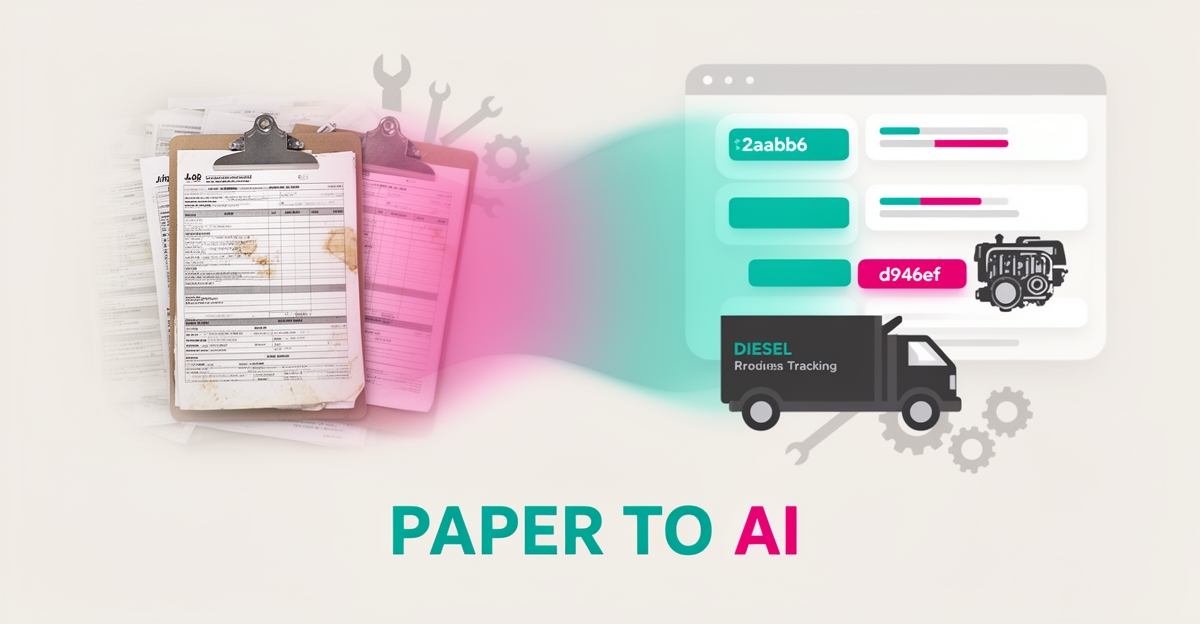
From Paper Logs to AI: Modernizing Repair Job Tracking in Diesel Shops
Key Facts
- Paper-based systems commonly lose a meaningful share of maintenance requests—industry analyses often cite 15-25%—between handoffs
- Shops still on paper typically spend several times more on emergency repairs than on planned maintenance
- Digital work order systems routinely cut completion times from days to hours, with some operations reporting same-shift turnaround
- Operations that move to digital tracking report substantially fewer unexpected equipment failures
- Digital systems let shops complete more work orders with the same staff—commonly cited gains fall in the 25-35% range
- Many maintenance operations still rely on paper-based systems as of late 2026, leaving significant efficiency on the table
- OSHA violations can reach six figures per citation, making auditable records a financial safeguard, not a nice-to-have
Hire a team member that works 24/7 — for less than a part-time wage.
AI receptionists, SDRs, dispatchers and 99+ roles. Trained on your business, fully managed.
Not sure where to start? Ask our AI planner
The Hidden Cost of Paper Logs in Diesel Shops
Paper-based repair tracking in diesel shops creates hidden costs that erode efficiency and profitability in ways many operators don't see until the damage is done. The reliance on sticky notes, handwritten logs, and verbal handoffs leads to systemic failures that compound over time, turning routine maintenance into a drain on resources. Industry analyses of maintenance operations commonly find that paper-based approaches lose a meaningful share of maintenance requests—often cited in the 15-25% range—between handoffs, creating a silent leak in operational capacity that goes unnoticed until critical work is missed. This information loss isn't just inconvenient—it directly impacts service delivery and customer trust when jobs fall through the cracks.
Beyond lost requests, paper systems create compliance gaps that expose shops to significant financial and legal risk. When inspectors arrive, the inability to quickly produce current service records, safety inspection logs, or parts usage documentation can result in costly citations. OSHA penalties can reach six figures per violation, and even smaller findings add up quickly in legal fees, downtime, and remediation. These aren't hypothetical risks—they're avoidable expenses tied directly to the inability to maintain centralized, auditable records in a paper environment.
Perhaps most damaging is the budget blindness that comes from fragmented, non-aggregatable data. Without digital tracking, shop managers cannot accurately calculate maintenance costs by vehicle, technician, or repair type, making it impossible to identify trends or justify capital investments. This lack of visibility forces decisions based on anecdote rather than evidence, leading to over-spending on emergency repairs—paper-based operations typically spend several times more on emergency repairs than on planned maintenance. The result is a cycle where preventable failures drive up costs, which then limit the ability to invest in better systems.
- Information loss: a meaningful share of maintenance requests lost between handoffs
- Compliance risk: inspection findings and OSHA citations that can reach six figures
- Budget blindness: several times higher emergency repair spend vs. planned maintenance
- Knowledge drain: Critical repair history held only in technicians' memory
These four failure modes—information loss, compliance gaps, knowledge drain, and budget blindness—don't just add friction; they actively undermine the shop's ability to operate efficiently, safely, and profitably. Breaking free from paper isn't about adopting technology for its own sake—it's about eliminating preventable losses that are already bleeding the bottom line. AIQ Labs helps diesel shops make this transition through AI Workflow Builds that rebuild the one workflow costing you most, integrating with existing tools and turning hidden costs into measurable gains.
The Five-Stage Evolution to AI-Optimized Tracking
Every diesel shop sits somewhere on a five-stage maturity curve, and knowing exactly where you stand is the first step toward fixing what's broken. The progression from paper logs to AI-optimized tracking isn't a leap—it's a proven sequence, and each stage delivers measurable gains while building the data foundation the next one requires.
Stage 1: Paper & Memory. Jobs arrive via sticky notes, phone calls, and verbal requests. Paper-based operations commonly lose a meaningful share of maintenance requests between handoffs, and work order completion is often measured in days rather than hours. Institutional knowledge lives in the lead mechanic's head—and leaves with every retirement.
Stage 2: Spreadsheets & Shared Drives. Work orders move into Excel or Google Sheets. It's better than paper, but still manual: when someone forgets to update the sheet, data gaps grow silently.
Stage 3: Digital Work Orders. Cloud-based platforms timestamp, categorize, and auto-route every work order, with preventive maintenance schedules generated automatically. The payoff is dramatic—digital systems routinely cut work order completion from days to hours, and operations report substantially fewer unexpected failures and more work orders completed with the same staff.
Stage 4: Data-Driven & IoT-Connected. Sensors on critical equipment stream real-time performance data, and AI analyzes work order patterns and equipment trends to predict failures before they generate emergency work orders.
Stage 5: AI-Optimized & Autonomous. Fully integrated AI platforms shift the shop from reactive to predictive, preventing the majority of failures before symptoms are even visible.
The pattern across these stages is clear: you can't skip to AI without the data foundation beneath it. AI systems draw on whatever data feeds them, and when that data is inconsistent or incomplete, outputs look authoritative but misinform decision-making. Most companies now use AI in at least one business function, yet many have yet to show measurable results—largely because of these foundational gaps.
The practical path for a diesel shop is to start with digital work orders, capture real job data—labor hours, part usage, completion times—and let the system mature. Custom AI systems built to integrate with existing shop management tools, like those AIQ Labs develops, replace paper logs with real-time digital tracking that improves transparency, reduces errors, and enables reporting that justifies the next stage of investment.
Each stage funds the next. The shops that move deliberately up this curve end up with something competitors can't buy: a complete, searchable record of every job, every asset, and every dollar.
How AI Transforms Job, Labor and Parts Tracking
Paper logs create blind spots that cost diesel shops time, money, and compliance readiness every week. Moving to AI-powered tracking closes those gaps by turning fragmented job notes into searchable, real-time data that works with the tools your technicians already use.
AI log analysis collects data from work orders, telematics, and shop management systems, centralizes it in one platform, and makes it searchable. Modern log-analysis tools enable fast queries across very large volumes of records and anomaly detection without manual threshold configuration, according to a comparison of log analysis tools. That capability transforms reactive repair into proactive monitoring for diesel operations.
Anomaly detection flags deviations in labor hours, parts usage, and cycle times before they become costly failures. Predictive maintenance models analyze work order patterns, equipment performance trends, and parts consumption to forecast failures and schedule service during planned windows. Integration with existing shop management tools ensures technicians keep using familiar interfaces while AI works behind the scenes to improve transparency, reduce errors, and enable better reporting.
The impact mirrors what digital maintenance evolution shows across industries: paper-based operations lose a meaningful share of maintenance requests between handoffs, and shops still on paper typically spend several times more on emergency repairs than on planned maintenance. Digital work order systems cut completion from days to hours and deliver substantially fewer unexpected failures.
For diesel shops, AI-driven job tracking builds on that foundation with:
- Real-time labor and parts capture that eliminates manual timesheets and reduces data entry errors
- Automated anomaly alerts for unusual parts consumption, overtime spikes, or repeat comebacks
- Predictive work order generation based on asset history and usage patterns
- Seamless integration with existing shop management tools for adoption without disruption
Transparency improves because every job, labor hour, and part is timestamped, categorized, and auditable. Managers gain dashboards that show completion rates, cost per job, and technician utilization without chasing paper. Reporting becomes continuous and audit-ready instead of a scramble before inspections.
AIQ Labs builds custom AI systems that integrate with existing shop management tools to ensure seamless adoption, replacing outdated paper logs with real-time digital tracking of jobs, labor hours, and part usage. The result is fewer missed requests, faster completions, and data that supports confident staffing and purchasing decisions.
Implementation Roadmap for Diesel Shops
Transforming a diesel shop from paper logs to AI-driven tracking doesn't happen overnight, but it doesn't require a complete shutdown either. As of late 2026, many maintenance operations still rely on paper systems, losing a meaningful share of work requests between handoffs and spending several times more on emergency repairs than on planned maintenance. Breaking this cycle requires a structured, phased approach that prioritizes quick wins while building toward long-term intelligence.
The first step involves assessing your current state to identify specific failure modes—whether that's information loss between shifts, compliance gaps during audits, or knowledge drain as veteran technicians retire. Document the true cost of paper by tracking how much time your team spends searching for work orders, rewriting lost tickets, or handling emergency repairs that could have been prevented. This baseline assessment reveals which operational bottlenecks to target first and creates the business case for investment.
Next, calculate the real expense of maintaining the status quo. Paper-based systems typically measure work order completion in days, while digital systems routinely bring that down to hours. Factor in compliance exposure—inspection findings and OSHA citations that can reach six figures—alongside the wave of experienced maintenance professionals reaching retirement age and taking critical institutional knowledge with them.
Once you've established the baseline, pilot digital work orders with a small team of three to five technicians. Start with mobile-accessible tools that require no IT infrastructure and run on any smartphone, providing short training sessions to drive adoption within the first month. This approach delivers day-one value by eliminating lost tickets and reducing fire-fighting within 90 days, proving the concept before scaling across the entire operation.
As the pilot succeeds, begin building your digital asset inventory during implementation rather than waiting for perfect data. Start with critical equipment and asset hierarchies, then expand the database as technicians use the system. This gradual approach prevents data paralysis while ensuring the system grows smarter weekly.
The final phases introduce advanced capabilities through IoT sensors and AI analytics. Connect sensors on critical diesel engines and shop equipment to stream real-time performance data into your management system, then deploy AI tools that analyze work order patterns and equipment trends to predict failures before they occur. This progression moves your shop from reactive repairs to predictive maintenance, preventing the majority of failures before symptoms appear.
Throughout this roadmap, integration with existing shop management tools remains critical. AIQ Labs builds custom AI systems that connect with your current software stack, ensuring seamless adoption without disrupting daily operations. Whether you start monthly, build in milestones, or own the system outright, the goal remains the same: creating a digital foundation that turns repair job tracking from an administrative burden into a competitive advantage.
Still paying for 10+ subscriptions that don’t talk to each other?
We build custom AI systems you own outright. No vendor lock-in. Full control.
Not sure where to start? Ask our AI planner
Frequently Asked Questions
How much time do paper-based systems really waste on lost maintenance requests?
What are the real financial risks of staying with paper logs during inspections?
Is it true that paper-based shops spend more on emergency repairs than planned maintenance?
How much faster are work orders completed with digital systems compared to paper?
Can AI really prevent failures before they happen in a diesel shop?
What's the first practical step to move from paper logs to AI tracking without disrupting operations?
Turning Repair Chaos into Competitive Clarity
The journey from paper logs to AI-powered tracking isn't just about upgrading tools—it's about reclaiming lost time, eliminating preventable costs, and building a foundation for smarter decisions. Diesel shops still relying on sticky notes and verbal handoffs are losing work requests between shifts, spending several times more on emergency repairs than planned maintenance, and risking compliance fines that can reach six figures. By moving through the five-stage evolution—starting with digital work orders, capturing real job data, and layering in IoT and AI—shops gain transparency, reduce errors, and turn reactive firefighting into predictive maintenance. AIQ Labs helps diesel shops make this shift with custom AI systems that integrate with existing tools, built on clear payment models: start monthly, build in milestones, or own it outright. The first step is assessing your current state to identify where paper is costing you most. Start the 2-minute Fit Check at aiqlabs.ai/apply to uncover your highest-ROI automation opportunity, then book a free 30-minute strategy call to map the path forward.
Make AI your competitive advantage — not just another tool.
Strategy, implementation and ongoing optimization. One partner, end to end.
Not sure where to start? Ask our AI planner