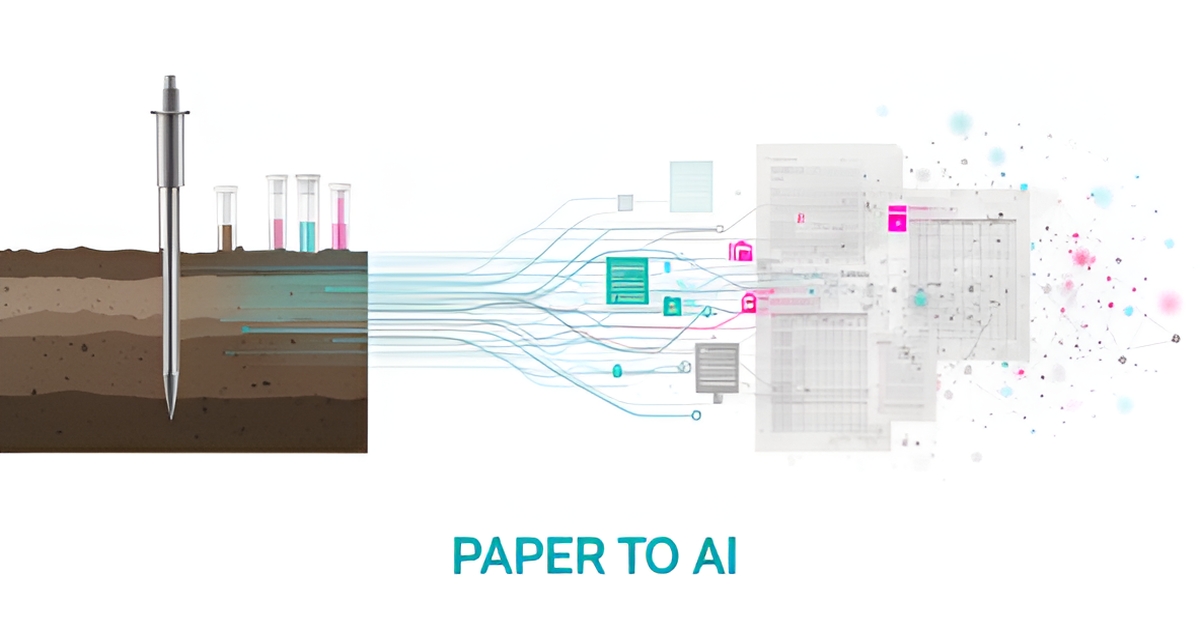
From Paper Logs to AI: Modernizing Soil Test Data Collection
Key Facts
- Many soil testing firms still run critical data workflows on paper logs and scattered spreadsheets, as of late 2026
- Manual handoffs are a common point of failure — samples and requests are frequently lost or duplicated between field, lab, and reporting
- AI document processing can extract structured data from test results in minutes rather than days of manual transcription
- Digital capture with automated archiving makes audit preparation a lookup, not a scramble
- AIQ Labs has deployed 200+ multi-agent systems and runs 4 live SaaS products daily — this is production work, not theory
Hire a team member that works 24/7 — for less than a part-time wage.
AI receptionists, SDRs, dispatchers and 99+ roles. Trained on your business, fully managed.
Not sure where to start? Ask our AI planner
The Hidden Cost of Paper-Based Soil Testing
The hidden cost of paper-based soil testing isn't always visible on balance sheets, but it accumulates in quiet, damaging ways. As of late 2026, plenty of soil testing firms still rely on manual processes — paper field logs, handwritten chain-of-custody sheets, and spreadsheets that live on one person's laptop. These systems create vulnerabilities that compound over time.
These methods don't just slow things down — they actively lose revenue and increase risk. Requests and samples get lost between handoffs: a field technician's notebook never makes it to the lab, a result sheet sits in a scanner queue, a client call goes unlogged. Beyond lost work, compliance becomes a gamble. Missing documentation during an audit can trigger fines or certification problems, especially as regulatory bodies increasingly demand traceable, auditable records for every test conducted.
Perhaps most insidiously, paper systems leak institutional knowledge with every retiring technician or staff turnover. When test interpretations, field notes, and calibration logs live only in physical binders or scattered spreadsheets, that expertise vanishes when people leave. AIQ Labs sees this pattern repeatedly — firms struggle to scale not because of market demand, but because their data foundation can't support growth without constant manual rework. Breaking free from this cycle requires more than digitizing forms; it demands intelligent systems that preserve context, enforce consistency, and turn every test into a lasting asset.
The Five-Stage Evolution to AI-Powered Data Capture
Every leap in data management technology starts with a simple realization: the current system is quietly bleeding value. For soil testing firms still relying on paper logs, that realization often arrives when a compliance audit looms or a technician retires with decades of institutional knowledge locked in handwritten notebooks.
The journey from paper to AI typically follows a five-stage pattern seen across industries. Organizations begin with paper and memory, progress through spreadsheets and shared drives, adopt structured digital systems, connect data streams, and finally arrive at AI-powered automation. Each stage builds on the data foundation of the previous one, creating compounding returns in accuracy and speed.
The cost of staying behind is measurable in your own operation: count the samples that needed re-testing last quarter, the hours spent chasing missing paperwork, and the audit prep that consumed a week of staff time. Firms that complete the transition stop losing requests between handoffs, cut turnaround from days to hours, and stop dreading audits because every record is already organized.
The shift delivers specific operational advantages:
- Request loss between handoffs effectively eliminated once digital capture replaces paper
- Turnaround times dropping from days to hours with structured databases
- Meaningfully more work completed with the same staff through automated routing and scheduling
- Automated extraction removing the manual data-entry errors that trigger retests
Stage five introduces intelligent document processing that doesn't just store data but understands it. AI systems scan soil test results, extract key metrics, categorize findings by parameter type, and flag anomalies for review. What once required hours of manual transcription now happens in minutes, freeing technicians to focus on analysis rather than paperwork.
AIQ Labs builds these custom capture systems through AI Workflow Builds — a fixed-price, phased engagement that rebuilds the one workflow costing you the most. For soil testing operations, that's usually the paper-to-system handoff. The technology handles the repetitive work of scanning, categorizing, and storing test results automatically, keeping compliance documentation audit-ready without the administrative overhead. That means faster turnaround and data integrity that stands up to regulatory scrutiny.
Building a Custom AI Document Processing System
Soil testing firms still relying on paper logs face significant operational risks, including lost data and compliance gaps that delay reporting and inflate audit preparation time. Transitioning to AI-driven document processing eliminates these bottlenecks by automatically scanning, categorizing, and storing test results with high accuracy. AIQ Labs builds custom systems that integrate directly with existing LIMS and reporting tools, ensuring data flows without disrupting current workflows. The same data-integrity benefits apply directly to soil testing, where accurate records underpin regulatory adherence and field recommendations.
These custom AI systems use multi-agent architecture to handle complex document workflows, with specialized agents for scanning, validation, categorization, and storage — mirroring the production-grade frameworks AIQ Labs employs across its live SaaS platforms, which the company runs daily. The system adapts to new test formats and regional reporting requirements, maintaining consistent performance as protocols evolve. That matters for extracting critical data points like pH levels, nutrient content, and contaminant thresholds without constant manual correction.
Integration with compliance workflows is built into the system's core, allowing automatic flagging of out-of-range results, generation of audit-ready reports, and secure archiving for retention periods. Every soil test result becomes traceable, timestamped, and instantly retrievable for regulatory inspections — a critical advantage as scrutiny of environmental and agricultural data increases. And because AIQ Labs' AI Operating Systems are owned outright, firms avoid vendor lock-in and retain complete control over customization, data governance, and future enhancements. That ownership model lets businesses scale the system across multiple labs or expand into related services like environmental reporting or precision agriculture consulting.
Measuring ROI: Accuracy, Speed, and Compliance Gains
Modernizing soil test data collection transforms operational bottlenecks into measurable business advantages. Firms replacing paper logs with AI-driven capture systems typically see a dramatic reduction in processing time — days of manual entry become minutes of automated workflow. This acceleration directly increases throughput without expanding headcount.
Automated extraction also removes the transcription errors that compromise compliance reporting and trigger costly retests. Instead of hoping the intern typed the contaminant threshold correctly, the system validates every field against expected ranges and flags anything unusual for human review. Audit preparation shifts from a scramble through binders to a simple lookup, because every result is traceable, timestamped, and retrievable on demand. These gains shift data operations from a cost center to a strategic asset.
With the same staff, soil testing labs can typically take on meaningfully more work per week after digitization, as automated routing and scheduling optimize resource allocation. That capacity lift enables firms to accept additional contracts or reallocate personnel to higher-value tasks like client consultation or field sampling. The combined impact — faster processing, reliable accuracy, and audit-proof documentation — creates a competitive edge in regulated markets where data integrity determines contract eligibility. AIQ Labs builds the custom systems that deliver these outcomes, turning soil test data into a reliable foundation for growth.
Still paying for 10+ subscriptions that don’t talk to each other?
We build custom AI systems you own outright. No vendor lock-in. Full control.
Not sure where to start? Ask our AI planner
Frequently Asked Questions
How much time can soil testing labs save by switching from paper logs to AI-powered data capture?
Why do soil testing requests get lost in paper-based systems?
How does AI document processing improve accuracy in soil test data entry?
Can AI systems help soil testing labs complete more work with the same staff?
What compliance benefits do soil testing firms gain after adopting AI-powered document processing?
Do AI systems for soil testing require constant manual reprogramming as testing protocols evolve?
Turn Every Soil Test Into a Lasting Asset
Paper logs quietly erode soil testing firms through lost samples, compliance gaps, and institutional knowledge that walks out the door with retiring technicians. Moving from paper and spreadsheets to structured digital capture and then to AI-powered document processing eliminates those leaks — no more request loss between handoffs, faster turnaround, reliable extraction, and audit-ready records that stand up to regulatory scrutiny. The five-stage evolution shows that each step builds a stronger data foundation, turning repetitive transcription into a scalable asset that supports growth without adding headcount. For firms ready to make the shift, the most practical next step is to map your current handoffs and identify where samples, results, and interpretations are most vulnerable to loss. AIQ Labs builds custom AI document processing systems that scan, categorize, and store test results automatically and integrate with existing LIMS and reporting tools — whether as a single workflow rebuild or a full AI Operating System you own outright. Start with the 2-minute Fit Check at https://aiqlabs.ai/apply, then book a free 30-minute strategy call to map your biggest bottleneck and see whether a clear, high-ROI automation path exists for your lab.
Make AI your competitive advantage — not just another tool.
Strategy, implementation and ongoing optimization. One partner, end to end.
Not sure where to start? Ask our AI planner