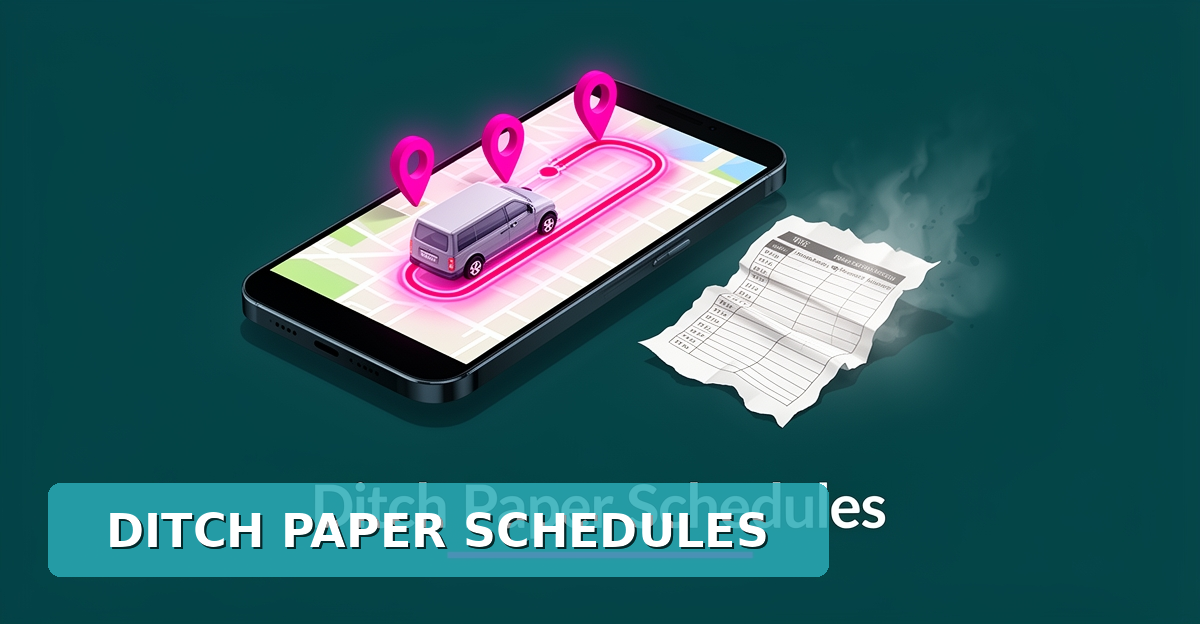
From Paper Schedules to AI: How Mobile Detailers Can Automate Job Routing and Dispatching
Key Facts
- Manual dispatching creates idle gaps, backtracking, and missed appointments that compound into lost billable hours and eroded client trust
- Governed AI workflows log every action while keeping final decisions with your human team per AP Workflow Solutions
- Most operations run disconnected systems where job details get lost at handoffs AP identifies
- AIQ Labs has deployed 200+ multi-agent systems and runs 4 live SaaS products daily see how they apply
- AI dispatching can be built in phases with milestone-based payments—you keep everything built if you pause
Hire a team member that works 24/7 — for less than a part-time wage.
AI receptionists, SDRs, dispatchers and 99+ roles. Trained on your business, fully managed.
Not sure where to start? Ask our AI planner
Why Paper-Based Dispatching Is Costing Mobile Detailers Time and Revenue
Paper-based dispatching is quietly draining time and revenue from mobile detailing businesses. Manual scheduling creates idle gaps between jobs, forces technicians to backtrack across service areas, and increases the likelihood of missed appointments due to human error or outdated information. These inefficiencies add up quickly—each delayed or missed job represents lost billable hours and erodes client trust.
Disconnected systems—paper schedules, siloed calendars, texts scattered across phones—prevent real-time visibility into technician availability and job locations. This mirrors the fragmented workflows the Associated Press identified in its own operations, where details get lost at handoffs between disconnected tools according to AP Workflow Solutions. Without a unified view, dispatchers spend valuable time coordinating through phone calls and texts instead of optimizing routes. This administrative burden pulls focus from customer service and business growth.
The consequences extend beyond operational friction. Inefficient routing increases fuel costs and vehicle wear, while idle time reduces the number of jobs completed per day—directly impacting revenue potential. Missed or late appointments lead to dissatisfied customers, negative reviews, and lower retention rates, especially in a service industry where reliability and punctuality are key differentiators. Over time, these small losses compound into significant gaps between current performance and achievable growth.
Customer expectations are shifting, too. Consumers increasingly expect intelligent, responsive service experiences—automated confirmations, tight arrival windows, and instant answers—from every business they hire, including detailers. Mobile detailers still relying on paper risk falling behind as clients gravitate toward providers who use technology to enhance reliability and communication.
The good news is that these pain points are solvable. By replacing manual dispatching with AI-powered job routing that considers location, vehicle type, and technician availability in real time, mobile detailers can close the gap between effort and output. Systems designed with human oversight—where AI assists but dispatchers retain control—ensure accountability while eliminating the guesswork and delays inherent in paper-based methods. This shift isn't just about efficiency; it's about building a more responsive, profitable, and scalable detailing business.
How AI-Powered Dispatching Works: Governed Automation for Real-Time Job Routing
The best dispatchers don't need AI to make every decision—they need AI to stop drowning in the decisions that don't require judgment. That's the principle behind governed automation, and no organization has articulated it better than the Associated Press.
AP's approach to intelligent workflows rests on a simple philosophy: assistance, not autonomy. Every action is logged, and editorial control stays with the human team at every step per AP Workflow Solutions. The same model translates directly to mobile detailing dispatch. AI agents handle the coordination, monitoring, and preparation work, while the human dispatcher retains final say over every assignment.
In practice, an AI-powered dispatching system for a mobile detailing operation works like this:
- Monitoring agents track technician locations and traffic conditions, flagging potential delays before they cascade into a day's worth of missed appointments.
- Routing agents draft optimized job sequences based on real-time location, vehicle type, and the specific equipment each detail requires.
- Availability agents match jobs to technicians based on current workload, skill fit, and shift schedules.
- A centralized system consolidates job notes, customer preferences, and scheduling details in one place—instead of scattered across texts, inboxes, and paper sheets.
The dispatcher reviews the AI's proposed assignments, adjusts where experience demands it, and approves. Every action is logged, creating an auditable trail of who was assigned what, when, and why.
This human-overseen model matters because AI works best when it can see the full picture. AP notes that most operations run on disconnected systems that each hold a fragment of the story, and that AI tools can't act on context they can't see. Mobile detailing operations face the identical problem: scheduling lives in one tool, customer records in another, vehicle details in a third. Details get lost at handoffs. This is why custom integration matters—AIQ Labs builds AI Workflow Builds that connect directly to your existing schedules, calendars, and customer databases so the AI reasons over complete context rather than fragments.
The payoff of governed dispatch automation is concrete: less idle windshield time, tighter arrival windows, and fewer double-bookings. The future isn't layering AI into existing workflows but rethinking the architecture so intelligent agents operate within governed, auditable systems. For a mobile detailing business, that architecture turns dispatching from a daily scramble into a supervised, self-optimizing workflow.
Implementation Steps: Integrating AI Dispatching Without Disrupting Your Current Workflow
Moving from paper schedules to AI dispatching doesn't require ripping out everything at once. A phased approach lets you validate results at each step while keeping daily operations running smoothly.
Start with a thorough workflow assessment. Map how jobs currently flow from booking to completion—where technicians' locations are tracked, how vehicle types factor into assignments, and where bottlenecks form. This mirrors the principle that human judgment stays in control, which the Associated Press applies to its intelligent workflows, ensuring AI handles coordination while people retain final say. AP's approach demonstrates that governed, auditable systems outperform ad-hoc automation every time.
Next, build the AI agent around your actual dispatch logic—not a generic template. The agent should ingest real-time technician GPS data, traffic conditions, job durations by vehicle type, and customer time windows. AP's intelligent workflows use monitoring agents that flag problems before they escalate and assistant agents that draft optimized outputs from source data. Your dispatcher agent does the same: it proposes optimized routes and assignments for human approval, with every action logged for auditability.
Integration comes third. Connect the agent to your existing calendar, CRM, and communication tools (SMS, email, phone) so it can read availability and write assignments without duplicate entry. This solves the disconnected-systems problem: when scheduling, customer records, and vehicle details live in separate tools, details get lost at handoffs.
- Phase 1: Workflow audit and data mapping (1–2 weeks)
- Phase 2: Custom AI dispatcher build with human-in-the-loop controls (4–8 weeks)
- Phase 3: Tool integration and parallel-run testing (1–2 weeks)
- Phase 4: Gradual cutover with dispatcher oversight (ongoing)
Deployment follows a milestones-based model—approve and pay per phase, keep everything built so far if you pause. AIQ Labs has deployed 200+ multi-agent systems across service businesses and runs 4 live SaaS products daily, so this pattern is well-trodden ground. Start the two-minute Fit Check to map your biggest dispatch bottleneck and see a phased plan with real numbers.
Still paying for 10+ subscriptions that don’t talk to each other?
We build custom AI systems you own outright. No vendor lock-in. Full control.
Not sure where to start? Ask our AI planner
Frequently Asked Questions
Will AI take over my dispatcher's job?
How is AI dispatching different from just automating my current paper schedule?
Do customers actually expect AI-powered scheduling from a detailer?
Can AI dispatching work with the tools I already use?
What does a realistic rollout timeline look like?
What results can I expect from switching off paper dispatching?
Turn Dispatching from a Daily Scramble into Your Competitive Edge
Paper-based dispatching creates hidden costs—idle time, missed appointments, and frustrated customers—that silently erode revenue and trust. By shifting to AI-powered job routing with human oversight, mobile detailers can eliminate guesswork, optimize routes in real time, and free up dispatchers to focus on service, not spreadsheets. As customer expectations for responsive, tech-enabled service keep rising, businesses that use intelligent scheduling will stand out for reliability and professionalism. The path forward doesn't require overhauling everything at once. Start by mapping your current workflow, then build a custom AI dispatcher that integrates with your existing tools, keeping humans in control while AI handles the coordination. To see how this could work for your specific operation, take the two-minute Fit Check to identify your biggest bottleneck and receive a phased implementation plan with real numbers—no obligation, just clarity on where AI can deliver measurable gains.
Make AI your competitive advantage — not just another tool.
Strategy, implementation and ongoing optimization. One partner, end to end.
Not sure where to start? Ask our AI planner