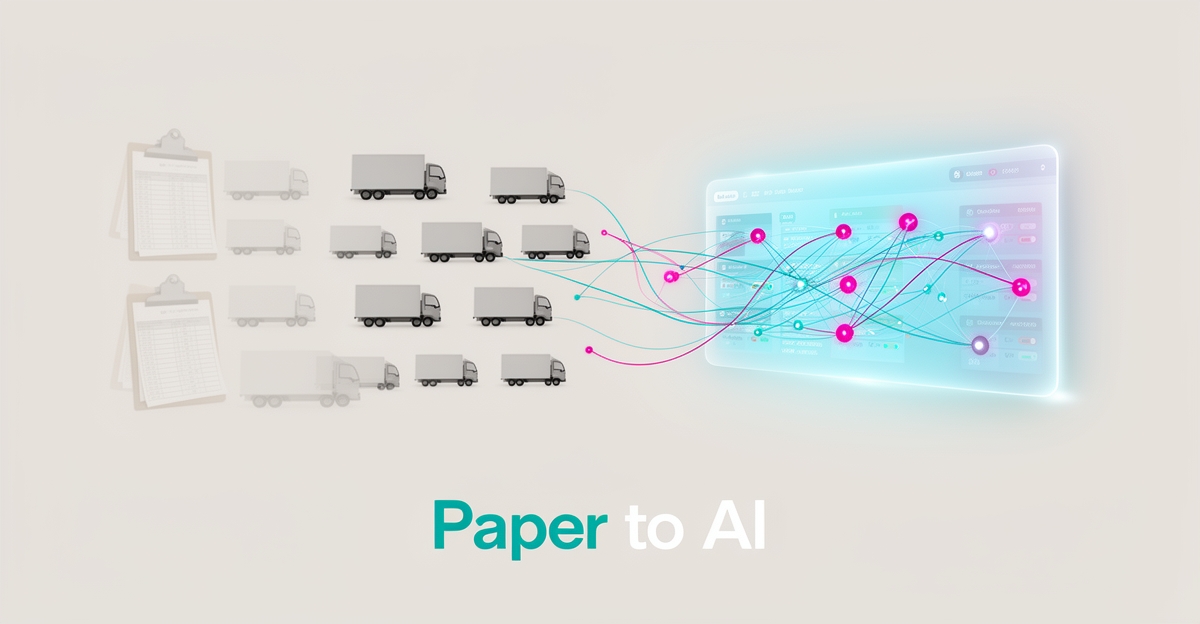
From Paper Schedules to AI: How Mobile Fleet Washing Can Automate Daily Operations
Key Facts
- Paper schedules and verbal dispatch typically lead to missed vehicles, duplicated work, and inconsistent service
- AI scheduling can auto-resolve conflicts and balance workload by location and skill in real time
- AI dashboards let non-technical staff query operational data using natural language, without writing SQL
- A phased rollout—pilot one workflow first—keeps crews productive while automation is introduced
- As of late 2026, AI scheduling and dispatch tools have matured into mainstream field-service options
Hire a team member that works 24/7 — for less than a part-time wage.
AI receptionists, SDRs, dispatchers and 99+ roles. Trained on your business, fully managed.
Not sure where to start? Ask our AI planner
The Hidden Cost of Manual Fleet Washing Operations
Many fleet washing operations still rely on paper schedules and manual job assignments, creating a hidden drag on efficiency and consistency. This approach often leads to miscommunication, duplicated efforts, or missed vehicles, directly impacting service quality. When technicians receive handwritten lists or verbal instructions, critical details like wash type, priority level, or special customer requests can be easily overlooked or misinterpreted. These small errors accumulate, resulting in inconsistent service delivery that frustrates customers and wastes resources. The lack of a centralized, real-time system means supervisors spend excessive time chasing updates and resolving preventable issues instead of focusing on operational improvements.
The consequences extend beyond daily inefficiencies to undermine confidence in operational data itself. Many leadership teams describe their organizations as data-driven, yet far fewer express confidence in their ability to deliver timely insights—a gap between aspiration and reality that shows up most clearly in field service, where manual tracking creates data silos and delays in information flow. Without accurate, real-time visibility into vehicle locations, wash completion status, or technician availability, decision-making becomes reactive rather than strategic. Managers are forced to base choices on outdated or incomplete information, perpetuating cycles of inefficiency that are difficult to break without systemic change.
Manual processes also introduce avoidable risks that compound over time. Handwritten schedules can be lost, damaged, or illegible, particularly in outdoor or wet environments common to fleet washing. Job assignments made through informal channels lack accountability trails, making it difficult to trace responsibility when service standards slip. Vehicle tracking becomes speculative when reliant on technician memory or periodic check-ins, leading to inefficient routing and increased fuel consumption. These operational frictions not only raise costs but also erode team morale as employees navigate unclear expectations and constant firefighting. The result is a system where human potential is undermined by preventable administrative burdens rather than empowered by streamlined workflows.
How AI Replaces the Dispatcher's Clipboard
The clipboard on the dispatch desk is still the bottleneck for most mobile fleet washing crews. Reactive calls, paper routes, and manual reassignments create delays that customers feel immediately.
AI scheduling moves operations from reactive firefighting to proactive assignment. Intelligent algorithms prioritize jobs, allocate time slots, and reschedule automatically when conditions change. As of late 2026, the category has matured considerably: modern AI scheduling tools integrate directly with existing calendars and work-order systems, handling the complex juggling of routes, crews, and deadlines that used to consume a dispatcher's morning.
Integration effort is where the shift becomes measurable. AI-powered data management platforms typically reduce integration effort meaningfully compared with traditional spreadsheet-based approaches, while producing more accurate, normalized results. For a fleet washing operation running on disconnected spreadsheets and text threads, that difference is the difference between a system that works and one nobody updates.
For fleet washing, that means technician dispatch, vehicle tracking, and job assignment can run from one connected system instead of spreadsheets and phone calls. AI auto-resolves conflicts, balances workload by location and skill, and updates routes in real time as jobs complete or new requests arrive. Human oversight remains for goal setting and strategic decisions, while routine coordination is automated.
The practical gains show up across daily operations:
- Automated job assignment that matches technician availability, proximity, and equipment to each wash request
- Real-time vehicle tracking for resource management and accurate ETAs
- Calendar and dispatch integration that eliminates manual data entry and rescheduling
- Conflict auto-resolution that frees dispatchers from repetitive replanning
This is AI workflow and task automation applied to field service. AIQ Labs builds production-ready AI systems that businesses can control and scale independently. Some clients start with a single [AI Workflow Build](/workflow-builds) that rebuilds the one workflow costing them the most; others deploy managed [AI Employees](/ai-employees) — dispatchers, service coordinators, and 99+ other roles — that handle routine coordination around the clock at a fraction of a human hire's cost.
The result is more consistent service, fewer missed windows, and dispatchers focused on exceptions rather than paperwork.
From Data Chaos to Daily Intelligence
A mobile fleet washing operation generates data constantly—job completions, truck locations, technician hours, water usage, customer feedback—but most of it sits scattered across spreadsheets, dispatch logs, and text messages, useless until someone manually pieces it together. The real breakthrough isn't collecting more data; it's making the data you already have answerable by anyone on the team.
That's where modern AI dashboards change the game. Instead of waiting for a weekly report, an owner can ask natural-language questions—"Which routes ran behind schedule this week?" or "Which technicians completed the most washes per hour?"—and get answers instantly, no SQL or analyst required. This capability is now standard in well-built AI operational systems, not a premium add-on.
The impact of this accessibility is straightforward: decisions no longer queue up behind a single gatekeeper. Route supervisors, dispatchers, and crew leads can each pull their own answers, enabling faster and more decentralized decision-making. In larger enterprises, opening data access broadly has expanded the number of people who can query operational data directly by an order of magnitude—and small field-service businesses see the same dynamic in miniature.
For a fleet washing business, that decentralization matters. When a dispatcher can instantly see which trucks are falling behind, or a crew lead can spot which accounts consistently need re-cleaning, problems get fixed the same day instead of surfacing at month-end. And the underlying plumbing gets easier too: AI-powered data platforms typically cut integration effort substantially compared with the traditional spreadsheet-based approach.
What unified intelligence looks like in daily operations:
- Natural-language dashboards that let non-technical staff query job performance, route efficiency, and technician output without writing a single query
- Automated data consolidation that pulls job records, GPS tracking, and scheduling information into one source of truth
- Anomaly detection that flags unusual patterns—like a route suddenly running 20% slower—before they become customer complaints
- Daily summaries delivered automatically, so mornings start with intelligence rather than guesswork
There's a caveat worth stating honestly: tools alone don't create a data-driven operation. Success is not just about deployment; adoption is also important. Teams need training, and leadership needs to model data-informed decisions for the culture to shift. The gap between having data and using it remains wide across industries.
This is exactly the gap AIQ Labs addresses when building custom operational systems: dashboards and automation designed around the people who will actually use them, not just the technology underneath. When intelligence is accessible to everyone on the team, daily operations stop running on memory and start running on evidence.
Rolling Out AI Without Breaking the Crew's Rhythm
Crews protect their rhythm for a reason. In mobile fleet washing, a disrupted schedule means missed sites, idle trucks, and frustrated technicians. AI rollout works when it preserves that rhythm instead of rewriting it overnight.
Start by naming the friction that costs time every day. Identify pain points in job assignment, vehicle tracking, and technician dispatch before touching any tool. Most leadership teams describe their organizations as data-driven, yet only about half of executives are confident in their ability to deliver timely business insights. That gap shows up on the road as manual rework and late updates.
A phased path keeps the crew in control. Pilot one workflow, not the whole operation. Test intelligent scheduling for a single route or depot with existing calendars and work-order systems. Keep human dispatchers in the loop for goal setting and strategic decisions while the system handles rescheduling and conflict checks.
Integration must respect current tools. AI-powered data management platforms can map, normalize, and cleanse data from disparate sources, significantly reducing manual effort—typically cutting integration work by roughly 30-40% compared with traditional approaches. For fleet washing, that means connecting telematics, work orders, and crew apps without forcing technicians to learn a new interface.
Training is cultural adaptation, not just software training. Provide adequate training to employees on how to use new AI tools and adapt to changes in workflow. Emphasize human-in-the-loop design so AI augments rather than replaces field teams. Technicians keep final say on job acceptance and priority calls, while AI handles the repetitive coordination behind the scenes.
Monitor and optimize with clear signals. Success is not just about deployment; adoption is also important. Track response times, missed assignments, and crew feedback weekly, then adjust thresholds and rules.
A practical rollout sequence looks like this:
- Identify pain points in manual job assignment and vehicle tracking
- Pilot one workflow with existing tools and human oversight
- Integrate with current dispatch and telematics systems
- Train technicians with role-specific scenarios and feedback loops
- Monitor performance and expand only after adoption stabilizes
When AI is introduced as an assistant, crews experience less disruption and more consistency. Cultural adaptation matters as much as the technology. AIQ Labs builds production-ready AI systems that businesses can control and scale independently, with workflows designed to fit around field teams rather than force teams to fit the system.
What Full Ownership Looks Like in Practice
Most fleet washing operations still run on paper schedules and spreadsheets, leaving dispatchers to manually juggle technician routes, vehicle tracking, and job assignments. That approach doesn't just waste time — it creates the kind of human error that leads to missed appointments and inconsistent service quality.
AI changes the equation by automating those daily decisions. Intelligent scheduling systems can prioritize tasks, allocate time slots, and reschedule automatically when conditions change, integrating directly with existing calendars and work-order systems. The result is a workflow that runs itself, freeing human operators for strategic oversight rather than administrative firefighting.
- Custom AI workflows that replace disconnected tools with a unified operational system
- Managed AI Employees like Dispatchers and Service Coordinators that work 24/7/365
- Full IP ownership — no vendor lock-in, no platform dependencies
- Enterprise-grade integration with CRM, accounting, and field service platforms
This is where the build-to-own model proves its value. Instead of renting SaaS tools that trap data in proprietary formats, AIQ Labs architects production-ready AI systems that businesses own outright — code, agents, and data included. The approach mirrors what enterprises have done for years: build core capabilities as owned assets, not rented utilities. With three flexible payment models — Start Monthly, Build in Milestones, or Own It Outright — SMBs can access enterprise-grade automation without the enterprise price tag or the long-term dependency. For operations ready to connect dispatch, scheduling, and reporting into one layer, an [AI Operating System](/ai-operating-systems) built in phases is often the right end state.
The pattern is well established. Organizations using AI-powered data management platforms typically report meaningful reductions in integration effort compared to traditional spreadsheet-based approaches, and the broader shift toward data-driven operations continues to accelerate. When the system belongs to you, every improvement compounds as equity rather than rent.
Still paying for 10+ subscriptions that don’t talk to each other?
We build custom AI systems you own outright. No vendor lock-in. Full control.
Not sure where to start? Ask our AI planner
Frequently Asked Questions
How does AI reduce the hidden costs of manual fleet washing operations?
What specific improvements can AI bring to technician dispatch and job assignment in fleet washing?
How does AI improve data accessibility for non-technical staff in fleet washing operations?
Can AI integration with existing systems really reduce effort, and is this backed by real-world results?
Will implementing AI disrupt our crew's existing workflow and rhythm?
What does 'full ownership' of an AI system mean for a fleet washing business, and why does it matter?
Turning Fleet Washing Chaos into Operational Clarity
Manual fleet washing operations built on paper schedules and reactive dispatch create avoidable waste—missed jobs, inconsistent service, and decisions based on outdated information. AI transforms this by automating job assignment, enabling real-time vehicle tracking, and turning scattered data into accessible intelligence through natural-language dashboards and unified systems. The result isn't just efficiency—it's a foundation for consistent service, empowered teams, and strategic focus instead of daily firefighting. For fleet washing businesses ready to move beyond spreadsheets and clipboard chaos, the path forward starts with identifying your biggest operational friction. AIQ Labs helps SMBs build owned, production-ready AI systems that fit around your crew's rhythm, not disrupt it—delivering enterprise-grade automation without subscription lock-in. To explore how this applies to your operation, start with the [2-minute Fit Check](/apply) and book a free 30-minute strategy call to map your highest-impact automation opportunity.
Make AI your competitive advantage — not just another tool.
Strategy, implementation and ongoing optimization. One partner, end to end.
Not sure where to start? Ask our AI planner