From Paper to AI: Automating Surf Equipment Rental Check-Ins
Key Facts
- Operators using dynamic pricing typically report double-digit revenue gains in the first season, with sunny-weekend rate increases of roughly 10-20%
- Usage-based AI maintenance typically reduces mid-rental equipment failures by 30-45% compared with calendar-based servicing
- A large share of a rental operator's workday — often around 40% — is spent on tasks AI can handle
- Cutting 15 manual hours per week at $20/hour saves roughly $1,800 per month in labor
- QR code and contactless check-in typically cuts average check-in times roughly in half
- App-based scan-and-pay rentals can complete a board rental in under 30 seconds
Hire a team member that works 24/7 — for less than a part-time wage.
AI receptionists, SDRs, dispatchers and 99+ roles. Trained on your business, fully managed.
Not sure where to start? Ask our AI planner
The Hidden Cost of Paper-Based Rental Workflows
Every rental slip filled out by hand is a small leak in a surf shop's profitability. While staff match boards to customers, tally spreadsheets, and chase down late returns, revenue opportunities quietly wash out with the tide. The problem isn't laziness — it's that paper-based workflows consume exactly the hours that should go toward customers and gear.
The scale of the loss is striking. Across rental operations, a large share of the workday — often around 40% — gets consumed by pattern-matching and data-crunching tasks that automation could handle entirely. That's nearly half a workday spent on administrative busywork instead of the floor.
Manual check-ins create three compounding costs:
- Time drain: Physical inventory counts, reordering, and schedule drafting typically consume far more staff hours than necessary — operators who digitize these tasks routinely reclaim most of that time.
- Billing errors: Paper waivers and manual data entry introduce high error risk in counting, billing, and scheduling — mistakes that mean lost revenue and frustrated customers.
- Missed revenue: Static, once-per-season pricing leaves money on the table during sunny weekends and surf competitions, when demand spikes go uncaptured.
The financial math becomes concrete when you tally the hours. A mid-size shop cutting just 15 hours of manual work per week at $20/hour saves roughly $1,800 per month in labor — before counting any recovered revenue.
Reactive maintenance compounds the problem. Calendar-based servicing ignores actual usage, so gear fails mid-rental during peak periods. A broken board on a Saturday morning costs more than the repair — it costs the rental revenue, the scramble for a replacement, and potentially a bad review. Operators who switch to usage-based tracking typically report 30-45% fewer mid-rental failures.
The alternative isn't more discipline with paper — it's a different system altogether. Modern approaches use computer vision, barcodes, and RFID to identify equipment instantly, update inventory in real time, and generate invoices automatically. AIQ Labs builds these custom automation systems around a shop's existing rental operation, managing the entire lifecycle from check-in scan to final invoice without manual data entry — see our AI Workflow Builds for how a single high-cost workflow gets rebuilt first.
For shops still running on clipboards and end-of-day counts, the question isn't whether these inefficiencies cost money — it's how much longer the margins can absorb them.
How AI Transforms the Rental Lifecycle from Scan to Invoice
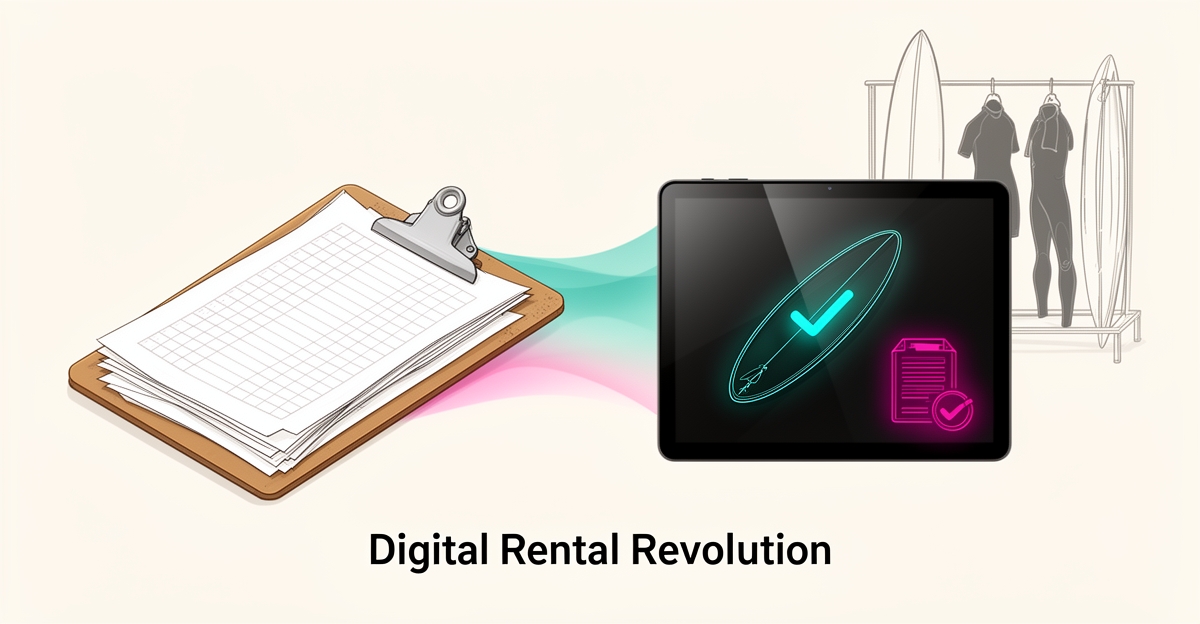
Manual check-ins are the choke point where rentals stall, errors multiply, and revenue leaks. AI replaces paper waivers and end-of-day counts with instant, contactless capture that moves the entire lifecycle from scan to invoice without staff keystrokes.
Computer vision, RFID tags and barcode scanning identify gear the moment it moves. App-based rental stations let customers download an app, scan a board and complete a rental in under 30 seconds with payment and support handled automatically. Real-time inventory updates eliminate manual counts, while digital condition photos create defensible pre- and post-rental records that reduce disputes and streamline check-in/check-out.
Dynamic pricing engines turn weather, booking velocity and local events into pricing actions. When a sunny weekend is forecast, SUP rates can automatically increase by 10-20%, and shops using dynamic pricing typically report double-digit revenue gains in the first season. Guardrails for minimum and maximum prices protect margins while keeping pricing transparent at booking.
Predictive maintenance shifts work from calendar service to usage-based triggers. AI tracks rental hours per unit and flags gear for service before peak demand, and pattern recognition escalates recurring issues such as a loose fin box on a specific board. Operators typically report a 30-45% reduction in mid-rental equipment failures after switching to usage-based AI maintenance. This cuts refunds, bad reviews and Saturday-morning scrambles for replacements.
Contactless workflows also compress admin time. QR code check-in portals typically cut average check-in times roughly in half and reduce staffing load meaningfully. And a large share of a rental operator's workday — often around 40% — is typically consumed by pattern-matching and data-crunching tasks that AI can handle.
The transformation shows up across the lifecycle:
- Scan-to-invoice automation removes manual data entry and creates real-time inventory visibility.
- Usage-based maintenance and condition documentation extend equipment life and reduce downtime.
- Weather and demand-driven pricing lifts revenue without adding fleet size.
- Automated communications and reminders reduce no-shows and free staff for customer experience.
AIQ Labs builds custom systems that integrate with existing rental operations and manage the entire lifecycle, replacing repetitive decisions with data-driven actions. The result is real-time scanning that eliminates busywork, usage-based maintenance that protects revenue, and pricing that responds to surf conditions and local events.
Implementing AI Automation: A Phased Approach for Surf Shops
The most effective way to adopt AI automation is not through a massive, disruptive overhaul, but through a deliberate, phased approach that mirrors how successful shops already operate. By breaking implementation into manageable stages, surf shops can mitigate risk, ensure staff buy-in, and validate ROI before scaling. This methodical strategy aligns with proven deployment models that prioritize stability and incremental value.
The foundation of any successful AI integration is data hygiene. Before deploying any intelligent system, shops must audit their existing data sources—POS records, inventory logs, and booking histories—to ensure accuracy. A thorough data cleanse of product SKUs, pricing tiers, and customer contact information is a critical prerequisite, as AI systems are only as effective as the data they receive.
Once data is clean, the next step is to identify a single high-impact pain point to automate first. Rather than attempting to digitize the entire operation at once, successful shops select one workflow—such as dynamic pricing or predictive maintenance—and run a controlled pilot. This allows operators to test assumptions and measure results in a low-stakes environment. For example, a shop might pilot dynamic pricing on a single category like SUPs, where rates can typically increase by 10-20% on sunny weekends based on weather forecasts.
Integration with existing systems is the third critical phase. The chosen AI solution must connect seamlessly with current POS and scheduling software to avoid creating data silos. This technical integration enables the real-time data flow necessary for automation, such as scanning equipment via RFID or barcodes to instantly update inventory status. Shops should configure specific rules and guardrails during this phase, setting minimum and maximum price floors or maintenance thresholds to ensure the AI operates within defined business parameters.
Staff training represents the final and most crucial phase of implementation. Technology alone cannot drive transformation; employees must understand how to interpret AI recommendations and respond to alerts. Creating Standard Operating Procedures (SOPs) for handling low-stock notifications or maintenance flags ensures that human expertise complements automated insights. This collaborative approach addresses the common challenge of staff adaptation and ensures that technology enhances rather than replaces the human connection vital to hospitality.
For surf shops ready to begin this journey, AIQ Labs offers a structured pathway through our Build in Milestones model. This approach allows shops to implement AI automation one workflow at a time, paying for each phase only as it delivers value. By starting with a targeted pilot and scaling based on proven results, shops can transform their operations without the risk of a monolithic system failure, ensuring that each step forward is grounded in measurable impact.
Still paying for 10+ subscriptions that don’t talk to each other?
We build custom AI systems you own outright. No vendor lock-in. Full control.
Not sure where to start? Ask our AI planner
Frequently Asked Questions
How much time does paper-based rental check-in actually waste?
Can AI really reduce equipment failures during peak weekends?
Will dynamic pricing scare customers away?
How fast can a customer check out with AI automation?
Is AI automation expensive for a small surf shop to start?
Do I need perfect data before I can start?
The Tide Has Turned: Your Move
Paper-based rental workflows aren't just inconvenient — they're a structural ceiling on growth. Every manual check-in, static price sheet, and calendar-based maintenance check represents revenue left on the table and staff hours that could be spent on the floor. Operators who automate these cycles typically reclaim a large share of their admin time, cut mid-rental failures sharply, and capture demand spikes static pricing misses. The technology to scan a board, price it for the swell, flag it for service, and close the invoice without a keystroke isn't theoretical — it's running in rental operations right now. The shift isn't about replacing your expertise; it's about removing the friction that keeps you from using it. AIQ Labs builds custom automation systems that integrate with your existing operation, managing the lifecycle from scan to invoice so you own the workflow and the data. Start with a single high-impact workflow — dynamic pricing on SUPs, predictive maintenance on your core fleet, or contactless check-in — and prove the value before you scale. Ready to see what the first phase looks like for your shop? Start the two-minute Fit Check at aiqlabs.ai/apply and we'll map the bottleneck and the opportunity in a free strategy call.
Make AI your competitive advantage — not just another tool.
Strategy, implementation and ongoing optimization. One partner, end to end.
Not sure where to start? Ask our AI planner