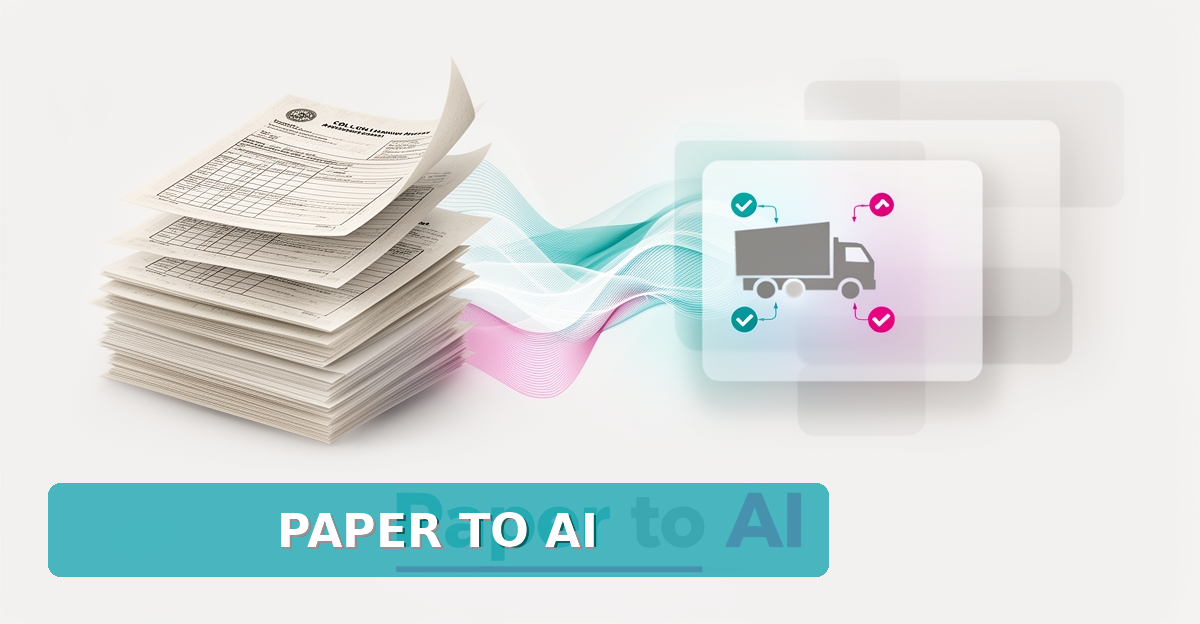
From Paper to AI: How CDL Training Schools Can Digitize License Application Processes
Key Facts
- 94% of companies using field service software reported real productivity gains according to industry research
- 83% of companies said field service software helped their business grow per field service analysis
- Manual bookkeeping eats up 8 to 12 hours a month for the average small business owner per small business operations research
- Decent accounting software cuts bookkeeping time to 2 to 4 hours a month based on industry software studies
- Only 25% of contractors surveyed use AI in any meaningful way per trade sector AI adoption data
- 47% of trade workers say they'd leave a job that doesn't offer a clear way to learn new skills according to workforce retention research
- Techs used to working off a clipboard need real coaching before software earns its keep per field service implementation insights
Hire a team member that works 24/7 — for less than a part-time wage.
AI receptionists, SDRs, dispatchers and 99+ roles. Trained on your business, fully managed.
Not sure where to start? Ask our AI planner
The Paper Bottleneck Costing CDL Schools Time and Compliance
Every CDL training school knows the routine: stacks of paper forms, photocopies of medical cards and residency proofs, and a staff member squinting at handwriting to retype data into a state portal. What looks like a minor administrative chore is actually one of the most expensive operational habits a school maintains.
The time cost alone is substantial. Research on small business operations shows that manual bookkeeping eats up roughly 8 to 12 hours a month for the average owner, and license application intake demands the same kind of repetitive, detail-heavy labor. For a CDL school, those hours are spent on data entry, document matching, and chasing missing signatures — work that pulls instructors and administrators away from student outcomes.
The error cost is harder to see but more damaging. A single mismatch between a name on a training certificate and the name on an ID can trigger an application rejection, delaying a student's licensing timeline and forcing staff to restart the submission. Because paper-based intake relies on memory and manual checklists, results vary depending on who handles each application — a pattern that researchers describe as "improvised" processing that breaks down in safety-critical domains. License applications, with their strict documentation requirements, sit squarely in that category.
Then there's the compliance exposure. Handing sensitive documents like driver's licenses and medical records through ad-hoc, paper-driven workflows creates real risk of data loss, missed expirations, and inconsistent validation. The stakes rise further when general-purpose AI chatbots are used to process application data, since these tools carry a well-documented fabrication risk when not grounded in verified data — a shortcut that can produce false validation results and serious compliance failures.
The productivity case for digitization is already proven in adjacent industries. Field studies found that 94% of companies using modern service software reported real productivity gains, and 83% said it helped their business grow. Yet only about a quarter of trade-sector businesses use AI in any meaningful way — meaning most CDL schools are still absorbing costs their peers have already eliminated.
The bottleneck shows up in three predictable places:
- Manual data entry that consumes 8-12+ hours monthly and introduces transcription errors into every submission batch.
- Incomplete document intake that triggers rejections, delays student licensing, and forces staff to restart applications from scratch.
- Inconsistent validation that leaves compliance outcomes dependent on individual diligence rather than a repeatable process.
The alternative is a systematic workflow where AI ingests documents, validates data against defined rules, and routes applications for human review — the same structured intake approach AIQ Labs builds as fully owned, secure systems that process submissions 24/7 with zero data loss. For schools ready to map the cost of their current paper process, the two-minute Fit Check at aiqlabs.ai/apply leads to a free strategy call where an AI engineer will identify whether there's a clear win — and say so plainly if there isn't.
A Systematic AI Workflow for Document Intake, Validation and Routing
Manual license packets pile up, get misfiled, and trigger costly state rejections. A systematic AI workflow replaces that chaos with a repeatable intake, validation, and routing engine that runs 24/7.
Instead of ad-hoc chatbots or copy-paste checks, the process delegates bounded tasks to AI and keeps humans in review. That structure mirrors the systematic AI coding workflow principle that improvised prompting breaks down in safety-critical domains. EclipseSource notes most organizations still rely on vibe coding, which fails in high-quality or safety-critical work.
Document intake starts the moment an applicant uploads forms. AI captures data from training certificates, medical cards, and residency proofs and writes it into the school’s system. Validation applies rule-based checks for completeness, expiration dates, and field matching, then flags discrepancies for human review. Routing automatically moves clean packets to the correct state portal or internal reviewer.
This design delivers the 24/7 operational capability seen in AI lead capture tools that answer calls after hours and turn them into booked appointments. For CDL schools, it means every submission is captured, timestamped, and processed consistently with zero data loss.
A repeatable workflow also creates an audit trail and reduces error-prone manual entry. Industry research shows manual bookkeeping eats up roughly 8 to 12 hours a month for the average small business owner, while decent software cuts that to 2 to 4 hours a month. The same time compression applies to license processing.
Adoption matters as much as architecture. Field service analysis found 94% of companies using field service software reported real productivity gains, but also warns techs used to working off a clipboard need real coaching before software earns its keep. Staff training ensures reviewers trust AI outputs and know how to handle exceptions.
A practical implementation follows a clear loop:
- Decide which tasks to delegate and scope them tightly, such as extract name/DOB/license number and compare to form entry
- Define tasks clearly through task engineering with explicit rules for Class A vs Class B requirements
- Invoke the agent with reusable context and review outputs before final submission
- Follow up with targeted refinements as error patterns emerge
AIQ Labs builds fully owned, secure AI systems that process applications 24/7 with zero data loss or compliance risks, replacing manual, error-prone submissions with consistent processing and audit trails. The result is consistent processing that reduces errors, enables audit trails, and frees staff for high-value student support.
How to Implement AI-Powered License Processing Without Disruption
Paper-based CDL license submissions create delays, rework, and compliance exposure. Schools that move to a systematic AI workflow replace ad-hoc checks with repeatable intake, validation, and routing that runs 24/7.
Start by scoping the work. Identify the repetitive, error-prone steps in the application process and define a bounded task for AI. That means extracting name, DOB, and license number from an ID, checking document completeness, and verifying expiration dates. A structured approach to AI work shows that improvised prompting breaks down in safety-critical domains, while a clear, repeatable process integrates into real operations.
Task engineering makes the difference. Instead of “check the application,” write precise instructions such as: extract fields from the uploaded medical card, compare to the online form, and flag discrepancies for human review. Reuse context for Class A and Class B requirements so every application is judged against the same ruleset. This mirrors how AI can be integrated with existing database structures for intelligent retrieval and semantic search.
Human-in-the-loop review protects compliance. The AI presents a clear output — ready for final review or flagged for follow-up — and a staff member makes the final decision. Iterative refinement follows: monitor false flags and misses, then tighten task definitions and rules. Staff coaching is essential; techs used to working off a clipboard need real coaching before the software earns its keep.
Integration and security must be designed in. The system connects to the school’s SIS and state submission portals, maintains audit trails, and handles sensitive personal data under privacy requirements. Exception handling is explicit: missing documents, mismatched names, and expired medical cards route to a human queue with context, not a dead end.
Schools see why this matters. 94% of companies using field service software reported real productivity gains, and 83% said it helped their business grow. Manual bookkeeping alone eats 8 to 12 hours a month for the average small business, while decent software cuts that to 2 to 4 hours — a proxy for the time freed when intake is automated.
A practical rollout looks like this:
- Map the current paper flow and define AI-bound tasks for intake, validation, and routing
- Build context libraries for Class A/B document requirements and accepted examiners for consistent reuse
- Deploy human-in-the-loop review with clear escalation paths for exceptions
- Train staff on the new workflow and new role as reviewer and coach, not data entry clerk
- Integrate with SIS, enforce data security and compliance, and iterate based on performance data
With fully owned, secure AI systems, schools can replace manual, error-prone submissions with AI-powered document intake and validation that processes applications 24/7 with zero data loss. AIQ Labs builds these systems as custom, production-ready workflows that businesses own and control, not rented subscriptions.
Why Owned AI Systems Beat Subscriptions for Regulated Education
For CDL training schools, the shift from paper-based license applications to AI automation isn't just about efficiency—it's a compliance imperative. Manual processes, prone to human error and inconsistent validation, create unacceptable risks in a regulated environment where a single missing document or incorrect data point can delay a student's licensure for weeks. Research confirms that ad-hoc approaches—what experts call "vibe coding"—break down in high-stakes domains like education and transportation, where inconsistent results and unpredictable outcomes directly violate safety and accountability standards. EclipseSource explicitly warns that improvised prompting and discovery-by-accident methods fail in safety-critical contexts, leaving schools exposed to compliance failures and reputational harm.
Owned AI systems eliminate these risks by replacing guesswork with a structured, repeatable workflow. Unlike general-purpose chatbots that frequently fabricate citations or hallucinate data when processing sensitive information—posing extreme dangers for license validation—production-grade multi-agent architectures operate within defined guardrails. These systems ingest applications 24/7, extract data from IDs and medical certificates using specialized document processing agents, validate against state-specific rules (e.g., Class A vs. Class B requirements, examiner accreditation), and route only verified submissions for final human review. Crucially, because the system is fully owned and operates on private infrastructure, there is zero data loss, no third-party exposure, and complete audit trail integrity—addressing the core concern that techs used to working off a clipboard need real coaching before the software earns its keep, but only when the tool itself is trustworthy.
This approach transforms compliance from a bottleneck into a competitive advantage. Schools using field service software report 94% real productivity gains and 83% business growth—metrics directly transferable to AI-driven application processing. By owning their AI stack, CDL training providers avoid subscription dependencies, vendor lock-in, and the hidden costs of platform changes, while gaining full control over updates, data governance, and integration with existing SIS or state portals. The result isn't just faster processing—it's a defensible, auditable system where every application follows the same validated path, every exception is tracked, and every stakeholder—from student to regulator—can trust the outcome. For regulated education, ownership isn't optional; it's the foundation of sustainable, scalable AI adoption.
Still paying for 10+ subscriptions that don’t talk to each other?
We build custom AI systems you own outright. No vendor lock-in. Full control.
Not sure where to start? Ask our AI planner
Frequently Asked Questions
How much time does manual license application processing actually take for CDL schools?
What are the biggest risks of using general-purpose AI chatbots for CDL license applications?
Can AI really process license applications 24/7 without human staff?
What does a human-in-the-loop review look like in an AI-powered license application system?
Why do CDL schools need to own their AI systems instead of using subscriptions for license processing?
What kind of training do staff need when switching from paper to AI-driven license processing?
Turn Paper Bottlenecks Into a Competitive Advantage
Paper-based license intake is quietly draining CDL schools through manual entry, incomplete packets, and inconsistent validation that delays students and exposes compliance risk. A systematic AI workflow replaces ad-hoc checking with repeatable intake, validation and routing that runs 24/7, captures every submission with zero data loss, and creates an audit trail regulators trust. The shift mirrors what field service leaders already see: 94% of companies using modern service software reported real productivity gains, with the same time compression applying to license processing when repetitive tasks are delegated and humans stay in review for exceptions. Start by mapping your current paper flow, scoping bounded AI tasks for extraction and rule checks, and training staff as reviewers rather than data clerks. AIQ Labs builds fully owned, secure AI systems that process applications 24/7 with zero data loss or compliance risks, so schools can own the workflow instead of renting subscriptions. See if there’s a clear win for your school with the two-minute Fit Check at aiqlabs.ai/apply, which leads to a free 30-minute strategy call with an AI engineer who will map your biggest bottleneck and tell you plainly if it’s worth pursuing.
Make AI your competitive advantage — not just another tool.
Strategy, implementation and ongoing optimization. One partner, end to end.
Not sure where to start? Ask our AI planner