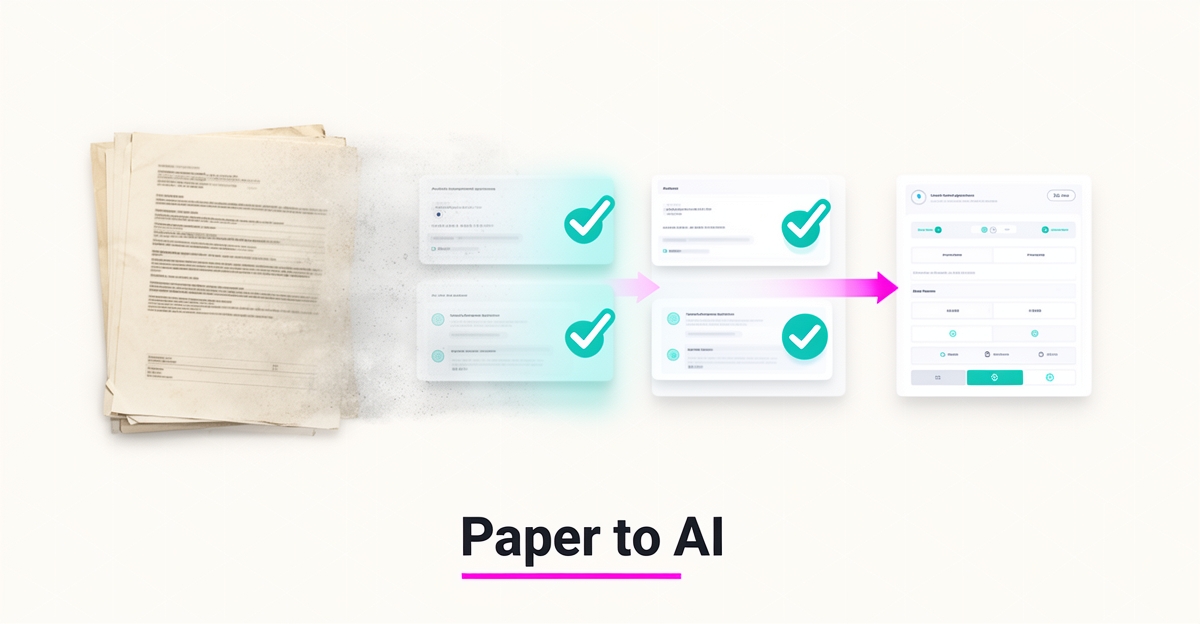
From Paper to AI: How Generator Rental Companies Can Digitize Lease Agreements
Key Facts
- AI abstraction produces a first-draft abstract in minutes compared to 2-4 hours for manual abstraction according to comparative analysis
- An 85-page rent roll document that would take 10 hours to process manually can be completed by an AI agent in less than 5 minutes achieving over a 99% reduction in processing time
- Automation can save 20-40% of time in rental operations by eliminating repetitive tasks and speeding workflows according to industry analysis
- The cost per lease for manual processing can exceed $100, primarily due to extensive human effort required to analyze complex documents line by line based on industry analysis
- Finance and real estate teams spend a majority of their time collecting and administering data, with only about 25% of their time dedicated to high-value analysis per industry analysis
- AI abstraction produces a first-draft abstract in minutes; a human abstractor takes roughly two to four hours per lease as noted in comparative analysis
- 13 languages are supported for rental agreement generation through AI tools per Makeform platform data
Hire a team member that works 24/7 — for less than a part-time wage.
AI receptionists, SDRs, dispatchers and 99+ roles. Trained on your business, fully managed.
Not sure where to start? Ask our AI planner
The Hidden Cost of Paper-Based Lease Management
Paper-based lease management quietly drains profit from every generator rental deal. Teams chase signatures, retype fields, and hunt for the latest version while customers wait for a quote they can sign today.
Manual lease abstraction can consume between 2 to 8 hours per lease, averaging around 3 to 4 hours according to industry analysis. The cost per lease for manual processing can exceed $100, primarily due to extensive human effort required to analyze complex documents line by line. That labor is not just slow, it is expensive and error-prone.
Finance and real estate teams spend a majority of their time collecting and administering data, with only about 25% of their time dedicated to high-value analysis. The result is a team trapped in data entry instead of pricing strategy, risk review, or customer growth. Automation can save 20-40% of time in rental operations by eliminating repetitive tasks and speeding up workflows.
The hidden cost shows up in three places:
- Processing drag: AI abstraction produces a first-draft abstract in minutes compared to 2-4 hours for manual abstraction
- Error risk: Manual re-keying of equipment specs, rates, and dates creates compliance exposure and billing disputes
- Opportunity cost: Staff spend hours on administration instead of analysis and customer service
Modern customers expect digital-first experiences. The modern customer is discerning and empowered, and expects quick quotes, digital contracts, real-time updates, order status via smartphone, reports and history. Rental companies without self-service portals risk losing competitive ground as buyers move to vendors who can deliver instant, signed agreements.
AI contract automation changes the equation by generating legally sound, customizable rental contracts with real-time field updates, clause validation, and digital signatures. AIQ Labs builds custom AI systems that generate these agreements and integrate with existing rental workflows, so lease data flows directly into accounting and operations without re-entry.
The shift is not theoretical. An 85-page rent roll document that would take 10 hours to process manually can be completed by an AI agent in less than 5 minutes, achieving over a 99% reduction in processing time. When applied to generator leases, that speed translates to faster approvals, fewer errors, and teams freed to focus on high-value analysis rather than paperwork.
How AI Transforms Lease Generation and Abstraction
Generator rental companies are moving past fill-in-the-blank templates toward AI agents that read context, not just fields. The shift changes lease generation from manual drafting to intelligent first-pass creation with human oversight on risk.
Traditional automation saves 20-40% of time in rental operations by eliminating repetitive tasks and speeding workflows, according to industry analysis of rental automation. AI agents go further by understanding lease intent, extracting terms from unstructured documents, and drafting new agreements from natural language instructions.
Lease abstraction illustrates the speed gap. Manual lease abstraction can consume between 2 to 8 hours per lease, averaging around 3 to 4 hours, with cost per lease often exceeding $100. Real estate efficiency research shows an 85-page rent roll document that would take 10 hours to process manually can be completed by an AI agent in less than 5 minutes, achieving over a 99% reduction in processing time. Comparative analysis of abstraction methods notes AI abstraction produces a first-draft abstract in minutes compared to 2-4 hours for manual abstraction.
The practical capability set for generator rental leases includes:
- Clause validation against state and local landlord-tenant rules with severability checks
- Multi-language support for agreements, with platforms offering 13 languages for rental agreement generation
- Conditional logic that adapts terms for equipment type, rental duration, damage waivers, and delivery requirements
- Real-time field updates that propagate across quotes, contracts, and digital signatures
AI is faster, cheaper at volume, and more consistent on well-structured fields like rent, dates, and square footage, while ambiguous clauses still benefit from human judgment. The accurate approach in 2026 is not one or the other, it is AI for the first pass with a person reviewing the terms that carry money or risk.
This hybrid model mirrors how AIQ Labs builds custom AI systems for document-heavy workflows, where AI handles first-pass drafting and abstraction and human experts review money-carrying terms. The result is legally sound, customizable rental contracts with reduced errors and improved compliance, without replacing the final legal check that rental operators require.
Implementation Roadmap: From Paper to Digital Workflow
Moving from paper-based lease agreements to a digital workflow requires a structured, step-by-step approach. Generator rental companies can begin by auditing their current lease templates and compliance requirements, ensuring that every clause—from fuel policies to runtime limits—meets local and state regulations. This foundational review helps identify gaps and standardize language before automation begins, reducing rework later in the process.
Next, deploying an AI agreement generator allows businesses to automate the creation of customized rental contracts tailored to generator rentals. Platforms like Makeform and Lumin offer AI-powered tools that generate legally sound agreements with customizable clauses for maintenance terms, usage caps, and liability protections. These systems can pull in real-time field data—such as equipment availability or customer history—to pre-populate fields, significantly cutting down manual entry time. According to industry analysis, AI-driven lease abstraction can reduce processing time from 2-8 hours per lease to mere minutes, delivering efficiency gains that scale with volume.
To close the loop, integrating digital signatures and connecting the workflow to ERP or accounting systems ensures seamless execution and record-keeping. Tools like DocHub support secure e-signatures and cloud storage, while native integrations with platforms like QuickBooks or Xero automate invoicing and payment tracking. Finally, establishing a human-in-the-loop review for high-value contracts adds a critical layer of oversight—especially for complex or high-risk agreements—balancing speed with accuracy. This hybrid approach, where AI handles initial drafting and humans validate key terms, reflects best practices in AI-augmented legal workflows and supports long-term compliance and trust. For companies ready to begin this transformation, AIQ Labs offers end-to-end support through custom AI development and integration services designed to own, deploy, and optimize intelligent document systems from start to finish. To explore how this could work for your business, start with a free strategy call to identify your highest-impact automation opportunities.
Compliance, Security, and ROI Considerations
Compliance, security, and return on investment form the critical foundation for any digital transformation in lease management. Generator rental companies adopting AI-powered lease agreement systems must ensure these solutions meet legal binding requirements across jurisdictions while maintaining robust data protection standards. Compliance frameworks such as SOC 2 Type 2 and GDPR are essential benchmarks, particularly when handling sensitive customer and financial data throughout the contract lifecycle. Advanced encryption protocols like SHA-256 safeguard information both in transit and at rest, reducing vulnerability to breaches and unauthorized access. Legal enforceability also depends on proper clause inclusion—such as severability provisions that preserve the validity of the agreement even if individual terms are challenged in court. These elements collectively establish trust and mitigate risk in automated workflows.
From an ROI perspective, digitizing lease agreements delivers measurable operational and financial benefits. Automation reduces processing time by up to 80%, transforming what once took hours into near-instantaneous document generation and execution. This efficiency gain directly lowers the cost per lead by approximately 70%, as manual labor-intensive steps like data entry, clause validation, and signature tracking are minimized or eliminated. Furthermore, timely digital execution helps prevent late payment fees by ensuring contracts are activated immediately upon signing, improving cash flow predictability. These savings accumulate quickly, especially for high-volume rental operations managing dozens or hundreds of agreements monthly.
However, full automation is not appropriate for every scenario. Human oversight remains crucial for complex ground leases, documents with extensive amendment histories, or any agreement headed toward litigation. Heavily negotiated clauses, particularly those involving liability, indemnification, or payment terms, benefit from expert review to ensure alignment with business objectives and jurisdictional nuances. AIQ Labs supports this hybrid approach by building custom AI systems that handle routine contract generation and validation while flagging high-risk documents for human legal review—combining speed with precision where it matters most.
Still paying for 10+ subscriptions that don’t talk to each other?
We build custom AI systems you own outright. No vendor lock-in. Full control.
Not sure where to start? Ask our AI planner
Frequently Asked Questions
How much time can AI really save on lease abstraction for generator rentals?
Is AI-generated lease agreement legally binding for generator rental companies?
What are the main risks of relying solely on AI for lease agreements without human review?
How does digitizing lease agreements improve customer experience in generator rentals?
What cost savings can generator rental companies expect from automating lease management?
What does a hybrid AI-human workflow look like for lease abstraction in practice?
Your Next Lease Could Take Minutes, Not Hours
The math is hard to ignore. Manual lease abstraction consumes 2-8 hours per lease at a cost exceeding $100 each, while AI agents turn a 10-hour, 85-page document into a five-minute task — a 99% reduction in processing time. For generator rental companies, that gap is the difference between quoting a customer while they're still interested and losing them to a competitor who already sent a signed agreement. Throughout this article, we've covered the hidden costs of paper-based workflows, how AI handles first-pass drafting and clause validation, a step-by-step implementation roadmap, and the compliance, security, and ROI considerations that make the hybrid model — AI for speed, humans for money-carrying terms — the smart path forward. The next step doesn't have to be a massive overhaul. Start by auditing your current lease templates, then identify one workflow where automation would deliver the fastest win. If you want a clear-eyed assessment of where that opportunity lives in your business, AIQ Labs offers a free strategy call to map your highest-impact automation opportunities — and if there isn't a clear win, we'll tell you that too. Take the two-minute Fit Check at aiqlabs.ai/apply and see what your leases could look like when paperwork stops slowing you down.
Make AI your competitive advantage — not just another tool.
Strategy, implementation and ongoing optimization. One partner, end to end.
Not sure where to start? Ask our AI planner