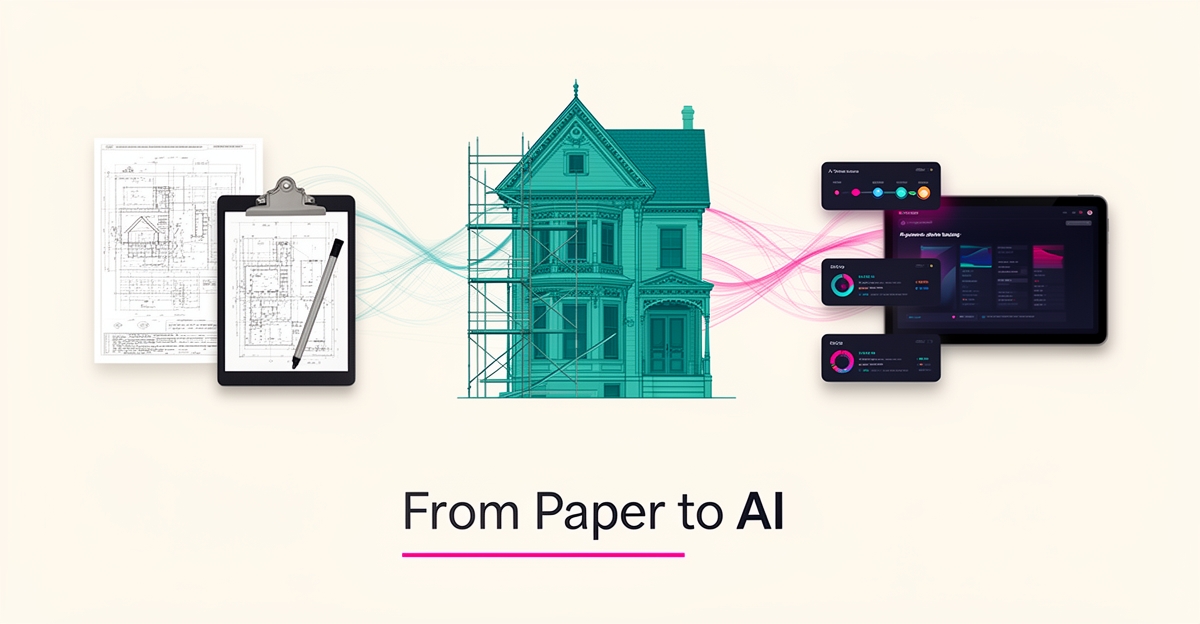
From Paper to AI: How Historic Home Restoration Contractors Can Optimize Job Tracking
Key Facts
- Manual job tracking consumes crew and office hours in duplicate data entry, scheduling fixes, and status chasing—time that AI automation can largely eliminate
- AI-powered systems automate repetitive tasks like data entry and scheduling, freeing staff for high-value craftsmanship
- Real-time timeline updates keep every project visible without chasing updates across phone calls and paper logs
- Automated material requisition prevents the missed requests that halt restoration phases and leave crews idle
- Fragmented tools are a leading cause of failed AI projects—integrated systems built on a single source of truth reduce that risk substantially
- AIQ Labs has deployed 200+ multi-agent systems and runs 4 live SaaS products daily, so these patterns are proven in the field
Hire a team member that works 24/7 — for less than a part-time wage.
AI receptionists, SDRs, dispatchers and 99+ roles. Trained on your business, fully managed.
Not sure where to start? Ask our AI planner
The Hidden Cost of Paper-Based Job Tracking in Historic Restoration
In the world of historic home restoration, where the past meets the present, reliance on paper-based job tracking is an increasingly costly anachronism. Manual tracking methods are riddled with inefficiencies that inflate labor costs and reduce project throughput. As contractors juggle multiple projects, the limitations of paper-based systems become glaringly apparent: time-consuming data entry, scheduling errors, missed material requests, and timeline delays.
One of the most significant pain points of manual job tracking is the sheer amount of time consumed by data entry. Contractors and their teams often spend hours each week transferring information from paper records into digital formats, a process prone to human error. Every duplicated entry is time not spent on billable restoration work—and every transcription mistake risks a wrong order, a missed deadline, or a callback to the site.
Scheduling errors are another common issue with paper-based systems. Miscommunications and lost documents lead to costly delays and rework. A missed material request can halt progress on a critical phase of restoration, leaving skilled trades idle while you wait on period-accurate materials with long lead times. These inefficiencies inflate labor costs and reduce the overall throughput of projects, limiting the number of restorations a contractor can handle simultaneously.
The hidden costs of paper-based tracking extend beyond direct labor expenses. They also include the opportunity costs of lost business and damaged reputations. Homeowners increasingly expect real-time updates and seamless communication on long, complex projects. Manual tracking systems struggle to meet those expectations, potentially leading to dissatisfied clients and lost referrals.
Moreover, the fragmentation of data across multiple paper records and digital tools exacerbates these challenges. When job information lives in three places—site logs, spreadsheets, and someone's memory—nothing reconciles. This is a common reason AI and software projects stall in field-service businesses: disconnected tools that never quite agree with each other.
To illustrate the specific pain points, consider the following challenges faced by historic home restoration contractors:
- Time-consuming data entry and error-prone manual processes
- Scheduling errors leading to costly delays and rework
- Missed material requests causing project halts and idle labor
- Timeline delays reducing overall project throughput
- Fragmented data across multiple systems and tools
These inefficiencies point to the need for a streamlined, automated approach to job tracking. By leveraging AI, contractors can automate repetitive tasks, cut manual admin time, and improve project completion times. AIQ Labs builds these systems through AI Workflow Builds—a fixed-price rebuild of the one workflow that costs you the most, delivered in phases so nothing breaks mid-project. This transformation improves operational efficiency and customer satisfaction through real-time updates and alerts.
In short, the hidden costs of paper-based job tracking in historic home restoration are substantial, impacting both labor costs and project throughput. As the industry evolves, AI-driven solutions become less of an option and more of a necessity for contractors aiming to stay competitive and meet growing client expectations.
How AI Automates Job Tracking, Timelines, and Material Requests Across Projects
Manual spreadsheets and phone calls create delays that ripple across historic restoration jobs. AI-powered systems replace those bottlenecks with continuous data synchronization, real-time timeline updates, and automated material requisition triggers.
AI eliminates the manual handoffs between site crews, suppliers, and office staff. Data entry, scheduling adjustments, and status reporting happen automatically as work progresses, freeing teams for high-value craftsmanship. Real-time timeline updates keep every project visible without chasing updates.
The gains come from removing repetitive tracking tasks and preventing costly rework caused by late material deliveries. Instead of paying skilled staff to copy numbers between systems, the system does it—and flags what needs your attention.
Intelligent material requisition is triggered by progress signals, not memory. When a milestone is logged on site, the system checks inventory, lead times for period-accurate materials, and supplier availability, then creates and routes requests automatically. Milestone alerts notify owners, architects, and crews simultaneously, reducing miscommunication.
Automation also reduces fragmentation risk. Historic restoration relies on specialized trades, custom materials, and strict preservation standards. AI workflows maintain a single source of truth across tools so changes propagate instantly. For contractors ready to connect everything—job tracking, scheduling, accounting, client communication—AI Operating Systems build one connected operating layer in phases, owned outright by your business.
The automation layer typically covers:
- Automatic job tracking sync from field updates to office dashboards
- Dynamic timeline recalculation based on completed tasks and weather delays
- Intelligent material requests triggered by milestone completion
- Proactive milestone alerts to clients, crews, and suppliers
With AI workflow and task automation, contractors move from reactive updates to predictive control. The system learns historical durations for restoration-specific tasks and flags risks before they impact schedule or budget.
Customer experience improves as real-time updates replace status calls. Owners see progress photos, timeline shifts, and material confirmations without staff intervention. This visibility builds trust on long, complex historic projects.
Implementation starts with mapping current workflows, then deploying automation that respects preservation requirements and existing software. When built as owned, integrated systems, AI becomes a durable operational asset rather than another subscription tool.
Implementing AI Job Tracking Without Disrupting Your Existing Workflow
Historic restoration runs on paper logs, phone calls, and memory. That friction creates delays in job tracking, material requests, and milestone alerts across multiple projects.
Start by mapping what actually happens today. Document each handoff from estimate to closeout, note where data is entered twice, and identify the repetitive updates that consume crew and office time. This assessment reveals the high-impact automation points without forcing change for its own sake.
Choose a solution built for integration and ownership, not another subscription silo. Historic contractors need systems that connect to existing scheduling, accounting, and field tools while keeping data inside their business. Custom AI built for workflow and task automation lets teams automate job tracking, timeline updates, material requests, and milestone alerts without replacing the tools crews already trust.
Integration comes first, disruption second. A phased connection to current project management and field systems preserves daily operations while creating a single source of truth. AIQ Labs builds in milestones—each phase is fixed-price and delivers working automation before the next begins—so you always know what you're paying for and what you're getting. For routine admin like status calls, scheduling follow-ups, and supplier chasing, AI Employees can handle the repetitive coordination work at a fraction of the cost of another hire.
Training should be role-specific and hands-on. Show office staff how automated alerts reduce inbound status calls, and show foremen how mobile updates flow back to the job tracker without extra paperwork. Short, practical sessions build confidence faster than broad overviews.
Monitor results with clear before-and-after metrics. Track time spent on manual data entry, on-time milestone completion, and customer update requests. Adjust thresholds and handoffs based on real field feedback, not assumptions.
Homeowner expectations for real-time visibility keep rising alongside connected home adoption. Automated progress photos, timeline updates, and milestone alerts meet those expectations without adding headcount to chase status calls.
A practical rollout plan keeps momentum without overload:
- Assess current workflows and pinpoint repetitive tracking tasks
- Select an AI solution with deep two-way integrations and client ownership
- Integrate with existing CRM, accounting, and project tools first
- Train teams by role with live job examples
- Monitor completion times, error rates, and customer satisfaction weekly
When AI augments rather than replaces existing processes, historic contractors gain faster timelines, fewer errors, and clearer client communication while preserving the craftsmanship standards the work demands.
Still paying for 10+ subscriptions that don’t talk to each other?
We build custom AI systems you own outright. No vendor lock-in. Full control.
Not sure where to start? Ask our AI planner
Frequently Asked Questions
How much can AI actually save my restoration business compared to paper-based job tracking?
Will switching to AI job tracking force my crews to abandon the tools and processes they already use?
How does AI handle material requests for hard-to-find, period-accurate restoration materials?
Isn't AI risky? I've heard a lot of companies fail with AI projects.
Do my clients really care whether I use AI for project updates?
What's the first step to implementing AI job tracking in my restoration business?
From Paper Trails to Predictive Power: Your Next Step in Restoration Excellence
The hidden costs of paper-based job tracking—time-consuming data entry, scheduling errors, missed material requests, and fragmented workflows—are no longer just inconveniences; they're competitive liabilities. AI-powered automation gives historic home restoration contractors a clear path to cut admin overhead and tighten project timelines, all while preserving the craftsmanship and standards that define their work. By integrating AI with existing tools, contractors gain real-time visibility, proactive alerts, and a single source of truth across projects—freeing teams to focus on high-value restoration rather than administrative overhead. The journey begins not with a full overhaul, but with a clear assessment of where AI can deliver the fastest impact. Take the 2-minute Fit Check, then book a free 30-minute strategy call to map your biggest bottlenecks and identify high-ROI opportunities—no sales pitch, just a working session with an AI engineer.
Make AI your competitive advantage — not just another tool.
Strategy, implementation and ongoing optimization. One partner, end to end.
Not sure where to start? Ask our AI planner