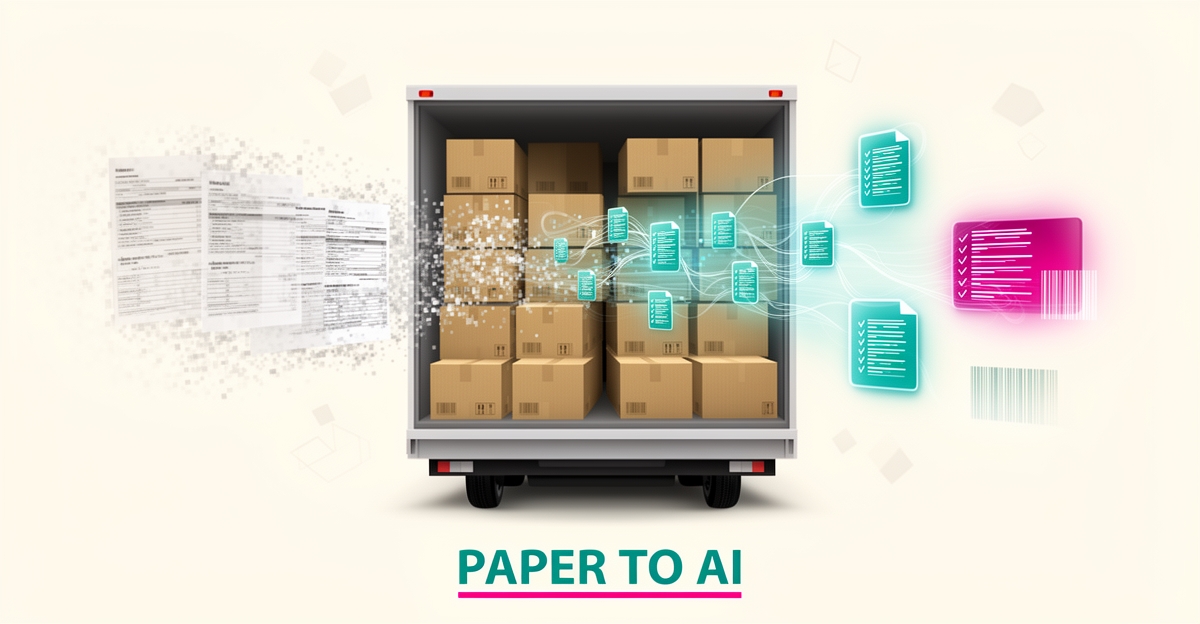
From Paper to AI: How Moving Firms Can Automate Loading Documentation
Key Facts
- Manual handling of packing lists, manifests, and delivery notes is one of the most common bottlenecks in moving operations, delaying dispatch and driving rework
- AI-powered data extraction can capture item quantities, addresses, and special handling instructions directly from scanned or photographed forms, typically reducing repetitive manual entry
- Intelligent verification can cross-check packing lists against manifests and flag discrepancies before trucks are loaded, reducing disputes over damaged or missing items
- As of late 2026, modern OCR enhanced with AI context understanding handles handwritten notes and varied document formats far better than traditional scanning alone
- AIQ Labs builds custom AI systems that integrate with existing dispatch, CRM, and accounting tools to eliminate manual bottlenecks without workflow disruption
- Phased AI implementation reduces integration complexity and builds team trust by showing time saved, not technology
- Moving companies that automate documentation now gain an operational advantage over competitors still filing paper
Hire a team member that works 24/7 — for less than a part-time wage.
AI receptionists, SDRs, dispatchers and 99+ roles. Trained on your business, fully managed.
Not sure where to start? Ask our AI planner
The Hidden Cost of Paper-Based Documentation
Manual handling of packing lists, manifests, and delivery notes creates significant operational drag on moving company operations. Paper-based documentation slows dispatch as crews wait for forms to be filled, signed, and filed, directly impacting daily throughput. This delay compounds when errors occur—illegible handwriting, missing fields, or transposed numbers force rework that can add hours to a single job's completion time.
These manual processes introduce compliance risks that paper trails struggle to contain. Inaccurate manifests can lead to disputes over damaged or missing items, while inconsistent delivery notes complicate insurance claims and regulatory audits. Without standardized digital records, moving companies lack the auditability needed to resolve customer concerns quickly or demonstrate due diligence during inspections.
Scaling becomes nearly impossible when documentation relies on physical paperwork. Each additional move requires proportional increases in administrative time for filing, retrieving, and reconciling paper records. As volume grows, bottlenecks intensify at the office where dispatchers manually cross-check lists against inventory, creating a ceiling on how many jobs a team can handle without hiring more staff. AI-powered document processing eliminates these constraints by automating data capture, validation, and routing, turning documentation from a bottleneck into a streamlined advantage. AIQ Labs helps moving companies replace paper workflows with owned AI systems that integrate directly with dispatch and inventory tools, ensuring every manifest is accurate, compliant, and instantly accessible—without adding headcount. For companies that want to fix the single costliest workflow first, a targeted AI Workflow Build is often the fastest entry point.
How AI Transforms Document Processing in Moving Operations
The manual handling of packing lists, manifests, and delivery notes creates a persistent bottleneck in moving operations, leading to data entry errors and delayed dispatches. AI-powered document processing eliminates this friction by automating data extraction from scanned documents, verifying packing lists against manifests, and synchronizing information in real time with dispatch systems. This shift transforms a traditionally error-prone workflow into a streamlined, accurate process that accelerates operational readiness.
Automated data extraction captures critical details—such as item quantities, destination addresses, and special handling instructions—directly from scanned or photographed forms with high accuracy, reducing the need for repetitive manual entry. Intelligent verification then cross-references packing lists against digital manifests, flagging discrepancies before they cause delays at pickup or delivery points. Real-time synchronization ensures dispatch teams have immediate access to verified load details, enabling faster crew assignments and vehicle loading.
Key capabilities driving this transformation include automated optical character recognition (OCR) enhanced by AI context understanding, which as of late 2026 interprets varied document formats and handwritten notes far better than traditional scanning alone. Intelligent validation engines apply business rules to detect inconsistencies, such as mismatched item counts or missing client signatures, triggering alerts for human review only when necessary. Seamless integration with dispatch platforms via APIs ensures updated load information flows directly into scheduling tools, eliminating lag between documentation completion and team deployment. These capabilities collectively reduce processing time per shipment while minimizing costly errors that lead to rework or customer disputes.
For moving companies seeking to implement this level of automation, AIQ Labs builds custom AI document processing systems that integrate with existing logistics tools and workflows, ensuring ownership and control over the technology. By automating the creation, scanning, and verification of loading documentation, companies not only accelerate dispatch times but also establish a foundation for broader operational AI adoption. The result is a more responsive, accurate moving service where documentation no longer hinders throughput but instead enables it. Starting with a targeted workflow fix like document automation allows businesses to validate AI impact quickly before scaling to other operational areas.
AI Tools and Technologies for Moving Company Documentation
Moving companies today face mounting pressure to modernize documentation workflows that still rely on paper-based packing lists, manifests, and delivery notes. Manual handling of these documents not only slows dispatch but also introduces costly errors that impact customer satisfaction and operational efficiency. Fortunately, AI-powered document automation tools now offer practical pathways to digitize and streamline these critical processes.
The market for AI document solutions ranges from specialized processors to comprehensive platforms that bundle multiple capabilities. All-in-one field service platforms typically combine AI estimating, document generation, and workflow automation in a single subscription, giving moving companies a unified system that reduces tool sprawl. These platforms often include features like AI-powered quote generation from job descriptions and automated follow-up sequences that minimize manual data entry. Pricing varies widely by vendor, so verify current plans before committing.
For companies seeking targeted document processing, specialized AI tools excel at specific tasks such as scanning packing lists, extracting data from manifests, or validating delivery notes against inventory systems. These tools typically use optical character recognition (OCR) enhanced with machine learning to interpret handwritten notes, varied formats, and damaged documents—common challenges in moving documentation. Integration remains a key consideration, as most moving companies need solutions that connect with existing CRM, dispatch, and accounting software rather than requiring full system replacements.
Successful implementation hinges on choosing tools that offer robust APIs or native integrations with platforms already in use, such as QuickBooks for accounting or Salesforce for customer management. AIQ Labs emphasizes this integration-first approach, building custom AI document processing systems that work within a company's current technology stack to eliminate manual bottlenecks without disrupting established workflows. By focusing on seamless connectivity, moving companies can automate documentation while preserving investments in their existing tools.
Implementing AI Document Automation: A Practical Roadmap
Paper piles slow down dispatch and create costly errors on moving day. Moving companies that automate packing lists, manifests, and delivery notes cut delays and improve accuracy across the entire customer lifecycle.
Start by mapping the current documentation flow end to end. Track where paper forms are created, handed off between dispatcher and crew, and re-entered into systems. Manual handling of packing lists, manifests, and delivery notes leads to errors and delays that compound under peak season volume. Documenting the handoffs reveals the highest-friction steps and the data that must be captured for compliance.
Identify high-impact automation targets before buying tools. Prioritize documents that touch every job, such as inventory lists and delivery confirmations, over niche forms. A workflow that costs the most in dispatcher hours and error correction is usually the right first candidate for an AI Workflow Build.
Choose between point solutions and custom-built systems based on integration needs. All-in-one platforms offer a comprehensive suite of AI-powered tools, including estimating, scheduling, invoicing, and customer communication, streamlining operations and reducing the need for multiple separate software solutions. Custom builds make sense when existing logistics tools must be kept and workflows are unique to your operation.
A practical phased roadmap minimizes disruption:
- Audit workflows and data sources with dispatchers and crew leads to define required fields and approvals
- Pilot AI capture and verification on one document type, such as delivery notes, with human-in-the-loop review
- Integrate the pilot with dispatch and accounting systems to eliminate re-keying and create a single source of truth
- Train teams on exception handling and data security protocols before expanding to manifests and packing lists
Manage change by showing time saved, not technology. Crews adopt faster when scanning replaces paperwork on the truck and dispatchers see real-time status without phone checks. Phased implementation reduces integration complexity and protects data privacy while building trust.
Address integration complexity and data security early. Ensuring the security and privacy of customer data is crucial when documents contain addresses and inventory details. AIQ Labs builds custom AI systems that integrate with existing logistics tools and workflows, allowing phased rollouts that keep operations running. Governance, role-based access, and audit trails should be defined before go-live.
Measure adoption and accuracy weekly, then scale. Track error rates, document completion time, and dispatch speed. The moving companies who adopt these tools now will have a significant advantage over those who wait.
Custom AI Systems vs. Off-the-Shelf Tools for Moving Operations
Moving companies face a critical decision when adopting AI for documentation: rely on subscription-based tools or invest in a custom-built system they own. Subscription platforms offer all-in-one solutions with monthly pricing, providing immediate access to AI estimating, scheduling, and communication features. These tools reduce upfront complexity and allow teams to automate packing lists and manifests quickly, improving accuracy and speeding up dispatch.
However, off-the-shelf tools often require adapting workflows to fit the software, creating friction in complex operations. Moving companies with multiple locations, specialized compliance needs, or legacy dispatch systems may find generic platforms unable to integrate seamlessly or handle unique document variations. Custom AI systems, by contrast, are engineered to match existing processes exactly—eliminating manual workarounds and ensuring data flows directly into current CRM or accounting tools without disruption.
AIQ Labs builds custom document processing systems that moving companies own outright, removing ongoing subscription dependencies while delivering a perfect fit with established workflows. This ownership model provides long-term cost predictability and full control over customization, particularly valuable for businesses scaling across regions or managing regulated interstate moves. For operations where flexibility and precision outweigh the convenience of pre-built tools, a tailored AI solution becomes a strategic asset rather than a recurring expense. To explore whether a custom system aligns with your moving company's documentation challenges, start the fit check at https://aiqlabs.ai/apply to schedule a free 30-minute strategy call with an AI engineer.
Still paying for 10+ subscriptions that don’t talk to each other?
We build custom AI systems you own outright. No vendor lock-in. Full control.
Not sure where to start? Ask our AI planner
Frequently Asked Questions
How much does AI document automation cost for a moving company?
Will AI actually read handwritten packing lists and manifests?
Can AI document tools connect to the dispatch and accounting software we already use?
What's the fastest way to start automating loading documentation without disrupting operations?
Is it better to buy an off-the-shelf tool or build a custom AI system for documents?
How big is the efficiency gain from automating moving documentation?
Turn Paperwork Into Your Competitive Edge
Moving companies that automate loading documentation eliminate costly delays, reduce errors, and free up crews to focus on what matters—getting jobs done right and on time. By replacing manual manifests and packing lists with AI-powered verification, businesses gain real-time accuracy, faster dispatch, and a scalable foundation for growth without adding headcount. The path forward is clear: start by mapping your current workflow, pilot automation on one document type like delivery notes, and integrate with your existing dispatch and accounting systems to create a single source of truth. This approach builds confidence, measures impact quickly, and positions your company to scale efficiently. To see how this could work for your specific operations, take the first step with a free, no-obligation strategy call—AIQ Labs helps moving companies identify high-ROI automation opportunities tailored to their workflows. Start the Fit Check today.
Make AI your competitive advantage — not just another tool.
Strategy, implementation and ongoing optimization. One partner, end to end.
Not sure where to start? Ask our AI planner