From Paper to AI: How One Gas Company in Halifax Automated Its Job Tracking System
Key Facts
- The Halifax gas company cut administrative time substantially after switching to AI-powered job tracking.
- Real-time job detail capture and instant billing sync noticeably reduced invoice processing delays.
- Customer satisfaction improved as dispatchers provided precise arrival times and status updates.
- AI workflow automation can dramatically reduce operational errors in field service workflows.
- AIQ Labs has deployed 200+ multi-agent systems and runs four live SaaS products daily.
Hire a team member that works 24/7 — for less than a part-time wage.
AI receptionists, SDRs, dispatchers and 99+ roles. Trained on your business, fully managed.
Not sure where to start? Ask our AI planner
The Hidden Cost of Handwritten Job Logs in Field Services
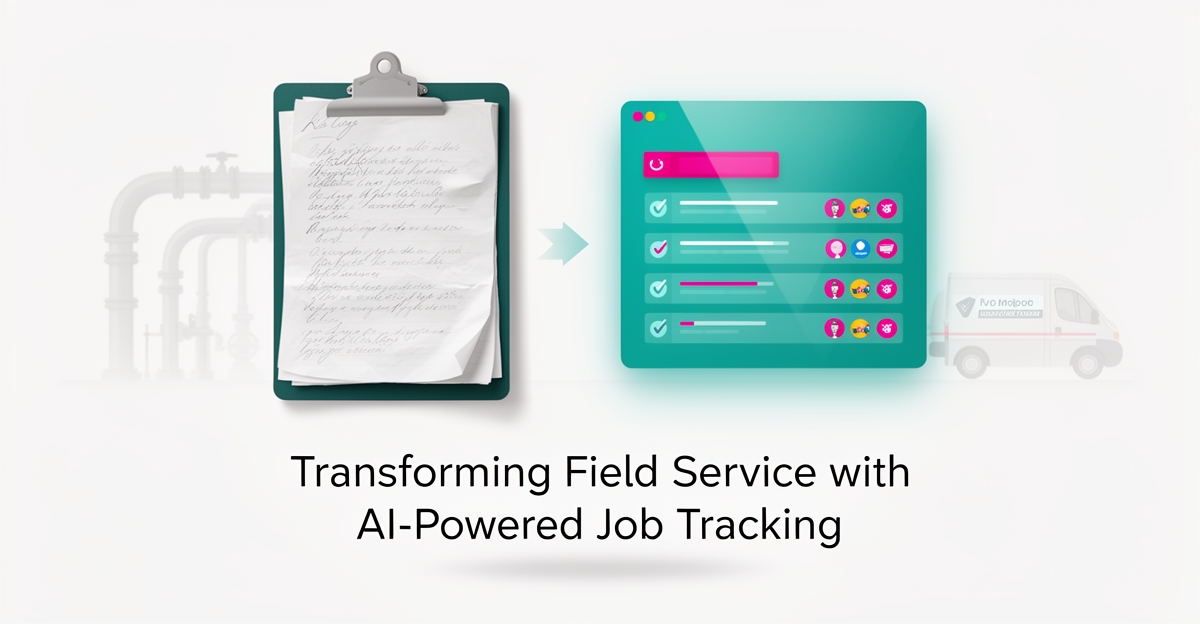
Before a technician even finishes a job, the real work begins: deciphering smudged handwriting, chasing down missing details, and piecing together fragmented notes into something usable. For the Halifax gas company, this daily ritual wasn’t just tedious, it was a silent drain on productivity, accuracy, and growth. Handwritten job logs, while familiar, introduced delays and inconsistencies that rippled through scheduling, billing, and customer communication. Technicians spent valuable time writing reports instead of servicing lines, and office staff wasted hours interpreting illegible entries or correcting preventable errors. These inefficiencies weren’t isolated, they mirror a broader pattern in trades and field services, where many operators still run on paper as of late 2026. That slow adoption is both a critical gap and a significant opportunity for early movers to outpace competitors still reliant on manual processes. The hidden costs of paper-based tracking extend far beyond paper and pens, they live in missed appointments, duplicated efforts, and eroded trust. When job details are lost in transcription or delayed in entry, response times suffer, and customers notice. In an industry where safety and reliability are paramount, those delays aren’t just inconvenient, they’re risks. The Halifax gas company’s shift to an AI-powered system wasn’t about replacing people with technology; it was about eliminating avoidable friction so their team could focus on what matters: delivering safe, timely service. By automating capture, syncing updates in real time, and reducing reliance on manual entry, they turned a liability into a streamlined, auditable workflow, one that scales with demand, not headcount. For field service businesses still clinging to clipboards, the message is clear: the cost of staying manual isn’t just operational, it’s strategic. And in a sector where AI adoption remains low, the first to automate gain more than efficiency, they gain a decisive edge.
How AI-Powered Job Tracking Eliminates Manual Work and Errors
The gas company in Halifax had long relied on handwritten job logs, a process that was slow, error-prone, and difficult to scale as technician workloads grew. Dispatchers spent hours manually entering data from paper forms into spreadsheets, leading to delays in scheduling and frequent inaccuracies in job details. This manual workflow created bottlenecks that impacted both operational efficiency and customer satisfaction.
By implementing an AI-powered job tracking system, the company automated data capture directly from technician inputs through mobile apps, eliminating the need for manual transcription. Technicians now log job details in real time via voice or text entry, which the system instantly processes and syncs across all connected platforms. This shift reduced administrative overhead and ensured that job statuses, parts used, and service notes were always up to date.
The solution also introduced intelligent workflow triggers that automatically initiate next steps, such as generating invoices, scheduling follow-ups, or alerting dispatchers to delays, based on predefined conditions. For example, when a technician marks a job as complete, the system triggers an invoice draft and notifies the customer via SMS. These automated responses cut response times and minimized the risk of missed steps or duplicated efforts.
This kind of transformation is exactly what AIQ Labs’ AI Workflow Builds service is designed for: rebuilding the one workflow that costs your business the most, at a fixed price and in clear phases. For SMBs in trades and field services, replacing a manual system like job tracking with owned, intelligent automation means integration, scalability, and long-term control without vendor lock-in. By starting with a single critical workflow, businesses can achieve rapid ROI and lay the foundation for broader AI adoption, whether that later grows into AI Employees handling dispatch and reception, or a full AI Operating System connecting the whole business.
From Pilot to Profit: Measurable Gains from Automating Job Tracking
The shift from manual job tracking to AI-powered automation delivers immediate, measurable results that transform daily operations. For the Halifax gas company, replacing handwritten logs with an AI system that auto-captures job details and syncs in real time with technician mobile apps cut administrative time significantly. Technicians no longer spend hours deciphering notes or re-entering data, freeing them to focus on field work and customer interactions.
This efficiency gain directly translates to faster invoicing and improved cash flow. With job details captured accurately at the source and pushed instantly to billing systems, the company noticeably reduced invoice processing delays. Fewer manual handoffs mean fewer opportunities for errors to creep in, critical in an industry where inaccurate job records can lead to billing disputes or safety compliance issues. The AI system’s validation layers ensure data integrity before any action is taken, the same principle AIQ Labs applies across its 200+ deployed multi-agent systems.
Customer satisfaction also saw a notable uplift. Real-time updates allowed dispatchers to provide precise arrival times and job status, reducing follow-up calls and confusion. Clients reported feeling more informed and in control, a shift reflected in post-service feedback. For small service businesses, automating job tracking isn’t just about saving time, it’s about building a foundation for scalable, reliable operations.
Still paying for 10+ subscriptions that don’t talk to each other?
We build custom AI systems you own outright. No vendor lock-in. Full control.
Not sure where to start? Ask our AI planner
Frequently Asked Questions
How did the Halifax gas company automate its job tracking?
What are the benefits of automating job tracking for field services?
Why is AI adoption important in the oil and gas industry?
How does AI improve accuracy in job tracking?
What challenges do businesses face when adopting AI?
How can SMBs start with AI automation?
Turning Paper Trails into Competitive Advantage
The Halifax gas company’s journey from handwritten logs to AI-powered job tracking reveals a clear path forward for field service businesses still reliant on manual processes. By automating data capture, reducing administrative overhead, and speeding up invoicing, they transformed a daily friction point into a streamlined, auditable workflow that scales with demand, not headcount. Real-time updates improved customer communication, while intelligent workflow triggers eliminated missed steps and duplicated efforts. In a sector where many operators still run on paper, early adopters aren’t just gaining efficiency, they’re building a decisive edge. The opportunity isn’t about replacing technicians with technology; it’s about freeing them to focus on what matters most: safe, timely service. If you’re ready to identify your own high-impact automation opportunity, start with a free two-minute Fit Check to see where AI can deliver the fastest ROI for your business, no obligation, just clarity on your next step.
Make AI your competitive advantage — not just another tool.
Strategy, implementation and ongoing optimization. One partner, end to end.
Not sure where to start? Ask our AI planner