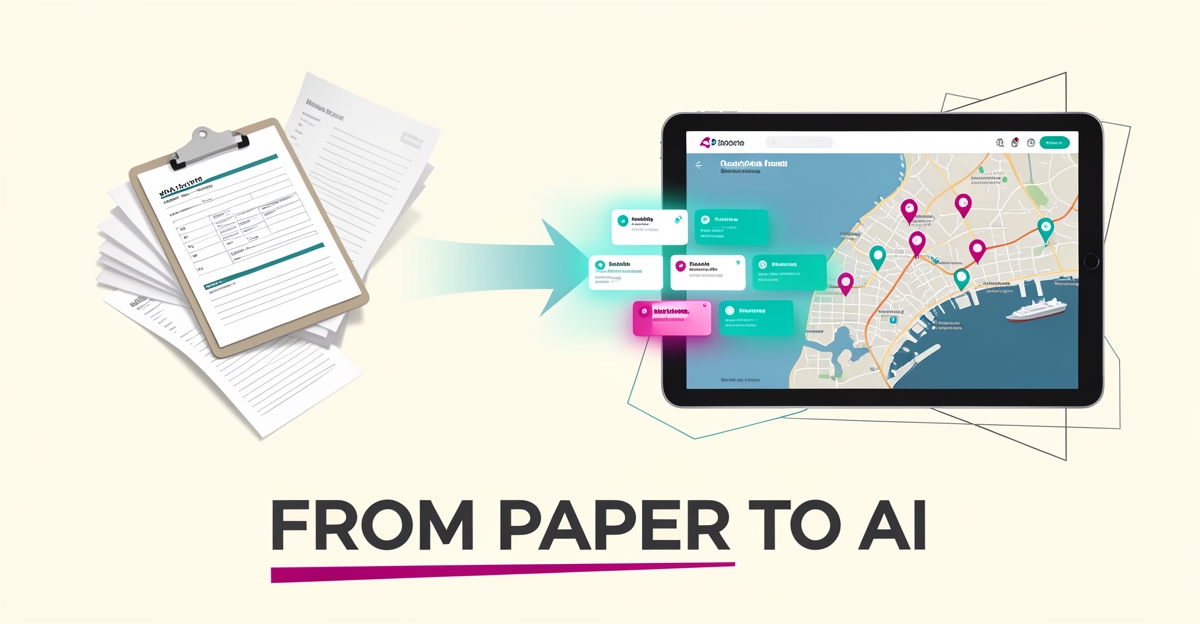
From Paper to AI: How One Generator Service Company in Halifax Automated Its Job Tracking System
Key Facts
- Manual job tracking in field services drains margin through duplicated work, delayed dispatches, and billing disputes
- AI job tracking auto-captures requests from voice and text, categorizes by urgency and type, and routes them without manual logging
- Integration with existing dispatch tools gives field teams real-time visibility from the moment a request arrives
- AIQ Labs builds systems clients own outright, with payment models that include Start Monthly, Build in Milestones, and Own It Outright
- Ongoing monitoring for model drift keeps AI system performance stable over time
Hire a team member that works 24/7 — for less than a part-time wage.
AI receptionists, SDRs, dispatchers and 99+ roles. Trained on your business, fully managed.
Not sure where to start? Ask our AI planner
The Hidden Cost of Manual Job Tracking in Field Services
Paper logs feel cheap until they start costing you jobs. In field services, manual job tracking quietly drains margin through duplicated work, delayed dispatches, and lost revenue that never shows up on a spreadsheet.
Generator service teams in Halifax live this reality daily. Service requests arrive by phone, text, and handwritten notes, then get transcribed into a logbook or spreadsheet. That handoff creates lag between call and crew, and the field team operates with yesterday's information.
Manual job logs are low cost to start but expensive to maintain. Crews spend hours each week re-entering data, chasing updates, and clarifying incomplete notes. Dispatchers lose real-time visibility, so trucks sit idle or drive past jobs that need attention.
Error-prone record keeping compounds the problem. Misread handwriting, missed fields, and duplicate entries create billing disputes and compliance risk. Without a single source of truth, managers cannot trust utilization reports or forecast parts needs.
Limited visibility breaks coordination. Field technicians cannot see priority changes, customers receive delayed updates, and office staff manually relay status back and forth. The business scales headcount instead of throughput.
The hidden costs show up as:
- Time lost to manual data entry and re-entry across office and field
- Error-prone record keeping that triggers rework and customer churn
- Delayed dispatch decisions due to lack of real-time job status
- Fragmented visibility that prevents accurate reporting and planning
This is why automation is shifting from optional to essential. Businesses across trades and field services are adopting systems that auto-capture and categorize work without human bottlenecks, because the cost of manual handoffs keeps rising while the cost of building AI workflows keeps falling.
For generator service firms, replacing manual logs with an AI-driven system that auto-captures, categorizes, and tracks service requests removes the transcription layer entirely. When the system integrates with dispatch tools, field teams gain real-time visibility and managers gain reliable data.
AIQ Labs deployed a full system for a Halifax generator service business that connects job intake to dispatch, improving visibility across the field team. The case shows how manual tracking costs are not just administrative; they are competitive.
Compliance risk also rises with paper processes. As businesses adopt automated record keeping, building governance habits alongside the system reduces risk from the start rather than retrofitting policies later.
How AI-Driven Job Tracking Transforms Field Service Operations
Field crews in Halifax used to lose time chasing paper logs and phone notes before a generator job even started. The generator service company replaced that manual loop with an AI-driven job tracking system that captures requests as they arrive and keeps the whole team aligned in real time.
The system auto-captures service requests from voice or text inputs, categorizes them by urgency and type, and tracks status without manual logging. AIQ Labs deployed the full system with integration to existing dispatch tools, so field visibility improved as soon as a request entered the workflow. This is AI Business Process Automation in practice, specifically AI Document Processing & Management applied to live field operations.
Accuracy and response time improve because the AI eliminates transcription errors and duplicate entries. Requests are logged once, classified consistently, and routed automatically to the right technician. Team coordination tightens when dispatch, field staff, and office share a single source of truth updated by the AI.
Administrative burden falls as manual data entry is removed from the daily routine. Technicians spend more time on service and less time on paperwork, while managers gain clear dashboards of open jobs, travel time, and completion rates. The AI system also supports continuous monitoring for model drift, a standard practice in cloud AI design that keeps performance stable over time.
Key operational changes delivered by the deployment include:
- Auto-capture from voice calls and text messages with automatic categorization
- Real-time sync with dispatch tools for instant field visibility
- Elimination of manual job logs and duplicate entry
- Measurable gains in accuracy, response time, and team coordination
The case study shows how replacing manual job logs with an AI-driven system reduces errors and improves visibility across the field team. Integration with dispatch tools ensures that updates flow without re-keying, and the business retains ownership of the custom system built by AIQ Labs. That ownership model aligns with AIQ Labs' focus on production-ready AI systems businesses control long term, similar in spirit to the AI Operating Systems approach, where the client owns the connected layer outright.
For SMBs in trades and field services, this pattern demonstrates practical automation that scales with the team. It is not a generic chatbot; it is a workflow that captures, classifies, and tracks work end to end, freeing people to do the work only people can do. If a full operating layer sounds like more than you need, a focused AI Workflow Build targets the single workflow that costs you the most.
Implementation Blueprint: From Manual Logs to AI-Powered Visibility
Manual job logs were costing the Halifax generator service team hours each week and hiding real-time visibility across the field. The shift to an AI-driven system started with mapping those pain points into a build plan the client could own.
Discovery focused on where paper logs created delays, errors, and blind spots in dispatch. AIQ Labs documented the existing request flow, data capture points, and integration needs with dispatch tools. This workflow audit shaped a custom AI agent specification built for auto-capture, categorization, and tracking of service requests.
System design prioritized true ownership and low-risk delivery. The build used the Start Monthly and Build in Milestones payment models to lower upfront risk and ensure the Halifax client retained control of the code, agents, and data. Start Monthly covers build, training, integrations, monitoring, and improvements in a flat monthly plan. Build in Milestones splits the workflow into phases with approval and payment per phase. Clients who prefer full control from day one can choose Own It Outright. Full payment model details are on the pricing page.
Integration connected the new AI layer to existing dispatch and CRM tools so field updates flowed without duplicate entry. The deployment blueprint followed a phased approach:
- Discovery and architecture of manual pain points and data flows
- Custom AI agent development for auto-capture and categorization of service requests
- Integration with dispatch tools to improve visibility across the field team
- Team training and go-live support with monitoring for performance drift
Training ensured technicians and dispatchers could trust automated logging and rely on real-time status. Go-live support included validation layers, human-in-the-loop escalation, and audit trails for compliance.
Implementation also reinforced governance habits early. Regular monitoring of AI system performance helps detect changes or errors before they reach customers. For SMBs, building formal policies alongside the system reduces risk as AI becomes operational.
The result is a system the client owns outright, with improved visibility, reduced manual data entry, and a payment structure that lets them pause or adjust anytime.
Paper Logs Are a Margin Leak, AI Is the Patch
Manual job logs in field services don't just slow crews down, they erode margin through re-entry, delayed dispatches, and billing disputes. The Halifax generator service case shows the shift: replacing paper and spreadsheets with an AI-driven system that auto-captures requests from voice or text, categorizes urgency, and syncs in real time with dispatch tools. The result is a single source of truth, fewer errors, faster response, and managers who can actually trust utilization and parts forecasts. Built with true ownership and flexible delivery options like Start Monthly, Build in Milestones, or Own It Outright, the system lets teams keep control while reducing administrative burden. If your field team is still chasing paper, start with a fit check. Take the 2-minute Fit Check at https://aiqlabs.ai/apply, then book a free 30-minute strategy call to map your biggest bottleneck and see if a custom, owned AI workflow is the right next step.
Make AI your competitive advantage — not just another tool.
Strategy, implementation and ongoing optimization. One partner, end to end.
Not sure where to start? Ask our AI planner