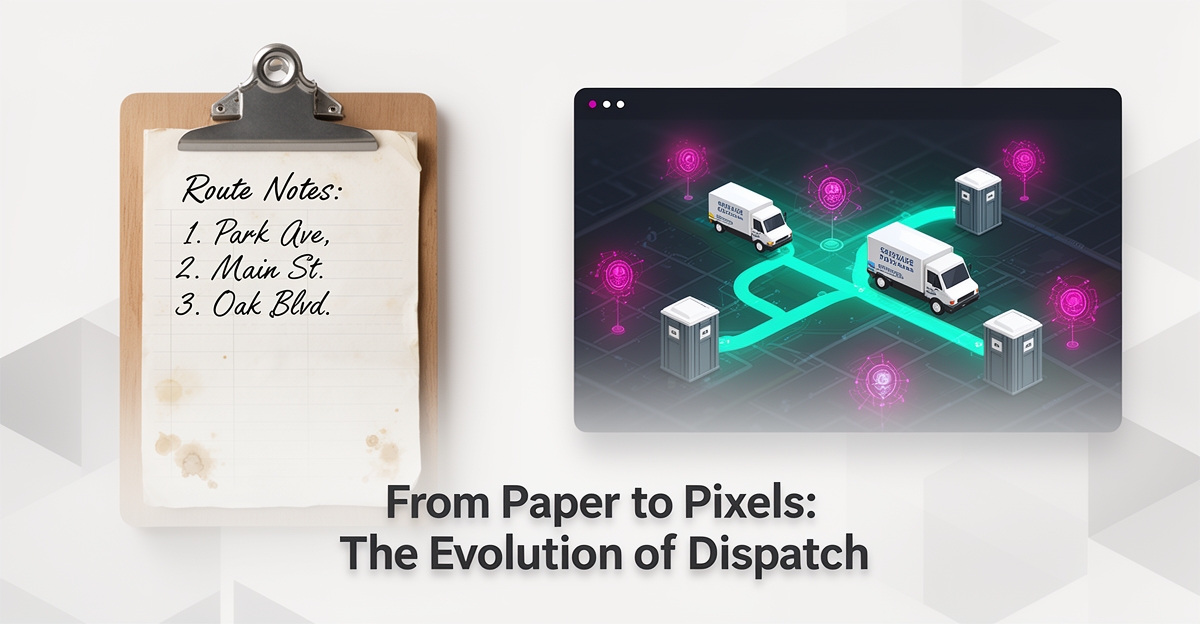
From Paper to AI: How a Portable Toilet Rental Company Automated Its Dispatch System
Key Facts
- Manual scheduling tends to produce significantly more emergency cleanups because service windows get missed, according to AIQ Labs analysis.
- Traditional phone booking loses a meaningful share of callers who hang up after about a minute on hold, booking conversion research suggests.
- AI-driven route optimization can cut total miles driven by roughly 10-25% and lower fuel spend by 15-30%, PJR Software analysis indicates.
- AI booking agents can complete OSHA-compliant rental quotes in a few minutes with very low error rates, industry data indicates.
- Companies still on manual dispatch processes typically see higher complaint rates than those using digital tracking, operational comparisons show.
- Automated scheduling can cut manual coordination time substantially, freeing dispatchers to focus on exceptions rather than routine assignments, AIQ Labs demonstrates.
Hire a team member that works 24/7 — for less than a part-time wage.
AI receptionists, SDRs, dispatchers and 99+ roles. Trained on your business, fully managed.
Not sure where to start? Ask our AI planner
The Hidden Cost of Paper-Based Dispatch in Portable Sanitation
The smell of diesel fuel mixes with the scratch of pen on paper as a dispatcher tries to reroute three trucks while the phone rings unanswered in the background. For portable sanitation operators still running on clipboards and sticky notes, this scene repeats daily—and the financial bleeding goes far beyond the obvious overtime hours.
Manual dispatch systems create invisible drains that compound quietly until they threaten the entire operation. According to industry analysis from PJR Software, paper-based routing burns hours of administrative time while leaving money on the table through inefficient truck routing and scheduling gaps. The real damage emerges in service quality: analysis from AIQ Labs suggests manual scheduling produces markedly more emergency cleanups because service windows get missed, turning routine maintenance into costly crisis management.
The revenue impact hits hardest after hours. When event planners call at 8 PM to book units for a weekend wedding, paper-based operations send those calls to voicemail—where they die. Research on booking conversion suggests that businesses relying on traditional phone booking lose a substantial share of callers who hang up after about a minute on hold, while more abandon when staff cannot instantly quote pricing. These missed connections represent more than single lost rentals; they sacrifice the long-term contracts that sustain portable restroom businesses through seasonal lulls.
Routing inefficiencies compound these losses daily. Manual routing typically wastes a meaningful share of total miles driven, according to route optimization studies, while simultaneously creating the service delays that trigger customer complaints. Operational comparisons indicate that companies clinging to manual processes see noticeably higher complaint rates than those using digital tracking systems.
The hidden costs manifest in specific operational failures:
- Emergency cleanup dispatches that cost multiples of standard service rates
- Fuel waste from zigzag routing across service territories
- Double-booked units discovered only when the truck arrives on site
- Lost deposits from customers who reached voicemail instead of a booking agent
- Driver overtime from unbalanced daily schedules and last-minute additions
These friction points explain why forward-thinking operators now view dispatch automation not as a luxury but as survival infrastructure. AIQ Labs has seen how AI-driven workflow automation—whether delivered as an AI Employee or a full workflow rebuild—transforms these chaotic manual processes into streamlined systems that capture every lead while optimizing every mile. The technology eliminates the transcription errors, scheduling conflicts, and communication gaps that make paper-based dispatch a liability rather than a cost-saving measure.
How AI Dispatch Solves Core Portable Toilet Workflow Challenges
The shift from paper logs to AI-driven dispatch isn't just a tech upgrade—it's a fundamental reimagining of how portable sanitation operations function. By replacing manual entry with intelligent automation, rental companies eliminate the transcription errors and scheduling chaos that plague traditional workflows.
At the core of this transformation sits automated unit assignment, where AI matches specific assets—standard units, ADA-compliant restrooms, or luxury trailers—to job requirements without human intervention. According to industry analysis, these systems verify real-time inventory levels before confirming bookings, eliminating the double-booking risks inherent in whiteboard-based tracking. The AI parses customer requests, checks live availability, and assigns units based on proximity and service schedules, ensuring optimal fleet utilization without dispatcher oversight.
This automation extends to OSHA-compliant quoting, where the AI calculates exact unit requirements based on workforce size and project duration. Research from EasyPottyRental indicates that AI agents can complete compliant rental quotes in a few minutes with very low error rates—effectively reducing transcription errors to near zero compared to the error rates typical of phone bookings taken by hand. The system automatically applies regulatory ratios and pricing matrices, ensuring every quote meets compliance standards without manual calculation.
Route optimization delivers perhaps the most immediate operational impact. Data from PJR Software shows that AI-driven routing can reduce total miles driven by 10–25% and lower fuel spend by 15–30% through dynamic constraint handling and multi-day planning. Simultaneously, AIQ Labs finds that automated scheduling can cut manual coordination time substantially, allowing dispatchers to focus on exceptions rather than routine assignments.
The workflow transformation manifests in several key capabilities:
- Real-time inventory tracking that prevents stock-outs and overbooking
- Automated OSHA compliance calculations for accurate quoting
- Dynamic route optimization reducing fuel costs and drive time
- Direct calendar integration eliminating double-booking risks
- Instant SMS confirmations and payment processing
By integrating these functions, portable toilet rental companies transition from reactive paper-based chaos to proactive, data-driven operations. The result is a dispatch system that operates with precision around the clock, capturing after-hours opportunities while maintaining accuracy across every booking and route.
Implementation and Results: From Manual Logs to AI-Powered Operations
A transition like this typically begins with a data cleanup effort: standardizing job names, addresses, and service types while centralizing maintenance logs and inventory records. Data hygiene is the critical first step in any successful AI transformation—automation amplifies whatever data it inherits. From there, an AI dispatcher agent is configured with the company's specific compliance codes, pricing matrix, and scheduling rules, enabling real-time job assignment based on location, certifications, and hours-of-service constraints. The agent connects to existing tools—CRM, calendar, and payment systems—to automate end-to-end workflows without manual data entry. Staff then shift into a supervisory role, reviewing AI outputs and handling exceptions, which preserves human oversight for complex decisions while the routine work happens automatically.
The results companies report from this kind of deployment follow a consistent pattern. Dispatch time drops sharply because office teams move from building schedules to reviewing and approving them, with same-day changes handled in minutes instead of hours. After-hours bookings climb because the AI agent answers 24/7 with instant response—no more voicemail leakage during nights, weekends, and peak-season surges. Booking and routing errors fall because the AI verifies addresses against mapping data during calls, preventing costly mistakes like transposed digits that once sent drivers to wrong sites. These outcomes reflect the approach behind AIQ Labs' AI Employees—managed AI staff that cost roughly 80% less than a human hire—and its AI Workflow Builds, which rebuild the one workflow that costs the most at a fixed price, in phases. For companies ready to connect everything, an AI Operating System ties dispatch, booking, and routing into one layer the business owns outright. To explore how your portable sanitation business could achieve similar results, start with the two-minute Fit Check, then book your free 30-minute strategy call to map your biggest bottleneck and identify high-ROI automation opportunities.
Still paying for 10+ subscriptions that don’t talk to each other?
We build custom AI systems you own outright. No vendor lock-in. Full control.
Not sure where to start? Ask our AI planner
Frequently Asked Questions
How much time can AI dispatch actually save portable toilet companies on scheduling?
Will AI dispatch reduce fuel costs for my portable sanitation fleet?
Can AI prevent double-bookings and scheduling errors in portable toilet rentals?
How does AI handle after-hours booking requests that traditional phone systems miss?
What error rate can I expect from AI booking compared to traditional phone booking?
Does AI dispatch improve customer service quality in portable sanitation?
From Clipboard Chaos to Clockwork Dispatch
Paper-based dispatch quietly bleeds portable sanitation businesses through missed after-hours leads, zigzag routing, and emergency cleanups that cost multiples of standard service. Moving from clipboards to an AI-driven workflow automates unit assignment, OSHA-compliant quoting, and dynamic routing so dispatchers review instead of rebuild schedules. Real-time inventory tracking eliminates double-booking, while instant confirmations and payment collection stop revenue from dying in voicemail. That shift turns dispatch from a daily headache into scalable, predictable operations. If you're still managing routes on paper, start by mapping your biggest bottleneck—data hygiene, after-hours capture, or routing waste—and test one workflow with a system you own outright. AIQ Labs can help you assess fit and design a high-ROI automation plan. Start the Fit Check at aiqlabs.ai/apply, then book a free 30-minute strategy call at aiqlabs.ai/book to map your opportunity.
Make AI your competitive advantage — not just another tool.
Strategy, implementation and ongoing optimization. One partner, end to end.
Not sure where to start? Ask our AI planner