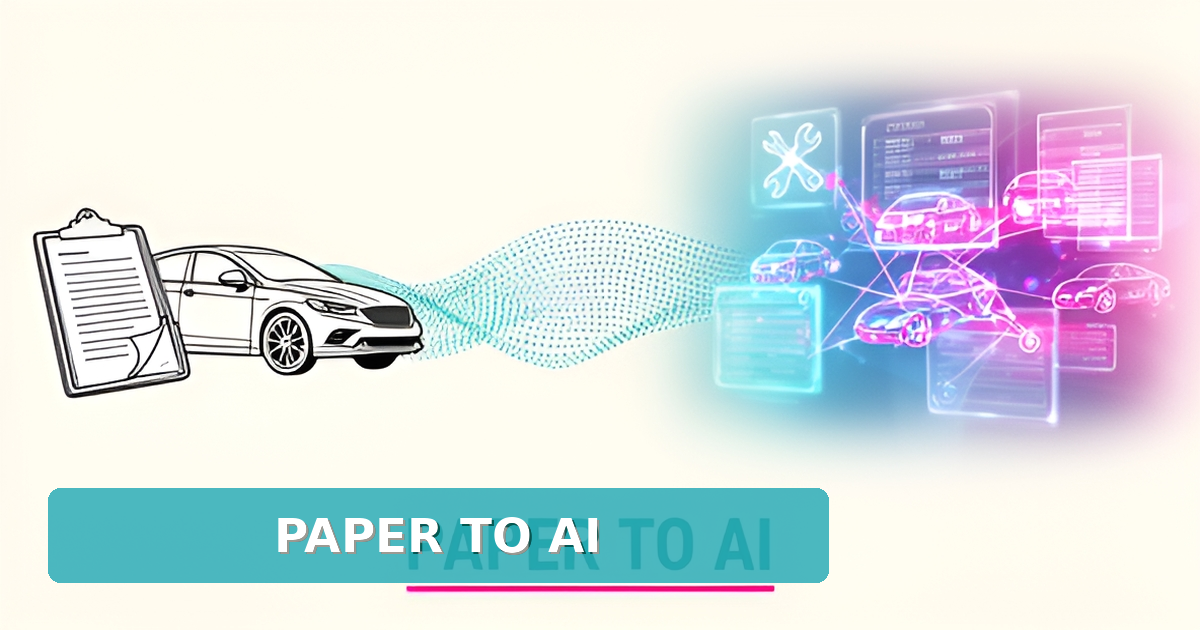
From Paper to AI: Modernizing Car Rental Maintenance Logs and Fleet Tracking
Key Facts
- Industry analyses of AI-driven predictive maintenance report meaningful reductions in maintenance costs and unplanned downtime compared to manual, reactive scheduling.
- AI-assisted vehicle inspections typically complete in minutes, versus one to three days for fully manual inspection cycles.
- Automated, timestamped inspection records with photo and video evidence reduce disputes and fraudulent damage claims.
- The market for AI in fleet management continues to grow as of late 2026, driven by pressure on efficiency and operating costs.
- Digitized maintenance logs create a single, auditable source of truth per vehicle—critical for compliance and insurance claims.
Hire a team member that works 24/7 — for less than a part-time wage.
AI receptionists, SDRs, dispatchers and 99+ roles. Trained on your business, fully managed.
Not sure where to start? Ask our AI planner
The Hidden Cost of Paper-Based Maintenance Logs in Car Rental Fleets
Paper-based maintenance logs create a hidden drain on car rental operations, turning routine vehicle care into a costly administrative burden. Manual systems require staff to spend hours each day filling out forms, filing paperwork, and chasing down missing records—time that could be spent serving customers or maintaining fleet readiness. This inefficiency directly translates to higher labor costs and slower response times when vehicles need service. Industry analyses of AI-driven predictive maintenance consistently report meaningful reductions in maintenance costs and unplanned downtime, which points to the scale of waste embedded in paper-based processes.
Beyond labor, paper logs introduce significant error risks that ripple through operations. Illegible handwriting, misplaced forms, and delayed data entry lead to inaccurate service histories, missed maintenance intervals, and incorrect billing for damages. These errors increase compliance risks, especially during audits or insurance claims, where missing or inconsistent records can result in penalties or disputed liabilities. The lack of real-time visibility means managers often discover problems only after a vehicle breaks down or a customer complains—turning preventative maintenance into reactive crisis management. AI-powered systems close these gaps by automating data capture and providing instant access to complete, accurate service histories across the fleet.
The cumulative impact extends to customer experience and fleet utilization. Vehicles tied up for unexpected repairs due to missed maintenance spend fewer days generating revenue, while customers face delays or receive cars with unresolved issues. AI-assisted inspections, by contrast, typically complete in minutes rather than the one to three days a fully manual cycle can take, enabling faster turnaround and higher fleet availability. For rental businesses aiming to optimize every asset, the hidden cost of paper isn't just in supplies or labor—it's in lost rental days, avoidable repairs, and eroded trust. AIQ Labs helps fleets replace fragile paper trails with intelligent, auditable digital systems, whether through a single workflow rebuild or a full operating layer for the whole business.
How AI Transforms Maintenance Logging and Fleet Inspections
Paper logs and clipboard inspections are slowing car rental fleets down. AI-powered document processing and computer vision change that by turning maintenance records and vehicle checks into structured, real-time data.
AI systems digitize maintenance logs, service histories, and inspection forms automatically. Handwritten notes, photos, and scanned work orders are classified and extracted without manual entry. This creates a single source of truth for each vehicle and enables proactive scheduling instead of reactive repairs.
Computer vision automates vehicle inspections at return and dispatch. Cameras capture damage, wear, and fluid leaks while models compare images to baseline condition. Inspections that once took days manually finish in minutes with AI, accelerating turnaround and improving customer experience.
Real-time fleet health insights emerge as data flows from telematics, inspections, and service logs into one system. Patterns in brake wear, battery health, and tire pressure trigger alerts before failures occur. Managers see utilization, cost per mile, and risk exposure across the entire fleet.
AIQ Labs builds these systems directly into rental operations—digitizing, classifying, and tracking maintenance logs and vehicle inspections so records stay compliant and visible in real time across all rental vehicles. With 200+ multi-agent systems deployed and four live SaaS products the company runs daily, this is proven infrastructure, not a science project.
The transformation delivers measurable operational gains:
- Faster inspections—from days to minutes, with consistent, objective assessments
- Lower maintenance costs and downtime through predictive scheduling
- Reduced fraud risk via video-backed inspections and auditable data trails
- Broader coverage with remote inspections enabled by internet connectivity
Fleet performance improves because decisions are data-driven, not memory-driven. Maintenance teams receive prioritized work orders, parts are ordered proactively, and vehicles return to service sooner. The market for AI in fleet management continues to grow as of late 2026, driven by sustained pressure on efficiency and operating costs. With AI document processing handling the paperwork and computer vision handling the inspections, rental operators gain the visibility needed to protect assets and revenue.
Implementing AI for Fleet Tracking: From Prototype to Full Integration
Moving from paper logs to real-time fleet visibility starts with a structured adoption path, not a wholesale rip-and-replace. Car rental teams that map the transition step by step avoid the pilot stall that traps most operations.
Problem identification sets the foundation. Teams audit current maintenance logs, inspection checklists, and telematics gaps to pinpoint where manual entry creates delays and errors. AIQ Labs' Workflow Builds service starts exactly here: find the one workflow that costs the most, rebuild it at a fixed price, in phases.
Workflow mapping makes the invisible visible. A detailed flowchart of intake, inspection, service authorization, and return processing reveals handoffs between rental agents, mechanics, and back-office staff. Mapping exposes duplicate data entry and approval bottlenecks that slow vehicle turnaround.
Data collection builds the training base. Sample inputs include scanned maintenance logs, service histories, vehicle inspection photos, and edge cases like damage disputes. Quality and variety here determine how reliably an AI document processing system can digitize, classify, and track records across the fleet.
Prototype development tests the hypothesis. A focused AI-powered inspection and log digitization prototype is built to extract data from documents, flag anomalies, and update fleet health status. This mirrors the problem-to-prototype discipline used in production AI builds.
Testing and iteration harden the system. Scenarios cover normal service entries, incomplete forms, and disputed claims. Feedback from operations staff refines accuracy and user experience before broader use.
Integration connects AI to daily operations. The system links with existing fleet management, telematics, and accounting tools so digitized logs flow automatically into maintenance scheduling and compliance reporting. For operators ready to connect everything—logs, inspections, scheduling, billing—AIQ Labs' AI Operating Systems service builds one connected operating layer, in phases, that you own outright.
Rollout and training embed adoption. Relevant personnel receive role-specific training on submitting inspections, reviewing AI outputs, and acting on proactive alerts. Where staffing is the bottleneck, AI Employees—managed AI staff across 99+ roles, at roughly 80% less cost than a human hire—can handle dispatch, record-keeping, and follow-up around the clock.
A practical implementation sequence:
- Identify the problem: Define specific pain points in inspection and log handling
- Map the workflow: Document current process from vehicle return to service close
- Collect data: Gather sample logs, photos, and edge cases for training
- Build the prototype: Develop AI inspection and document processing test
- Test and iterate: Validate accuracy with real scenarios and staff feedback
- Integrate with systems: Connect AI outputs to fleet management and telematics
- Roll out and train: Deploy fleet-wide with targeted team enablement
Executed in this order, AI moves from concept to operational asset that digitizes records, shortens inspection cycles, and improves fleet health. Payment is flexible throughout—start monthly, build in milestones, or own the system outright. See pricing models for details.
Still paying for 10+ subscriptions that don’t talk to each other?
We build custom AI systems you own outright. No vendor lock-in. Full control.
Not sure where to start? Ask our AI planner
Frequently Asked Questions
How much can AI-driven predictive maintenance reduce maintenance costs and fleet downtime?
How long do AI inspections take compared to manual inspections?
What are the main benefits of using AI for maintenance logs and fleet tracking in car rental operations?
Is implementing AI for fleet management complex or disruptive to existing operations?
How does AI help reduce fraud in vehicle inspections and maintenance records?
What market trends support adopting AI in fleet management for car rental businesses?
From Cost Center to Competitive Edge
Paper logs turn routine maintenance into slow, error-prone admin that costs labor, downtime and trust. Moving to AI changes that equation by digitizing service histories and inspection forms automatically, using computer vision to complete checks in minutes instead of days, and surfacing real-time fleet health from telematics and service data. The result is fewer missed intervals, faster turnaround, lower maintenance spend and an auditable record that protects you during audits and disputes. The shift doesn't require a rip-and-replace. AIQ Labs offers three ways in: rebuild the one workflow that costs the most with Workflow Builds, add managed AI staff with AI Employees, or connect the whole operation with an AI Operating System you own outright. Start with the 2-minute Fit Check at https://aiqlabs.ai/apply, then book a free 30-minute strategy call at https://aiqlabs.ai/book to map your biggest bottleneck and see whether a clear, high-ROI automation path exists. Prefer email? Reach the team at [email protected].
Make AI your competitive advantage — not just another tool.
Strategy, implementation and ongoing optimization. One partner, end to end.
Not sure where to start? Ask our AI planner