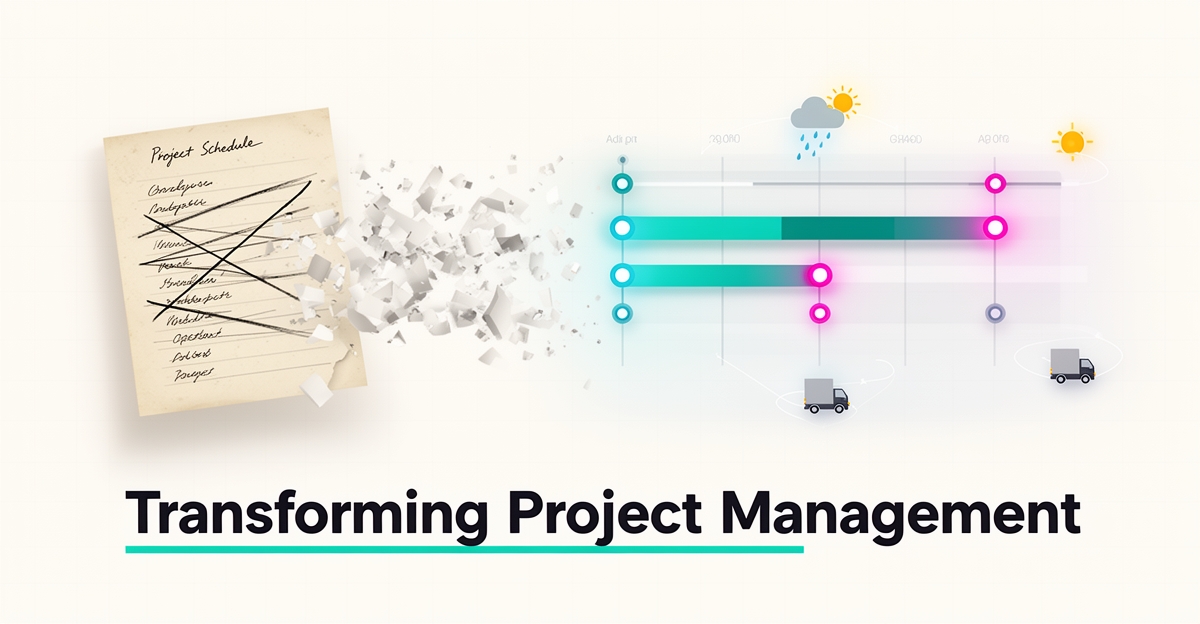
From Paper to AI: Transforming How Disaster Contractors Manage Project Schedules
Key Facts
- The frequency and severity of disasters have increased in recent years according to recent research
- Current disaster management practices suffer from fragmented data streams and siloed technologies per recent analysis
- AI can combine knowledge from multiple data sources to simulate disaster scenarios at unprecedented speed as shown in AI disaster research
- Manual scheduling causes delayed crews who arrive on-site only to find prerequisites incomplete per disaster management systems research
- Resource misallocation occurs when equipment sits idle at one site while another faces shortages per recent research
- AI-driven scheduling enables dynamic timeline adjustment that preserves sequence logic while responding to reality per AI disaster research
- AIQ Labs builds custom AI systems that integrate with existing tools to dynamically adjust project timelines based on real-time updates
Hire a team member that works 24/7 — for less than a part-time wage.
AI receptionists, SDRs, dispatchers and 99+ roles. Trained on your business, fully managed.
Not sure where to start? Ask our AI planner
Why Disaster Schedules Break So Fast
Disaster work doesn't allow for a stable plan, and schedules collapse under conditions that change by the hour. When a contractor is already mobilizing crews, sourcing materials, and navigating access restrictions, the timeline itself becomes the weakest link.
The frequency and severity of disasters have increased in recent years, posing challenges to societal stability and economic security in recent Nature research. That rising pressure lands directly on field teams who must execute fast, with less margin for error.
Manual Gantt charts and paper logs were built for predictable construction, not for environments where weather, labor availability, material delivery, and site conditions shift daily. Updates are hand-written, photos are texted, and approvals sit in inboxes. By the time the master schedule is revised, crews are already idle or working out of sequence.
Current practices in disaster management are hindered by fragmented data streams, siloed technologies, resource constraints, and the erosion of institutional memory according to an arXiv analysis of response capabilities. For contractors, that fragmentation shows up as:
- Weather windows closing mid-task with no automatic resequencing of dependent work
- Labor call-outs and no-shows that aren't reflected in the schedule until the next morning's huddle
- Material deliveries delayed by road closures, with no real-time link between procurement and site tasks
- Site condition changes logged on paper that never reach the planning office
The result is reactive firefighting instead of coordinated execution. Teams lose hours chasing status, managers make decisions on stale information, and response capacity is consumed by coordination rather than recovery work.
AI offers a way through for disaster management, combining knowledge from multiple types and sources of data, simulating realistic scenarios, and identifying emerging trends at a speed previously unimaginable in recent AI disaster research. That capability is exactly what scheduling needs: a system that ingests real-time updates and adjusts timelines without manual re-entry.
AIQ Labs builds custom AI systems that integrate with existing tools and dynamically adjust project timelines based on real-time updates, moving from static plans to living schedules. In practice, this means weather feeds, crew check-ins, and delivery confirmations automatically trigger rescheduling, resource reallocation, and stakeholder notifications.
Without that adaptability, even experienced teams are forced to choose between speed and accuracy. Manual tools force the compromise, and in disaster recovery, both matter.
The Hidden Cost of Manual Scheduling
Every disaster contractor knows the sinking feeling of arriving at a job site only to find the crew idle, materials missing, and the schedule already obsolete. Yet the true expense of paper-based scheduling extends far beyond daily frustration—it quietly erodes profit margins through inefficiencies that compound with every passing hour.
When project timelines live on static Gantt charts and paper logs, critical updates travel slowly through fragmented channels. According to recent research on disaster management systems, current practices suffer from fragmented data streams and siloed technologies that prevent real-time coordination. For contractors, this means a supervisor's handwritten note about a delayed shipment might never reach the crew chief across town, resulting in missed handoffs that leave workers waiting and deadlines slipping.
The financial impact manifests in several predictable ways:
- Delayed crews who arrive on-site only to discover prerequisites remain incomplete
- Rework costs when teams proceed based on outdated specifications or sequences
- Slow decisions as managers chase down status updates via phone tag and paper trails
- Resource misallocation when equipment sits idle at one site while another faces shortages
These inefficiencies intensify as disaster frequency increases. Research published in Nature Communications indicates that the rising frequency and severity of disasters poses challenges to response capabilities, making schedule agility more critical than ever. Yet manual systems force project managers to make decisions based on yesterday's information, creating a cascade of costly corrections.
Beyond immediate delays, paper-based scheduling contributes to the erosion of institutional memory. When project knowledge exists only in scattered notebooks and individual recollections, contractors lose valuable insights with every staff transition. This knowledge drain, combined with resource constraints, prevents teams from optimizing workflows or anticipating bottlenecks before they trigger expensive downtime.
The transition to AI-driven scheduling addresses these pain points by replacing static documents with dynamic, real-time operational views. AIQ Labs builds custom systems that integrate with existing tools to automatically adjust timelines based on weather updates, labor availability, and material deliveries. Rather than reacting to disruptions hours or days later, contractors gain the ability to reallocate resources instantly and keep projects moving forward.
How AI-Driven Scheduling Adapts in Real Time
Manual Gantt charts collapse the moment a storm shifts or a crew calls out. Disaster contractors need schedules that move with the conditions on the ground, not after the fact.
AI-driven scheduling replaces static plans with living timelines that update as new information arrives. Systems combine live inputs across weather, labor, and supply chains to keep project plans current without manual rework. This approach directly addresses the fragmented data streams, siloed technologies, resource constraints, and erosion of institutional memory that currently hinder disaster management.
The frequency and severity of disasters have increased in recent years according to recent research. In that environment, waiting for end-of-day updates is a cost contractors cannot absorb.
An AI scheduling system ingests real-time feeds and re-optimizes dependencies automatically. Weather alerts can pause exterior work and shift crews to interior tasks. Labor availability changes trigger reallocation across sites. Material delivery updates ripple through critical paths and suggest alternate suppliers.
AI can combine knowledge from multiple types and sources of data, simulate realistic scenarios, and identify emerging trends at a speed previously unimaginable as described in current AI disaster research. That capability creates a real-time operational picture instead of a delayed snapshot.
In practice, the adaptation loop looks like this:
- Weather shifts are parsed from forecasts and site sensors, with tasks auto-rescheduled and safety windows enforced
- Labor availability is tracked from timecards, call-outs, and certifications, with crews reassigned to maintain coverage
- Material delivery updates from suppliers and logistics platforms adjust procurement tasks and downstream installs
- Risk signals are flagged early, enabling proactive mitigation before delays compound
The result is dynamic timeline adjustment that preserves sequence logic while responding to reality. AIQ Labs delivers custom AI systems that integrate with existing tools and dynamically adjust project timelines based on real-time updates, moving teams from paper logs to responsive operations.
Because the system learns from each disruption, it improves prediction and faster trend detection over time. Contractors gain visibility into likely bottlenecks before they materialize and can commit to clients with greater confidence.
This is AI Workflow Builds applied to the field: schedules that adapt, crews that stay productive, and recovery work that moves forward even as conditions change.
What an AI Scheduling System Looks Like in Practice
Imagine a system that automatically updates your project schedule based on real-time data from the field, flagging potential conflicts and suggesting adjustments before delays cascade. This is the power of AI-driven scheduling for disaster contractors.
AI scheduling systems integrate with existing tools like field reporting apps, calendars, communication channels, and project management software. By pulling data from these sources, the AI gains a comprehensive view of project status, resource availability, and potential disruptions. According to recent research, current disaster management practices are often hindered by fragmented data streams and siloed technologies, issues that AI can directly address.
The system can then analyze this information to identify potential conflicts, such as overlapping resource allocations or tasks at risk due to weather delays. It can also recommend schedule changes to optimize resource utilization and minimize downtime. For example, if a material delivery is delayed, the AI can automatically adjust the schedule to prioritize tasks that don't depend on that material, keeping crews productive.
Here's how an AI scheduling system fits into a contractor's existing stack:
- Connects to field tools for real-time progress updates.
- Syncs with calendars to track resource availability.
- Monitors communication channels for potential disruptions.
- Integrates with project management systems for task dependencies.
AIQ Labs specializes in building custom AI systems that integrate with your existing tools. This ensures a seamless transition from manual processes to AI-driven scheduling. Because, as research indicates, AI can combine knowledge from multiple sources of data to simulate realistic scenarios and identify emerging trends, disaster contractors can use AI to dynamically adjust project timelines based on real-time updates.
By automating schedule updates and conflict detection, AI frees up project managers to focus on higher-level decision-making and strategic planning. This leads to improved efficiency, reduced delays, and better project outcomes. AIQ Labs' custom workflow and integration approach ensures that the AI system is tailored to your specific needs and integrates seamlessly with your existing technology stack.
From Paper Logs to an AI Scheduling Rollout
Most disaster contractors don't fail at scheduling because of a lack of effort—they fail because the schedule lives on paper logs and static Gantt charts that can't respond to reality. The transition to AI-driven scheduling doesn't require a rip-and-replace overhaul; it follows a practical, phased path.
The first step is honest diagnosis. Identify the single scheduling bottleneck that causes the most rework—whether that's weather delays, crew availability, or material deliveries. Research shows current disaster management practices are hindered by fragmented data streams, siloed technologies, and resource constraints, so the goal is to fix one broken workflow first, not everything at once. That's exactly the premise behind AI Workflow Builds: rebuild the one workflow that costs the most, at a fixed price, in phases.
Next, centralize live project data. AI-driven scheduling only works when it can see what's actually happening on site. The value of AI in this space is its ability to combine knowledge from multiple types and sources of data and identify emerging trends at a speed previously unimaginable. That means pulling crew updates, delivery confirmations, and weather feeds into one place rather than leaving them scattered across text messages and clipboards.
Then integrate the tools already in use. A custom system should connect to existing project management, accounting, and communication platforms so field teams keep working the way they already do. This is where a partner like AIQ Labs fits in—building custom AI systems that integrate with existing tools and dynamically adjust project timelines based on real-time updates, rather than forcing contractors onto another subscription platform. Contractors who want to go further can eventually connect scheduling into a broader AI Operating System—one connected layer across the business, built in phases and owned outright.
The pilot phase is where adoption happens. Run the system on one active job, not the entire portfolio:
- Track how the AI reschedules around a real weather event or delayed delivery
- Measure time saved on manual schedule updates each week
- Gather field feedback on how the system communicates changes
- Refine the rules before rolling out to additional projects
Only after the pilot proves itself should contractors expand across jobs and departments. This staged approach mirrors what research on AI maturity consistently shows: pilots stall when they try to scale too fast without governance, training, or a clear strategy. With the frequency and severity of disasters increasing in recent years, contractors can't afford a stalled rollout—the demand for responsive scheduling keeps growing.
Ownership matters at every stage. Systems built as custom assets, rather than rented subscriptions, give contractors full control over their scheduling data and future development. That's the difference between a tool the team tolerates and a system the team actually adopts.
For contractors ready to map their own transition, the starting point is a conversation about where the schedule breaks today. A two-minute Fit Check at aiqlabs.ai/apply leads to a free 30-minute strategy call with an AI engineer—a working session to identify the highest-ROI automation opportunity, with no obligation. If there isn't a clear win, they'll say so.
Still paying for 10+ subscriptions that don’t talk to each other?
We build custom AI systems you own outright. No vendor lock-in. Full control.
Not sure where to start? Ask our AI planner
Frequently Asked Questions
Why do traditional Gantt charts and paper logs fail so quickly in disaster recovery projects?
How does AI-driven scheduling improve upon manual methods in disaster response?
What are the hidden costs of relying on paper-based scheduling in disaster contracting?
Can AI scheduling systems work with the tools our team already uses?
What does a pilot rollout of AI-driven scheduling look like for a disaster contractor?
Is there research showing that AI can improve disaster management through real-time data integration?
The Bottom Line: From Paper Chaos to AI Precision
Disaster contractors can no longer afford to manage projects with static Gantt charts and paper logs. As research indicates, the frequency and severity of disasters are increasing, making schedule agility more critical than ever. AI-driven scheduling offers a solution, providing real-time operational pictures, predicting risk, and identifying emerging trends. By transitioning to AI-driven scheduling, contractors can improve efficiency, reduce delays, and enhance project outcomes. AIQ Labs delivers custom AI systems that integrate with existing tools, dynamically adjusting project timelines based on real-time updates. To map your transition and identify high-ROI automation opportunities, start with a two-minute Fit Check at aiqlabs.ai/apply, leading to a free 30-minute strategy call with an AI engineer — a working session to pinpoint your biggest bottleneck and create a tailored plan, with no obligation.
Make AI your competitive advantage — not just another tool.
Strategy, implementation and ongoing optimization. One partner, end to end.
Not sure where to start? Ask our AI planner