How a Heavy Haul Trucking Company Can Reduce Route Delays with AI-Powered Dispatching
Key Facts
- AI-powered route optimization can reduce service failures, improve fuel economy, and lower overall costs by adapting to real-time variables according to industry research
- AI-powered telematics have shown fuel economy gains in the range of roughly 5–9 percent depending on cab type, per NMFTA research
- Predictive maintenance powered by AI is typically credited with reducing unplanned downtime by 30–50 percent and extending vehicle lifespan by 20–40 percent per industry research
- ADAS technologies have been associated with reductions of over 40 percent in heavy truck accidents reported by NMFTA
- AI-driven load matching platforms reduce empty miles and deadhead runs, a persistent profitability challenge industry analyses suggest
- Cybercriminals now use AI tools to accelerate malware development and automate attacks on logistics data per NMFTA security analysis
- Integrated AI fleet solutions improve overall performance by addressing multiple delay factors simultaneously research indicates
Hire a team member that works 24/7 — for less than a part-time wage.
AI receptionists, SDRs, dispatchers and 99+ roles. Trained on your business, fully managed.
Not sure where to start? Ask our AI planner
The Problem: Why Route Delays Persist in Heavy Haul Trucking
Static route planning and manual dispatching continue to undermine efficiency in heavy haul trucking, leaving companies vulnerable to costly delays. Traditional methods rely on fixed schedules and paper-based coordination, which cannot adapt to real-time disruptions like traffic congestion, sudden weather changes, or last-minute shipment adjustments. As a result, drivers often encounter unexpected roadblocks that force detours, increase idle time, and burn excess fuel. These inefficiencies directly impact delivery windows, with static planning failing to account for the dynamic nature of long-haul logistics where even minor delays compound into significant schedule slippage.
Research shows that AI-powered route optimization can reduce service failures and improve fuel economy by dynamically responding to changing conditions, a capability absent in conventional systems. Without real-time data integration, dispatchers operate reactively rather than proactively, leading to avoidable delays that frustrate drivers and erode customer trust. The inability to reroute efficiently when disruptions occur means trucks spend more time idling in traffic or waiting for clearance, directly increasing operational costs. This reactive approach not only wastes fuel but also strains driver morale, as unpredictable schedules make rest planning difficult and contribute to fatigue-related risks.
- Static planning ignores real-time traffic and weather data
- Manual dispatching creates bottlenecks in communication
- Last-minute changes disrupt entire route sequences
- Idle time increases fuel consumption unnecessarily
- Missed deliveries damage customer relationships
AIQ Labs addresses these challenges by building AI dispatching systems that integrate with existing fleet management tools to enable dynamic, data-driven route adjustments. By replacing manual processes with intelligent automation, heavy haul companies can shift from reactive firefighting to proactive planning, reducing delays before they occur. This transformation improves on-time delivery performance while lowering fuel waste and driver stress—key outcomes that strengthen both operational resilience and service reliability in an industry where timing is critical.
The Solution: AI-Powered Dynamic Route Optimization
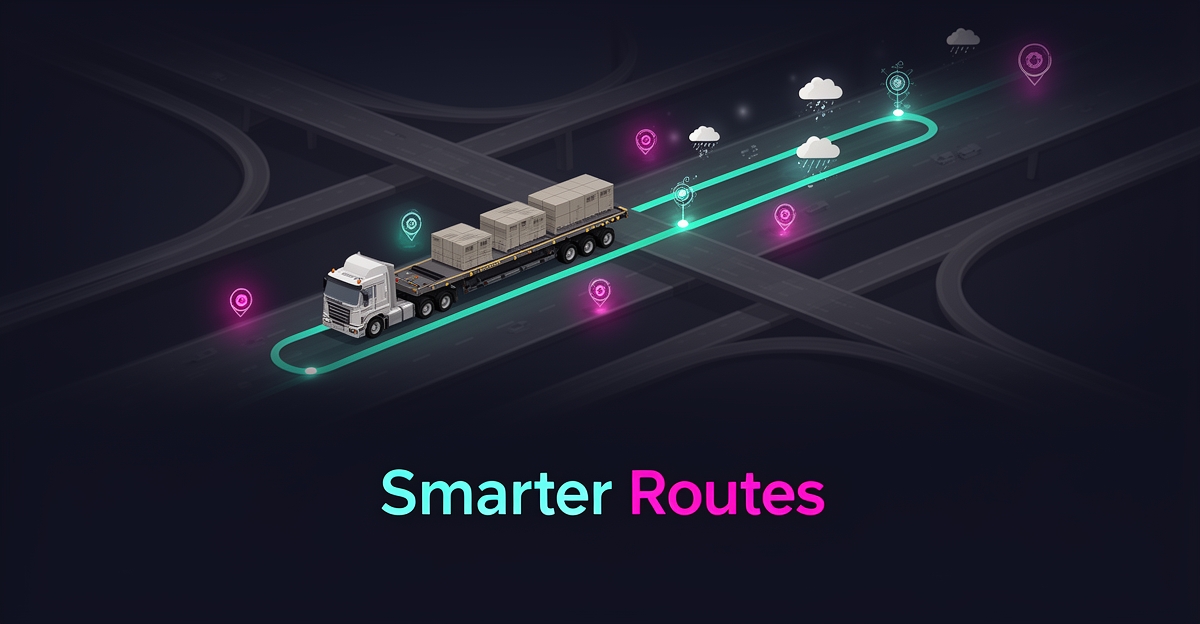
AI-powered dispatching transforms route planning by continuously analyzing real-time conditions to determine the most efficient paths for heavy haul operations. Unlike static methods that rely on fixed schedules and historical patterns, AI algorithms process live traffic, weather, and delivery windows to dynamically adjust routes as conditions change. This approach ensures trucks avoid congestion, hazardous weather, and unexpected delays while maintaining on-time performance.
According to industry research, AI-powered route optimization can reduce service failures, improve fuel economy, and lower overall costs by adapting to real-time variables that static planning cannot address. The technology evaluates multiple route options simultaneously, selecting the optimal path based on current road conditions, vehicle specifications, and delivery priorities. For heavy haul carriers managing oversized loads with strict transit windows, this dynamic capability prevents costly reroutes and missed appointments.
The system integrates data from GPS tracking, traffic sensors, weather forecasts, and dispatch schedules to create a continuously updating optimization model. When a traffic incident occurs or weather deteriorates, the AI recalculates routes in seconds, proposing alternatives that minimize delay while respecting load restrictions and driver hours-of-service regulations. This responsiveness is particularly valuable for regional hauls where weather patterns shift rapidly and urban corridors experience unpredictable congestion.
Key benefits include reduced fuel consumption through minimized idling and optimal speed maintenance, shorter delivery times via avoided bottlenecks, and improved asset utilization by decreasing empty miles between jobs. Research on AI-powered telematics has reported fuel economy gains in the range of roughly 5–9 percent depending on cab type, which translates directly into lower operating costs. Additionally, dynamic routing helps maintain consistent delivery schedules, enhancing customer satisfaction and reducing the need for expedited corrections.
For heavy haul operations specifically, AI dispatching accounts for route constraints like bridge clearances, weight limits, and permit requirements while still optimizing for efficiency. The technology learns from historical performance data to refine its recommendations over time, identifying patterns in recurring delays and proactively suggesting preventive adjustments. This creates a feedback loop where each dispatch improves the system's ability to anticipate and mitigate future disruptions.
By replacing reactive planning with predictive optimization, AI-powered dispatching turns route management from a cost center into a competitive advantage. Carriers gain real-time visibility into fleet performance while reducing the cognitive load on dispatchers, who can focus on exception handling rather than constant route recalculations. The result is a more resilient operation capable of maintaining service reliability despite volatile road conditions.
Beyond Routing: AI for Proactive Fleet Management
Beyond route optimization, AI transforms fleet management by anticipating issues before they cause delays. Predictive maintenance systems analyze real-time sensor data from heavy haul trucks to forecast potential mechanical failures, enabling repairs to be scheduled during planned downtime. This proactive approach is typically credited with reducing unplanned downtime by 30–50 percent and extending vehicle lifespan by 20–40 percent, directly improving fleet availability and on-time delivery performance. Industry research points to these gains as critical for minimizing costly disruptions in long-haul operations.
Intelligent load matching further enhances efficiency by using AI to align available freight with truck capacity in real time, significantly reducing empty miles and deadhead runs. By automating what was once a manual, time-intensive process, carriers improve asset utilization and revenue per mile while decreasing fuel waste from non-revenue travel. AI-driven platforms streamline this matching process, benefiting both shippers and carriers through increased operational efficiency. Industry analyses show AI can effectively reduce empty miles, a persistent challenge that erodes profitability in trucking.
These AI applications work in concert with dynamic routing to create a resilient, responsive fleet management system. When predictive maintenance prevents unexpected breakdowns and intelligent load matching keeps trucks revenue-generating, dispatchers gain greater flexibility to adapt to changing conditions. AIQ Labs builds AI systems that integrate these capabilities—predictive analytics, load optimization, and real-time dispatch—into a unified workflow tailored to heavy haul operations, whether as a single rebuilt workflow or a full AI operating system. This end-to-end approach ensures AI delivers value not just at the point of routing, but across the entire delivery lifecycle, turning fleet management from a reactive function into a proactive competitive advantage. Research indicates such integrated AI solutions improve overall fleet performance by addressing multiple delay factors simultaneously. Ready to explore how AI can transform your fleet operations? Start the 2-minute Fit Check, then schedule a free 30-minute strategy call to identify your highest-impact automation opportunities.
Navigating the Roadblocks: Implementation Challenges
While AI-powered dispatching promises substantial gains for heavy haul operations, successful adoption requires confronting real-world hurdles head-on. One of the most pressing concerns is data security, as AI systems processing sensitive route, cargo, and driver information become prime targets for increasingly sophisticated cyber threats—cybercriminals are now using AI tools to accelerate malware development and automate attacks, heightening the risk profile for logistics companies handling critical supply chain data.
Equally significant is the complexity of integrating new AI dispatching tools with established fleet management platforms, a challenge frequently cited by industry analysts who note that legacy system incompatibility can derail even well-funded initiatives. This technical friction often necessitates middleware solutions or phased rollouts to maintain operational continuity during transition.
Perhaps the most human-centric obstacle lies in overcoming resistance to change among dispatchers and drivers accustomed to manual planning methods; without deliberate change management strategies—including comprehensive training programs and transparent communication about AI's role as a decision-support tool rather than a replacement—organizations risk low adoption rates that undermine the technology's potential benefits. Addressing these interconnected challenges through careful planning, robust security protocols, and workforce engagement is essential for transforming AI from a conceptual advantage into a reliable operational asset.
Your Roadmap to AI-Powered Dispatching with AIQ Labs
Starting with a clear assessment ensures your AI dispatching investment targets the right pain points. Begin with the 2-minute Fit Check to analyze where delays occur most frequently in your current route planning workflows—whether from traffic, weather, or inefficient load matching. That assessment maps your high-impact opportunities and aligns AI solutions with your operational goals, focusing resources where AI delivers the greatest value, such as reducing idle time or improving delivery accuracy.
From there, AIQ Labs offers three entry points depending on how deep you want to go. If you want dispatching handled without adding headcount, an AI dispatcher works as a managed AI Employee alongside your team, around the clock, at a fraction of the cost of a human hire. If dispatching is the one workflow that costs you the most, an AI Workflow Build rebuilds it end to end at a fixed price, in phases, so you see results early. And if you want routing, maintenance, and load matching connected in one layer your company owns outright, an AI Operating System is built in phases to replace disconnected tools. Whichever path fits, the system optimizes routes in real time based on traffic, weather, and delivery schedules—dynamic planning over static methods, with 200+ multi-agent systems deployed behind the approach.
Finally, deploy in phases to minimize disruption and validate results early. Start with a pilot on a subset of routes or a single dispatch team, then scale based on performance metrics like reduced downtime or improved fuel economy. Payment follows the same logic: start monthly for an AI Employee, build in milestones for a workflow rebuild, or own it outright for a full operating system—no long lock-ins before you've seen results. This phased, partnership-driven approach ensures your transformation is smooth, measurable, and sustainable, turning AI from a concept into a competitive advantage in heavy haul logistics.
Still paying for 10+ subscriptions that don’t talk to each other?
We build custom AI systems you own outright. No vendor lock-in. Full control.
Not sure where to start? Ask our AI planner
Frequently Asked Questions
How does AI-powered dispatching actually cut route delays for heavy haul trucks?
What kind of fuel savings do heavy haul carriers see with AI route optimization?
Can AI help prevent breakdowns before they cause delays?
Will AI reduce empty miles and deadhead runs in my fleet?
Is AI dispatching secure, or does it create new cyber risks?
What's the biggest hurdle to adopting AI dispatching in heavy haul?
Turning Route Delays into Competitive Advantage
Heavy haul trucking companies face persistent route delays due to static planning and manual dispatching, which fail to adapt to real-time disruptions like traffic, weather, and last-minute changes. AI-powered dynamic routing solves this by continuously optimizing paths using live data, reducing fuel waste, improving on-time deliveries, and easing driver strain—while predictive maintenance and intelligent load matching further boost fleet utilization and minimize empty miles. Though implementation requires thoughtful change management and integration, the payoff is clear: a more resilient, efficient operation. To see where AI can deliver the highest impact in your heavy haul logistics, start with the free Fit Check and schedule a no-obligation 30-minute strategy call to map your automation opportunities.
Make AI your competitive advantage — not just another tool.
Strategy, implementation and ongoing optimization. One partner, end to end.
Not sure where to start? Ask our AI planner