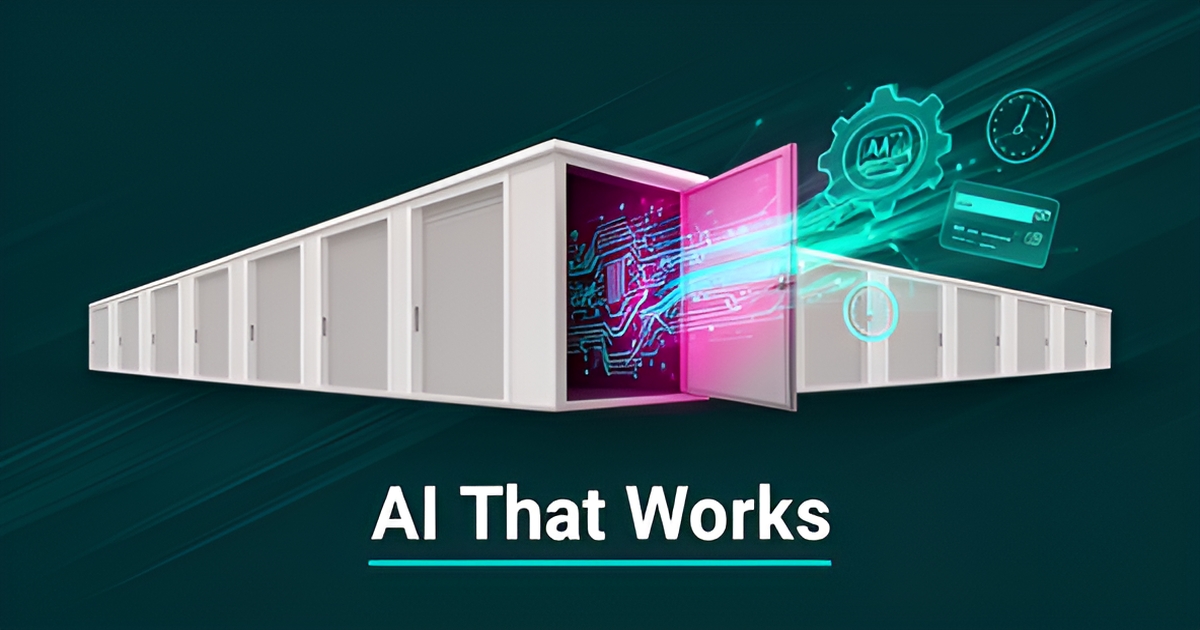
How a Storage Company in Halifax Can Use AI to Streamline Operations
Key Facts
- AI-powered operating systems cut self-storage move-in time from 20-30 minutes down to 10-15 minutes.
- Only 12.2% of Canadian businesses reported using AI to produce goods or deliver services in Q2 2025.
- Automated payment reminders improve rent collection while eliminating awkward manual follow-up calls.
- AI Employees work 24/7/365 and typically cost around 80% less than a human hire in an equivalent role.
- AI chatbots can handle routine customer inquiries around the clock, eliminating missed after-hours opportunities.
- Dynamic pricing engines continuously optimize rates based on real-time demand, replacing slow weekly or monthly manual reviews.
- A phased rollout starts with one workflow fix, then department automation, then a complete AI operating system the business owns outright.
Hire a team member that works 24/7 — for less than a part-time wage.
AI receptionists, SDRs, dispatchers and 99+ roles. Trained on your business, fully managed.
Not sure where to start? Ask our AI planner
The Operational Bottlenecks Holding Back Halifax Storage Operators
Halifax storage operators face mounting pressure as manual workflows consume disproportionate staff time and hinder growth. Processing a single move-in still takes 20-30 minutes when done manually, from application review to gate code assignment, creating a significant bottleneck during peak seasons. This inefficiency directly limits how many new customers a facility can onboard daily without adding staff.
Rent collection remains another time-intensive process, relying on staff to manually track due dates, send payment reminders, and follow up on late payments through phone calls or emails. These repetitive tasks pull employees away from higher-value activities like customer relationship management or facility maintenance. After-hours inquiries further strain resources, as operators must either pay for overnight staffing or risk losing potential customers who call outside regular business hours.
Pricing adjustments also suffer from manual limitations, with operators typically reviewing and updating rates only weekly or monthly based on seasonal trends or competitor checks. This reactive approach misses opportunities to optimize revenue in real time as demand fluctuates. The cumulative effect of these manual workflows is a ceiling on scalability—each additional container or location requires proportional increases in administrative staff, making growth costly and complex.
For portable storage businesses in Halifax, these operational constraints are particularly acute due to the mobile nature of their assets, which adds layers of coordination between depots, customer sites, and transportation logistics. AIQ Labs helps regional operators identify these specific friction points through a 2-minute Fit Check, laying the groundwork for automation that aligns with local market demands and seasonal patterns. By addressing these core bottlenecks, storage providers can redirect staff focus toward strategic initiatives that drive sustainable expansion.
How AI Operating Systems Cut Move-In Time and Automate Revenue Collection
The move-in process has long been a bottleneck for storage operators—paper applications, manual background checks, and physical gate-code handouts can stretch a single transaction to half an hour. An AI operating system compresses that workflow into a fraction of the time by handling every step digitally, from application to access. According to industry analysis, AI-powered operating systems can reduce self-storage move-in time from 20–30 minutes to 10–15 minutes.
- Prospective tenants complete digital applications on any device
- Automated credit and background checks run instantly
- Qualifying applicants receive immediate approval and a temporary gate code
- Protection-plan enrollment and welcome sequences trigger automatically
Revenue collection follows the same hands-off logic. Instead of staff chasing late payments, the system sends timed reminders, offers one-click payment links, and escalates only when human intervention is truly needed. Research shows automated payment reminders improve rent collection rates while eliminating the awkward follow-up calls that drain team morale. Meanwhile, a dynamic pricing engine continuously adjusts rates based on real-time occupancy and demand signals—something manual weekly reviews simply cannot match.
AIQ Labs helps Halifax storage operators design and deploy these end-to-end workflows through AI Workflow Builds—rebuilding the one workflow that costs you the most, at a fixed price, without ripping out existing property-management software. The goal is a self-running move-in and revenue engine that scales whether you manage twenty containers or two hundred.
Deploying AI Employees for 24/7 Customer Intake and Dispatch Coordination
Halifax portable storage businesses face constant pressure to maintain responsiveness while managing costs, especially during off-hours when customer inquiries and operational needs don't stop. Deploying AI Employees for 24/7 customer intake and dispatch coordination directly addresses this gap by automating critical workflows that traditionally require human staffing around the clock.
AI Receptionists can handle after-hours calls, intelligently routing inquiries about unit availability, pricing, and reservation requests while capturing lead details for follow-up. This ensures zero missed opportunities—a key advantage given that AI-powered systems in self-storage reduce move-in time from 20–30 minutes to 10–15 minutes by streamlining intake processes. Meanwhile, AI Dispatchers coordinate container scheduling and delivery logistics in real time, integrating with calendar and GPS tools to optimize routes and confirm appointments without delay. For overdue accounts, AI Collections Agents engage customers via voice, SMS, or email to negotiate payment arrangements, improving rent collection through automated, compliant outreach—a capability proven effective in regulated industries where consistent follow-up directly impacts cash flow.
- AI Employees work 24/7/365 with zero missed calls or days off, unlike human staff limited to 40-hour weeks.
- Managed AI Employee plans cost roughly 80% less than an equivalent human hire, on a predictable monthly basis.
- AI systems enable continuous dynamic pricing optimization based on demand patterns, maximizing revenue without constant manual oversight.
By mapping specific AI Employee roles—Receptionist, Dispatcher, and Collections Agent—to portable storage workflows, Halifax operators gain a scalable, always-on workforce that handles routine tasks while freeing human teams to focus on relationship-driven activities. This approach aligns with AIQ Labs' managed AI Employee model, where build, training, tool integration, and ongoing optimization are included in a predictable monthly plan—eliminating the complexity of hiring, managing, and scaling traditional staff while maintaining full operational control.
Ready to explore how AI Employees can transform your intake and dispatch operations? Start the 2-minute Fit Check to assess your current systems and identify high-ROI automation opportunities, then schedule a free 30-minute strategy call to map a clear implementation path. If there isn't a clear win, we'll tell you that too—no obligation, just clarity on your AI opportunity.
A Phased Implementation Roadmap for Halifax Storage Businesses
Halifax storage operators can cut disruption by rolling AI out in controlled phases rather than a full rebuild. A phased approach matches operational reality and lets teams learn on one workflow before expanding across sales and operations.
Phase one targets a single high-friction workflow. Move-in automation is the most common starting point for portable storage businesses in Halifax. Industry research shows manual move-ins typically require 20-30 minutes per tenant, while AI-powered operating systems can reduce that to 10-15 minutes. The fix covers digital applications, automated credit and background checks, instant approval, and automated gate code generation, followed by welcome sequences.
This workflow fix delivers immediate relief without touching core systems. Staff keep their existing tools while the AI handles repetitive steps. For regional operators, AIQ Labs designs these initial builds at a fixed price so the solution fits Halifax-specific processes and your budget stays predictable.
Phase two expands to department-level automation once the first workflow is stable. Sales and operations are natural next targets. An AI Employee can qualify leads, book site visits, and follow up on quotes 24/7, while an operations agent automates rent reminders, payment tracking, and maintenance coordination. Analysis of self-storage automation notes that automated payment reminders improve rent collection and AI chatbots can handle 24/7 routine inquiries.
Department automation replaces manual handoffs with integrated workflows. Pricing can also shift from weekly adjustments to continuous optimization based on demand patterns. This is where a milestone-based build model adds value: one workflow or department system is split into phases, you approve and pay per phase, and you can stop anytime while keeping everything built so far.
Phase three scales to a complete AI Operating System. The business moves from isolated automations to one connected operating layer linking intake, container tracking, billing, and customer communication—built in phases and owned outright. Data-driven decision making improves as AI analyzes occupancy, pricing, and demand to predict risk and maximize revenue.
A low-disruption rollout for Halifax storage businesses typically follows:
- Workflow Fix: Automate move-in from application to gate code in 10-15 minutes
- Department Automation: Deploy AI Employees for sales qualification and operations coordination
- Operating System: Integrate pricing optimization, rent collection, and container tracking into one owned platform
Adoption remains gradual. With only 12.2% of businesses reporting AI use to produce goods or deliver services in Q2 2025 according to StatCan data, early movers in Halifax gain efficiency and customer experience advantages before market saturation.
Overcoming Integration, Security, and Staff Adoption Challenges
Even with a clear roadmap, three barriers consistently stall AI projects in the portable storage sector: legacy software that refuses to talk to new tools, strict tenant-data obligations, and a crew that has seen "the next big thing" fizzle before. In the second quarter of 2025, 12.2% of Canadian businesses reported using AI to produce goods or deliver services, yet many pilots never scale because integration, privacy, and adoption are treated as afterthoughts.
An API-first architecture turns the integration problem inside out. Instead of forcing a modern AI layer onto a closed property-management system, you expose clean, versioned endpoints for unit availability, gate access, and billing events. That contract lets an AI orchestration engine—whether it's automating move-ins or optimizing pricing—pull and push data without screen-scraping or fragile RPA bots. The result is a single source of truth that survives vendor upgrades and keeps container tracking in sync across the yard and the office.
Tenant privacy is non-negotiable in Nova Scotia. PIPEDA and provincial guidelines require consent, minimization, and breach-ready audit trails before any personal information feeds a model. Practical guardrails include: encrypting data at rest and in transit, stripping identifiers before training, logging every inference request, and enforcing human-in-the-loop approval for any action that affects a lease or payment. These controls transform compliance from a checkbox into a competitive differentiator that tenants notice.
Staff resistance evaporates when training mirrors daily reality. Role-based programs should pair a dispatcher with an AI dispatch agent, a yard manager with an inventory forecasting bot, and the front-desk team with a 24/7 intake assistant. Short, hands-on labs—run on actual Halifax workflows—replace abstract demos. When the team sees move-in time drop from 20–30 minutes to 10–15 minutes, skepticism shifts to feature requests.
- Publish versioned APIs for every core system before the first model trains
- Embed privacy-by-design checkpoints in every sprint review
- Assign an internal "AI champion" per shift to coach peers in real time
- Measure adoption with leading indicators—active sessions, error overrides, suggestion volume
AIQ Labs structures each engagement around these exact guardrails, with 200+ multi-agent systems deployed and four live SaaS products we run daily—so the technology sticks. See how the phases are priced at aiqlabs.ai/pricing.
Still paying for 10+ subscriptions that don’t talk to each other?
We build custom AI systems you own outright. No vendor lock-in. Full control.
Not sure where to start? Ask our AI planner
Frequently Asked Questions
How much time can AI actually save on storage move-ins?
What does an AI Employee cost compared to hiring staff?
Will AI integrate with my existing property management software?
How do AI Employees handle after-hours calls and dispatch?
Is tenant data secure when using AI systems?
What's the best way to start implementing AI without disrupting operations?
Turning Operational Friction into Strategic Momentum
Halifax storage operators have a clear path forward: by targeting high-friction workflows like move-in automation, deploying AI Employees for 24/7 intake and dispatch, and following a phased rollout, businesses can cut administrative time, improve cash flow, and scale without proportional staffing increases. The result isn't just efficiency—it's reclaiming team capacity for customer relationships and strategic growth while maintaining full control over owned AI systems. AIQ Labs helps regional operators navigate integration, compliance, and adoption with a practical, milestone-based approach that starts with a no-obligation Fit Check to identify your highest-ROI opportunity. Ready to see where AI can unlock measurable gains in your specific operation? Start the 2-minute Fit Check to assess your systems, then book a free 30-minute strategy call to map a clear implementation path.
Make AI your competitive advantage — not just another tool.
Strategy, implementation and ongoing optimization. One partner, end to end.
Not sure where to start? Ask our AI planner